
Megalomyrmex leoninus
- Sci. Name
- Megalomyrmex leoninus
- Tribe
- Solenopsidini
- Subfamily
- Myrmicinae
- Author
- Forel, 1885
- Distribution
- Found in 6 countries
Introduction
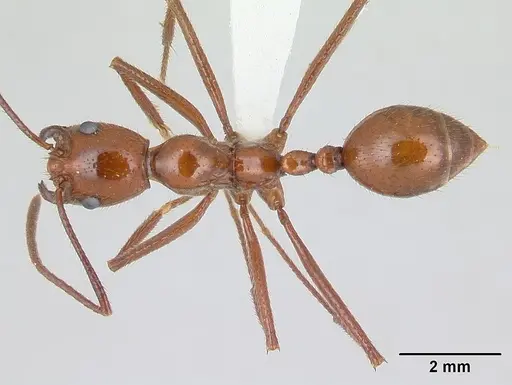
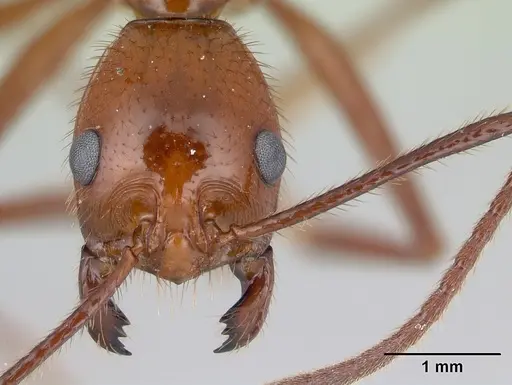
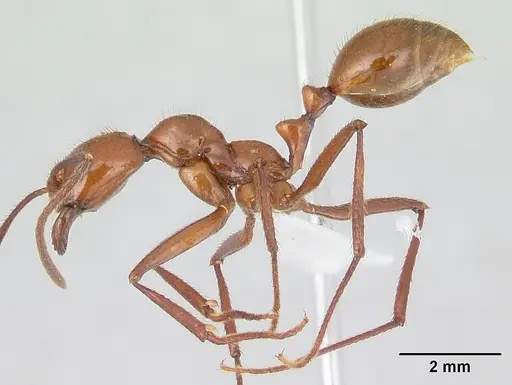
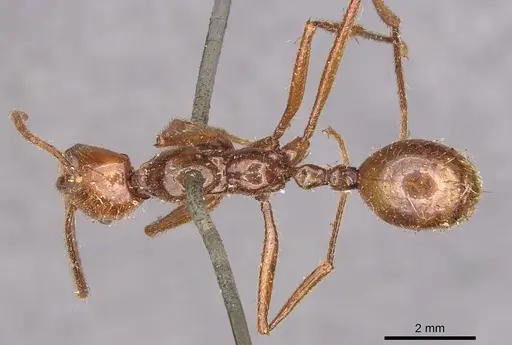
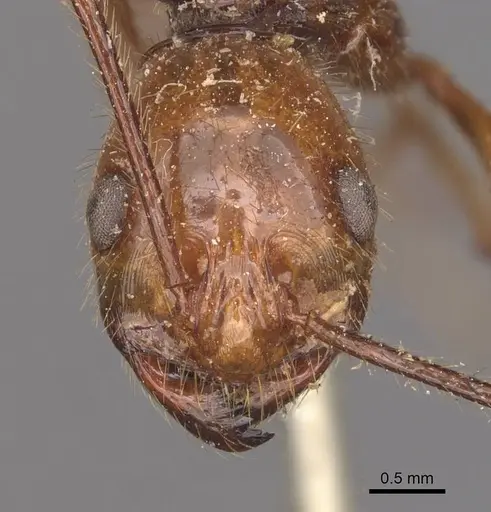
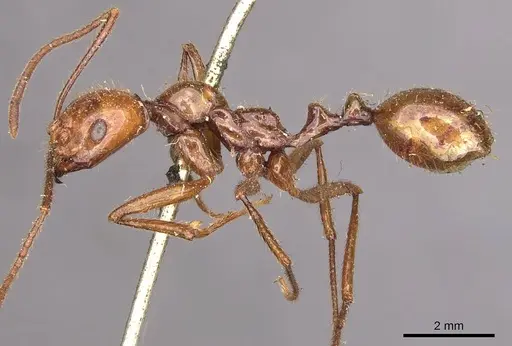
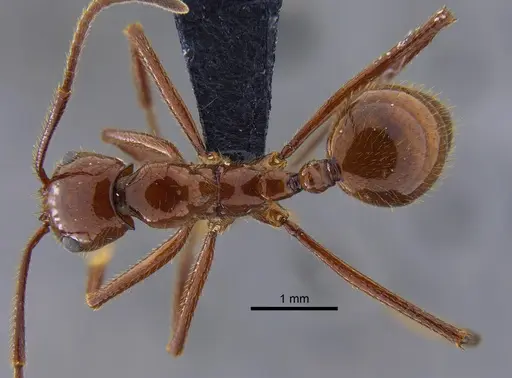
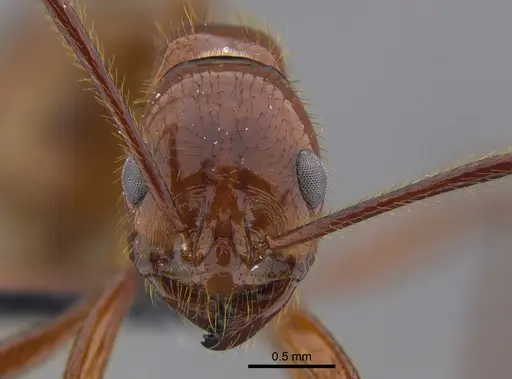
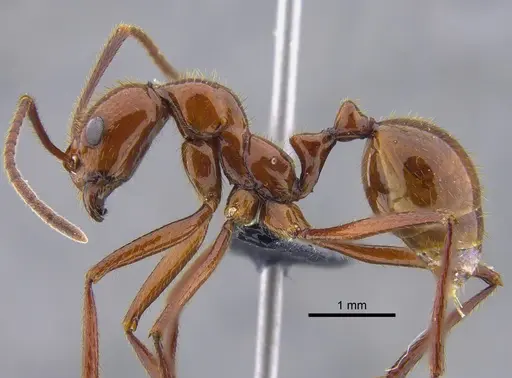
Megalomyrmex leoninus is a large Neotropical ant with workers reaching 10.5-11.5mm, making them giants compared to most Myrmicinae ants . Their body is smooth and very shiny with abundant erect hairs, especially on the antennae and legs . The most notable trait is their extreme color variation - specimens range from bright red to deep brown, almost black . This species is the type species of the genus by monotypy . These ants are aggressive free-living predators that nest in logs and shallow soil chambers, foraging through leaf litter . They actively protect honeydew-producing insects and use their potent alkaloid-based venom for hunting prey, competing for food, and defending their colony .
Quick Summary
- Difficulty: Medium
- Origin & Habitat: Found across northern South America: Brazil, Colombia, Ecuador, French Guiana, Guyana, Suriname, Trinidad and Tobago, and Venezuela [2][6]. They inhabit rain forests and humid tropical forests, typically found in forest litter at elevations ranging from 110m to 1480m [7][8].
- Colony Type: Colony structure is not well documented. One wild colony contained 450 workers and 35 males with no queens or immatures observed, suggesting it was in reproductive condition when collected [3]. They are free-living predators, not social parasites.
- Size & Growth:
- Queen: size data unavailable, queen has not been described in available literature
- Worker: 10.5-11.5mm [1]
- Colony: At least 450 workers in observed wild colonies [3]
- Growth: Unknown, no development data available
- Development: Unknown, no direct development studies exist for this species (Development timeline has not been documented in scientific literature.)
- Antkeeping:
- Temperature: Keep at 24-28°C. These are tropical forest ants from warm, humid environments. A gentle temperature gradient allows workers to self-regulate [7].
- Humidity: High humidity required, forest floor litter dwellers need moist conditions. Keep substrate consistently damp but not waterlogged. Mist occasionally and provide a water tube.
- Diapause: No, as a tropical species, they do not require hibernation. Maintain warm conditions year-round.
- Nesting: Use a naturalistic setup with moist substrate (like a terrarium-style formicarium) or a Y-tong/plaster nest with a water reservoir. They naturally nest in logs and shallow soil chambers [4]. Provide leaf litter and hiding spots in the outworld.
- Behavior: These ants are aggressive predators with potent alkaloid-based venom [4]. They actively forage in leaf litter and will readily take down prey much larger than themselves. They protect honeydew-producing insects and compete aggressively with other ants for food resources [4]. Workers are large and confident, they will investigate and potentially attack intruders. Their size makes them easier to contain than tiny ants, but escape prevention is still important.
- Common Issues: tropical humidity requirements mean drying out is a constant risk, monitor substrate moisture regularly, their predatory nature requires live prey, they may not accept pre-killed insects, wild-caught colonies may be in reproductive condition (males but no queen) and won't establish properly in captivity, their alkaloid venom means they can be aggressive defenders, handle with care, limited availability in the antkeeping hobby means captive-bred colonies are rare
Housing and Nest Setup
Megalomyrmex leoninus does well in a naturalistic terrarium-style setup that mimics their natural forest floor habitat. Use a moist substrate like a mix of soil and sand, and include pieces of rotting wood or bark for them to nest in [4]. A Y-tong or plaster nest with a built-in water reservoir also works well, these ants prefer enclosed, humid spaces. The outworld should include leaf litter, small stones, and other hiding spots that simulate the forest floor litter layer they naturally forage in. Because they are larger ants, they need appropriately sized chambers and passages.
Feeding and Diet
As aggressive predators, these ants need a protein-rich diet. Offer live small insects like fruit flies, small crickets, and mealworms. They will also accept other small arthropods found in leaf litter. Their natural diet includes hunting prey and aggressively protecting honeydew-producing insects [4]. Sugar sources like honey water may be accepted but are not their primary food. Feed protein prey 2-3 times per week, and remove uneaten prey to prevent mold. Fresh water should always be available.
Temperature and Humidity
Keep these tropical ants warm at 24-28°C. They come from humid rain forests in northern South America, so they need consistent warmth and humidity [7]. Room temperature may be too cool, consider using a heating cable on one side of the nest to create a temperature gradient. Humidity should be high, the substrate should feel consistently moist. Use a water tube or mist regularly to maintain humidity. Avoid both drying out and stagnant, overly wet conditions. Good ventilation helps prevent mold while maintaining humidity.
Behavior and Defense
These ants are not for beginners. They are aggressive defenders with potent alkaloid-based venom that they use for killing prey, competing for food, and colony defense [4]. Workers are confident foragers that will investigate and confront threats. When keeping them, avoid opening the nest frequently as they may respond defensively. Their sting is not medically significant for humans but their venom is highly effective against other ants and prey. They are active foragers that search through leaf litter, so provide them with a spacious outworld to explore.
Colony Acquisition
This species is rarely available in the antkeeping hobby. Wild-caught colonies may be difficult to establish because the observed colony contained only workers and males with no queen or brood [3]. This suggests the colony was in reproductive condition when collected, meaning the queen may have already died or the colony was preparing to disperse. Captive-bred colonies are extremely rare. If you obtain a colony, expect a challenging establishment period and be prepared for the possibility that it may not have a functional queen.
Frequently Asked Questions
How long does it take for Megalomyrmex leoninus to develop from egg to worker?
The exact development timeline is unknown, no scientific studies have documented their development for this species.
What do Megalomyrmex leoninus ants eat?
They are aggressive predators that primarily eat live insects and other small arthropods. Offer live prey like fruit flies, small crickets, and mealworms. They may also accept sugar sources like honey water, but protein is essential for their diet. They naturally hunt in leaf litter and protect honeydew-producing insects [4].
Are Megalomyrmex leoninus good for beginners?
No, this species is not recommended for beginners. They have specific humidity and temperature requirements, need live prey as food, and are aggressive defenders with potent venom. Their rarity in the hobby also means established keeping knowledge is limited. They are better suited for experienced antkeepers who can provide the specialized care they require.
What temperature should I keep Megalomyrmex leoninus at?
Keep them at 24-28°C. These are tropical forest ants from northern South America that need warm, humid conditions [7]. A heating cable on part of the nest can help maintain optimal temperatures, especially if your room temperature is below 24°C.
Do Megalomyrmex leoninus need hibernation?
No, they do not require hibernation. As tropical ants from rain forests in South America, they need warm conditions year-round. Do not expose them to cold temperatures or simulate winter dormancy.
How big do Megalomyrmex leoninus colonies get?
At least 450 workers have been observed in a wild colony [3]. The exact maximum size is unknown.
Can I keep multiple Megalomyrmex leoninus queens together?
The colony structure of this species is not well documented. We do not know if they are monogyne (single queen) or polygyne (multiple queens). Given the lack of data, combining unrelated queens is not recommended. If you obtain a colony, assume single-queen structure and house only one queen.
What type of nest is best for Megalomyrmex leoninus?
A naturalistic setup with moist substrate works best, or a Y-tong/plaster nest with a water reservoir. They naturally nest in logs and shallow soil chambers [4]. The nest should have chambers scaled to their large worker size (10.5-11.5mm). Provide high humidity inside the nest and a spacious outworld with leaf litter for foraging.
Why is my Megalomyrmex leoninus colony dying?
Common causes include: too low temperature (they need 24-28°C), too dry conditions (they need high humidity), lack of live prey (they need protein), or stress from frequent disturbance. Wild-caught colonies may also arrive already stressed or without a functional queen. Ensure proper warmth, humidity, and provide live prey regularly.
Report an Issue
The current care sheet is based fully on literature. See inconsistencies, or something that's incorrect? Please , it will be resolved after review from an admin. Contributing to the blogs tab also helps providing information, to make us be able to further improve the caresheets. Thank you for your support!
References

This caresheet is licensed under CC BY-SA 4.0 .
Community Blogs
Literature
Loading distribution map...Loading products...