
Megalomyrmex adamsae
- Sci. Name
- Megalomyrmex adamsae
- Tribe
- Solenopsidini
- Subfamily
- Myrmicinae
- Author
- Longino, 2010
- Distribution
- Found in 3 countries
Introduction
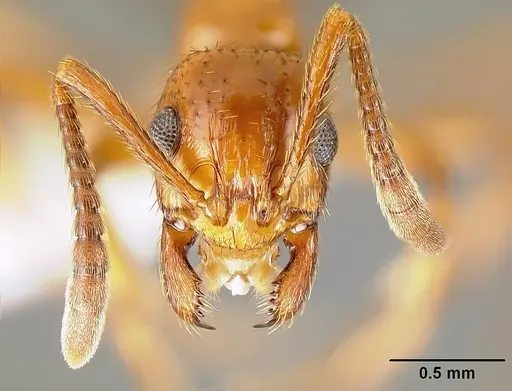
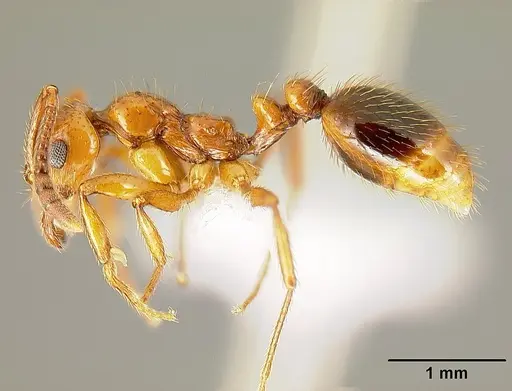
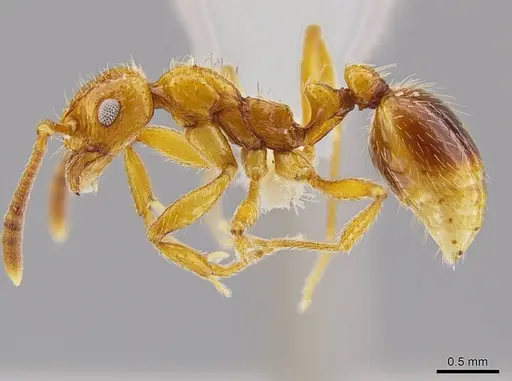
Megalomyrmex adamsae is a tiny ant native to Panama and Nicaragua, living from sea level up to 100 meters elevation in lowland tropical rainforests . Workers are small, approximately 3-5 mm - inferred from Megalomyrmex genus . They have an orange body with a darker gaster and distinctive features like a grooved mandible surface and long antennae . This species belongs to the genus Megalomyrmex, commonly known as guest ants or agro-predators . They live entirely inside the nests of fungus-growing ants, feeding on the host's fungal garden and consuming host brood . What makes this ant unique is its lifestyle as an obligate social parasite . You cannot keep this species in a standard ant setup because it relies completely on a host colony to survive . The parasite queen infiltrates newly founded host nests, uses venom to subdue the host queen, and eventually coexists with her . Workers never leave the host nest and rely entirely on the host's fungus garden for food . This extreme specialization makes captive breeding impossible with current methods .
Quick Summary
- Difficulty: Expert
- Origin & Habitat: Lowland tropical rainforests in Panama and Nicaragua, typically near creek embankments where host fungus-growing ants nest [1].
- Colony Type: Obligate social parasite, requires a live host colony (usually Mycetomoellerius) to survive. Queens infiltrate newly founded host nests and coexist with the host queen [1]. The colony produces male and female reproductives at the start of the rainy season [1].
- Size & Growth:
- Queen: ~4-6 mm, inferred from Megalomyrmex genus [3].
- Worker: ~3-5 mm, inferred from Megalomyrmex genus [3].
- Colony: Colony size is very small and rare, with only 1-6% of host colonies in the wild being parasitized [1].
- Growth: Unknown, growth depends entirely on the host colony's development
- Development: Unknown, development happens inside the host colony (Timeline is tied to host colony cycles rather than independent development)
- Antkeeping:
- Temperature: Keep at warm tropical temperatures around 24-28°C, matching the host's environment [2].
- Humidity: Maintain high humidity inside the host nest, similar to the moist conditions of fungus gardens [2].
- Diapause: No, this is a tropical species with no winter dormancy. Reproductives emerge at the start of the rainy season [1].
- Nesting: You cannot keep this species in a standard nest. It is an obligate social parasite that requires a live Mycetomoellerius host colony [3]. There are no established captive protocols for maintaining this species, and attempting to do so would require expert-level fungus-farming ant husbandry [1].
- Behavior: This species never leaves the host nest [1]. Workers are small and relatively docile. The parasite queen uses venom to subdue the host queen during infiltration, and the host queen eventually shows a submissive posture [1][4]. Workers forage directly on the host's fungal garden and consume host brood [1]. Escape risk is irrelevant since they cannot survive outside the host nest [1].
- Common Issues: this species cannot be kept in captivity because it requires a live host colony that itself needs specialized fungus-farming conditions, no established protocol exists for maintaining Megalomyrmex adamsae with host colonies in captivity, the complex chemical communication between parasite and host makes captive maintenance extremely difficult, wild colonies are rare, with only 1-6% of host colonies being parasitized, making collection nearly impossible, releasing this species outside its native range could disrupt local ecosystems as a specialized parasite
Why You Cannot Keep This Species in Captivity
Megalomyrmex adamsae is an obligate social parasite, meaning it cannot survive without a host colony [3]. Unlike typical ants where you can catch a queen and raise workers in a test tube, this species requires a live Mycetomoellerius host colony from day one [1]. The parasite queen infiltrates newly founded host nests that contain just a queen and a small fungus garden [1]. She uses venom to subdue the host queen during infiltration, but the two eventually coexist with the host queen showing a submissive posture [1][4]. Workers never leave the host nest and forage exclusively on the fungal garden and host brood [1]. There are no established protocols for maintaining this species in captivity, and attempting to do so would require maintaining a living host colony of fungus-growing ants [3]. This makes M. adamsae suitable only for advanced researchers studying host-parasite interactions, not for hobbyist antkeepers [1].
Host Species and Relationship
Megalomyrmex adamsae specifically associates with Trachymyrmex species (now classified as Mycetomoellerius), particularly Mycetomoellerius zeteki and related species in Panama [3]. This host preference differs from its close relative Megalomyrmex symmetochus, which associates with Sericomyrmex hosts [3]. The host species are fungus-farming ants that cultivate fungal gardens in underground nests, typically in creek embankments or other moist soil locations [1]. The parasite has a rare occurrence rate of only 1-6% in wild host colonies, making both the parasite and its hosts difficult to locate [1]. The relationship is permanent, once the parasite queen establishes within a host colony, she remains there for life, with the colony becoming a mixed society of host and parasite individuals [1].
Reproduction and Nuptial Flights
Male and female reproductives are produced at the start of the rainy season in Panama [1]. Young parasite queens (1-3 per colony) have been found in incipient host colonies from May to August [1]. Reproductives have been collected in large numbers from single collection events, presumably during nuptial flights, in September at Fort Clayton in Panama [1]. The mating behavior is not well documented, but like other Megalomyrmex species, mating likely occurs during the rainy season flight period [1]. Newly mated queens then seek out newly founded host colonies to infiltrate [1].
Identification and Distinguishing Features
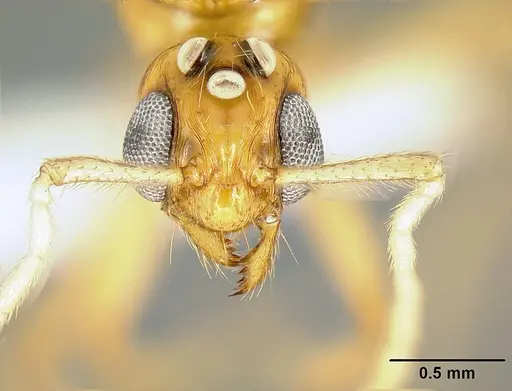
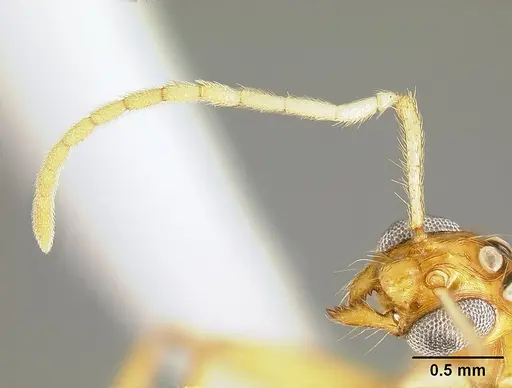
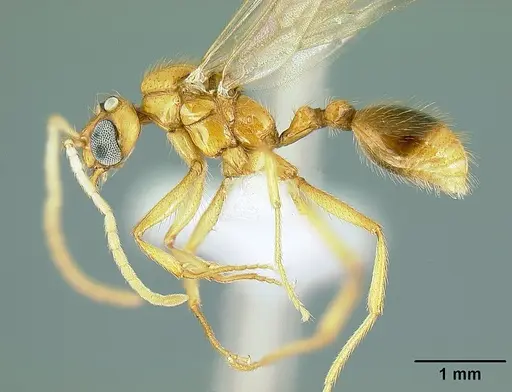
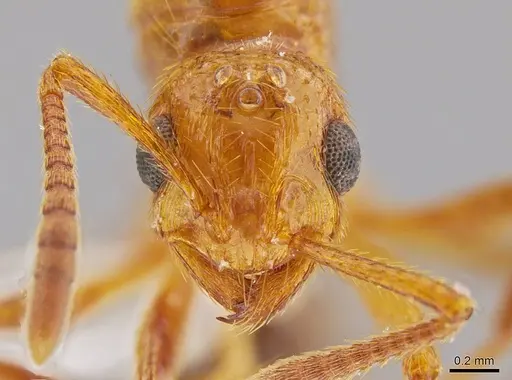
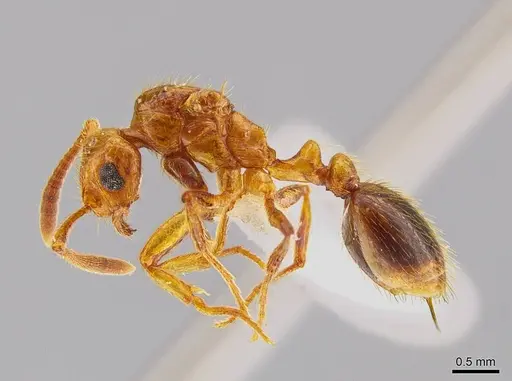
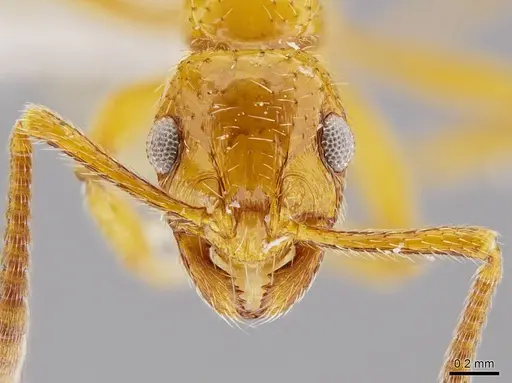
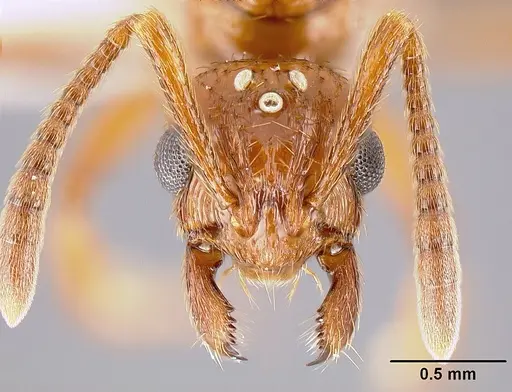
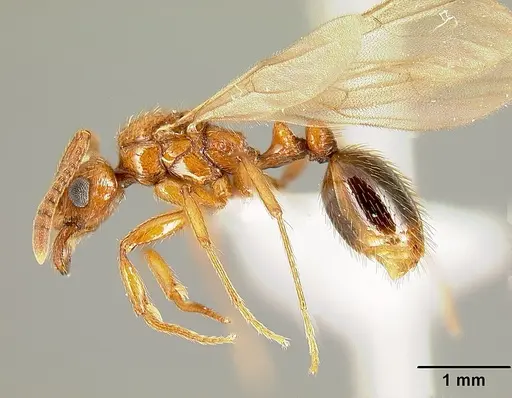
Megalomyrmex adamsae workers can be distinguished from other Central American Megalomyrmex by several characters: the katepisternum (a part of the middle body) has costae (ridges) in the dorsal third, the dorsal surface of mandibles is striate (grooved), mandibles typically have 6 teeth, and the occipital carina (a ridge at the back of the head) is not visible in full-face view [3]. The species is distinguished from the similar Megalomyrmex fungiraptor by having orange mandibles, longer scapes, and more appressed setae on the funiculus [3]. Queens are similar to workers but with smoother katepisternum and are alate (winged) [3]. Males have relatively long scapes, a present crossvein 1m-cu, and a weakly convex postpetiolar sternum [3].
Frequently Asked Questions
Can I keep Megalomyrmex adamsae as a pet ant?
No. This is an obligate social parasite that cannot survive without a live Mycetomoellerius host colony [3]. There are no established captive breeding protocols, and maintaining both the parasite and its host would require expert-level knowledge of fungus-farming ant husbandry [1]. This species is not suitable for hobbyist antkeepers [3].
How do I start a Megalomyrmex adamsae colony?
You cannot. Unlike typical ants where you can catch a queen and raise workers in a test tube, M. adamsae requires a host colony from the beginning [1]. The queen must infiltrate a newly founded host colony containing a queen and small fungus garden [1]. This complex relationship cannot be replicated in captivity [3].
What do Megalomyrmex adamsae eat?
They do not forage outside the host nest [1]. Workers consume fungal mycelium from the host's fungus garden and also eat host brood [1]. They are essentially exploiting the host's food resources rather than hunting independently [1].
What is the colony size of Megalomyrmex adamsae?
Colonies are relatively small, typically consisting of just a few dozen parasite individuals plus the host colony [1]. This species is rare in the wild, with only 1-6% of host colonies being parasitized [1].
Do Megalomyrmex adamsae need hibernation or diapause?
No. This is a tropical species from Panama with no winter season [1]. Reproductives are produced at the start of the rainy season rather than in response to cold temperatures [1].
What makes Megalomyrmex adamsae different from other ants?
Most ant species are independent and can establish colonies on their own [3]. M. adamsae is a specialized social parasite that has lost this independence, it cannot survive without a host colony [1]. This makes it fundamentally different from nearly all other ant species kept in captivity, which can be raised independently from a founding queen [3].
Report an Issue
The current care sheet is based fully on literature. See inconsistencies, or something that's incorrect? Please , it will be resolved after review from an admin. Contributing to the blogs tab also helps providing information, to make us be able to further improve the caresheets. Thank you for your support!
References

This caresheet is licensed under CC BY-SA 4.0 .
Community Blogs
CASENT0613258
View on AntWeb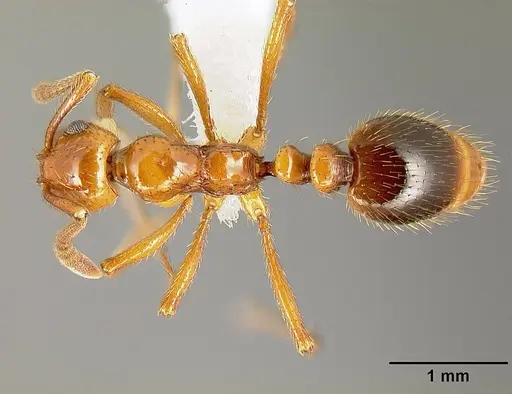
CASENT0613259
View on AntWeb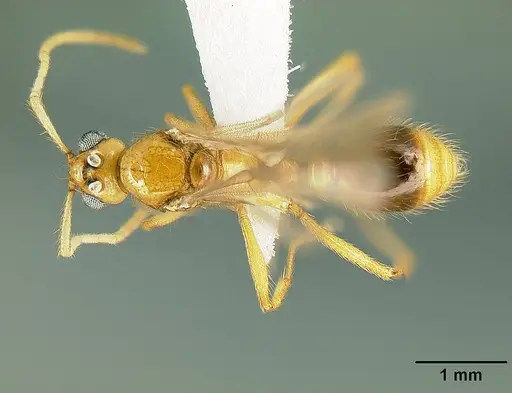
CASENT0613265
View on AntWeb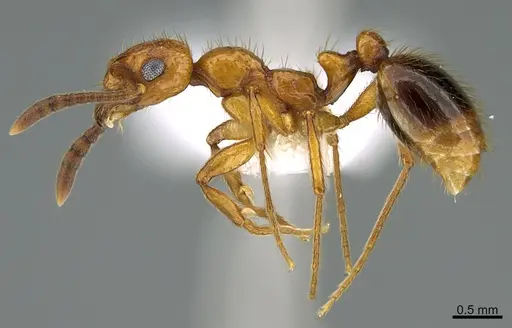
CASENT0629669
View on AntWeb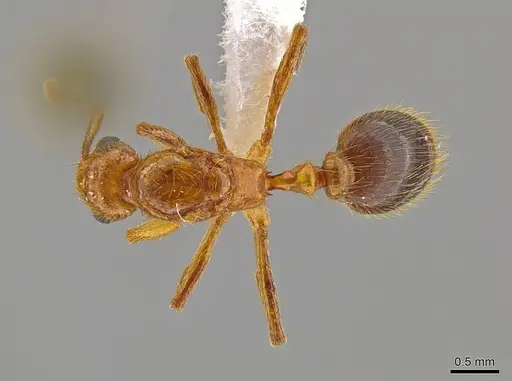
CASENT0630965
View on AntWeb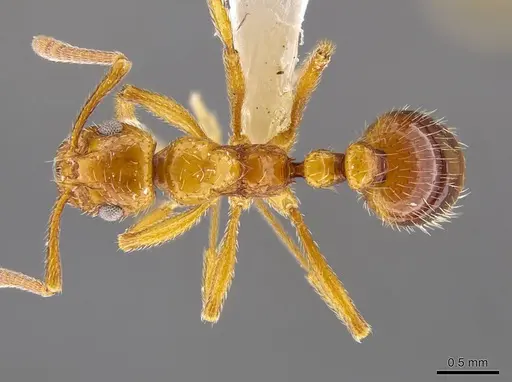
USNMENT00693014
View on AntWeb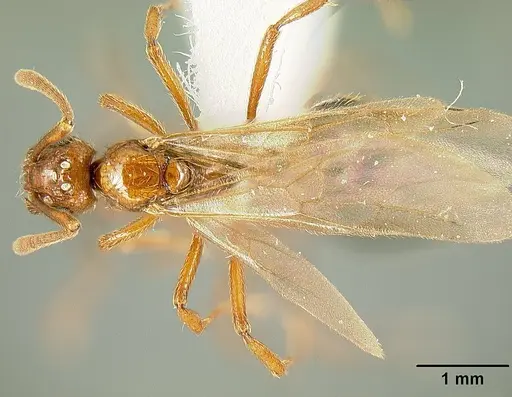
Literature
Loading distribution map...Loading products...