
Lordomyrma sukuna
- Sci. Name
- Lordomyrma sukuna
- Tribe
- Crematogastrini
- Subfamily
- Myrmicinae
- Author
- Sarnat, 2006
- Distribution
- Found in 1 countries
Introduction
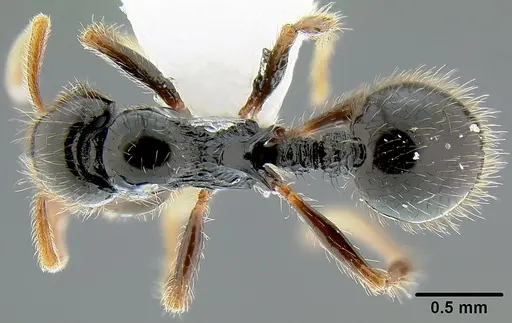
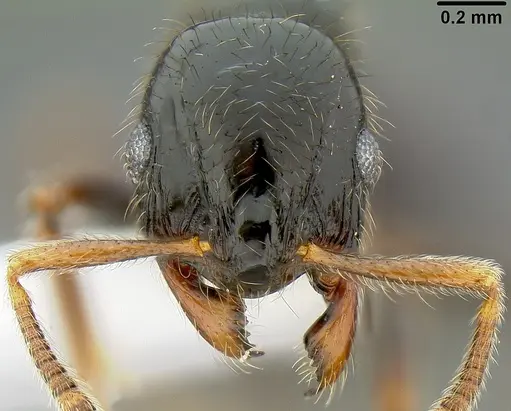
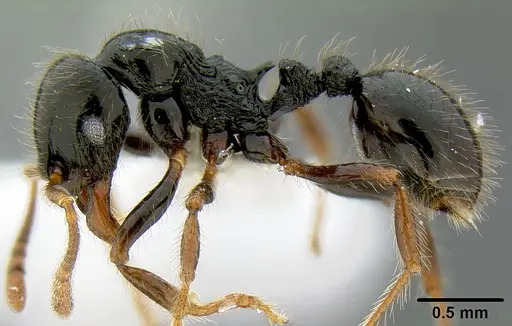
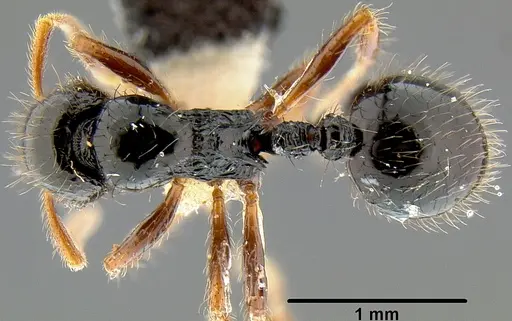
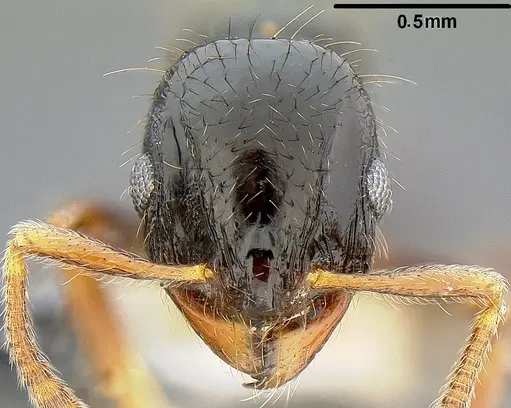
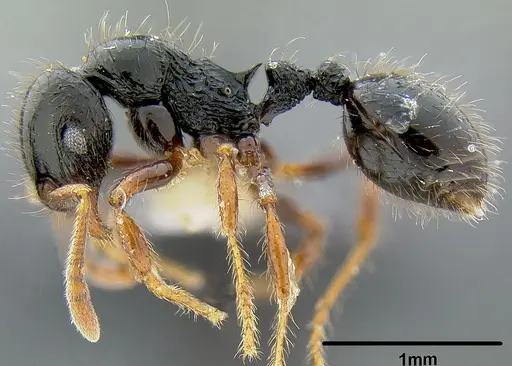
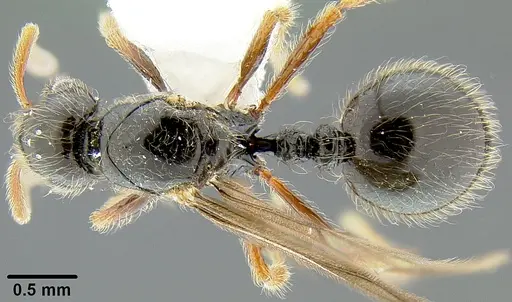
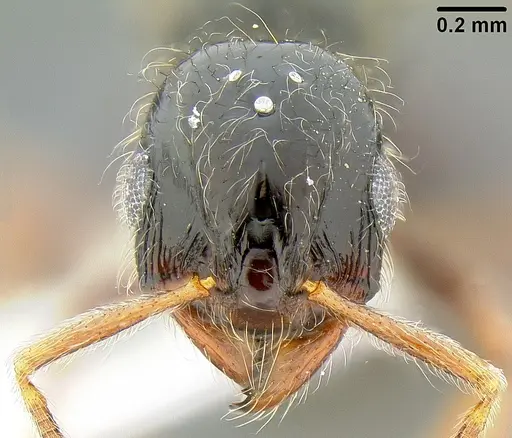
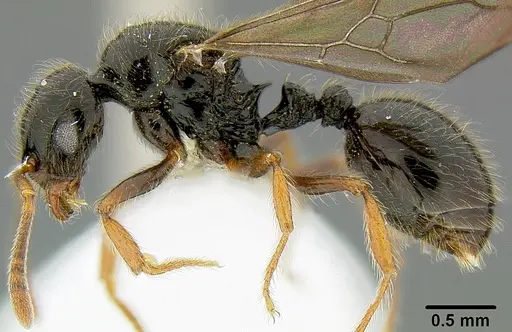
Lordomyrma sukuna is a medium-sized black ant endemic to the Fiji Islands. Workers measure 3.48-4.14 mm in total length and have a distinctive appearance with very long yellowish hairs covering their dorsal surfaces - these hairs are longer than the length of their eyes. They have a slender petiole, short propodeal spines, and relatively smooth facial sculpture compared to other Lordomyrma species. The species shows considerable morphological variation across different islands, with specimens from higher elevations on Viti Levu being larger and less sculptured than those from lower elevations on Ovalau and Taveuni . These ants are ground-dwelling, nesting in soil beneath stones or in rotting logs in Fiji's forested mountain regions .
Quick Summary
- Difficulty: Medium
- Origin & Habitat: Fiji Islands, found on Viti Levu, Ovalau, Taveuni, Beqa, and Kadavu at elevations from 300-1050m. They inhabit the ground fauna of forest areas, nesting in soil beneath stones or in rotting logs [1][2].
- Colony Type: Colony structure is unconfirmed. The type series was collected as a colony of 30 workers nesting in soil beneath a stone [1][2].
- Size & Growth:
- Queen: Size data unavailable, queen measurements have not been documented in available literature
- Worker: 3.48-4.14 mm [1][3]
- Colony: At least 30 workers in type series colony [1]. Maximum colony size is unknown.
- Growth: Unknown, development data unavailable for this species
- Development: Unconfirmed, direct development data unavailable (No specific timeline data exists for this species. Estimates based on related Pacific Myrmicinae would suggest several months at tropical temperatures.)
- Antkeeping:
- Temperature: Keep at 24-28°C. Being from tropical Fiji, they prefer warm conditions. A heating cable on one side of the nest creates a temperature gradient they can regulate by moving
- Humidity: Keep substrate moderately moist. In nature they nest in soil beneath stones in forested areas, suggesting they prefer damp but not waterlogged conditions [1][2].
- Diapause: No, Fiji has no true winter, so they do not require a diapause period
- Nesting: Y-tong (AAC) nests or plaster nests work well. They naturally nest in soil beneath stones, so a naturalistic setup with a moist substrate layer also works. Avoid very dry conditions.
- Behavior: These ants are relatively docile and not aggressive. They are ground-dwelling and likely forage in the leaf litter layer. Workers are moderate in size with good escape-climbing abilities, so standard barrier methods should suffice. They possess a stinger typical of Myrmicinae but are not considered dangerous to humans, they would only sting if severely provoked. Their long hairs give them a distinctive appearance among Myrmicinae ants [1].
- Common Issues: limited availability, this species is rarely kept in captivity and hard to obtain, colony size may remain modest, type series was only 30 workers, humidity management is critical, being ground-dwelling, they need consistent moisture without flooding, temperature sensitivity, being from tropical Fiji, they may not tolerate cool conditions, escape prevention, while not tiny, they are agile and can escape through standard gaps
Natural History and Distribution
Lordomyrma sukuna is endemic to the Fiji Islands, where it is found across several islands including Viti Levu, Ovalau, Taveuni, Beqa, and Kadavu [2]. The species demonstrates considerable morphological variation among populations from different islands. Specimens from higher elevations (950-1050m) on Viti Levu tend to be larger with less sculptured faces, while specimens from lower elevations (around 300m) on Ovalau and Taveuni are smaller with more developed facial sculpture [1]. In their natural habitat, these ants are components of the ground fauna. On Viti Levu, specimens have been collected from logs and under stones, while specimens from Ovalau and Taveuni were collected from sifted leaf litter [1][2]. The type series was collected from a colony of 30 workers nesting in soil beneath a stone, identifiable by the presence of excavated earth adjacent to the entrance [1][2].
Nest Preferences and Housing
In captivity, Lordomyrma sukuna does well in Y-tong (AAC) nests or plaster nests that can maintain consistent humidity. Being a ground-dwelling species that naturally nests in soil beneath stones, they prefer nests with a moist substrate layer. A test tube setup can work for founding colonies, but established colonies do better in formicariums designed for ground-nesting species. The key is providing a chamber or substrate that stays damp but not waterlogged. These ants are not arboreal, so vertical setups designed for tree-nesting species are not appropriate. The nest should have passages and chambers scaled to their medium size, workers around 3-4mm need passages around 5-8mm wide. Avoid completely dry conditions, as this species comes from the humid forest floor of Fiji.
Feeding and Diet
The specific diet of Lordomyrma sukuna has not been documented in scientific literature. Based on typical Myrmicinae behavior and their position as ground-dwelling foragers in leaf litter, they likely are generalist omnivores that forage for small invertebrates, honeydew, and nectar. In captivity, offer a varied diet including sugar sources (honey water, sugar water) and protein sources (small insects like fruit flies, pinhead crickets, mealworms). Being medium-sized ants, they can handle prey items roughly equal to their own body size. Feed protein roughly twice weekly and keep sugar water available at all times. Remove uneaten prey after 24-48 hours to prevent mold issues.
Temperature and Seasonal Care
As a species from tropical Fiji, Lordomyrma sukuna prefers warm conditions. Keep the nest area at 24-28°C for optimal colony health and development. A heating cable placed on one end of the nest creates a temperature gradient, allowing ants to regulate their body temperature by moving between warmer and cooler areas. Since Fiji has no true winter, these ants do not require a diapause period. Maintain consistent warm temperatures year-round. If your room temperature stays within their preferred range (around 24°C), no additional heating is needed. Avoid temperatures below 20°C for extended periods, as this species is not adapted to cool conditions.
Defense Mechanism
Lordomyrma sukuna belongs to the subfamily Myrmicinae and tribe Crematogastrini. Like other members of this group, they have a modified, flattened stinger used to wipe or smear venom onto enemies rather than piercing flesh. This smear defense is common among Crematogastrini ants and serves as an effective deterrent against predators without requiring direct contact.
Behavior and Colony Dynamics
Lordomyrma sukuna workers are relatively docile and not prone to aggressive displays. They are ground-dwelling ants that likely forage in the leaf litter layer, searching for small invertebrates and honeydew from aphids or scale insects. The species has distinctive very long yellowish hairs covering its dorsal surfaces, these hairs are longer than the length of their eyes, making them easily recognizable among Fiji's ant fauna [1]. Workers have short propodeal spines and a slender petiole. While they possess a stinger (typical of Myrmicinae), they are not considered dangerous to humans and would only sting if severely provoked. Colonies appear to remain relatively modest in size, with the type series consisting of only 30 workers, suggesting this species does not form large supercolonies [1].
Frequently Asked Questions
How long does it take for Lordomyrma sukuna to produce first workers?
The exact development timeline has not been documented for this species. Without specific data, expect the process to take several months under optimal conditions (24-28°C). This is an estimate, actual timing may vary.
What do Lordomyrma sukuna ants eat?
While their exact diet is unstudied, they likely accept standard ant foods: sugar water or honey for carbohydrates, and small insects like fruit flies, pinhead crickets, or mealworms for protein. Feed protein twice weekly and keep sugar water available constantly.
Do Lordomyrma sukuna ants sting?
Yes, they have a stinger as members of the Myrmicinae subfamily. However, they are not aggressive and would only sting if handled roughly or threatened. The sting is mild and not medically significant to humans.
Can I keep multiple queens together?
The colony structure of this species has not been studied. Combining unrelated queens is not recommended since we do not know their social structure. It is best to start with a single queen colony unless you have specific information about multi-queen tolerance.
What temperature do Lordomyrma sukuna ants need?
Keep them warm at 24-28°C. Being from tropical Fiji, they do not tolerate cool conditions well. A heating cable on one side of the nest creates a gradient they can use to regulate their temperature.
How big do Lordomyrma sukuna colonies get?
The maximum colony size is unknown. The type series had only 30 workers, suggesting colonies remain relatively modest in size rather than reaching thousands of workers. Expect a medium-sized colony over time.
Are Lordomyrma sukuna good for beginners?
This species is rated as Medium difficulty. It is not commonly available in the antkeeping hobby, and there is limited captive care information. If you can source a colony, they require standard Myrmicinae care with attention to humidity and warmth. They are not ideal for complete beginners but manageable for those with some experience.
Do Lordomyrma sukuna need hibernation?
No, they do not require a diapause period. Fiji has a tropical climate with no true winter, so these ants are not adapted to cold-induced dormancy. Maintain consistent warm temperatures year-round.
What type of nest should I use for Lordomyrma sukuna?
Y-tong (AAC) nests or plaster nests work well. They naturally nest in soil beneath stones, so a naturalistic setup with a moist substrate layer is appropriate. The key is maintaining consistent humidity without waterlogging the nest.
Where is Lordomyrma sukuna found in the wild?
This species is endemic to the Fiji Islands, specifically found on Viti Levu, Ovalau, Taveuni, Beqa, and Kadavu. They live in forested mountain regions at elevations between 300-1050m, where they nest in soil beneath stones or in rotting logs.
Report an Issue
The current care sheet is based fully on literature. See inconsistencies, or something that's incorrect? Please , it will be resolved after review from an admin. Contributing to the blogs tab also helps providing information, to make us be able to further improve the caresheets. Thank you for your support!
References

This caresheet is licensed under CC BY-SA 4.0 .
Community Blogs
Literature
Loading distribution map...Loading products...