
Lordomyrma striatella
- Sci. Name
- Lordomyrma striatella
- Tribe
- Crematogastrini
- Subfamily
- Myrmicinae
- Author
- Mann, 1921
- Distribution
- Found in 1 countries
Introduction
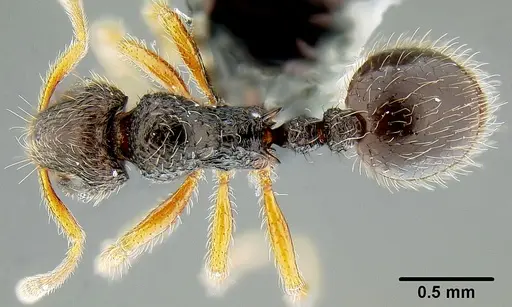
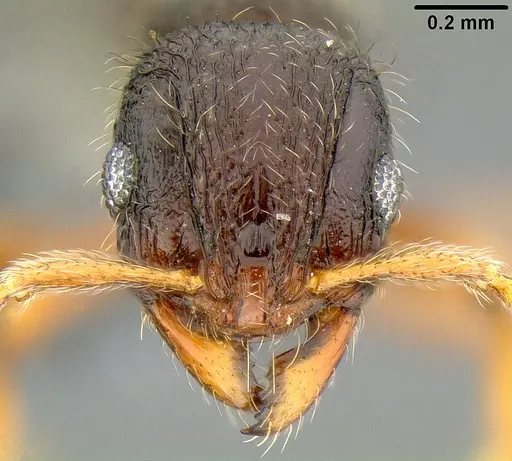
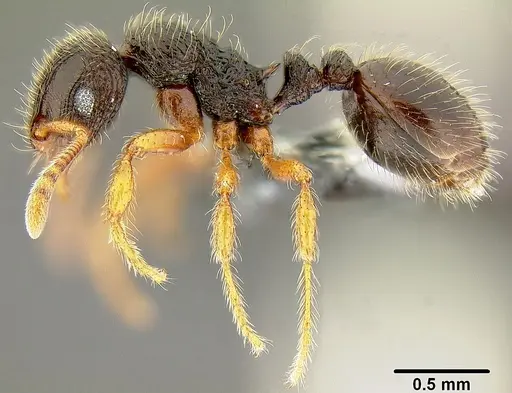
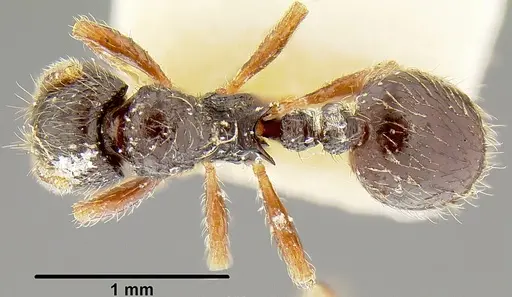
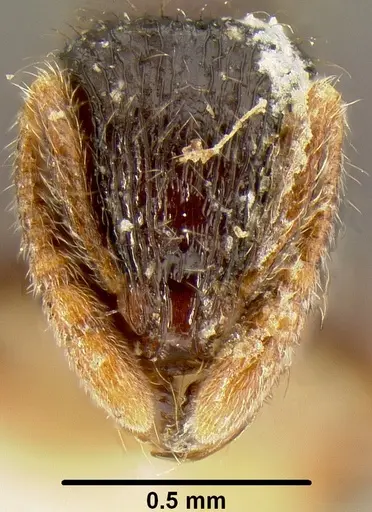
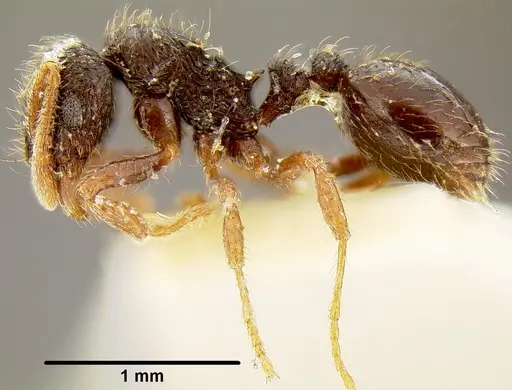
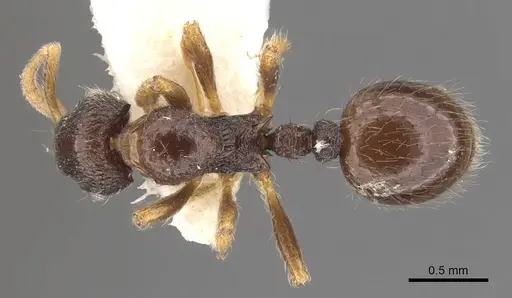
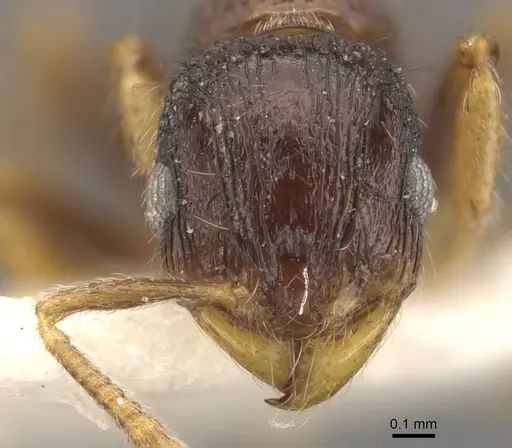
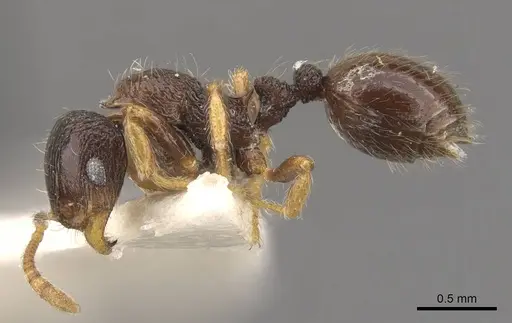
Lordomyrma striatella is a tiny ant species endemic to the Fiji Islands. Workers measure just 3.16-3.33mm and have a distinctive dark reddish-brown coloration with fine rugulae (wrinkle-like sculpturing) covering most of their body surfaces . They can be recognized by their strongly defined antennal scrobes (grooves running along the sides of the head), short weakly downcurved propodeal spines, and long yellowish hairs standing up from their dorsal surfaces . The species gets its name from the thin longitudinal striae running along its face between the frontal carinae, which helps distinguish it from close relatives like Lordomyrma sukuna . This species is found only in Fiji, where it inhabits the islands of Viti Levu, Ovalau, Beqa Island, Taveuni, and Kadavu at elevations below 400 meters . In the wild, they nest beneath stones and in leaf litter on the forest floor. Mann reported them as abundant from Kadavu, where he found them nesting under stones . The sting apparatus has been studied and shows a reduced sting with an Index of Reduction of 0.31,indicating their sting is quite weak compared to many other Myrmicinae . As with other Crematogastrini ants, they use a smear defense mechanism where the flattened stinger wipes venom onto enemies rather than piercing flesh.
Quick Summary
- Difficulty: Medium
- Origin & Habitat: Endemic to the Fiji Islands, found on Viti Levu, Ovalau, Beqa Island, Taveuni, and Kadavu. They live in tropical forest habitats, nesting beneath stones and in leaf litter at elevations below 400 meters [1][3][5].
- Colony Type: Colony structure is unconfirmed. No published data on whether they are single-queen (monogyne) or multi-queen (polygyne) colonies.
- Size & Growth:
- Queen: size data unavailable
- Worker: 3.16-3.33mm [1][2]
- Colony: Unknown, maximum colony size has not been studied
- Growth: Unknown, no development data available
- Development: Unknown, this species has not been studied in captivity and no development timeline exists (Based on typical Myrmicinae patterns from similar tropical litter ants, expect several weeks at warm temperatures, but this is an estimate only.)
- Antkeeping:
- Temperature: Keep warm and stable, roughly 24-28°C. As a tropical species from Fiji, they prefer warm conditions. A gentle heat gradient allows them to choose their preferred temperature.
- Humidity: Keep moderately to high humidity. In the wild they live in leaf litter and under stones in tropical forest, so the nest should stay damp but not waterlogged. Provide a moisture reservoir.
- Diapause: No, as a tropical species from Fiji, they do not require hibernation or winter rest. Keep temperatures stable year-round.
- Nesting: Provide a nest with chambers scaled to their tiny 3mm size. They naturally nest under stones and in leaf litter, so a Y-tong (AAC) nest or plaster nest with good humidity retention works well. Avoid large open spaces, tight chambers suit them better.
- Behavior: These are small, docile ants with a significantly reduced sting [4]. They are not aggressive and rarely sting, and even if they do, the sting is very weak. Workers forage in the leaf litter layer, likely hunting small micro-arthropods. Because of their tiny 3mm size, escape prevention is critical, they can squeeze through very small gaps. Use fine mesh and tight-fitting barriers.
- Common Issues: escape prevention is critical due to their very small 3mm size, they can slip through tiny gaps that larger ants cannot, humidity management is important, being from leaf litter, they need consistent moisture but not saturation, this is a rarely kept species with no established captive protocols, success requires careful observation, no data on their exact dietary needs, they likely accept small live prey but specific acceptance is unknown, wild-caught colonies may carry parasites or struggle with captivity stress
Housing and Nest Setup
Lordomyrma striatella is a tiny ant at just 3.16-3.33mm, so your nest must have appropriately scaled chambers and tunnels. They naturally nest under stones and in leaf litter in Fiji's tropical forests [1][3], so they prefer humid, stable conditions. A Y-tong (AAC) formicarium or plaster nest works well, both retain moisture while providing dark, enclosed chambers. The nest should have a water reservoir or moisture chamber to maintain humidity without frequent misting. Keep the outworld simple since these tiny ants do not travel far. Escape prevention is essential: use fine mesh and check all lid seams carefully, these ants can slip through gaps that seem impossibly small.
Temperature and Humidity
As a tropical species endemic to Fiji, Lordomyrma striatella needs warm conditions. Aim for 24-28°C in the nest area, with a slight gradient so workers can move to warmer or cooler spots if needed. Room temperature may be sufficient if your home stays in the low-mid 20s°C. For humidity, aim for moderate to high levels, think damp forest floor. The nest substrate or moisture chamber should feel consistently damp but never sitting in standing water. A small test tube water reservoir attached to the nest works well for maintaining humidity over time. Avoid placing the nest near air conditioning vents or in areas with temperature swings. [1]
Feeding and Diet
The specific dietary needs of this species are unconfirmed, but being a small Myrmicinae, they likely forage for tiny arthropods in the leaf litter layer. Offer small live prey appropriate to their size, such as springtails, fruit flies, or tiny crickets. They may also accept sugar sources like honey water or sugar water, though this is an educated guess rather than confirmed. Start with small live prey and observe acceptance. Remove any uneaten prey after 24-48 hours to prevent mold. Feed every 2-3 days for established colonies, adjusting based on how quickly food disappears.
Behavior and Temperament
These ants are small and docile. Research on their sting apparatus shows it is significantly reduced with an Index of Reduction of 0.31,meaning they are not a stinging threat to keepers [4]. Workers are likely nocturnal or crepuscular, foraging through the leaf litter in search of small prey. Because of their tiny size, they are not escape artists in the traditional sense, instead, they are experts at squeezing through microscopic gaps. Always use excellent escape prevention regardless of how calm they appear. They do not form large colonies quickly, so patience is key when growing your colony from a single queen or small group.
Colony Establishment
Since colony structure is unconfirmed for this species, you may encounter either a single queen or potentially multiple queens depending on what you find in the wild. If you find a queen, she was likely claustral (queen seals herself in a chamber and lives off stored body fat while raising first workers), which is typical for Myrmicinae, though this is not confirmed specifically for L. striatella. The first workers, called nanitics, will be smaller than mature workers and may take several weeks to emerge. Do not disturb the founding chamber during this time, vibrations and light can stress the queen and cause her to abandon or eat her brood. Wait until you see workers before offering any food.
Frequently Asked Questions
How long does it take for Lordomyrma striatella to produce first workers?
The exact development timeline is unknown for this species as it has never been studied in captivity. Based on typical Myrmicinae patterns for small tropical ants, expect several weeks from egg to worker at warm temperatures (around 26°C), but this is an estimate only.
Do Lordomyrma striatella ants sting?
They do have a stinger, but it is significantly reduced. Research shows their sting apparatus has an Index of Reduction of 0.31,indicating a very weak sting [4]. They are not aggressive and rarely sting handlers.
What do Lordomyrma striatella ants eat?
Their exact diet is unconfirmed, but being small leaf-litter ants, they likely hunt tiny arthropods. Offer small live prey like springtails, fruit flies, or minute crickets. They may also accept sugar water or honey, though this is an educated guess.
Are Lordomyrma striatella good for beginners?
This species is not well-established in the antkeeping hobby due to limited data on its care. It is considered intermediate difficulty primarily because so little is known about its specific requirements. Beginners may have success with careful attention to humidity and escape prevention, but this is not a recommended starter species.
How big do Lordomyrma striatella colonies get?
Maximum colony size is unknown. Being a small species with tiny workers (3.16mm), colonies likely remain modest in size, probably under a few hundred workers at maximum, though this is an estimate.
Do Lordomyrma striatella need hibernation?
No. As a tropical species endemic to Fiji, they do not require hibernation or diapause. Keep temperatures stable year-round in the 24-28°C range.
Can I keep multiple Lordomyrma striatella queens together?
Colony structure is unconfirmed for this species. We do not know whether they are single-queen (monogyne) or multi-queen (polygyne) in the wild. Combining unrelated queens is not recommended without documented evidence that they can coexist.
What is the best nest type for Lordomyrma striatella?
A Y-tong (AAC) formicarium or plaster nest works well. They need appropriately scaled tiny chambers due to their 3mm size, good humidity retention, and darkness. Avoid large open spaces, tight chambers suit these small leaf-litter ants.
Why are my Lordomyrma striatella escaping?
Their tiny 3mm size means they can slip through gaps that seem impossibly small. Check all lid seams, tubing connections, and any cracks in the formicarium. Use fine mesh on any ventilation holes and ensure all connections are tight.
Where is Lordomyrma striatella native to?
This species is endemic to the Fiji Islands, found only on Viti Levu, Ovalau, Beqa Island, Taveuni, and Kadavu at elevations below 400 meters [1][5]. It is not found anywhere else in the world.
Report an Issue
The current care sheet is based fully on literature. See inconsistencies, or something that's incorrect? Please , it will be resolved after review from an admin. Contributing to the blogs tab also helps providing information, to make us be able to further improve the caresheets. Thank you for your support!
References

This caresheet is licensed under CC BY-SA 4.0 .
Community Blogs
Literature
Loading distribution map...Loading products...