
Lordomyrma stoneri
- Sci. Name
- Lordomyrma stoneri
- Tribe
- Crematogastrini
- Subfamily
- Myrmicinae
- Author
- Mann, 1925
- Distribution
- Found in 1 countries
Introduction
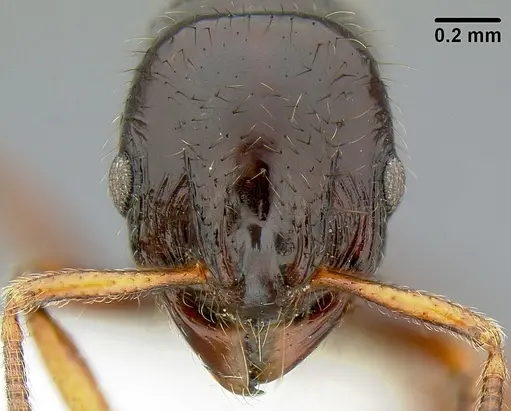
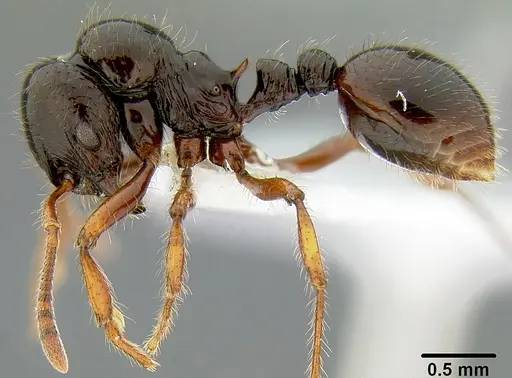
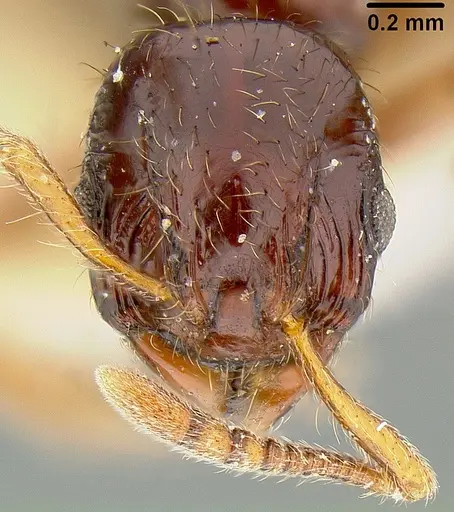
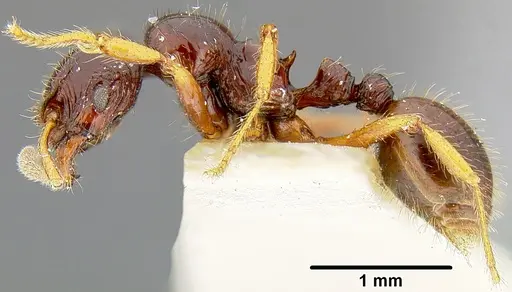
Lordomyrma stoneri is a large, striking ant species endemic to the mountains of southeastern Viti Levu in Fiji. Workers measure 4.21–5.52 mm and feature a shiny reddish-brown body with a massive, bulging promesonotum and strong upturned propodeal spines . It is one of the larger Lordomyrma in Fiji and can be identified by its reduced sculpturing, strong spines, and the distinctive bulge of its promesonotum above the head and propodeum . The species is restricted to a narrow mountain range near Suva, where it lives alongside its close relatives Lordomyrma tortuosa and Lordomyrma desupra . Very little is known about their biology, but they have been collected by sifting leaf litter from the forest floor .
Quick Summary
- Difficulty: Unknown, likely Medium to Hard due to limited data
- Origin & Habitat: Endemic to Fiji, specifically the mountains of southeastern Viti Levu near Suva. Found in tropical forest habitats, collected from leaf litter [1][3].
- Colony Type: Unconfirmed, colony structure has not been documented in scientific literature
- Size & Growth:
- Queen: Unknown, queen measurements not documented
- Worker: 4.21–5.52 mm [1][2]
- Colony: Unknown, no colony size data available
- Growth: Unknown, estimated Moderate based on worker size
- Development: Unknown, estimated 6–10 weeks based on typical Myrmicinae development at tropical temperatures (No direct development data exists for this species. Estimates based on related Lordomyrma species and typical Myrmicinae patterns.)
- Antkeeping:
- Temperature: Estimated 22–26 °C – start in this range and observe colony activity. As a tropical Fiji species, they likely prefer warm, stable conditions.
- Humidity: High humidity likely required – forest floor litter dwellers typically need 70–85% humidity. Keep substrate consistently moist but not waterlogged.
- Diapause: Unlikely – tropical species from Fiji does not require hibernation. May have seasonal slowdowns related to wet/dry seasons.
- Nesting: Based on litter collection, they likely nest in soil or decaying wood in forest floor environments. A naturalistic setup with moist substrate or a Y‑tong/plaster nest works well. Provide small chambers scaled to their moderate size.
- Behavior: Behavior is poorly documented. They are likely moderate foragers that search leaf litter for small prey. Escape risk is moderate due to their 4–5 mm size – use standard barrier methods. No sting data available, but Myrmicinae typically have stingers though many are too small to penetrate human skin effectively.
- Common Issues: limited availability – this species is rarely available in the ant trade due to its restricted endemic range, no established care protocols – keepers will be pioneering husbandry methods, escape prevention needed despite moderate size – they can still squeeze through small gaps, humidity management is critical – forest floor species are sensitive to drying out, wild‑caught colonies may have parasites or disease that can cause captive failures
Natural History and Distribution
Lordomyrma stoneri is endemic to the island of Viti Levu in Fiji, specifically restricted to a narrow mountain range in the southeastern part of the island near Suva [1][3]. This extremely limited distribution makes it one of the more geographically restricted ant species in Fiji. The species was originally described in 1925 by Mann as a subspecies of Lordomyrma tortuosa, later elevated to species rank by Sarnat in 2006 [4]. It forms a species complex with two close relatives, Lordomyrma tortuosa and Lordomyrma desupra, with which it shares its range [5]. All Lordomyrma species in Fiji are found in forested habitats, and Lordomyrma stoneri specifically has been collected by sifting leaf litter from the forest floor [1][3], indicating it nests in soil or decaying organic matter at ground level.
Identification and Appearance
This is one of the larger Lordomyrma species in Fiji, with workers measuring 4.21–5.52 mm in total length [1][2]. The most distinctive features are its shiny reddish-brown integument, massive and strongly convex promesonotum that visibly bulges above the level of the head and propodeum, and strong upturned propodeal spines [3]. The body has reduced sculpturing compared to related species, giving it a notably shiny appearance. The propodeal spines are triangular, divergent, and roughly as long as the width of the procoxae when viewed in profile [1]. It can be distinguished from Lordomyrma tortuosa by its weaker face sculpture, and from Lordomyrma desupra and Lordomyrma vuda by its strongly upturned spines. The only other Fiji species with similarly upturned spines is Lordomyrma curvata, which is nearly half the size [3].
Housing and Nesting
Since this species has been collected from leaf litter [1][3], they likely nest in moist soil or decaying wood in forest floor environments. For captive care, a naturalistic setup with consistently moist substrate works well – think damp forest floor conditions rather than dry setups. A Y‑tong (AAC) nest or plaster nest with small chambers scaled to their 4–5 mm worker size would be appropriate. Provide a water reservoir to maintain humidity, and consider adding a layer of leaf litter or small debris in the outworld to simulate their natural forest floor habitat. Since they are a ground‑nesting species, ensure the nest chambers are not too large or open – tighter spaces help them feel secure. Use standard escape prevention methods, while not tiny, they can still squeeze through small gaps.
Feeding and Diet
The diet of Lordomyrma stoneri has not been documented, but based on typical Myrmicinae behavior and their forest floor habitat, they likely forage for small invertebrates and may tend aphids for honeydew. Offer a varied diet including small live prey like fruit flies, pinhead crickets, or mealworms, along with sugar sources such as honey water or sugar water. Since they are collected from leaf litter, they probably prefer protein‑rich foods. Start with offering protein prey once or twice weekly and sugar water constantly. Remove uneaten prey after 24–48 hours to prevent mold. As this is a poorly studied species, keepers may need to experiment to determine preferred foods.
Temperature and Humidity Requirements
As a tropical species from Fiji, Lordomyrma stoneri likely requires warm and humid conditions. Their tropical forest habitat [1][3] suggests a temperature range of roughly 22–26 °C – start in the middle of this range and adjust based on colony behavior. If workers become sluggish, increase temperature slightly, if they avoid the heated areas, reduce it. Humidity is particularly important for this species given their leaf‑litter habitat. Aim for 70–85% humidity by keeping the nest substrate consistently moist but not waterlogged. Allow some drier areas in the outworld so ants can self‑regulate. Avoid both excessive dryness and stagnant, overly wet conditions which can lead to mold.
Colony Development and Growth
No specific development data exists for this species. Based on typical Myrmicinae patterns and their moderate worker size (4–5 mm), estimate an egg‑to‑worker timeline of 6–10 weeks at optimal tropical temperatures. Queens have not been documented, so colony founding behavior is unknown. Colony size is also unknown – related Lordomyrma species typically form colonies of several hundred workers. Growth is likely moderate – faster than tiny Cryptoneirus but slower than fast‑growing Camponotus species. Patience will be required when establishing colonies.
Frequently Asked Questions
How long does it take for Lordomyrma stoneri to produce first workers?
The egg‑to‑worker timeline is not documented for this species. Based on typical Myrmicinae development and their moderate worker size, estimate 6–10 weeks at optimal temperature (around 24–26 °C). This is an educated guess – actual development time may vary.
What do Lordomyrma stoneri ants eat?
Diet is not documented, but based on their forest floor habitat and typical Myrmicinae behavior, they likely eat small invertebrates and may accept honeydew. Offer small live prey (fruit flies, pinhead crickets, mealworms) and sugar sources (honey water, sugar water). Experiment to confirm preferences.
Are Lordomyrma stoneri ants aggressive?
Aggression levels are not documented. As a Myrmicinae species, they likely have defensive behavior but are not considered particularly aggressive. Their moderate size suggests standard ant behavior – they will defend the colony if threatened.
Do Lordomyrma stoneri ants sting?
Sting capability is not documented for this species. Most Myrmicinae have stingers, but many are too small to effectively penetrate human skin. Assume they may attempt to sting if handled roughly, but significant pain is unlikely.
What temperature do Lordomyrma stoneri ants need?
Temperature requirements are not documented. Based on their tropical Fiji origin [1][3], estimate 22–26 °C. Start around 24 °C and adjust based on colony activity. Avoid temperatures below 20 °C or above 30 °C.
What humidity level do Lordomyrma stoneri ants need?
High humidity is likely required – estimate 70–85% based on their leaf‑litter habitat [1][3]. Keep the nest substrate consistently moist but not waterlogged. Forest floor species are sensitive to drying out.
Can I keep multiple Lordomyrma stoneri queens together?
Colony structure is not documented for this species. The combining of unrelated queens has not been studied. Do not attempt to keep multiple foundress queens together unless you have specific guidance – most Myrmicinae are monogyne (single queen).
How big do Lordomyrma stoneri colonies get?
Maximum colony size is unknown. Based on related Lordomyrma species, colonies likely reach several hundred workers. Their restricted distribution suggests they may not form supercolonies.
Is Lordomyrma stoneri a good species for beginners?
This species is not recommended for beginners due to limited available care information. The restricted endemic range also makes them rarely available in the ant trade. Experienced keepers interested in unusual species may find them rewarding but should expect a learning curve.
Do Lordomyrma stoneri ants need hibernation?
Hibernation is unlikely needed. As a tropical species from Fiji, they do not experience cold winters. They may have seasonal slowdowns related to wet/dry seasons, but no artificial diapause is required.
What type of nest is best for Lordomyrma stoneri?
Based on their leaf‑litter habitat [1][3], a naturalistic setup with moist substrate or a Y‑tong/plaster nest with small chambers works well. Keep the nest material consistently moist. Provide a water reservoir and avoid letting the nest dry out.
Why is my Lordomyrma stoneri colony dying?
Common causes likely include: drying out (critical for forest floor species), temperature extremes, poor nutrition, or parasites from wild‑caught colonies. Ensure humidity is high and stable, temperature is in the 22–26 °C range, and offer varied protein foods. Wild‑caught colonies may carry diseases or parasites that cause captive failures.
Report an Issue
The current care sheet is based fully on literature. See inconsistencies, or something that's incorrect? Please , it will be resolved after review from an admin. Contributing to the blogs tab also helps providing information, to make us be able to further improve the caresheets. Thank you for your support!
References

This caresheet is licensed under CC BY-SA 4.0 .
Community Blogs
CASENT0171003
View on AntWeb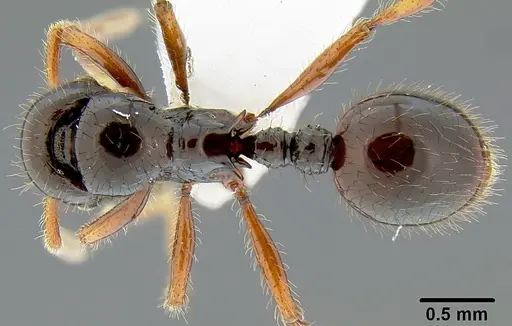
CASENT0171014
View on AntWeb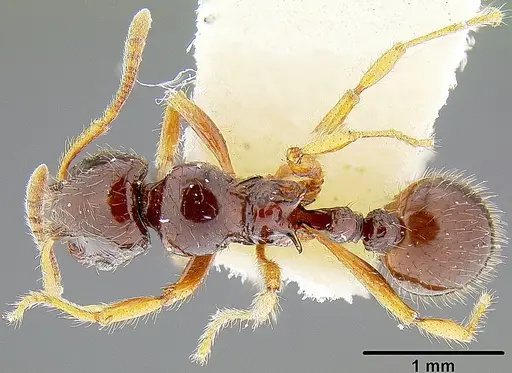
Literature
Loading distribution map...Loading products...