
Lordomyrma rugosa
- Sci. Name
- Lordomyrma rugosa
- Tribe
- Crematogastrini
- Subfamily
- Myrmicinae
- Author
- Mann, 1921
- Distribution
- Found in 1 countries
Introduction
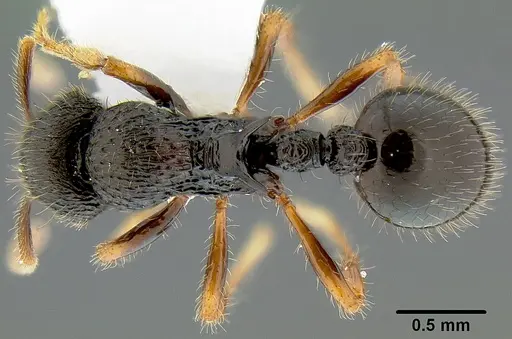
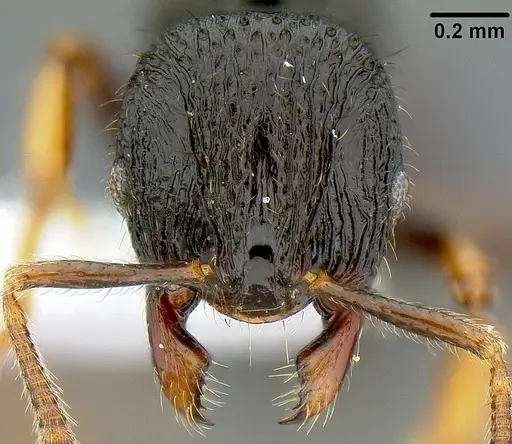
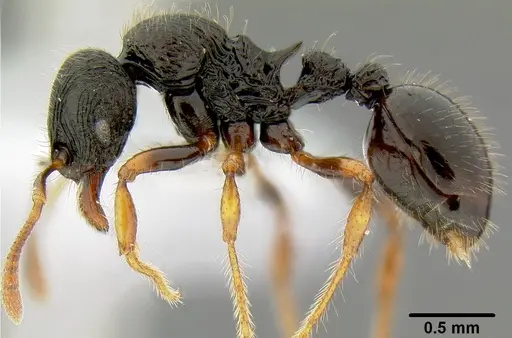
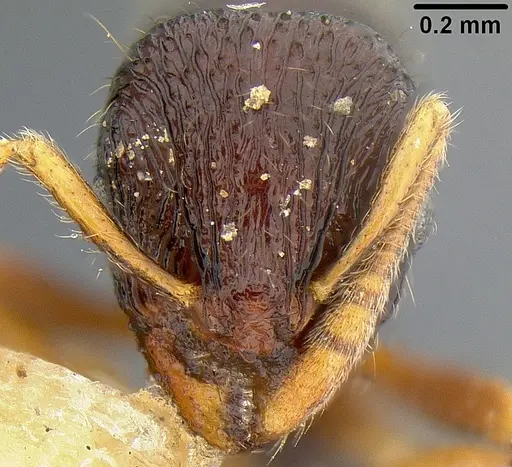
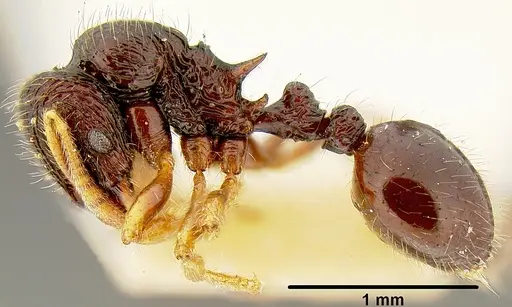
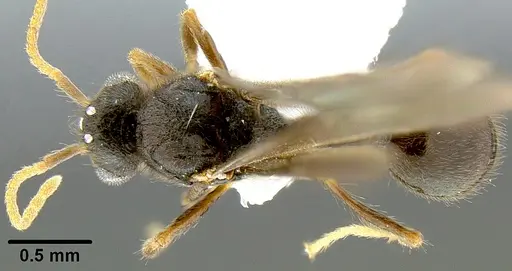
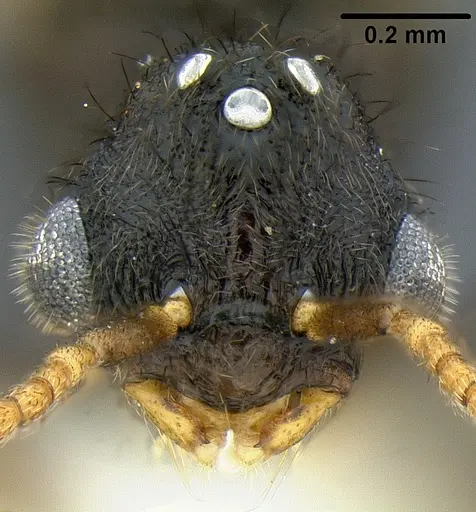
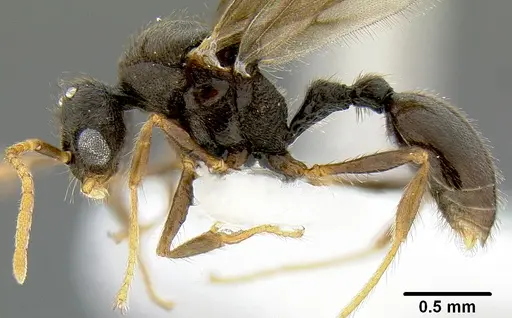
Lordomyrma rugosa is a medium-sized ant endemic to Fiji, found only in the Nadarivatu and Mount Tomaniivi area on Viti Levu . Workers measure 3.36–3.77 mm and are dark reddish brown with a heavily sculptured face and mesosoma. They have long, upturned propodeal spines and small eyes . This is the only Fijian Lordomyrma with strong striations on its mandibles and forelegs . Colonies are small – one nest contained 66 workers and 4 males – and live beneath stones or in clay soil with a tiny 1 mm entrance . Workers move slowly, making them calm and easy to watch in captivity.
Quick Summary
- Difficulty: Medium
- Origin & Habitat: Endemic to Fiji – found only in the Nadarivatu and Mt. Tomaniivi area on Viti Levu island. They nest in small colonies beneath stones or directly in clay soil, often in bare ground with a 1 mm entrance hole [1][2][3].
- Colony Type: Likely monogyne (single queen) based on small colony sizes observed, but not confirmed [1][3].
- Size & Growth:
- Queen: Unconfirmed – no specific measurements documented in available literature [1].
- Worker: 3.36–3.77 mm (total length) [1][3].
- Colony: Small – up to roughly 66 workers in the wild, possibly up to 100 in captivity (estimated) [1][3].
- Growth: Unknown – likely moderate based on small colony sizes observed.
- Development: Unconfirmed – no development studies exist. Based on typical Myrmicinae patterns from similar tropical ants, estimate 6–10 weeks at optimal temperature. (Development timeline has not been directly studied. Estimates are based on genus-level patterns for related Crematogastrini.)
- Antkeeping:
- Temperature: 22–26 °C – inferred from tropical origin. Provide a gentle gradient so workers can choose their preferred temperature.
- Humidity: Keep the nest substrate consistently moist but not waterlogged. Since they nest in clay soil in a humid tropical environment, some drier areas nearby let the ants self-regulate (inferred from soil-nesting behavior in Fiji’s climate).
- Diapause: Unlikely – as a tropical Fijian species, they probably do not require true diapause. A slight temperature drop in winter may be beneficial but is not needed (inferred from tropical origin).
- Nesting: Soil-nesting species. In captivity they do well in test tubes with soil or a plaster nest with moisture. Their natural nests are in clay soil beneath stones or directly in ground with small entrances [1][3].
- Behavior: Workers are slow-moving and calm, making them excellent for observation. They are not aggressive and likely forage individually for small prey and honeydew. Their small size (under 4 mm) means you need good escape prevention – they can squeeze through tiny gaps. Use fine mesh barriers. As a myrmicine, they have a modified stinger used to smear venom rather than pierce, but given their size and calm nature, this is not a concern for keepers.
- Common Issues: small colony sizes make the colony vulnerable to stress and slow to develop., slow growth can tempt keepers to overfeed or disturb the nest too often., escape prevention is critical despite their slow movement – their 1 mm natural entrance shows how small gaps they can fit through., limited availability – an endemic Fiji species that may be hard to acquire., humidity control is vital – drying out can kill colonies faster than in more resilient species., mold can build up quickly in high humidity if prey is left uneaten, remove leftovers within 24–48 hours.
Natural History and Distribution
Lordomyrma rugosa is one of the most distinctive Lordomyrma in Fiji, with a heavy rugoreticulum (wrinkled texture) covering the face and mesosoma [2]. It is endemic to Fiji, known only from the Nadarivatu and Mt. Tomaniivi area on Viti Levu [1][2][4]. The species was first described by Mann in 1921 as Lordomyrma rugosa and later moved to Lordomyrma by Kugler in 1994 [5]. It is the only Fijian Lordomyrma with strong striations on both the mandibles and procoxae (forelegs) [1][2]. Colonies are small and live beneath stones or directly in clay soil, often with a 1 mm entrance hole flush with the ground [1][3]. Workers are slow-moving [1][3]. One excavated nest yielded 66 workers and 4 males [1], additional workers were spotted on stones elsewhere [1].
Housing and Nest Preferences
Wild Lordomyrma rugosa nests in clay soil beneath stones or in bare ground with a tiny 1 mm entrance hole [1][3][2]. In captivity, a naturalistic setup with a soil chamber works best – this matches their underground habits. Test tubes with a soil chamber or a plaster nest with good moisture retention are good options. The key is to keep the substrate consistently moist without waterlogging. Since they nest under stones in humid conditions, do not let the nest dry out. A small water reservoir connected to the nest area helps maintain humidity. These ants are not aggressive climbers, but their small size means you still need fine mesh or oil barriers for escape prevention [1][3].
Feeding and Diet
No specific dietary studies exist for Lordomyrma rugosa, but Lordomyrma species are generally omnivorous, feeding on small insects, honeydew, and nectar. In captivity, offer a varied diet: small live prey (fruit flies, pinhead crickets, mealworms) and sugar sources (honey water, sugar water). Because foragers move slowly, place food near the nest entrance and be patient. Protein is important for brood development. Feed small amounts frequently rather than large items that may go uneaten. Remove leftovers after 24–48 hours to prevent mold.
Temperature and Seasonal Care
As a tropical species from Fiji, Lordomyrma rugosa prefers warm conditions. Keep the nest area at 22–26 °C with a gentle gradient so workers can choose their preferred temperature. Fiji has a warm, humid tropical climate year-round, so these ants do not require hibernation. A slight seasonal variation may be natural, but it is not required. Avoid temperatures below 18 °C or above 30 °C. A heating cable on one side of the nest can create the ideal gradient, but make sure it does not dry out the substrate too much. Watch condensation levels as a humidity indicator.
Behavior and Observation
The most appealing trait of Lordomyrma rugosa is their calm, slow-moving nature – they are described as slow-moving even in the wild [1][2][3]. They are not aggressive and likely forage alone rather than in groups. Their small colony size (typically under 100 workers) lets you watch the whole colony without it becoming overwhelming. The heavily sculptured body and long propodeal spines make them visually interesting. Watch for brood care, foraging, and nest maintenance – these slow ants give you time to observe each individual. As a myrmicine, they have a modified stinger that smears venom rather than stabbing, but it is harmless to humans.
Frequently Asked Questions
How long does it take for Lordomyrma rugosa to produce first workers?
The exact development timeline has not been documented for this species. Based on typical Myrmicinae patterns for tropical ants, expect roughly 6–10 weeks from egg to worker at optimal temperature (around 24 °C). Patience is key – wild colonies are naturally small and develop slowly.
What size colony does Lordomyrma rugosa reach?
Wild colonies are small, with documented nests containing around 66 workers [1]. In captivity, colonies likely reach roughly 100 workers before stabilizing. This is a small size compared to many common ant species.
Is Lordomyrma rugosa good for beginners?
This species is rated medium difficulty. Their slow, calm nature makes them interesting to watch, but their small colony size and need for steady humidity make them less forgiving than hardy species. They are also rare in the hobby due to their endemic status in Fiji.
Do Lordomyrma rugosa ants sting?
As a myrmicine, they have a stinger, but it is modified for smearing venom rather than piercing. Given their tiny size (under 4 mm) and calm nature, they are not considered dangerous to humans. Any sting would barely be noticeable.
What do Lordomyrma rugosa eat?
They are omnivorous. Offer small live prey (fruit flies, small crickets, mealworms) and sugar sources (honey water, sugar water). Protein is important for brood development. Feed small amounts several times per week rather than large meals.
Can I keep multiple queens together?
This has not been documented for this species. Given their small natural colony sizes and the likelihood of monogyne (single queen) colonies, keeping multiple unrelated queens together is not recommended. If you obtain a queen, house her alone for claustral founding.
Do Lordomyrma rugosa need hibernation?
As a tropical species from Fiji, they do not require true hibernation. A slight reduction in temperature during winter may be beneficial to simulate natural seasonal cycles, but it is not required. Keep them warm year-round at 22–26 °C.
When should I move Lordomyrma rugosa to a formicarium?
Keep them in a test tube setup with soil for the founding stage. Once the colony reaches 20–30 workers and is well established, you can move them to a naturalistic formicarium with soil chambers. They do well in setups that retain moisture well.
Why are my Lordomyrma rugosa dying?
Common causes include: drying out (the substrate must stay consistently moist), temperature stress (too cold below 18 °C or too hot above 30 °C), mold from overfeeding, and stress from disturbance during founding. Their small colony size makes them vulnerable – losing a few workers can significantly impact the colony.
Where is Lordomyrma rugosa found in the wild?
This species is endemic to Fiji, known only from the Nadarivatu and Mt. Tomaniivi area on Viti Levu island [1][2]. They live in small colonies beneath stones or in clay soil.
Report an Issue
The current care sheet is based fully on literature. See inconsistencies, or something that's incorrect? Please , it will be resolved after review from an admin. Contributing to the blogs tab also helps providing information, to make us be able to further improve the caresheets. Thank you for your support!
References

This caresheet is licensed under CC BY-SA 4.0 .
Community Blogs
Literature
Loading distribution map...Loading products...