
Lordomyrma reticulata
- Sci. Name
- Lordomyrma reticulata
- Tribe
- Crematogastrini
- Subfamily
- Myrmicinae
- Author
- Lucky & Sarnat, 2008
- Distribution
- Found in 2 countries
Introduction
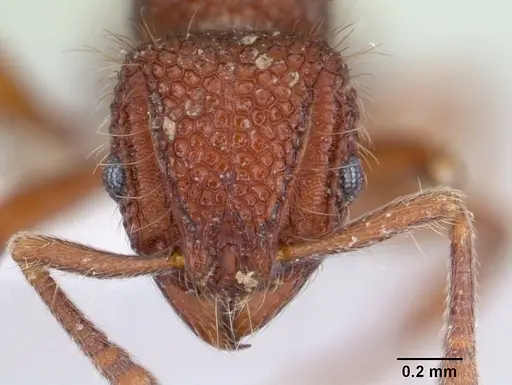
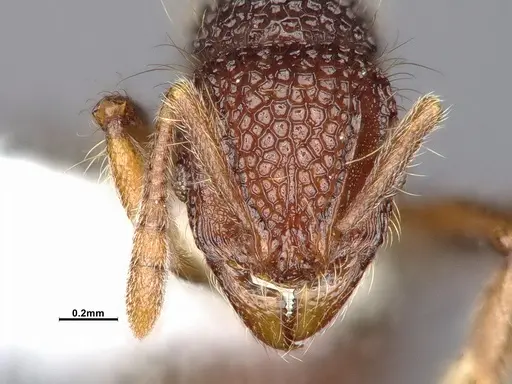
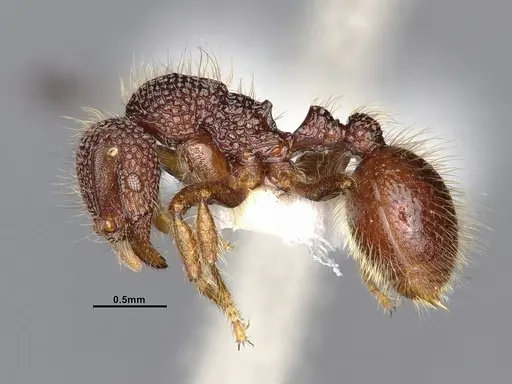
Lordomyrma reticulata is a tiny rainforest ant native to Borneo, Indonesia, and Malaysia in Southeast Asia. Workers measure 3.47-3.92mm in total length, making them one of the smaller ant species you'll encounter . They have a distinctive reddish-brown coloration with heavily sculptured bodies featuring a unique honeycomb-like pattern (rugoreticulum) covering their head and mesosoma - this distinctive sculpture is what gives them their species name 'reticulata', meaning net-like or reticulated . These ants live in the leaf litter layer of lowland dipterocarp rain forests, where they nest in the decaying organic matter on the forest floor . Their closest relative is the Japanese species Lordomyrma azumai, which shares similar heavy sculpturing .
Quick Summary
- Difficulty: Medium
- Origin & Habitat: Borneo, Indonesia, and Malaysia, specifically found in lowland dipterocarp rain forest leaf litter in Sabah, Malaysia (Danum Valley,5°01'N 117°49'E) [3][5]. This is a tropical rainforest environment with high humidity and stable warm temperatures year-round.
- Colony Type: Colony structure is unconfirmed. Based on typical Lordomyrma patterns, likely single-queen (monogyne) colonies, but no specific research documents this for this species.
- Size & Growth:
- Queen: Unknown, queen measurements have not been documented in scientific literature
- Worker: 3.47-3.92mm total length [1]
- Colony: Unknown, no colony size data is available for this species
- Growth: Unknown, no development timing data exists for this species
- Development: Unknown, no direct measurements exist for this species (Development timeline has not been studied for this species.)
- Antkeeping:
- Temperature: Keep warm, around 24-28°C. As a tropical rainforest species from Borneo, they need stable warm conditions.
- Humidity: High humidity required, think damp forest floor. Keep substrate consistently moist but not waterlogged. These leaf-litter ants need humid conditions to survive.
- Diapause: Unknown, no research on overwintering behavior exists for this species. As a tropical species from near the equator, they likely do not require a diapause period.
- Nesting: Natural nesting occurs in leaf litter and rotting wood debris on the forest floor [3]. In captivity, a naturalistic setup with moist substrate or a well-humidified Y-tong nest works best. They need tight chambers scaled to their tiny size and should not be kept in test tubes long-term due to their small size and humidity needs.
- Behavior: These are tiny, docile ants that live in leaf litter. They are not aggressive and unlikely to sting, their small size means any sting would be negligible to humans. They are likely nocturnal or crepuscular foragers based on their small eyes and rainforest leaf-litter lifestyle. Escape prevention is critical, their tiny size means they can squeeze through standard barrier setups. Use fine mesh and tight-fitting lids.
- Common Issues: escape prevention is critical, they are very small and can slip through tiny gaps, humidity management is challenging, they need high humidity but mold can become a problem, slow growth and small colony size may frustrate keepers expecting rapid development, no established feeding guidelines, their exact diet preferences are unknown, wild-caught colonies may contain parasites that can devastate captive colonies
Appearance and Identification
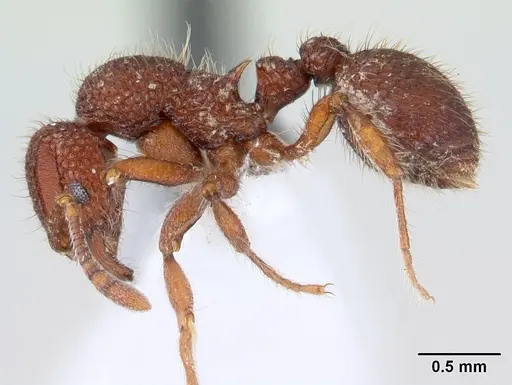
Lordomyrma reticulata is a small but striking ant. Workers measure 3.47-3.92mm total length with a reddish-brown body and slightly paler appendages [1][6]. The most distinctive feature is their heavy sculpturing, the head and mesosoma are covered in a raised, closely-packed rugoreticulum (honeycomb-like pattern) that gives them a textured appearance [7]. This sculpture becomes shallower on the gaster (abdomen) but is still visible [8]. They have pale yellow standing hairs (pilosity) scattered across most of their body [9]. Their eyes are small and hairless, longer than wide [10]. The propodeal spines are strong and triangular, slightly downcurved . The petiole (the narrow 'waist' segment) is taller than long with a thick peduncle [11]. These ants are most similar in appearance to the Japanese species Lordomyrma azumai, but can be distinguished by their shorter petiolar peduncle [12].
Natural Habitat and Distribution
This species is known from Borneo, Indonesia, and Malaysia in the Indomalaya region [5]. The type specimens were collected from leaf litter samples in lowland dipterocarp rain forest in Sabah, Malaysia (Danum Valley,5°01'N 117°49'E) [3]. This is a tropical rainforest environment with high year-round humidity and warm temperatures. They were found using Mini-Winkler extractors, which means they live deep within the leaf litter layer rather than on the surface . The Danum Valley area is a conservation area in logged forest, showing these ants can persist in disturbed habitats, though they prefer intact rainforest conditions. The elevation is lowland (near sea level to a few hundred meters), which explains their need for warm, humid conditions.
Nest Preferences and Housing
In the wild, Lordomyrma reticulata lives in the leaf litter layer of rainforests, nesting among decaying organic matter and rotting wood debris [3]. They are not ground-nesting in the traditional sense, they live within the moist debris on the forest floor where humidity remains constantly high. For captive care, this means they need a setup that recreates these conditions. A naturalistic terrarium-style setup with several centimeters of moist substrate (a mix of soil, leaf litter, and small rotting wood pieces) works well. Alternatively, a Y-tong nest with very small chambers and excellent humidity retention can work, but you'll need to ensure the chambers are appropriately sized for their tiny 3-4mm bodies. Test tubes are generally not suitable for long-term housing due to their small size and high humidity requirements. The nest should have a moisture reservoir or be regularly misted to maintain the damp conditions they need.
Feeding and Diet
The exact diet of Lordomyrma reticulata has not been documented in scientific literature. As a small leaf-litter Myrmicinae ant, they likely forage for small prey and tend honeydew-producing insects. Based on related genera, they probably accept small live prey like springtails, fruit flies, and other tiny arthropods. They may also accept sugar sources, though this is unconfirmed. Given their tiny size, any prey items offered must be very small. Start with small live prey and observe acceptance. Do not overfeed, small colonies can be overwhelmed by large prey items. Sugar water or honey can be offered occasionally, but don't rely on it as a primary food source until acceptance is confirmed.
Temperature and Humidity Requirements
As a tropical rainforest species from Borneo, Lordomyrma reticulata needs warm and humid conditions. Aim for temperatures in the range of 24-28°C, stable warmth is more important than exact numbers. A heating cable on one side of the nest can create a gentle gradient, but ensure the main nest area stays warm. Humidity is critical, these ants live in the constantly moist leaf litter layer of rainforests. The substrate should feel damp to the touch, with condensation occasionally visible on the nest walls. However, avoid waterlogging, which can lead to mold and drown the colony. A well-sealed naturalistic setup or Y-tong nest with a water reservoir works best. Poor ventilation leads to mold, but excessive airflow dries them out, aim for balance.
Behavior and Temperament
Based on their morphology and habitat, these are docile, non-aggressive ants. Their small size and placement in the leaf litter suggest they are shy foragers, likely active during cooler parts of the day or at night. They probably nest in small colonies and are not known for aggressive defense. The likelihood of stinging humans is extremely low, their small size and docile nature make them harmless to keepers. However, their tiny size creates a significant escape risk. They can squeeze through gaps that seem impossible, so use fine mesh on all openings and consider barrier methods like fluon on test tube rims. They are not escape artists in the sense of being clever, but simply small enough to go where most ants cannot.
Frequently Asked Questions
How long does it take for Lordomyrma reticulata to produce first workers?
The egg-to-worker timeline is unknown, no research has documented development timing for this species. Be patient, small colonies in leaf-litter species often develop slowly.
Can I keep Lordomyrma reticulata in a test tube?
Test tubes are not ideal for this species long-term. Their tiny size and high humidity needs make them better suited to naturalistic setups with moist substrate or well-humidified Y-tong nests. If you must use test tubes temporarily, use very small diameter tubes and ensure excellent escape prevention.
What do Lordomyrma reticulata ants eat?
Their exact diet is unconfirmed. Based on related leaf-litter Myrmicinae, they likely accept small live prey (springtails, fruit flies, tiny mealworm pieces) and may occasionally take sugar sources. Start with small live prey and observe acceptance. Do not overfeed.
Do Lordomyrma reticulata ants sting?
They are extremely unlikely to sting humans. Their small size means any sting would be negligible, and they are docile by nature. They are not considered dangerous to keepers.
Are Lordomyrma reticulata good for beginners?
This species is rated Medium difficulty. While not aggressive, they have specific humidity requirements and their tiny size makes escape prevention challenging. They are also poorly studied, so established care guidelines are limited. Beginners may struggle with their humidity needs and slow growth.
How big do Lordomyrma reticulata colonies get?
Colony size is unknown, no research documents maximum colony sizes for this species. Do not expect large colonies.
Do Lordomyrma reticulata need hibernation?
Diapause requirements are unconfirmed. As a tropical species from near the equator (Borneo), they likely do not need a winter rest period. However, slightly cooler temperatures during what would be the dry season may be beneficial. Do not hibernate this species unless you have specific evidence they need it.
When should I move Lordomyrma reticulata to a formicarium?
Move them when the colony reaches a moderate size and you can maintain proper humidity in a formicarium. A naturalistic setup with moist substrate is recommended over traditional formicariums. Ensure the chambers are appropriately sized for their tiny 3-4mm workers.
Why are my Lordomyrma reticulata dying?
Common causes include: incorrect humidity (too dry or too wet/moldy), temperature stress (too cold), escape/collection loss due to their tiny size, parasites from wild-caught colonies, or poor feeding. Review humidity levels, ensure warmth, check for escape routes, and verify they are accepting offered food.
Can I keep multiple Lordomyrma reticulata queens together?
Combining unrelated queens has not been documented for this species. Based on typical Myrmicinae patterns, they likely form single-queen colonies. Do not attempt to combine foundress queens unless you have specific evidence they will accept each other.
Report an Issue
The current care sheet is based fully on literature. See inconsistencies, or something that's incorrect? Please , it will be resolved after review from an admin. Contributing to the blogs tab also helps providing information, to make us be able to further improve the caresheets. Thank you for your support!
References

This caresheet is licensed under CC BY-SA 4.0 .
Community Blogs
CASENT0012197
View on AntWeb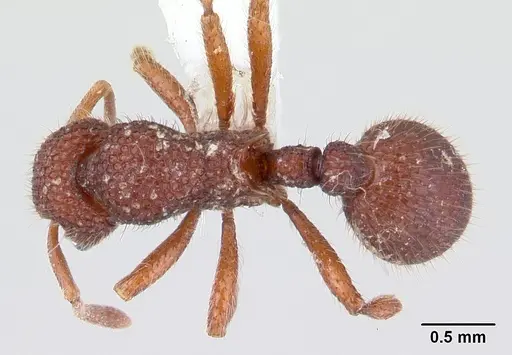
CASENT4032446
View on AntWeb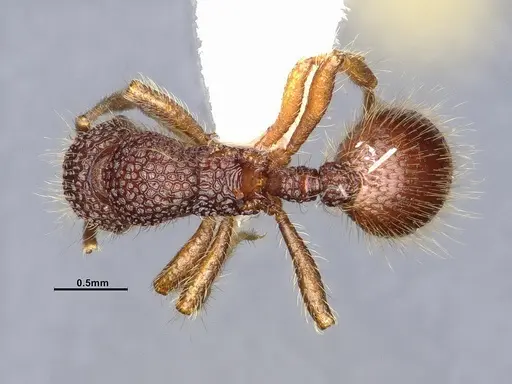
Literature
Loading distribution map...Loading products...