
Lordomyrma leae
- Sci. Name
- Lordomyrma leae
- Tribe
- Crematogastrini
- Subfamily
- Myrmicinae
- Author
- Wheeler, 1919
- Distribution
- Found in 1 countries
Introduction
Lordomyrma leae is a small ant species endemic to Lord Howe Island, a remote volcanic island in the Tasman Sea off the coast of New South Wales, Australia. Workers measure 3.4-3.6mm and have a distinctive appearance with relatively short propodeal spines but notably long metasternal spines. Their body is dark piceous brown with reddish-brown accents on the mandibles, clypeus, legs, and gaster tips. The head shows longitudinal rugae that become coarsely reticulate on the occipital region, while the thorax has irregular transverse rugae. The gaster is smoother and more shining. This species was first recorded in 1915 and was formally described by Wheeler in 1919 . The genus Lordomyrma belongs to the subfamily Myrmicinae and tribe Crematogastrini. These ants likely inhabit forest environments on Lord Howe Island, preferring damp, shaded microhabitats. The genus is not well-studied in captivity, and specific care requirements for L. leae remain poorly documented in scientific literature.
Quick Summary
- Difficulty: Medium
- Origin & Habitat: Lord Howe Island, Australia, endemic to this isolated volcanic island in the Tasman Sea. The island has a subtropical climate with mild temperatures year-round [1][2].
- Colony Type: Colony structure is unconfirmed. The exact queen number and colony size in wild populations has not been documented.
- Size & Growth:
- Queen: Size data unavailable, queen measurements have not been described in available literature
- Worker: 3.4-3.6mm [3]
- Colony: Unknown, no documented colony sizes in scientific literature
- Growth: Unknown
- Development: Unconfirmed, no specific development data available for this species (Development timeline has not been directly studied for Lordomyrma leae.)
- Antkeeping:
- Temperature: Keep around 22-26°C as a starting point. Lord Howe Island has a subtropical climate with mild temperatures year-round, so avoid extremes [4].
- Humidity: Require moderate to high humidity, think damp forest floor conditions. Keep the nest substrate consistently moist but not waterlogged, with some drier areas available for the ants to regulate their own moisture exposure [4].
- Diapause: Unknown for this species. Lord Howe Island has mild winters, so a true diapause may not be required. Consider a brief cool period during winter months rather than a full hibernation [4].
- Nesting: In nature they likely nest in rotting wood, under stones, or in leaf litter. In captivity, a Y-tong (AAC) nest or plaster nest with good moisture retention works well. Provide a small outworld and narrow chambers scaled to their 3-4mm size [4].
- Behavior: These ants are generally docile and non-aggressive. Workers are small and likely forage primarily in the nest vicinity. They probably feed on small insects, honeydew, and nectar like other Lordomyrma species. Their small size means escape prevention is important, use fine mesh and tight-fitting barriers. They are not known to be particularly aggressive or to sting. As a member of the Crematogastrini tribe, they possess a modified stinger used for smearing venom rather than piercing, though this is not a significant concern for keepers [4].
- Common Issues: very limited scientific data means care requirements are estimates, monitor your colony closely and adjust conditions based on their behavior, escape prevention is important due to their small size, use fine mesh barriers and check for gaps, humidity management is critical, too dry and brood will fail, too wet and mold becomes a problem, slow growth is typical for this genus, do not overfeed or disturb the colony frequently, wild-caught colonies may have parasites or disease that can cause colony failure in captivity
Origin and Distribution
Lordomyrma leae is endemic to Lord Howe Island, making it a truly special species for antkeepers. This small volcanic island lies in the Tasman Sea about 600km off the coast of New South Wales, Australia. The species was first recorded in 1915 and was formally described by William Morton Wheeler in 1919 based on specimens collected by A.M. Lea [1].
Lord Howe Island has a unique subtropical climate with mild temperatures year-round. The island is relatively small and features diverse habitats from beaches to subtropical forests. As an endemic species, L. leae is found nowhere else in the world, making any captive colonies particularly valuable for conservation of this species' genetics [2].
The limited distribution means wild populations are small and potentially vulnerable. If you obtain stock, it likely comes from established cultures rather than wild collection, which is better for both conservation and colony health.
Identification and Appearance
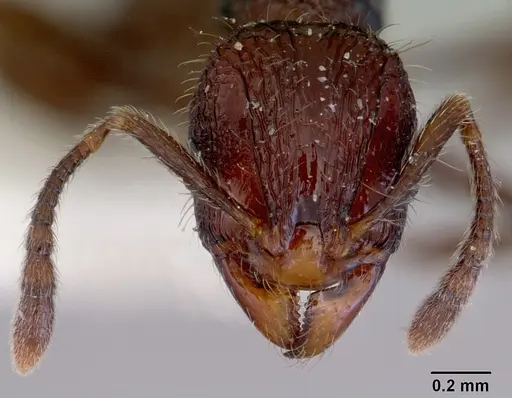
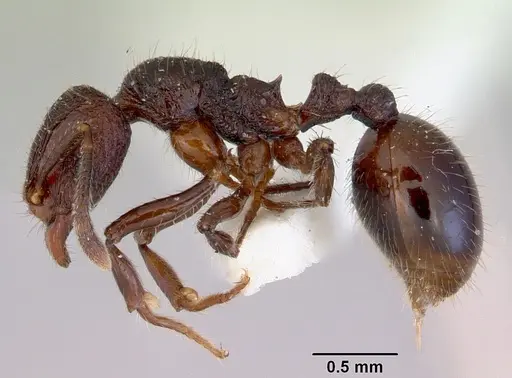
Workers of Lordomyrma leae measure 3.4-3.6mm, making them a small ant species. They have a distinctive appearance with relatively short propodeal spines on the rear of their thorax, but notably long metasternal spines underneath. The head is longer than broad with rounded sides and small, elongate, flat eyes positioned toward the front [3].
The body coloration is dark piceous brown, nearly black on the thorax, petiole, and postpetiole. Lighter reddish-brown areas appear on the mandibles, clypeus, cheeks, the base and tip of the gaster, and the legs including the coxae. The first funiculus joints and the antennal club are also reddish-brown [3].
Sculpturing is a key identification feature: the head shows longitudinal rugae that become coarsely reticulate on the back of the head. The thorax, petiole, and postpetiole have irregular transverse rugae. In contrast, the gaster is smoother and more shining, without the coarse punctures seen in some related species. Body hairs are moderately long, abundant, yellowish, and bristly, standing erect or semi-erect across most of the body [3].
Males are slightly smaller at 3mm and have distinct morphology including an unarmed epinotum and notably pubescent wings [3].
Nest Preferences and Housing
In their natural habitat on Lord Howe Island, Lordomyrma leae likely nests in damp forest microhabitats. Based on typical Lordomyrma genus behavior, they probably prefer rotting wood, hollow stems, or spaces under stones and logs. The island's humid, subtropical environment supports these moisture-loving ants [4].
For captive housing, a Y-tong (AAC) nest or plaster formicarium works well because these materials hold moisture effectively. Keep the nest substrate consistently moist but not waterlogged, the ants should be able to move between damp and slightly drier areas within the nest. A small test tube setup can work for founding colonies, but expect to move them to a more substantial nest as the colony grows.
Chamber size should be scaled to their worker size, narrow passages and small chambers help them feel secure. Provide a small outworld for foraging. Because of their small size, use fine mesh for any barriers and check regularly for escape routes. Good ventilation is important to prevent mold while maintaining humidity.
Feeding and Diet
Like other Lordomyrma species, Lordomyrma leae is likely omnivorous with a preference for small invertebrates and sugar sources. In captivity, offer a varied diet including small live prey like fruit flies, pinhead crickets, or mealworm pieces. They probably also accept sugar water, honey, or diluted honeydew.
Feed protein prey items once or twice per week, removing any uneaten prey after 24-48 hours. Keep a constant source of sugar water available. Because of their small size, prey items should be appropriately sized, nothing larger than their head width.
Observing foraging behavior will help you refine their diet. If workers ignore certain foods, try alternatives. The limited natural history data means some experimentation may be needed to determine their exact preferences. [4]
Temperature and Seasonal Care
Lord Howe Island has a mild subtropical climate with temperatures rarely dropping below 10°C or exceeding 30°C. For captive care, aim for a stable temperature in the low-to-mid 20s Celsius, roughly 22-26°C seems appropriate as a starting point. Avoid temperatures above 30°C or below 15°C for extended periods.
A heating cable on one side of the nest can create a gentle temperature gradient, allowing the ants to regulate their own exposure. Place the heating element on top of the nest, not underneath, to prevent excessive drying.
Regarding winter dormancy: the species likely does not require a true hibernation given Lord Howe Island's mild winters. However, a brief cool period during winter months (reducing to 15-18°C for 2-3 months) may be beneficial and more closely mimics natural seasonal cycles. Monitor colony activity, if they remain active and brood continues developing, they may not need a cool period. [4]
Behavior and Temperament
Lordomyrma leae is likely a docile, non-aggressive species typical of the genus. Workers probably forage relatively short distances from the nest, focusing on the immediate surroundings. They are not known to be particularly aggressive or to have a painful sting, their small size means any sting would be negligible to humans.
The colony is probably relatively calm, with workers going about their tasks without excessive alarm responses. This makes them suitable for observation but perhaps less exciting than some more active species. They likely exhibit typical Myrmicinae behaviors including trophallaxis (food sharing), brood care, and cooperative foraging.
Their small size does mean escape prevention is important. Even though they are not particularly good climbers, they can squeeze through remarkably small gaps. Use fluon barriers, tight-fitting lids, and check for any cracks or gaps in your setup. [4]
Frequently Asked Questions
How long does it take for Lordomyrma leae to produce first workers?
The exact timeline is unconfirmed. Development time has not been directly studied for this species. Expect several months from egg to worker at optimal temperature, and do not be alarmed if development takes longer than expected.
What size colony does Lordomyrma leae reach?
Colony size is not documented in scientific literature. There is no data on maximum colony size for this species.
Do Lordomyrma leae ants sting?
They are not known to be aggressive or to have a painful sting. Their small size means any sting would be negligible to humans. They are considered docile and suitable for observation-focused keepers.
Can I keep multiple queens together?
This has not been documented for this species. There is no evidence they accept co-founding. Start with a single queen colony.
What nest type is best for Lordomyrma leae?
A Y-tong (AAC) nest or plaster formicarium works well because these hold moisture effectively. Keep the nest substrate consistently moist. Scale chambers to their worker size with narrow passages.
Do Lordomyrma leae need hibernation?
A true hibernation is likely not required given Lord Howe Island's mild climate. A brief cool period during winter may be beneficial but is probably optional. Monitor your colony's activity level.
Are Lordomyrma leae good for beginners?
They are considered medium difficulty due to their humidity requirements and the limited scientific data available for fine-tuning care. They are docile and interesting, but successful keeping requires attention to moisture levels and patience.
What do Lordomyrma leae eat?
They are likely omnivorous. Offer small live prey as protein and keep sugar water or honey available constantly. Adjust based on what your colony accepts.
Why are my Lordomyrma leae dying?
Common issues include: too dry conditions, mold from excessive humidity without ventilation, temperature extremes, stress from frequent disturbance, or parasites from wild-caught colonies. Review each factor and adjust accordingly.
When should I move Lordomyrma leae to a formicarium?
Move them when the test tube setup becomes crowded or the water reservoir is depleted. For a founding colony, wait until you have at least 10-20 workers and they seem to need more space.
Report an Issue
The current care sheet is based fully on literature. See inconsistencies, or something that's incorrect? Please , it will be resolved after review from an admin. Contributing to the blogs tab also helps providing information, to make us be able to further improve the caresheets. Thank you for your support!
References

This caresheet is licensed under CC BY-SA 4.0 .
Community Blogs
CASENT0172480
View on AntWeb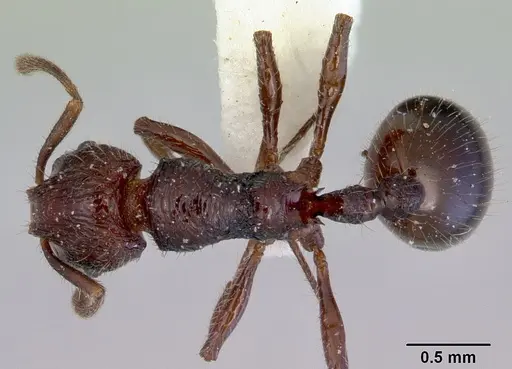
Literature
Loading distribution map...Loading products...