
Lioponera foreli
- Sci. Name
- Lioponera foreli
- Subfamily
- Dorylinae
- Author
- Santschi, 1914
- Distribution
- Found in 3 countries
Introduction
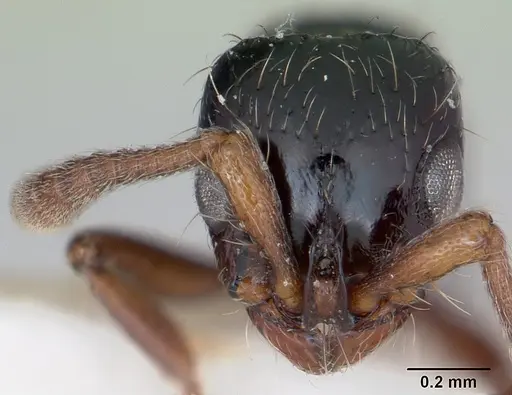
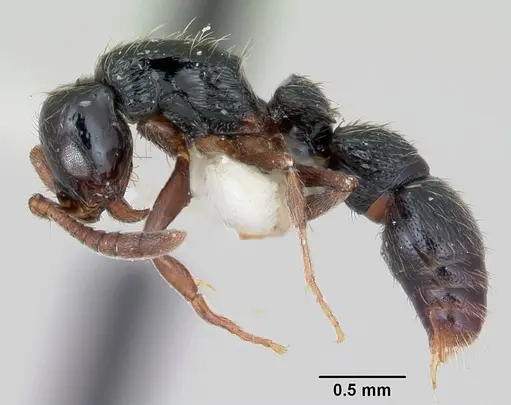
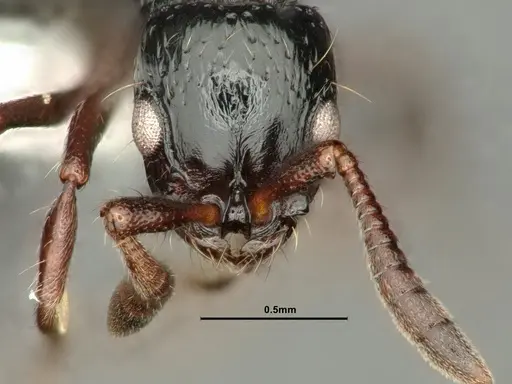
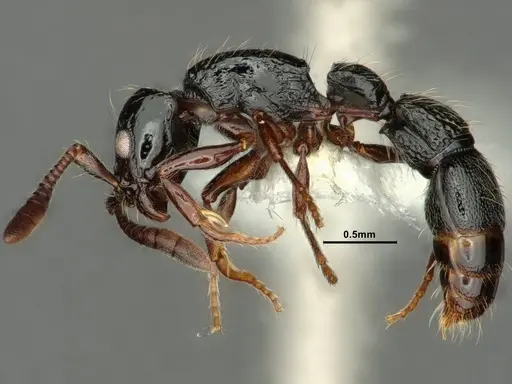
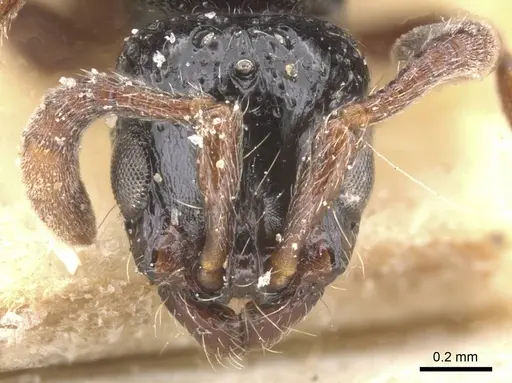
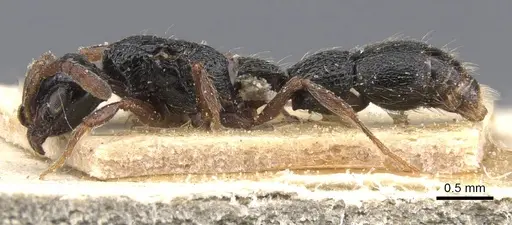
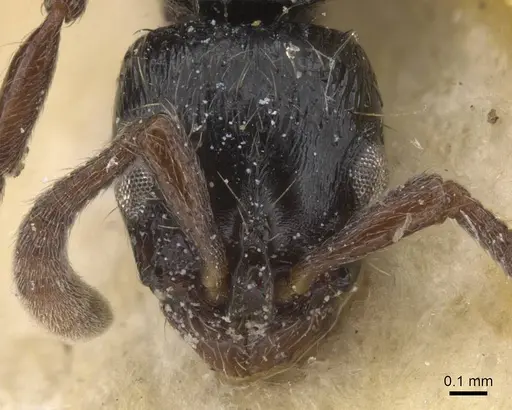
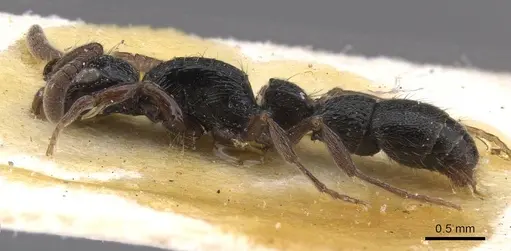
Lioponera foreli is a small predatory ant native to the rainforests of West and Central Africa. Workers are dark brown to black and belong to the Dorylinae subfamily (army ant relatives). This species belongs to the longitarsus group, characterized by a distinct lateral margination on the petiole. The species has been recorded across multiple countries including Ghana, Ivory Coast, Cameroon, Democratic Republic of Congo, Gabon, Guinea, Kenya, and Nigeria . What makes this species interesting is its arboreal nesting habit. Unlike typical ground-nesting army ants, Lioponera foreli nests in hollow twigs, beetle burrows, and other channels found in wood, branches, or bark. Researchers have observed workers climbing tree trunks in single file through savanna and forest edge habitats in Ivory Coast, suggesting a semi-arboreal lifestyle .
Quick Summary
- Difficulty: Medium
- Origin & Habitat: West and Central African tropical rainforests. Found in Ghana, Ivory Coast, Cameroon, Democratic Republic of Congo, Gabon, Guinea, Kenya, and Nigeria at elevations ranging from sea level to 1150m. The species prefers forest habitats and has been collected from leaf litter, hollow twigs in trees, and climbing on tree trunks [4][2][3].
- Colony Type: Colony structure is not well documented. Based on related Dorylinae species, likely single-queen colonies (monogyne), though this requires confirmation.
- Size & Growth:
- Queen: size data unavailable
- Worker: size data unavailable
- Colony: Likely small based on nesting in hollow twigs
- Growth: Moderate, estimated based on related predatory dorylines
- Development: Estimated 6-10 weeks at optimal temperature based on related Dorylinae species (Development time is estimated from genus-level data since species-specific studies are lacking. Tropical species typically develop faster than temperate species.)
- Antkeeping:
- Temperature: Keep at 24-28°C. As a tropical forest species, they need warm, stable temperatures. A heating cable on one side of the nest can create a gentle gradient [1].
- Humidity: High humidity required, aim for 70-80%. These forest ants need consistently moist substrate conditions. Keep the nest substrate damp but not waterlogged, with some slightly drier areas available for the ants to regulate their own humidity [2][3].
- Diapause: No, as a tropical species, they do not require hibernation. Maintain warm conditions year-round.
- Nesting: Arboreal specialists. In captivity, provide a nest that mimics their natural hollow twig habitat. Y-tong (AAC) nests or plaster nests with narrow chambers work well. The key is providing tight, enclosed spaces scaled to their small size. Avoid large open areas, these ants prefer confined spaces [2][3].
- Behavior: Workers are predatory, hunting small invertebrates. They forage in single file along tree trunks and through leaf litter. Compared to typical army ants, they are less aggressive and form smaller colonies. They have a defensive bite but are not considered dangerous to humans. Escape risk is moderate due to their small size, use standard barrier methods. Activity level is moderate, they are not constantly on the move like some dorylines.
- Common Issues: small colony size makes them vulnerable to stress, handle minimally, arboreal nesting means they need vertical space and climbing structures, predatory diet requires live prey, colony may fail without adequate protein, high humidity needs can lead to mold if ventilation is poor, tropical species will not tolerate cool temperatures
Nest Preferences and Housing
Lioponera foreli is an arboreal or subarboreal species that naturally nests in hollow twigs, beetle burrows, and other channels within wood, branches, or bark. In captivity, you should replicate these conditions. Y-tong (AAC) nests work well because they provide the dark, enclosed chambers these ants prefer. Plaster nests can also work if you create narrow tunnels and chambers scaled to their small worker size. Avoid large, open formicaria, these ants feel safest in tight spaces.
Include some vertical elements or climbing structures in the outworld to allow natural arboreal behavior. A small piece of cork bark or wooden branch gives them opportunities to climb and forage as they would in the wild. Keep the nest area dark and quiet, as disturbance can stress small colonies. [2][3][1]
Feeding and Diet
As a Dorylinae ant, Lioponera foreli is predatory. In the wild, they hunt small invertebrates including springtails, mites, and other micro-arthropods found in leaf litter and on tree bark. In captivity, their primary food should be live small prey such as springtails, fruit flies, and tiny crickets. Offer protein-rich foods 2-3 times per week.
Acceptance of sugar sources is uncertain, some Dorylinae will take honey or sugar water occasionally, but they are primarily protein-focused predators. Do not rely on sugar water as a primary food source. Always ensure any prey items are appropriately sized for their small workers. Uneaten prey should be removed within 24-48 hours to prevent mold. [1]
Temperature and Seasonal Care
Maintain warm temperatures year-round. These tropical forest ants thrive at 24-28°C with minimal temperature fluctuations. Room temperature within this range is acceptable, but you may need a heating cable during cooler months. Place any heating on top of the nest, not underneath, to avoid drying out the substrate.
Unlike temperate species, Lioponera foreli does not require hibernation or diapause. Keep conditions stable throughout the year. Cool temperatures below 20°C can stress the colony and slow or stop brood development. Monitor for signs of chilling if your room temperature drops at night. [4][1]
Behavior and Colony Dynamics
Workers forage in sparse single file, a behavior documented in the wild when researchers observed them climbing tree trunks in Ivory Coast. This is different from the massive swarm raids of typical army ants, instead, they are more cryptic, hunting individually or in small groups through their territory.
Colony size is likely small, probably under a few hundred workers based on their twig-nesting habit. This makes them less dramatic than some Dorylinae but also easier to house in compact setups. Workers have a mild bite for defense but pose no danger to humans. The founding behavior has not been directly documented for this species. [2][3]
Frequently Asked Questions
How long does it take for Lioponera foreli to produce first workers?
Based on related Dorylinae species, expect 6-10 weeks from egg to first worker at optimal temperature (24-28°C). This is an estimate since species-specific development data is not available.
Can I keep Lioponera foreli in a test tube setup?
Yes, a test tube setup can work for founding colonies. Ensure the tube provides a dark, enclosed space and maintain high humidity by keeping the water chamber filled. However, their arboreal nature means they may do better in a Y-tong or plaster nest once the colony grows.
What do Lioponera foreli ants eat?
They are predatory ants that need live small invertebrates. Feed live springtails, fruit flies, or tiny crickets 2-3 times per week. Sugar water may be accepted occasionally but should not be the primary food source.
Are Lioponera foreli good for beginners?
This species is rated as medium difficulty. While not the most challenging ant, their specific arboreal nesting requirements, need for live prey, and high humidity needs make them better suited for keepers with some experience.
How big do Lioponera foreli colonies get?
Based on their nesting in hollow twigs, colonies are likely small, probably under a few hundred workers. This is smaller than many common pet ants.
Do Lioponera foreli need hibernation?
No, they are a tropical species and do not require hibernation. Keep them warm year-round at 24-28°C.
When should I move my colony to a formicarium?
Move to a formicarium when the test tube becomes crowded or the colony reaches 20-30 workers. Their preference for enclosed spaces means a Y-tong or plaster nest with narrow chambers is ideal.
Why are my Lioponera foreli dying?
Common causes include: temperatures below 20°C, low humidity causing desiccation, lack of adequate live prey, mold from poor ventilation, or stress from excessive disturbance. Check these parameters first.
Can I keep multiple Lioponera foreli queens together?
Colony structure is not well documented for this species. Based on related Dorylinae, they are likely single-queen colonies. Combining unrelated queens is not recommended without documented evidence of success.
Report an Issue
The current care sheet is based fully on literature. See inconsistencies, or something that's incorrect? Please , it will be resolved after review from an admin. Contributing to the blogs tab also helps providing information, to make us be able to further improve the caresheets. Thank you for your support!
References

This caresheet is licensed under CC BY-SA 4.0 .
Community Blogs
CASENT0005962
View on AntWeb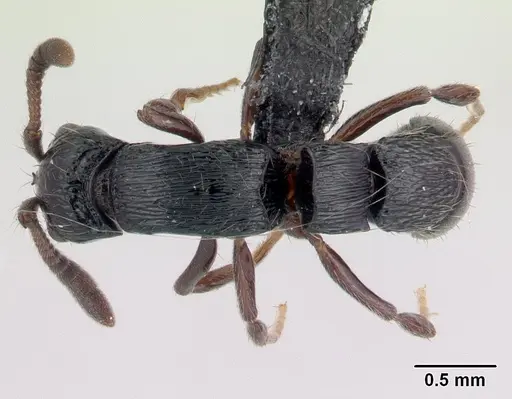
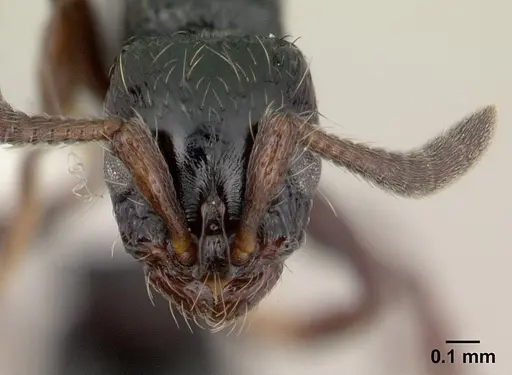
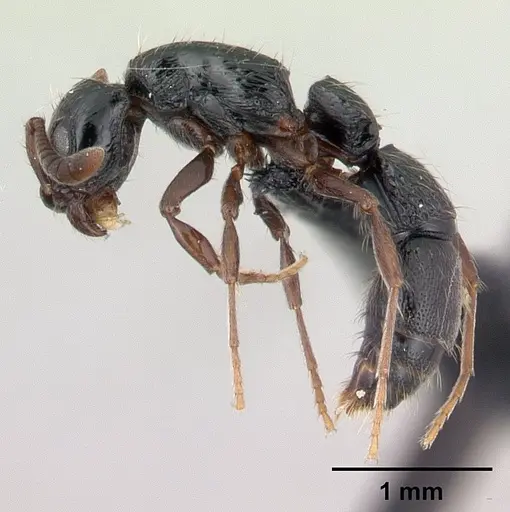
CASENT0173075
View on AntWeb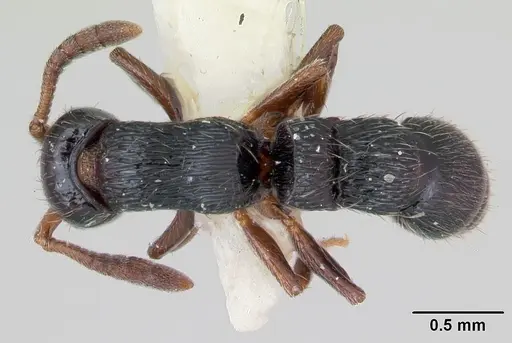
CASENT0883442
View on AntWeb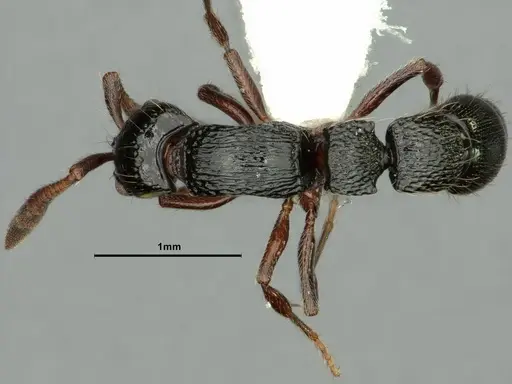
CASENT0911258
View on AntWeb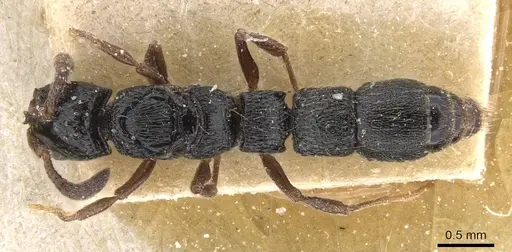
CASENT0915487
View on AntWeb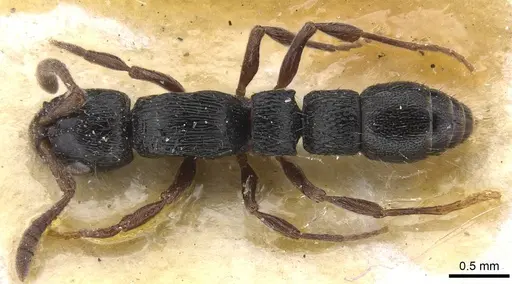
Literature
Loading distribution map...Loading products...