
Linepithema gallardoi
- Sci. Name
- Linepithema gallardoi
- Tribe
- Leptomyrmecini
- Subfamily
- Dolichoderinae
- Author
- Brèthes, 1914
- Distribution
- Found in 6 countries
Introduction
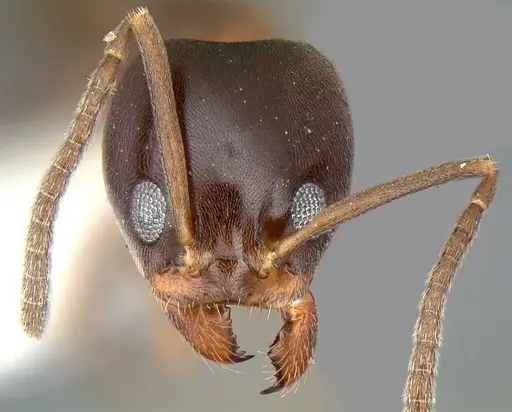
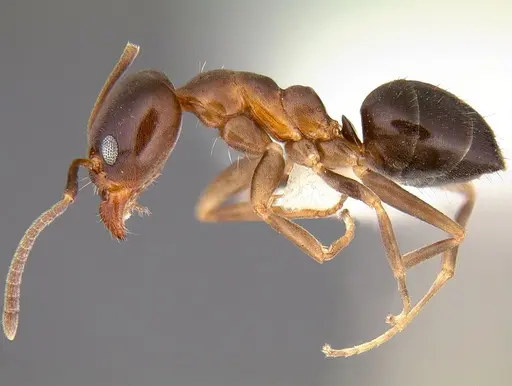
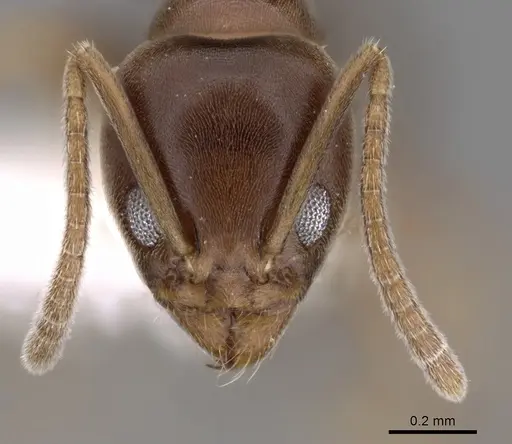
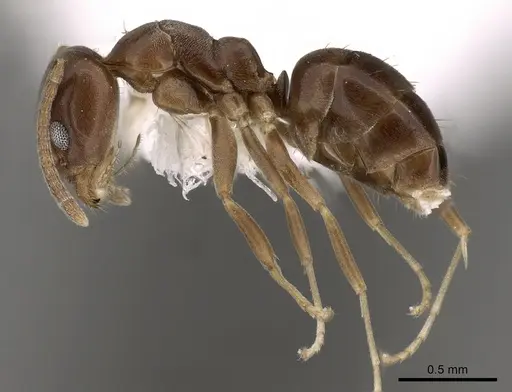
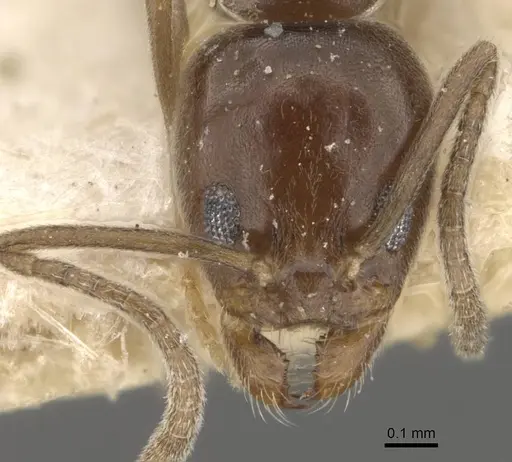
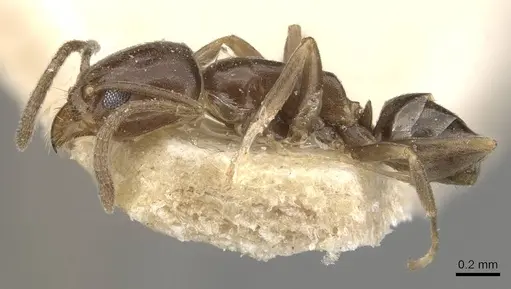
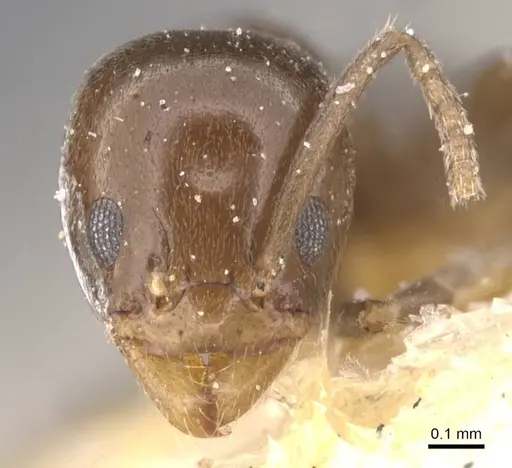
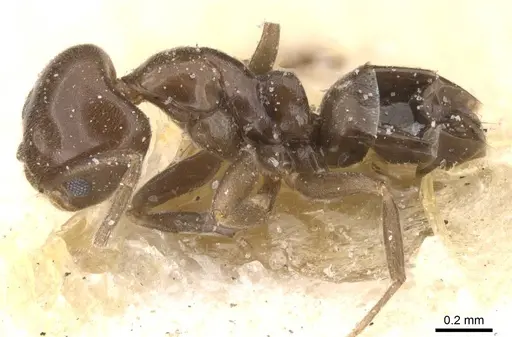
Linepithema gallardoi is a small ant species native to South America, found across a vast range from Venezuela and Colombia south to Argentina and southeastern Brazil, from sea level to nearly 3000m elevation . Workers are tiny at approximately 2-3mm with a relatively robust mesosoma (middle body section), short antennal scapes, and a distinctive angular profile where the mesonotum meets the declivitous face . The species shows considerable variation in color (from light reddish-brown to nearly black) and pubescence density across different populations, though local populations tend to be consistent . Colonies are polydomous, meaning they nest in multiple connected chambers near the soil surface, often under stones . This species is a member of the humile species group and uses tandem communication to improve foraging success in competitive tropical habitats .
Quick Summary
- Difficulty: Easy
- Origin & Habitat: South America, Venezuela and Colombia south to Argentina and southeastern Brazil, from sea level to nearly 3000m elevation [1]. Found in open forests, montane scrub grassland, grassland, urban lawns, coffee plantations, and humid chaco [2].
- Colony Type: Likely monogyne, single dealate queens found in 2 of 8 excavated colonies, with polydomous nesting structure (multiple connected chambers) [1].
- Size & Growth:
- Queen: ~4-5mm, inferred from Linepithema genus patterns (MML 1.45-1.62mm mesosoma length) [1]
- Worker: ~2-3mm, inferred from Linepithema genus patterns (HL 0.52-0.69mm head length) [1]
- Colony: Unknown, polydomous colonies with diffuse brood chambers suggest moderate to large colony sizes [1]
- Growth: Moderate
- Development: 6-10 weeks estimated based on related Linepithema species development at warm temperatures (Development time inferred from genus patterns, direct measurements not available for this species)
- Antkeeping:
- Temperature: Keep at 22-26°C, this species tolerates a wide elevation range from sea level to 3000m, indicating adaptability, but colonies are more active in warmer conditions [1][5]
- Humidity: Moderate, provide a moist test tube setup with some drier areas available. Found in varied habitats including humid chaco and subtropical forest edges [2].
- Diapause: Unknown, no specific data on overwintering requirements. Given the broad elevation range, some populations likely experience cooler periods. Monitor colony activity and adjust if workers become less active.
- Nesting: Test tube setup works well for founding colonies. Mature colonies prefer naturalistic setups with stones or soil chambers, reflecting their natural nesting under stones and in soil [1].
- Behavior: Workers are small and active foragers. The species uses tandem communication, workers lead nestmates to food sources by walking together [4]. They are not aggressive and lack a functional sting. Escape prevention is critical due to their very small size, use fine mesh barriers and tight-fitting lids. Colonies are polydomous, which means they naturally spread across multiple connected chambers, so provide expansion space in captivity.
- Common Issues: escape prevention is critical, tiny workers squeeze through the smallest gaps, polydomous colonies need space to expand into multiple chambers, founding phase can be slow, queens may take months to raise first workers, high humidity can cause mold in test tube setups, wild-caught colonies may harbor parasites that kill them in captivity
Nest Preferences
In the wild, Linepithema gallardoi nests primarily under stones (8 of 11 nest records), with some colonies in open soil and leaf litter [1]. Excavated colonies near La Falda, Córdoba, Argentina showed a polydomous structure, a diffuse series of small brood chambers connected through subterranean tunnels near the soil surface or under stones [1]. For captive care, start with a standard test tube setup for founding colonies. Once the colony reaches 20-30 workers, you can transition to a naturalistic setup with a dirt chamber and flat stones on top, or a Y-tong nest with narrow chambers scaled to their tiny size. The key is providing enough horizontal space for the colony to expand, since they naturally spread across multiple connected chambers.
Feeding and Diet
Linepithema gallardoi is a generalist forager that exploits various food sources. In the wild, workers have been collected at sardine baits in Brazil, indicating they scavenge protein sources [2]. They are known to use tandem communication to improve foraging success in competitive habitats [4]. In captivity, offer sugar water or honey as a constant energy source, along with small protein sources like fruit flies, tiny mealworms, or other small insects. Given their very small worker size, prey items should be appropriately sized, wingless fruit flies and springtails work well. They likely also collect honeydew from aphids if given access to plants.
Temperature and Care
This species tolerates an extraordinary elevation range from sea level to nearly 3000m [1], which tells us they adapt to various temperatures. However, they are more active and colony development is faster at warmer temperatures. Keep the nest area at 22-26°C for optimal colony growth. A heating cable on one side of the nest creates a gentle temperature gradient, allowing workers to self-regulate by moving between warmer and cooler areas. In Brazil, they show positive association with summer sampling [5], suggesting increased activity in warmer months. If your colony becomes less active in winter, you can reduce temperatures slightly, but a true diapause is not documented for this species.
Behavior and Temperament
Workers are small, active, and not particularly aggressive. They use tandem communication, one worker leads others to food sources by walking together [4], which is more efficient than random searching in competitive environments. Colonies are polydomous, meaning they naturally establish multiple connected chambers rather than concentrating in one large nest. This affects captive care because they need space to expand. The species has been observed being attacked by Pseudacteon phorid flies in Brazil [2], which is a natural predator that lays larvae inside the ants. Escape prevention is critical, their tiny size means they can squeeze through gaps that seem impossible. Use fluon on test tube rims and ensure all enclosure connections are sealed with fine mesh.
Colony Founding
Colony founding behavior has not been directly studied for this species. Alates (reproductives) have been recorded in nests during October and January in Argentina, November in Brazil, and April in Colombia, with queens and males collected flying to lights in Paraguay during November and December [1]. This suggests nuptial flights occur during warm summer months in most of their range. Queens are relatively small (MML 1.45-1.62mm mesosoma length) compared to some related species [1]. Start with a standard test tube setup, the queen will seal herself in a chamber and raise the first workers alone.
Frequently Asked Questions
Can I keep Linepithema gallardoi in a test tube?
Yes, test tubes work well for founding colonies. Use a small test tube with a cotton ball providing a water reservoir. The tube should be narrow enough that the queen can touch both walls. For a founding queen, a 9mm or 12mm diameter test tube works well. Cover the opening with cotton wool and then a tight-fitting sponge or parafilm with tiny holes for ventilation. Once the colony reaches 20-30 workers, consider moving to a larger setup.
How long until first workers appear?
Based on related Linepithema species, expect 6-10 weeks from egg to first worker (nanitic) at optimal temperatures (22-26°C). The queen will remain sealed in her chamber while the eggs develop through larvae and pupae. Do not disturb the founding chamber during this time, excessive vibration or light can cause the queen to abandon or eat her brood.
Are Linepithema gallardoi good for beginners?
Yes, this species is beginner-friendly. They are small, adaptable to various conditions, and don't require special equipment beyond standard test tube setups. The main challenge is escape prevention due to their tiny size, use fine mesh and fluon barriers. They are not aggressive and can be observed easily once established.
Do Linepithema gallardoi need hibernation?
Diapause requirements are not documented for this species. Given their wide elevation range (sea level to 3000m), some populations experience cooler winters while others don't. If your colony shows reduced activity in winter (workers clustering, less foraging), you can reduce temperatures slightly for a few months. Do not force hibernation if the colony remains active.
Why are my Linepithema gallardoi escaping?
Their tiny size means they can escape through gaps you might not notice. Use fluon (liquid PTFE) on all rim edges, wrap connecting tubes with cotton wool or fine mesh, and ensure any gaps larger than 1mm are sealed. Check all connections between the nest and outworld, even a small gap at a tube connection can allow escape.
How big do Linepithema gallardoi colonies get?
Exact colony size is not documented, but their polydomous nesting structure suggests moderate to large colonies. The species is widespread and adaptable, which often correlates with substantial colony sizes. In captivity, expect colonies to reach several hundred workers over time with proper care.
Can I keep multiple queens together?
This is not recommended. While colony structure appears to be monogyne (single queen) in the wild, combining unrelated foundresses has not been documented and would likely result in fighting. Start with one founding queen per enclosure.
Report an Issue
The current care sheet is based fully on literature. See inconsistencies, or something that's incorrect? Please , it will be resolved after review from an admin. Contributing to the blogs tab also helps providing information, to make us be able to further improve the caresheets. Thank you for your support!
References

This caresheet is licensed under CC BY-SA 4.0 .
Community Blogs
CASENT0106981
View on AntWeb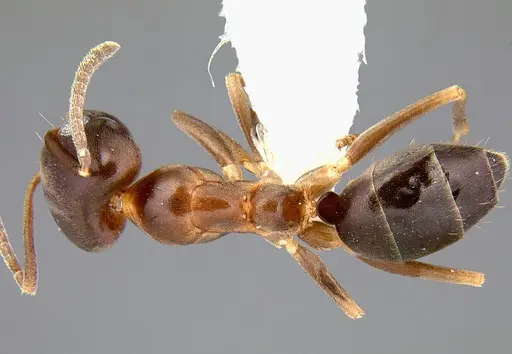
CASENT0249732
View on AntWeb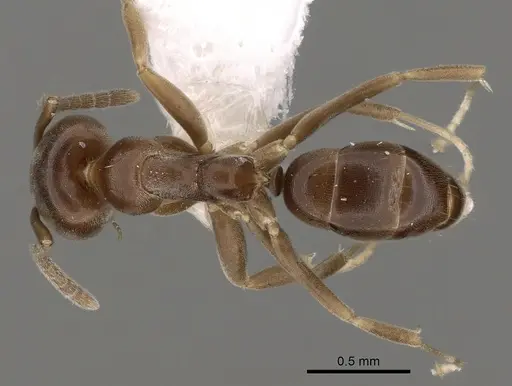
CASENT0909568
View on AntWeb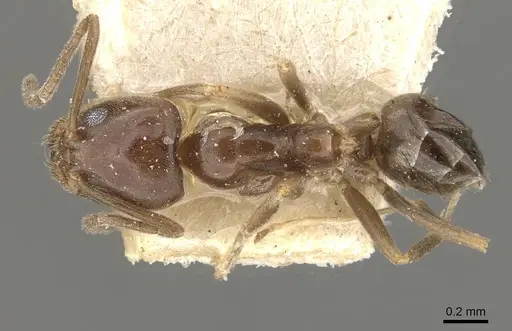
CASENT0911564
View on AntWeb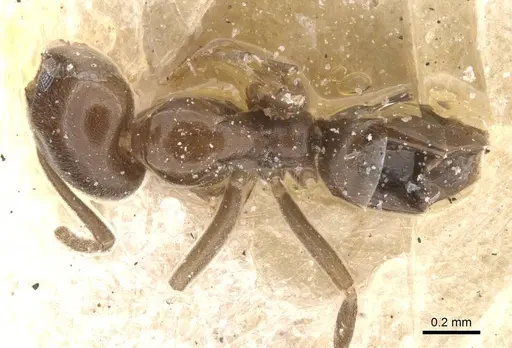
Literature
Loading distribution map...Loading products...