
Leptothorax paraxenus
- Sci. Name
- Leptothorax paraxenus
- Tribe
- Crematogastrini
- Subfamily
- Myrmicinae
- Author
- Heinze & Alloway, 1992
- Distribution
- Found in 1 countries
Introduction
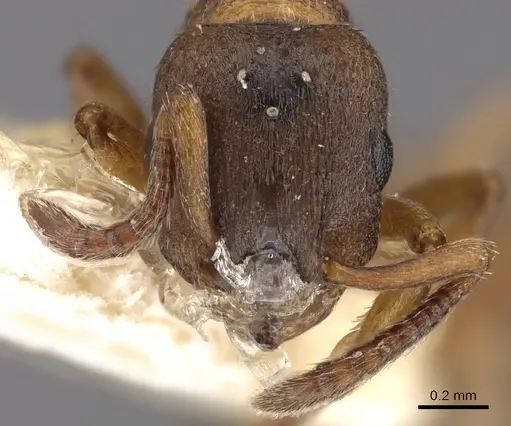
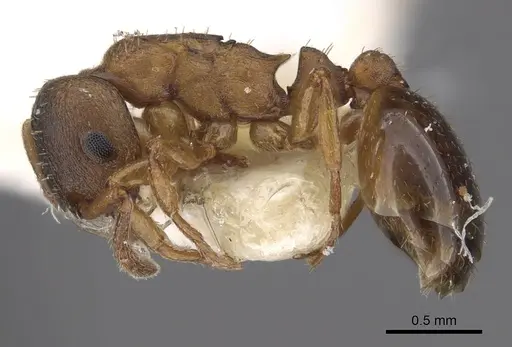
Leptothorax paraxenus is a workerless social parasite (inquiline) from Canada. This tiny ant exists entirely within nests of its host species, Leptothorax sp.B (likely Leptothorax canadensis). The parasite queen has no workers of her own and is completely dependent on host workers for food and care. She produces eggs that host workers raise to maturity . Unlike typical ants, this species has no worker caste - the queen lives permanently as a guest in the host colony, laying eggs that host workers tend as if they were their own .
Quick Summary
- Difficulty: Expert
- Origin & Habitat: Nearctic Region, specifically Milton, Ontario, Canada. Known only from its type locality in southern Ontario [1]. The natural habitat would be small cavities in rotting wood, under bark, or in soil crevices where the host colony resides.
- Colony Type: Workerless social parasite (inquiline). The queen lives permanently in the host colony and produces no workers. She is entirely dependent on host workers for nutrition and brood care. The species may be queen-intolerant, potentially eliminating the host colony queen(s), though this has not been firmly demonstrated [3].
- Size & Growth:
- Queen: Size data unavailable, inferred from Leptothorax genus (~3-4mm)
- Worker: N/A, workerless species
- Colony: Unknown, depends entirely on host colony size
- Growth: Unknown
- Development: Unknown, eggs are raised by host workers (Development timeline follows host colony patterns rather than having its own development)
- Antkeeping:
- Temperature: Unknown for this species specifically. Would likely follow host preferences of roughly 18-22°C based on typical Leptothorax requirements.
- Humidity: Unknown. Would match host colony requirements, moderate humidity typical of rotting wood or soil nesting sites.
- Diapause: Likely follows host colony patterns. Related Leptothorax species in Canada typically require winter hibernation.
- Nesting: In nature, the queen lives within the host colony nest. In captivity, this would require establishing a host Leptothorax colony first, then introducing the parasite queen, an extremely advanced procedure.
- Behavior: This species is completely dependent on its host. The queen does not forage, does not tend brood, and has no workers. She lives permanently in the host nest, producing eggs that host workers raise. This is an obligate social parasite, it cannot survive without a host colony [2]. The species may be queen-intolerant, potentially killing the host queen to establish itself, similar to other inquiline parasites [3]. As a Myrmicinae member of the Crematogastrini tribe, this species uses a smear defense mechanism, a flattened stinger used to wipe venom onto enemies rather than piercing flesh.
- Common Issues: this species cannot be kept by typical antkeepers, it requires a living host colony of Leptothorax sp.B or L. canadensis, workerless parasites are extremely difficult to establish in captivity and require expert-level knowledge, the parasite queen may kill the host queen, making colony establishment risky, finding the host species and parasite queen in the wild is exceptionally difficult, even if obtained, the parasitic relationship may fail, killing both host and parasite
Understanding Workerless Parasites
Leptothorax paraxenus represents one of the most specialized parasitic lifestyles in the ant world. Unlike typical ants where a queen founds a new colony alone, this species has completely lost the ability to raise its own workers. The queen invades a host colony (Leptothorax sp.B, likely L. canadensis) and lives there permanently as a guest. She produces eggs, but the host workers care for these eggs as if they were their own brood. This arrangement is called inquilinism, the parasite lives among the host colony without contributing to colony labor [2]. The relationship is obligate, meaning the parasite cannot survive without a host. This is fundamentally different from temporary social parasitism where the queen eventually establishes her own worker force.
Host Species Requirements
The host for Leptothorax paraxenus is Leptothorax sp.B, which may be Leptothorax canadensis [1]. If you were to attempt keeping this parasite (which is not recommended), you would first need a healthy colony of the host species. Leptothorax canadensis is a small ant native to eastern North America. They nest in small cavities in rotting wood, under stones, or in soil. Keeping a host colony requires standard Leptothorax care: moderate humidity, temperatures around 18-22°C, and feeding protein sources like small insects and sugar water. The host colony must be well-established before any introduction attempt.
Why This Species Is Not Suitable for Most Antkeepers
Leptothorax paraxenus is not a species that hobbyist antkeepers can realistically keep. Several factors make this extraordinarily difficult. First, you would need to locate and collect both the parasite queen and a host colony from the wild in Ontario, the species is known only from a single location. Second, even if you found both, introducing the parasite to the host colony is extremely challenging and often fails, resulting in the death of either the host queen, the parasite, or both. Third, the parasite queen cannot survive alone, she has no workers and cannot forage. Fourth, there is no established captive breeding of this species because of these constraints. This species exists primarily in scientific collections and is studied in the wild by myrmecologists [1].
Scientific Significance
Despite being unsuitable for captivity, Leptothorax paraxenus is scientifically significant. It represents an example of workerless inquiline parasitism in ants, a rare evolutionary path where a species loses its worker caste entirely and becomes completely dependent on host workers. The original discovery in Milton, Ontario in 1991 was significant enough to warrant a formal species description by Heinze and Alloway in 1992 [1]. The species also raises interesting questions about the coevolutionary dynamics between parasite and host, how does the parasite avoid being rejected by host workers? Does it use chemical mimicry? These questions continue to interest researchers studying social parasitism in ants [2].
Frequently Asked Questions
Can I keep Leptothorax paraxenus as a pet?
No. This workerless social parasite cannot be kept by typical antkeepers. It requires a living host colony of Leptothorax sp.B (likely L. canadensis), which must be established first. Even expert myrmecologists find it extremely difficult to maintain this parasitic relationship in captivity. The species is known only from a single location in Ontario, Canada, and is not available through any ant-keeping suppliers.
What does Leptothorax paraxenus eat?
The parasite queen does not forage for food. Instead, she is fed by host workers through trophallaxis (mouth-to-mouth food sharing). The host workers also feed the parasite's eggs and any brood that develops. In essence, the parasite eats whatever the host colony eats, typically small insects and honeydew in the case of Leptothorax.
How big do Leptothorax paraxenus colonies get?
The colony size is determined entirely by the host colony, not the parasite. The parasite queen produces no workers of her own, so the total number of workers in the nest remains whatever the host colony produces. The parasite simply adds her eggs to the host's brood pile.
Does Leptothorax paraxenus sting?
No. This species has no workers, and the queen does not leave the nest. As a member of the Crematogastrini tribe, Leptothorax species have a modified stinger used for smearing venom rather than piercing flesh. They are too small to affect humans.
Where can I find Leptothorax paraxenus?
This species is known only from Milton, Ontario, Canada. It was discovered in 1991 and described in 1992. The host species (Leptothorax sp.B) may have a broader range, but finding the parasite requires locating an active host colony and identifying the parasitic queen among the hosts, a task requiring expert-level ant identification skills. This is not a species that hobbyists should attempt to collect.
What is the difference between Leptothorax paraxenus and other parasitic ants?
Leptothorax paraxenus is an inquiline, a permanent social parasite that lives in the host colony without contributing any work. This is different from slave-making ants (which raid other colonies for workers) or temporary social parasites (where the queen invades, kills the host queen, but then raises her own workers). The key feature of L. paraxenus is that it has completely lost its worker caste, there are no worker parasites, only a queen that lives off the host [2].
Do I need to hibernate Leptothorax paraxenus?
If kept (which is not recommended), the parasite would follow the host colony's seasonal patterns. Related Leptothorax species in Canada require winter hibernation. The parasite queen would likely enter diapause along with the host colony. However, this is entirely theoretical, no one has successfully maintained this species in captivity long-term to observe its seasonal behavior.
Are there other workerless ant parasites?
Yes, several genera contain workerless parasites. The most famous are in the genus Teleutomyrmex (found in Europe, Alps), which are also workerless inquiline parasites of Tetramorium colonies. In North America, other Leptothorax parasites exist. However, workerless parasites remain rare and are among the most specialized ants known. They represent evolutionary dead ends in some cases, species that cannot exist without their specific host.
Report an Issue
The current care sheet is based fully on literature. See inconsistencies, or something that's incorrect? Please , it will be resolved after review from an admin. Contributing to the blogs tab also helps providing information, to make us be able to further improve the caresheets. Thank you for your support!
References

This caresheet is licensed under CC BY-SA 4.0 .
Community Blogs
CASENT0901776
View on AntWeb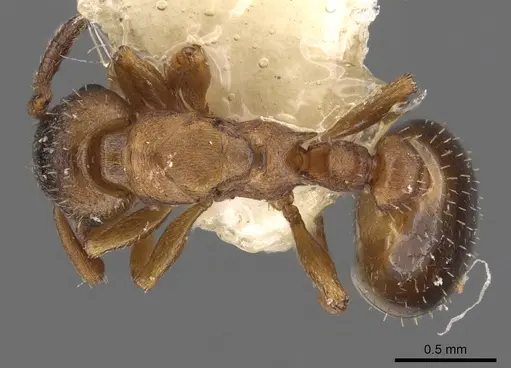
Literature
Loading distribution map...Loading products...