
Leptomyrmex wiburdi
- Sci. Name
- Leptomyrmex wiburdi
- Tribe
- Leptomyrmecini
- Subfamily
- Dolichoderinae
- Author
- Wheeler, 1915
- Distribution
- Found in 1 countries
Introduction
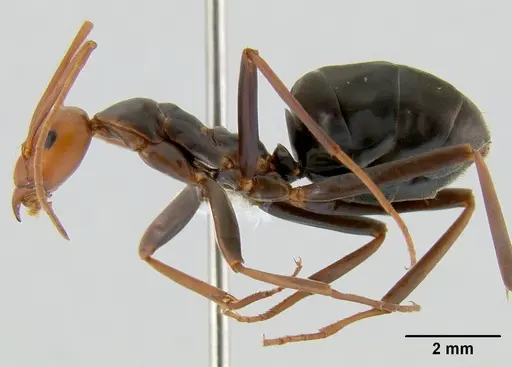
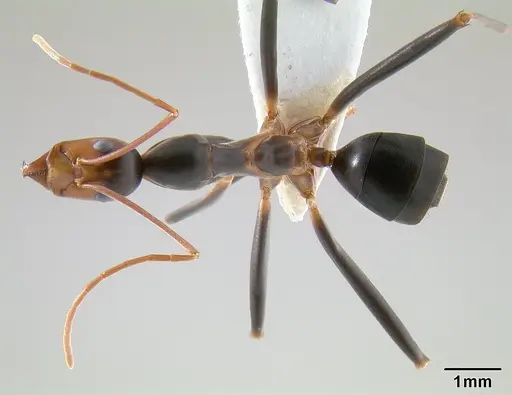
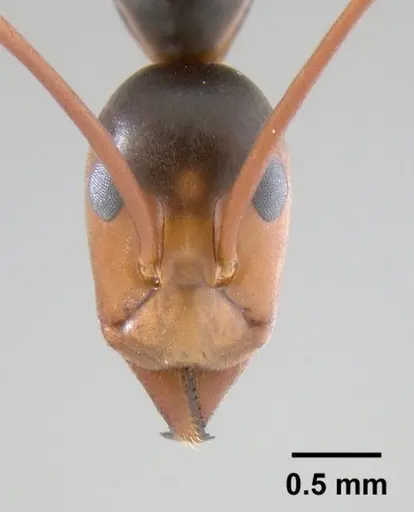
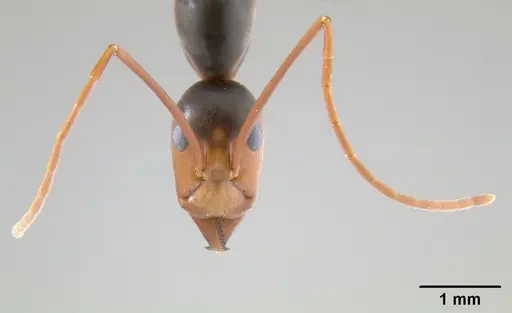
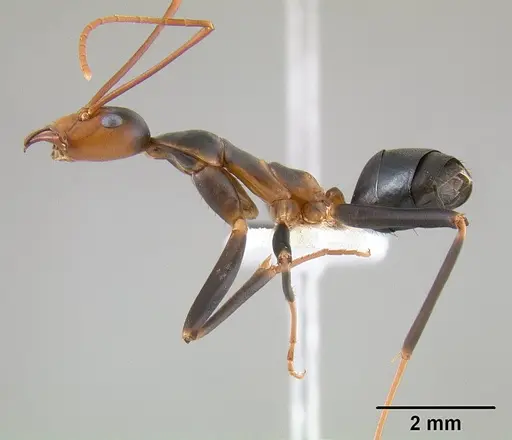
Leptomyrmex wiburdi is a relatively small Australian ant species known for its remarkably broad head and extremely variable coloration. Workers measure approximately 4-7mm in total length, with a distinctive broad head that is widest behind the eyes . This species is found throughout New South Wales, Australia, where it nests in soil, standing or fallen trees, stumps, and under rocks in habitats ranging from rainforest to wet and dry sclerophyll forest . What makes L. wiburdi particularly fascinating is its mimicry - workers display highly variable coloration ranging from erythrocephalus-like to rufipes-like patterns, with different color morphs even occurring in the same nest, apparently mimicking other co-occurring Leptomyrmex species . The genus is commonly called 'spider ants' due to their long legs and somewhat spider-like appearance.
Quick Summary
- Difficulty: Medium
- Origin & Habitat: New South Wales, Australia. Found in rainforest, wet sclerophyll, and dry sclerophyll forest. Nests in soil, standing or fallen trees, stumps, and under rocks [1][2].
- Colony Type: Single-queen colonies with documented ergatoid (wingless) replacement reproductives. Ergatoid queens develop when the primary queen dies, allowing the colony to continue without a nuptial flight [1].
- Size & Growth:
- Queen: Approximately 5-8mm, inferred from genus patterns. Head broader than worker, with three ocelli. Gaster globose. Exact measurements not specified in available literature [1].
- Worker: Approximately 4-7mm, inferred from genus patterns. The context provides head measurements (1.65-1.94mm head length,1.15-1.33mm head width) but not full body length [1].
- Colony: Unknown, no specific colony size data available.
- Growth: Moderate, estimated based on typical Dolichoderinae development patterns.
- Development: Unconfirmed, specific development timeline for this species is not published. (Development time inferred from genus-level data, specific timing for this species unconfirmed.)
- Antkeeping:
- Temperature: Keep around 22-26°C. Based on NSW temperate to subtropical climate, they prefer moderate warmth. A gentle gradient allowing workers to choose their preferred temperature is ideal.
- Humidity: Moderate to high humidity preferred. Their natural habitat includes rainforest and wet sclerophyll areas. Keep nest substrate consistently moist but not waterlogged.
- Diapause: Likely, NSW experiences cool winters. Provide a cool period around 10-15°C for 2-3 months during winter months.
- Nesting: Use a naturalistic setup with multiple nesting options, soil chambers, small wood pieces, or a Y-tong/plaster nest with moist substrate. They nest in soil, wood, and under rocks in the wild, so offering variety helps them feel secure [1].
- Behavior: Generally calm and non-aggressive. Workers are active foragers, primarily hunting small invertebrates and collecting honeydew. They have few body hairs and rely on their mimetic coloration for protection rather than aggressive defense. Escape risk is moderate, their small size means they can squeeze through small gaps, so ensure your setup has tight barriers. They lack a functional sting and use chemical defense (smear secretion) typical of Dolichoderinae ants.
- Common Issues: colonies may fail if humidity drops too low, they prefer moist conditions, ergatoid queens mean single-queen colonies can survive queen loss, but wild colonies may already have ergatoids present, their variable coloration can cause confusion, color patterns alone cannot identify this species, small size means escape prevention must be good, check for gaps regularly, limited captive breeding data means establishing colonies from wild-caught foundresses may be challenging
Appearance and Identification
Leptomyrmex wiburdi workers are relatively small ants with a distinctive broad head that sets them apart from most other ant species. The head width is more than 3/5 of the head length, and the head is widest posterior to the eyes, with straight sides narrowing anteriorly [1]. Workers measure approximately 4-7mm in total length, making them one of the smaller Leptomyrmex species [1]. The most striking feature is their extremely variable coloration, they can range from erythrocephalus-like (reddish head) to rufipes-like (reddish legs and body), with many intermediate patterns. Many individuals have a mottled brown-black coloration on the head and mesosoma that is unique to this species. Notably, workers with different color patterns have been observed in the same nest, demonstrating their mimicry of co-occurring Leptomyrmex species [1]. Queens are similar but larger with a broader head, three ocelli, and a globose gaster [1].
Natural History and Distribution
This species is endemic to New South Wales, Australia, where it is commonly found in multiple protected areas including Mount Tomah, Mount Keira, Royal National Park, and Dorrigo National Park [3]. L. wiburdi occupies diverse habitats including rainforest, wet sclerophyll (tall eucalyptus forest with dense understory), and dry sclerophyll (drier eucalyptus woodland) [1][2]. Nests are constructed in multiple substrates including soil, standing or fallen trees and snags, stumps, and under rocks [1][2]. This flexibility in nesting habitat reflects their adaptability. The species is part of a south-eastern Australian clade that diverged approximately 7 million years ago, making them a relatively ancient lineage within the genus [3].
Colony Structure and Reproduction
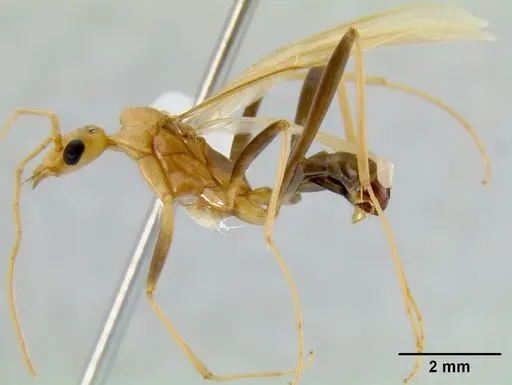
Leptomyrmex wiburdi forms single-queen colonies with a notable adaptation: the presence of ergatoid (wingless) replacement queens [1]. Ergatoid queens are born without wings and serve as replacement reproductives if the primary queen dies, allowing the colony to survive without needing to produce new sexuals and conduct nuptial flights. This is a significant advantage in stable environments where finding a mate might be difficult. The colony structure is monogyne (one queen per colony), but the ergatoid system provides functional redundancy. Males are known and have been described, with distinctive morphological features [1]. The colony likely produces sexuals (alates) during appropriate seasons for nuptial flights.
Housing and Nest Setup
For captive care, provide a naturalistic setup that mimics their diverse natural nesting preferences. A mix of soil chambers, small wood pieces, or a Y-tong/plaster nest with moist substrate works well [1]. They nest in soil, under rocks, and in decaying wood in the wild, so offering multiple nesting options helps them feel secure. The nest should be kept humid but with some ventilation to prevent mold. Because they are small ants, ensure your formicarium has appropriately sized chambers and tight-fitting lids, they can squeeze through surprisingly small gaps. A water reservoir connected to the nest helps maintain consistent humidity. Place the setup in a location with stable temperatures away from direct sunlight and drafts.
Feeding and Diet
Like other Leptomyrmex species, these ants are omnivorous with a preference for protein-rich foods. In captivity, offer small live prey such as fruit flies, small crickets, and mealworms. They will also collect sugar sources, a small dish of sugar water or honey water can be offered, though they may not accept it as readily as pure protein. Their natural diet includes hunting small invertebrates and collecting honeydew from aphids and scale insects. Feed protein prey 2-3 times per week, adjusting based on colony size and consumption. Remove any uneaten prey after 24-48 hours to prevent mold. Always provide a fresh water source. [2]
Temperature and Seasonal Care
Maintain temperatures around 22-26°C, which reflects their NSW temperate to subtropical origin. A gentle thermal gradient allows workers to regulate their own temperature by moving between warmer and cooler areas of the nest. During Australian winter (roughly June-August in the southern hemisphere), reduce temperatures to around 10-15°C to simulate their natural seasonal cycle. This winter rest period is important for colony health and may trigger reproductive behavior when temperatures rise again. If you cannot provide natural seasonal temperature changes, a reduced feeding schedule during a 2-3 month cool period can help maintain natural cycles. Avoid temperatures below 10°C or above 30°C for extended periods. [1][3]
Behavior and Temperament
Leptomyrmex wiburdi workers are generally calm and not aggressive toward keepers. They are active foragers that will hunt small prey and explore their environment. Their primary defense appears to be cryptic coloration and mimicry rather than aggressive behavior, they blend in with other Leptomyrmex species that may be better defended or more toxic [1]. Workers have very few hairs on their body, giving them a sleek appearance, and their pubescence is extremely fine, giving a pruinose (dusty) appearance to the surface [1]. They lack a functional sting and use chemical defense secretions typical of Dolichoderinae ants. Their small size and active foraging mean escape prevention should be taken seriously, check all connections and barriers regularly. They are diurnal and show peak activity during daylight hours.
Frequently Asked Questions
How long does it take for Leptomyrmex wiburdi to produce first workers?
The exact timeline is unconfirmed. Specific development timing for this species is not published. Expect several months based on typical Dolichoderinae development at optimal temperature (22-26°C). Growth is moderate, don't expect rapid expansion like some tropical species.
Can I keep multiple Leptomyrmex wiburdi queens together?
No. This species is monogyne (single-queen) with ergatoid replacement reproductives. Multiple unrelated queens will likely fight. If you find a colony with multiple queens, they are likely already established ergatoids from a previous queen loss, not co-foundresses.
What do Leptomyrmex wiburdi eat?
They are omnivorous but prefer protein. Offer small live prey like fruit flies, small crickets, and mealworms. They may also accept sugar water or honey water, but protein should be the primary food source.
Do Leptomyrmex wiburdi need hibernation?
Yes, likely. As a NSW species, they experience cool winters and should be given a cool period (10-15°C) for 2-3 months during winter. This helps maintain natural seasonal cycles and may be important for triggering reproduction.
Are Leptomyrmex wiburdi good for beginners?
They are rated Medium difficulty. While not aggressive, their specific humidity requirements and need for seasonal temperature changes make them better suited for keepers with some ant-keeping experience. Their small size and variable coloration also require attention to escape prevention and identification.
How big do Leptomyrmex wiburdi colonies get?
Colony size data is not published, but based on related species and their relatively small worker size, colonies likely reach several hundred workers at maximum. Growth is moderate, not rapid.
Why do my Leptomyrmex wiburdi have different colors?
This is normal! L. wiburdi has extremely variable coloration, workers in the same nest can range from reddish (erythrocephalus-like) to patterns with reddish legs (rufipes-like), with many intermediates. This is a documented trait where they mimic other co-occurring Leptomyrmex species [1].
When should I move my colony to a formicarium?
Move them when the test tube colony reaches 20-30 workers and shows active foraging behavior. Ensure the formicarium has appropriately sized chambers for their small size and maintain humidity through a water reservoir.
Report an Issue
The current care sheet is based fully on literature. See inconsistencies, or something that's incorrect? Please , it will be resolved after review from an admin. Contributing to the blogs tab also helps providing information, to make us be able to further improve the caresheets. Thank you for your support!
References

This caresheet is licensed under CC BY-SA 4.0 .
Community Blogs
Literature
Loading distribution map...Loading products...