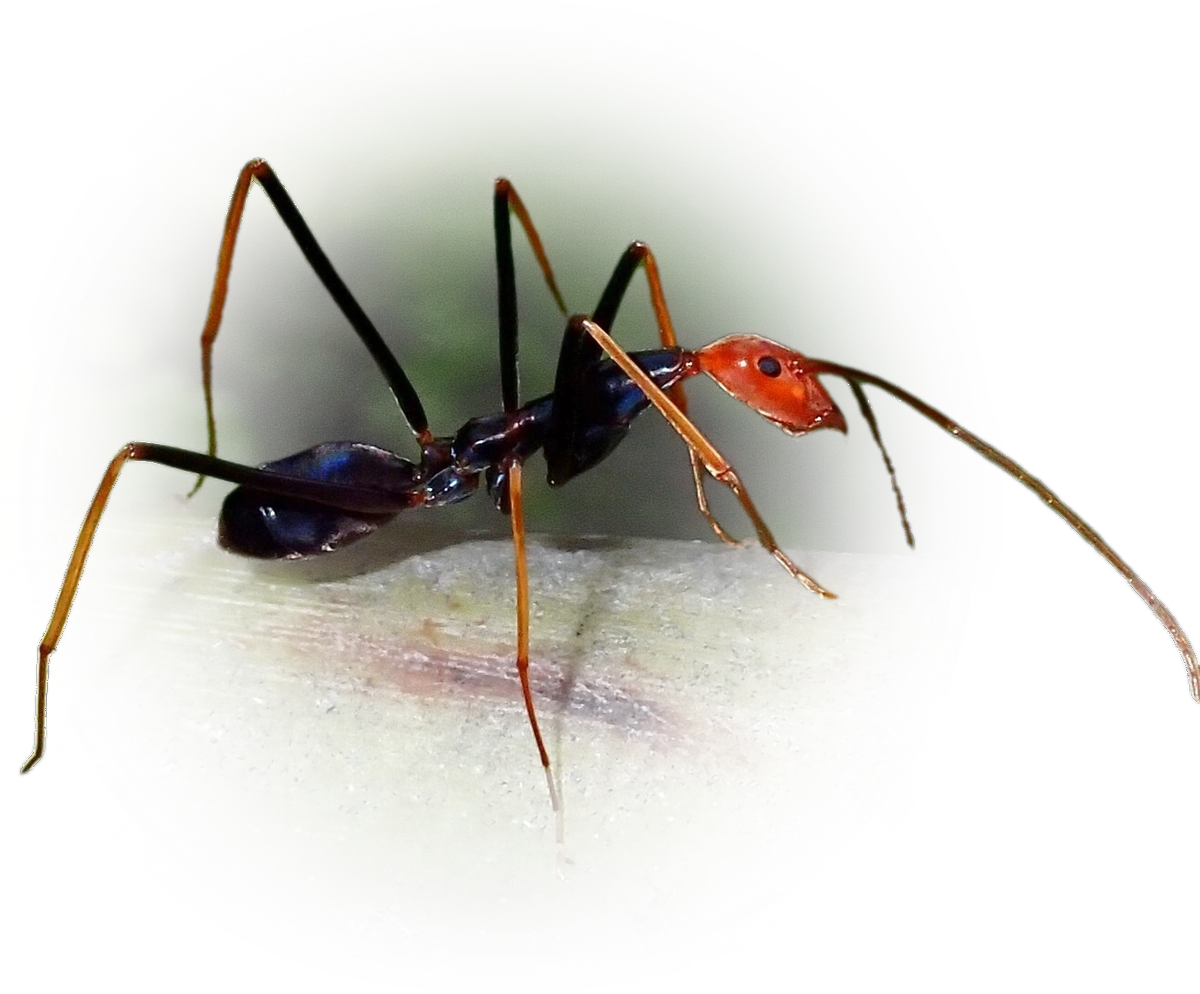
Leptomyrmex ruficeps
- Sci. Name
- Leptomyrmex ruficeps
- Tribe
- Leptomyrmecini
- Subfamily
- Dolichoderinae
- Author
- Emery, 1895
- Distribution
- Found in 1 countries
Introduction
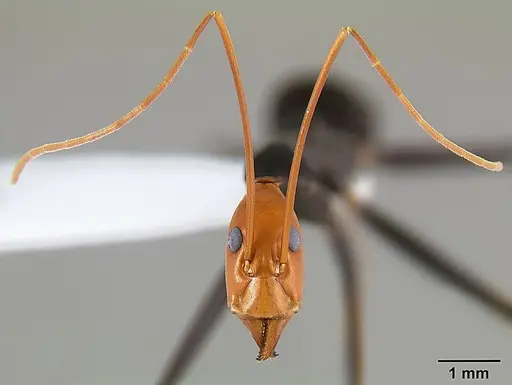
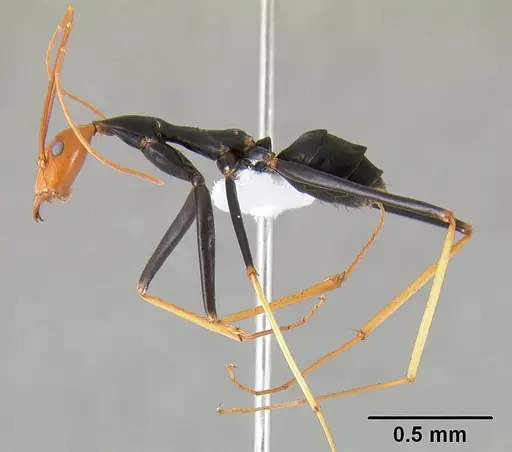
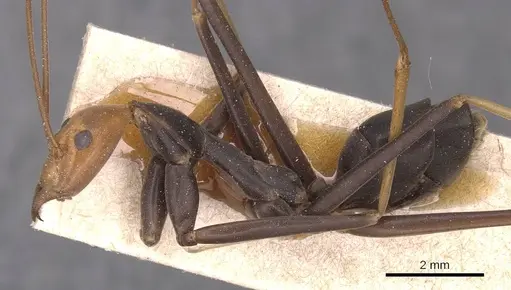
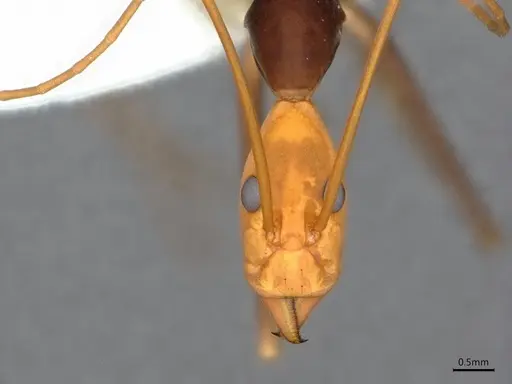
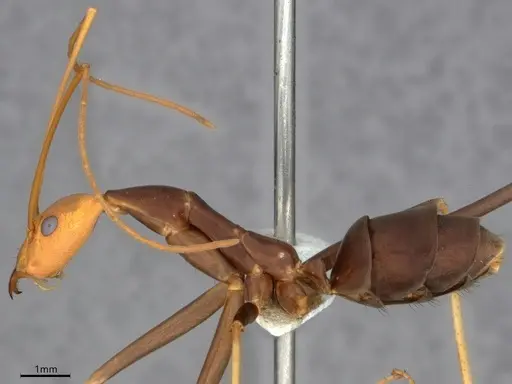
Leptomyrmex ruficeps is a distinctive medium-sized ant found only in Australia's Wet Tropics region of north Queensland. Workers have an unusually elongated body with extremely long legs and antennae, measuring approximately 5-6mm total body length (inferred from genus patterns) . The species is easily recognized by its striking coloration: a black body contrasted with a bright red head and antennae, yellow tarsi and tibiae, and a black gaster with a pale yellow anal opening . A unique identifying feature is the neck-like constriction at the posterior margin of the head, giving them a somewhat spider-like appearance that inspired the genus common name . This species is restricted to rainforest habitats where it nests in tree cavities, under logs, at tree bases, and under rocks . Queens have never been collected, making captive breeding challenging as the colony structure and founding behavior remain unconfirmed .
Quick Summary
- Difficulty: Hard
- Origin & Habitat: Australian Wet Tropics (north Queensland), rainforest specialist with one record from Eucalyptus open forest [1]
- Colony Type: Unconfirmed, queens have never been collected, colony structure unknown [1]
- Size & Growth:
- Queen: Unknown, queens have not been collected [1]
- Worker: Approximately 5-6mm total body length, inferred from genus patterns (Leptomyrmex workers typically range 4-8mm) [1]
- Colony: Unknown, no colony size data available
- Growth: Unknown, no development data available
- Development: Unknown, no published data exists for this species (No data on development timeline.)
- Antkeeping:
- Temperature: Keep warm, around 24-28°C. As a tropical rainforest specialist from north Queensland, they need stable warm conditions year-round.
- Humidity: High humidity required, rainforest species. Keep nest substrate consistently moist but not waterlogged. Provide a water tube for drinking.
- Diapause: No, being a tropical species, they do not require hibernation. Maintain warm conditions year-round.
- Nesting: In captivity, they do well in Y-tong (AAC) nests or plaster nests with tight chambers scaled to their medium size. Provide connections to an outworld. Natural nesting sites include tree cavities, under logs, and at tree bases, replicate this with dark, humid nest chambers [1].
- Behavior: These ants are relatively docile and not aggressive. Workers are active foragers that search for food both on the ground and possibly in vegetation given their long legs and arboreal nesting habits. They have a distinct appearance with their elongated spider-like morphology. They are a Tropical Climate Specialist functional group, indicating sensitivity to habitat disturbance [2]. Dolichoderine ants lack a functional sting and instead secrete defensive compounds from a slit-like opening at the tip of the abdomen.
- Common Issues: queen unavailability, queens have never been collected, making established colonies extremely rare in the hobby, humidity control, rainforest species prone to dying in dry conditions, temperature stability, tropical specialists need consistent warmth, temperature swings can be harmful, no published care guidelines, limited information means keepers must experiment carefully, slow colony growth, without documented development times, establishing a colony requires patience
Appearance and Identification
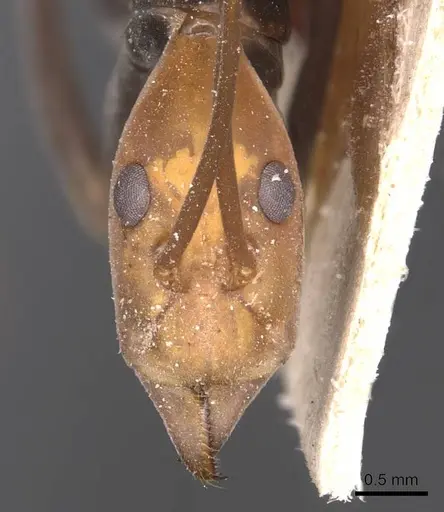
Leptomyrmex ruficeps workers are medium-sized ants with an unmistakable elongated and slender appearance. Workers measure approximately 5-6mm in total body length (inferred from genus patterns) [1]. The most striking feature is their coloration: a jet-black body contrasted with a bright red head and antennae, yellow tarsi and tibiae, and a black gaster with a pale yellow anal opening [1]. They have extremely long legs and antennae that extend well beyond the head. A unique identifying feature is the neck-like constriction at the posterior margin of the head, this is especially pronounced in this species and helps distinguish it from related species like Leptomyrmex rufipes (which is red with a black gaster) and Leptomyrmex unicolor [1]. Males are smaller and yellow throughout with large eyes [1].
Distribution and Habitat
This species is restricted to the Australian Wet Tropics, specifically north Queensland [1]. Known collection localities include Cape Tribulation, Mt. Lewis, and Babinda [3]. They are primarily rainforest inhabitants, with the vast majority of records coming from this habitat type [1]. There is a single record from Eucalyptus open forest, suggesting some tolerance for more open habitats [1]. Within the Leptomyrmex genus, this species is part of the L. rothneyi/L. ruficeps/L. rufipes species complex [3]. They function as a Tropical Climate Specialist in ecological studies, indicating they are sensitive to habitat disturbance [2].
Nesting Behavior
In the wild, Leptomyrmex ruficeps nests in a variety of locations including cavities in live trees, at the base of trees, in or under logs, and under rocks [1]. This flexibility in nesting sites suggests they can adapt to different microhabitats. For captive care, replicate these natural conditions using a Y-tong (AAC) nest or plaster formicarium with chambers that are appropriately scaled to their medium size. They prefer dark, humid nest chambers. Provide a connection to an outworld for foraging. The nest should retain moisture well since they are a rainforest species.
Feeding and Diet
While specific dietary studies for Leptomyrmex ruficeps do not exist, Leptomyrmex species are typically generalist foragers that collect nectar, honeydew, and small insects. As a rainforest ant with long legs and arboreal nesting tendencies, they likely forage both on the ground and in vegetation. In captivity, offer a varied diet including sugar water or honey as an energy source, and protein sources like small crickets, mealworms, or other appropriate-sized prey. Fresh water should always be available.
Temperature and Care Requirements
As a tropical rainforest specialist from Australia's Wet Tropics, Leptomyrmex ruficeps requires warm and humid conditions year-round. Maintain temperatures in the range of 24-28°C, avoiding drops below room temperature. A heating cable placed on one side of the nest creates a thermal gradient allowing workers to self-regulate their temperature preference. High humidity is essential, keep the nest substrate consistently moist but not waterlogged. A water tube should be provided for drinking. Unlike temperate species, they do not require a diapause or hibernation period. Maintain stable conditions without temperature fluctuations, as tropical specialists can be sensitive to changes in their environment.
Challenges in Captive Care
The primary challenge in keeping Leptomyrmex ruficeps is that queens have never been scientifically collected, meaning established colonies are essentially unavailable in the antkeeping hobby [1]. Without queen specimens, we cannot confirm the colony structure (monogyne vs polygyne), founding behavior, or development timeline. This makes them one of the most difficult Leptomyrmex species to keep simply because no established colonies exist. Additionally, being a tropical specialist, they have specific humidity and temperature requirements that must be maintained consistently. The lack of published care guidelines means keepers must carefully experiment and document their results. For these reasons, this species is recommended only for experienced antkeepers who understand the challenges of working with poorly-studied species.
Frequently Asked Questions
Can I keep Leptomyrmex ruficeps in a test tube?
Test tubes can work for founding colonies, but given their rainforest habitat and need for humidity, a Y-tong or plaster nest is more appropriate once the colony establishes. The test tube should have a water reservoir and be kept in a humid environment.
How long does it take for Leptomyrmex ruficeps to develop from egg to worker?
This is unknown, no published data exists for this species.
Are Leptomyrmex ruficeps good for beginners?
No. This species is not recommended for beginners. Queens have never been collected, so established colonies are essentially unavailable. Additionally, being a tropical rainforest specialist, they have specific temperature and humidity requirements that must be maintained year-round.
What do Leptomyrmex ruficeps eat?
While not specifically studied, Leptomyrmex species are generalist foragers. Offer sugar water or honey for energy, and protein sources like small crickets or mealworms. Fresh water should always be available.
What temperature do Leptomyrmex ruficeps need?
Keep them warm at 24-28°C year-round. As a tropical species from Australia's Wet Tropics, they do not tolerate cool temperatures and do not require hibernation.
Can I keep multiple queens together?
Unknown, queens have never been collected, so colony structure is unconfirmed. Without this basic biological information, combining queens is not recommended.
How big do Leptomyrmex ruficeps colonies get?
Unknown, no colony size data has been published for this species.
Do Leptomyrmex ruficeps need hibernation?
No, as a tropical rainforest species from north Queensland, they do not require hibernation or diapause. Maintain warm conditions year-round.
Why are Leptomyrmex ruficeps so hard to find in the hobby?
Queens have never been scientifically collected, meaning there are no established colonies in captivity [1]. This makes them one of the rarest Leptomyrmex species in the antkeeping hobby.
Report an Issue
The current care sheet is based fully on literature. See inconsistencies, or something that's incorrect? Please , it will be resolved after review from an admin. Contributing to the blogs tab also helps providing information, to make us be able to further improve the caresheets. Thank you for your support!
References

This caresheet is licensed under CC BY-SA 4.0 .
Community Blogs
CASENT0127109
View on AntWeb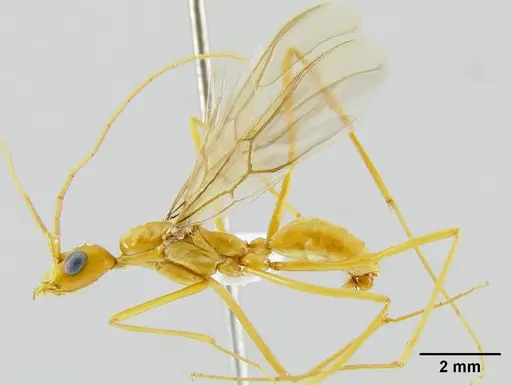
CASENT0127122
View on AntWeb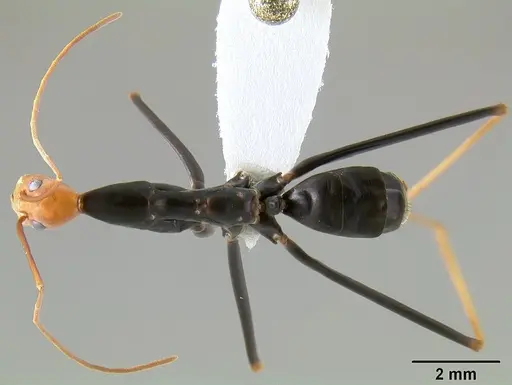
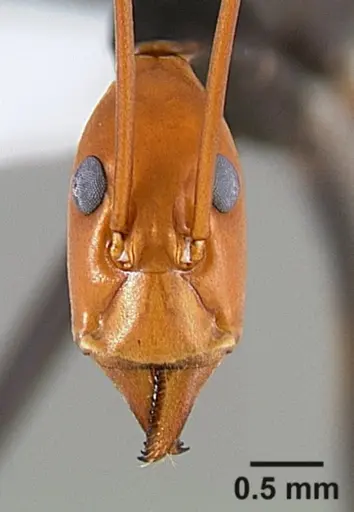
CASENT0127384
View on AntWeb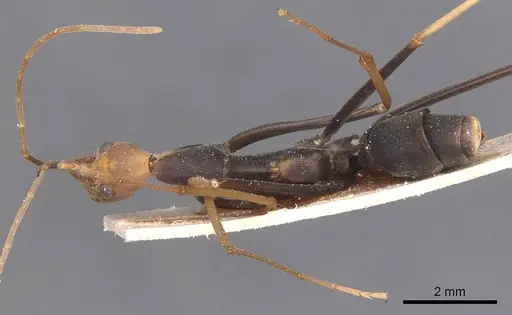
CASENT0841230
View on AntWeb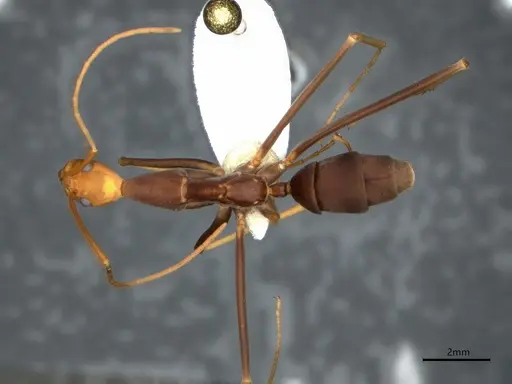
Literature
Loading distribution map...Loading products...