
Leptomyrmex nigriventris
- Sci. Name
- Leptomyrmex nigriventris
- Tribe
- Leptomyrmecini
- Subfamily
- Dolichoderinae
- Author
- Guérin-Méneville, 1831
- Distribution
- Found in 1 countries
Introduction
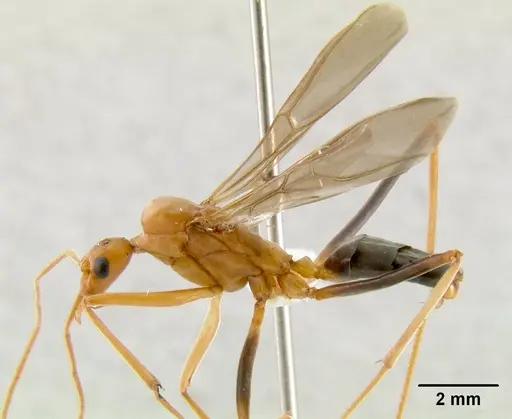
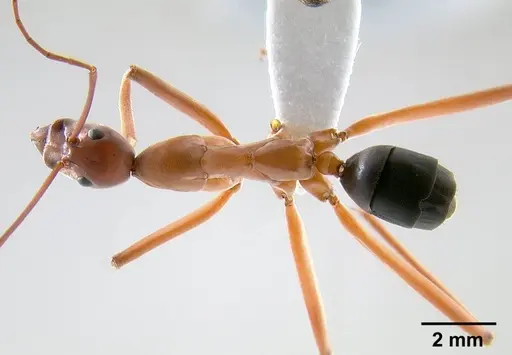
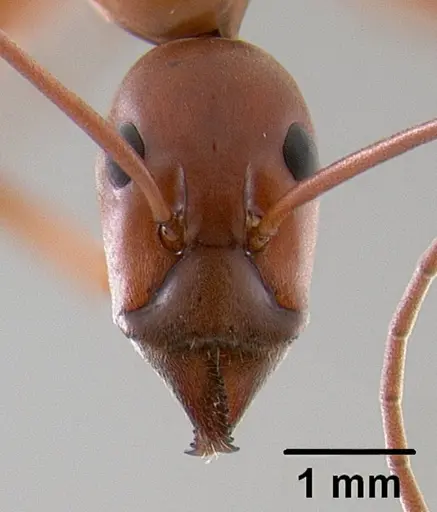
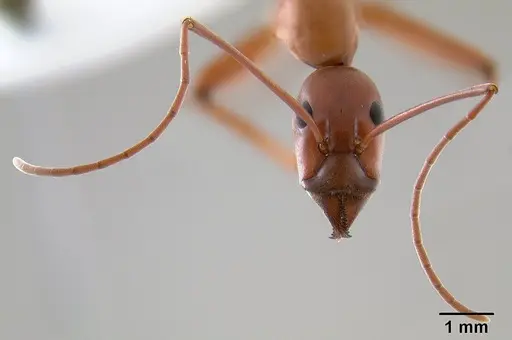
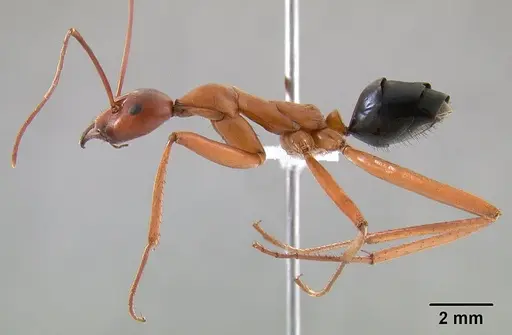
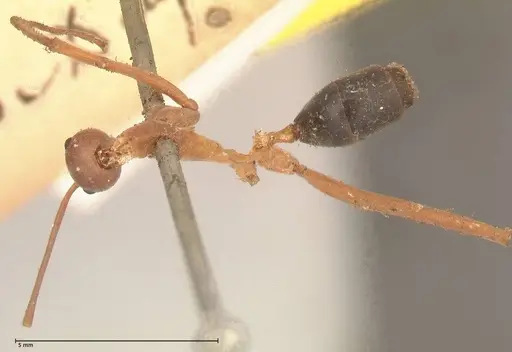
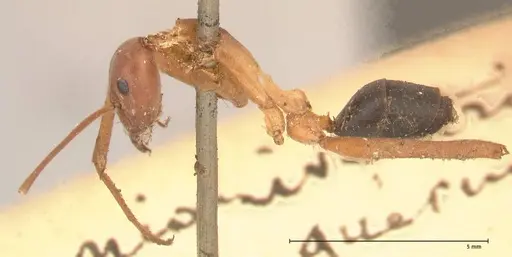
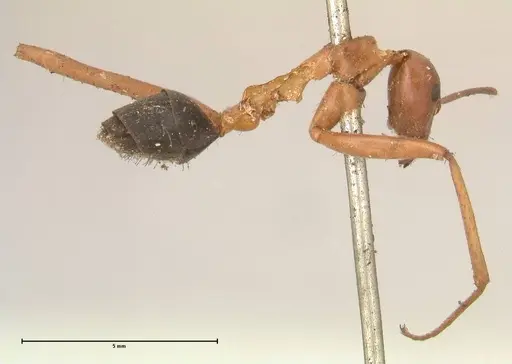
Leptomyrmex nigriventris is one of the largest spider ants, native to eastern Australia. Workers have an orange to purplish-red head and body contrasting with a black gaster (abdomen). Their head is very broad and their legs and antennae are extremely long, giving them their 'spider ant' common name. This species is found throughout New South Wales in habitats ranging from rainforest to wet and dry sclerophyll forest, where they nest under rocks, at tree bases, and in soil . Queens are ergatoid (wingless) and only slightly larger than workers – a rare trait that allows replacement reproductives to exist within established colonies .
Quick Summary
- Difficulty: Medium
- Origin & Habitat: New South Wales, Australia. Found in rainforest, wet sclerophyll, and dry sclerophyll forest. Nests occur under rocks, at tree bases, and in soil [1].
- Colony Type: Colony structure is not fully documented. Queens are ergatoid (wingless), which suggests replacement reproductives can exist within colonies. This species belongs to the macro clade with large, elongate morphology [3][4].
- Size & Growth:
- Queen: Ergatoid queens are only slightly larger than workers [2]. No precise body length measurements are available.
- Worker: Workers are large, with a very broad head and long legs. No total body length measurements are recorded, but they rank among the largest Leptomyrmex [1].
- Colony: Maximum colony size is unconfirmed. Based on related large Leptomyrmex species, colonies likely reach several hundred workers.
- Growth: Unconfirmed – estimated moderate based on large body size.
- Development: Unconfirmed – estimated 8-12 weeks based on similar-sized Dolichoderinae at optimal temperature. (Estimated based on genus-level data, no direct species-specific measurements available.)
- Antkeeping:
- Temperature: Temperature preferences are not documented. As a temperate Australian species, keep at room temperature (20-25°C) and avoid extremes. Provide a gradient.
- Humidity: Maintain moderate to high humidity. Their natural habitats include rainforest and wet sclerophyll, so keep the nest substrate consistently moist but not waterlogged.
- Diapause: Likely required. As a temperate species, they probably benefit from a winter rest period of 2-3 months at 10-15°C. Reduce feeding during this time.
- Nesting: Provide a naturalistic setup with a soil or Y-tong/plaster nest. They naturally nest under rocks, at tree bases, and in soil, so include a dark, humid chamber with a moisture gradient.
- Behavior: These ants are not aggressive but may defend their nest. They belong to Dolichoderinae and lack a functional sting – instead they use chemical secretions (smear defense) from the tip of the abdomen. They can bite. Their long legs make them fast runners. Escape prevention is important, use fluon on container edges to prevent climbing (given their size and climbing ability). Foraging patterns are not well documented, but offer food during the day.
- Common Issues: escape prevention is critical – their large size and long legs make them good climbers, humidity control: too wet causes mold, too dry may kill brood, winter dormancy is not well researched – handle with care and gradual temperature changes, ergatoid queen systems are fragile – avoid disturbing the nest once a queen is established
Appearance and Identification
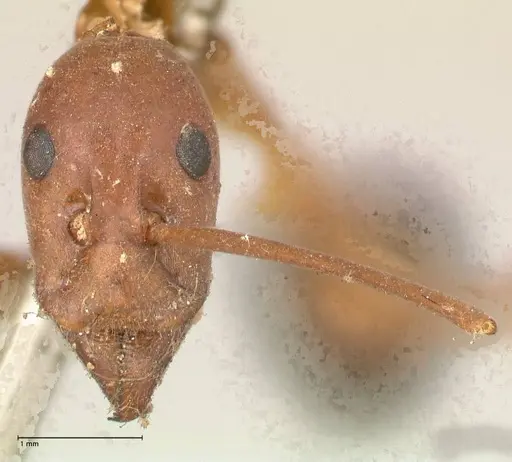
Leptomyrmex nigriventris is one of the largest spider ants. Workers have an orange to purplish-red head and body with a jet-black gaster [1]. The head is very broad, nearly three-quarters as wide as its length. The antennae are extremely long and extend well past the back of the head. The legs are notably long and slender – that's where the 'spider ant' name comes from. They can be told apart from their close relative L. tibialis by tibial coloration: L. nigriventris has pale tibiae while L. tibialis has dark ones [1].
Natural History and Distribution
This species is endemic to New South Wales, Australia. They inhabit diverse environments from rainforest to wet and dry sclerophyll forest [1]. Their range includes the Blue Mountains region (Wentworth Falls, Blackheath, Katoomba) based on molecular studies [5]. Nests are found under rocks, at tree bases, and in soil [1]. They are part of the south-eastern Australian clade, which diverged around 7 million years ago. As a macro clade species, they share a large, elongate body plan with their sister species L. tibialis [3][1].
Queen Biology and Colony Structure
A unique trait of Leptomyrmex nigriventris is the ergatoid queen form. Unlike typical ants with large, winged queens for dispersal, ergatoid queens are wingless and only slightly larger than workers [2]. This allows replacement reproductives to exist within established colonies – if the primary queen dies, an ergatoid can take over without the colony needing to produce new winged reproductives. Wheeler described the queen as 'just slightly larger than workers' [2]. This system is different from standard monogyne or polygyne colonies, and it affects captive management: avoid disturbing the nest once a queen is established, as the replacement system may be fragile.
Housing and Nest Setup
In captivity, these ants do well in naturalistic setups that mimic their nesting preferences. A formicarium with a soil chamber or a Y-tong nest with moist plaster works well. Since they naturally nest under rocks and at tree bases, provide a dark, humid chamber with a moisture gradient. Use a water reservoir to maintain humidity. Because of their large size and long legs, give them more vertical space than smaller ants. The outworld should be spacious enough for foraging. Use escape prevention like fluon on container edges – these ants are good climbers despite their size. [1]
Feeding and Diet
Specific dietary preferences are not documented for L. nigriventris. In captivity, provide a carbohydrate source (sugar water or honey) and a protein source (small insects such as fruit flies, small crickets, or mealworms). Remove uneaten prey after 24 hours. Fresh water should always be available. This follows standard practice for ant keeping.
Temperature and Seasonal Care
Temperature preferences are not documented. As a temperate Australian species, keep the colony at room temperature (20-25°C) and provide a gradient with a heating cable on one side if needed. Avoid overheating. For diapause, a winter cooling period may be beneficial, gradually reduce temperature to 10-15°C for 2-3 months. Monitor colony activity – if workers cluster and move slowly, they may be entering dormancy. Reduce feeding during this period.
Growth and Development
Development timelines are undocumented for this species. Based on typical large Dolichoderinae, expect 8-12 weeks from egg to first worker at optimal conditions, but this is an estimate. The first workers (nanitics) may be smaller than mature workers. Growth rate is likely moderate, and colonies may take several years to reach full size. Be patient with founding colonies, and monitor brood development.
Frequently Asked Questions
How long does it take for Leptomyrmex nigriventris to produce first workers?
The exact timeline is unconfirmed, but based on similar large Dolichoderinae, expect 8-12 weeks from egg to first worker at optimal temperature (20-25°C). Large ant species typically develop more slowly.
What do Leptomyrmex nigriventris ants eat?
Specific dietary preferences are not documented. In captivity, offer sugar water or honey as a constant energy source, plus small insects (fruit flies, small crickets, mealworms) for protein 2-3 times per week. Remove uneaten prey.
What temperature should I keep Leptomyrmex nigriventris at?
Temperature preferences are not documented. Keep at room temperature (20-25°C) and avoid extremes. A gradient is beneficial. As a temperate species, they are not heat-loving.
Do Leptomyrmex nigriventris need hibernation?
Likely yes. As a species from temperate NSW, a winter rest period of 2-3 months at 10-15°C is probably beneficial. This mimics their natural seasonal cycle.
How big do Leptomyrmex nigriventris colonies get?
Maximum colony size is not documented, but based on related large Leptomyrmex species, colonies likely reach several hundred workers over several years.
Can I keep multiple Leptomyrmex nigriventris queens together?
Colony structure is not well documented. Ergatoid queens suggest replacement reproductives exist within colonies, but combining unrelated queens has not been studied. It is not recommended.
What makes Leptomyrmex nigriventris different from other ants?
They are one of the largest Leptomyrmex species, with an extremely broad head and very long legs. Their ergatoid (wingless) queens are unusual – most ants have large winged queens. They also have striking orange body with black gaster coloring.
Report an Issue
The current care sheet is based fully on literature. See inconsistencies, or something that's incorrect? Please , it will be resolved after review from an admin. Contributing to the blogs tab also helps providing information, to make us be able to further improve the caresheets. Thank you for your support!
References

This caresheet is licensed under CC BY-SA 4.0 .
Community Blogs
Literature
Loading distribution map...Loading products...