
Leptomyrmex burwelli
- Sci. Name
- Leptomyrmex burwelli
- Tribe
- Leptomyrmecini
- Subfamily
- Dolichoderinae
- Author
- Smith & Shattuck, 2009
- Distribution
- Found in 1 countries
Introduction
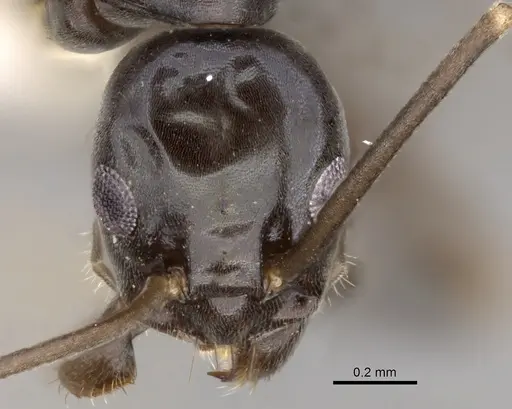
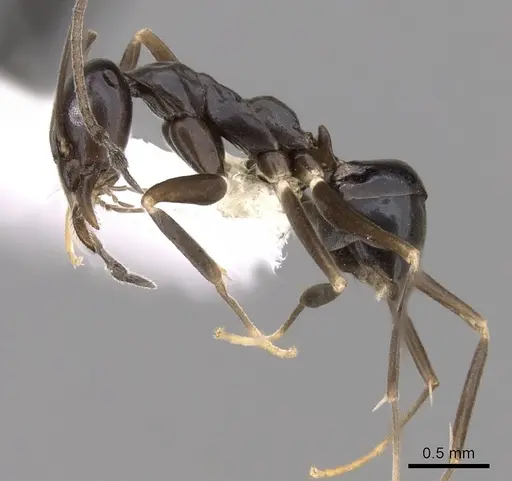
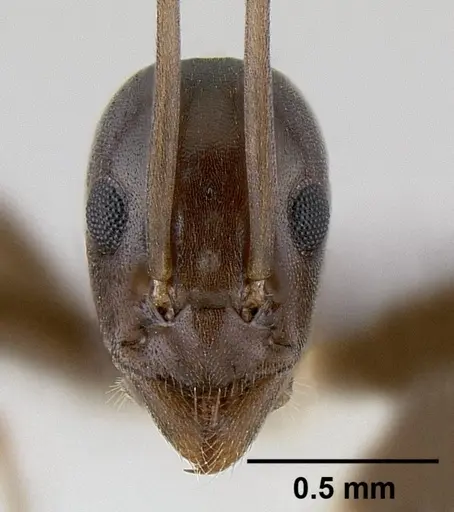
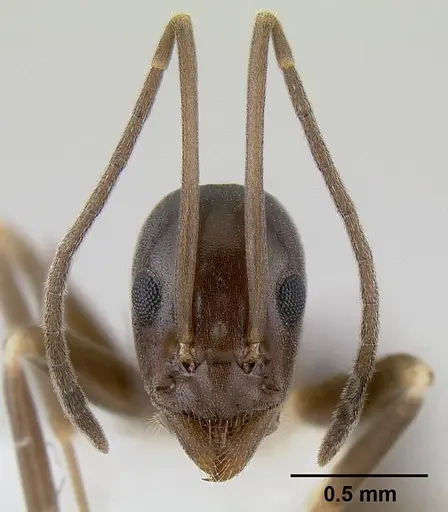
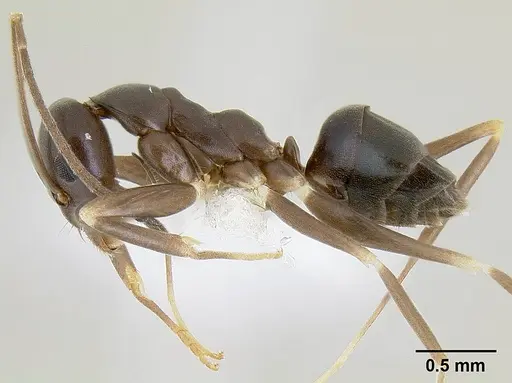
Leptomyrmex burwelli is a very small ant species in the micro-Leptomyrmex clade, distinguished by a humped mesonotum and yellow-brown coloration . It is restricted to rainforests in south-eastern Queensland, Australia, with one record just across the border in NSW . What makes L. burwelli interesting is its reproductive biology: queens are ergatoid (wingless), which limits colony dispersal . They nest under rocks or in rotten wood and forage on ground and vegetation .
Quick Summary
- Difficulty: Medium
- Origin & Habitat: Rainforests of south-eastern Queensland, Australia, with one record in NSW. Nests under rocks or in rotten wood [1][3].
- Colony Type: Single-queen colonies with ergatoid (wingless) queens [4][5].
- Size & Growth:
- Queen: Size data unavailable, no total length measurements in literature.
- Worker: Size data unavailable, no total length measurements in literature.
- Colony: Unknown, no colony size data available.
- Growth: Moderate, inferred from tropical rainforest habitat.
- Development: Unknown, no specific data for this species. (Development time is unconfirmed.)
- Antkeeping:
- Temperature: Keep warm, roughly 24-28°C, based on rainforest origin [1].
- Humidity: Keep nest substrate consistently moist but not waterlogged, as they are rainforest ants [1].
- Diapause: No, tropical species do not require hibernation.
- Nesting: Prefer humid nests such as Y-tong, plaster, or naturalistic setups that retain moisture [1].
- Behavior: Workers are active foragers on ground and vegetation [1]. They are not aggressive but may bite if disturbed. Escape prevention is critical due to very small size [1].
- Common Issues: escape prevention is critical due to very small size, they can squeeze through tiny gaps., humidity management is essential, dry conditions can stress or kill colonies., wild-caught colonies may have parasites or diseases that cause failure., founding stage may be slow due to ergatoid queens., limited availability makes this a specialty species for collectors.
Housing and Nest Setup
Leptomyrmex burwelli requires a humid nest environment that mimics their natural habitat under rocks or in rotten wood [1]. Use Y-tong, plaster, or naturalistic setups that retain moisture. Ensure all connections between nest and outworld are sealed with cotton or fine barriers due to their small size. Provide an outworld with substrate for foraging, such as moist soil [1].
Feeding and Diet
Diet specifics are not documented, but based on genus patterns, they are likely omnivorous. Offer sugar water or honey water as a constant energy source, and provide small protein sources like fruit flies or tiny insects.
Temperature and Humidity
Maintain warm conditions around 24-28°C, as they originate from rainforests [1]. Humidity is critical, keep nest substrate moist but not waterlogged, with a gradient for self-regulation [1].
Colony Structure and Reproduction
Queens are ergatoid (wingless), limiting dispersal [4][5]. Colonies likely expand through budding rather than nuptial flights. Specific reproductive cycles are unconfirmed in literature.
Behavior and Observation
Workers forage on ground and vegetation [1]. They are not aggressive but may bite if threatened. Escape prevention is essential due to tiny size, use fine mesh and fluon barriers [1].
Seasonal Care
As a tropical species, no hibernation is needed. Maintain stable warm temperatures year-round. Monitor humidity, especially in winter when heating can dry nests.
Frequently Asked Questions
How long does it take for Leptomyrmex burwelli to produce first workers?
The exact development time is unknown for this species. No specific data is available in the literature.
Can I keep multiple Leptomyrmex burwelli queens together?
Colony structure is unconfirmed, but ergatoid queens suggest single-queen colonies. Combining unrelated queens is not recommended as it has not been documented.
What do Leptomyrmex burwelli eat?
Diet is unconfirmed, but they are likely omnivorous. Offer sugar water and small protein sources like fruit flies.
Are Leptomyrmex burwelli good for beginners?
This species is rated Medium difficulty. It requires specific humidity and temperature control, and escape prevention due to small size, which may challenge beginners.
How big do Leptomyrmex burwelli colonies get?
Colony size is unknown, no data is available in scientific literature.
Do Leptomyrmex burwelli need hibernation?
No, as a tropical rainforest species, they do not require diapause. Maintain stable warm temperatures year-round.
Why are my Leptomyrmex burwelli escaping?
Their very small size makes them excellent escape artists. Use fine mesh barriers and check seals regularly [1].
When should I move Leptomyrmex burwelli to a formicarium?
Start in a test tube setup for founding. Move to a humid formicarium once the colony shows signs of outgrowing the tube, but timing is unconfirmed.
Report an Issue
The current care sheet is based fully on literature. See inconsistencies, or something that's incorrect? Please , it will be resolved after review from an admin. Contributing to the blogs tab also helps providing information, to make us be able to further improve the caresheets. Thank you for your support!
References

This caresheet is licensed under CC BY-SA 4.0 .
Community Blogs
CASENT0012048
View on AntWeb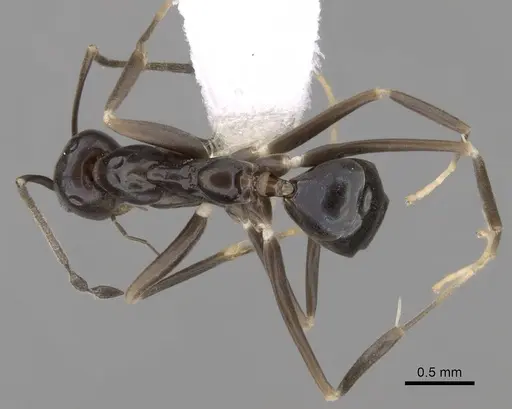
CASENT0106001
View on AntWeb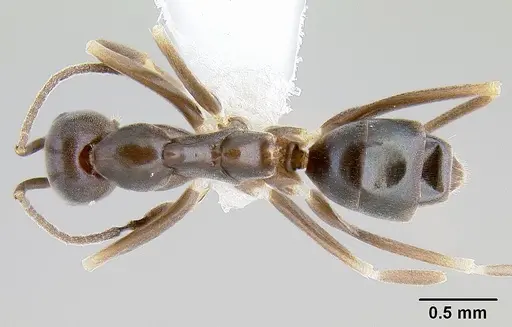
Literature
Loading distribution map...Loading products...