
Leptogenys tama
- Sci. Name
- Leptogenys tama
- Tribe
- Ponerini
- Subfamily
- Ponerinae
- Author
- Lattke, 2011
- Distribution
- Found in 0 countries
Introduction
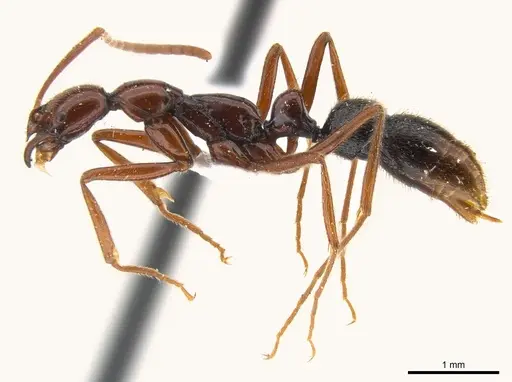
Leptogenys Tama is a small predatory ant species from the Ponerinae subfamily, recently described in 2011 from a single worker specimen collected in Tamá National Park in northern Colombia . Workers have a slender, elongated body predominantly brown in color, though abdominal segments III and IV are distinctly black . The species is known only from its type locality in the Serranía de Motilones mountains at approximately 1250m elevation, an area of exceptional biological diversity straddling the Colombia-Venezuela border . This is one of the most poorly known ant species in captivity, with virtually no documented biological or behavioral data beyond the original description.
Quick Summary
- Difficulty: Expert
- Origin & Habitat: Known only from Tamá National Park in Norte de Santander, Colombia, in the Serranía de Motilones mountains at 1250m elevation [1]. The region features humid premontane forest with rich biodiversity.
- Colony Type: Unknown, only a single worker specimen has ever been collected. Colony structure has not been documented.
- Size & Growth:
- Queen: Unknown, queen caste has not been described [2]
- Worker: ~5-6 mm, inferred from Leptogenys genus patterns (no total length measurement available)
- Colony: Unknown
- Growth: Unknown
- Development: Unknown, no data available for this species (Development timeline cannot be estimated from available data.)
- Antkeeping:
- Temperature: Likely requires warm, stable conditions around 24-28°C based on its tropical premontane origin. Provide a gentle temperature gradient allowing the colony to self-regulate.
- Humidity: Requires high humidity, aim for 70-85% relative humidity. Keep the nest substrate consistently moist but not waterlogged, reflecting the humid forest floor conditions of its natural habitat.
- Diapause: Unknown, tropical ants from this elevation may not require strong diapause, but no data exists for this species.
- Nesting: No specific nesting data exists. Based on genus patterns, Leptogenys species typically nest in soil, under stones, or in rotting wood. A naturalistic setup with moist substrate or a Y-tong/plaster nest works well.
- Behavior: Behavior is undocumented for this species. Based on genus patterns, Leptogenys are typically active predators that hunt small invertebrates. They are likely more active and aggressive compared to many captive-kept ants. Given their small size, escape prevention is critical, they can easily slip through standard barriers.
- Common Issues: no biological data exists, this is one of the least studied ant species in captivity, colony establishment may be difficult since founding behavior is completely unknown, temperature and humidity requirements are inferred, not confirmed, only a single specimen has ever been collected in the wild, so captive populations are extremely rare, slow growth and lack of data means keepers must experiment with care parameters
Species Discovery and Rarity
Leptogenys Tama was only formally described in 2011 by J.E. Lattke based on a single worker specimen collected in Tamá National Park in Norte de Santander, Colombia [1]. This makes it one of the rarest and least studied ant species in the world. The type locality sits in the Serranía de Motilones mountains, a range that forms part of the border between Colombia and Venezuela. The area is known for its exceptional biodiversity but has been poorly sampled due to challenging access and security concerns. The species name 'tama' directly references Tamá National Park where it was discovered [2]. This species represents a significant knowledge gap in ant biology, virtually every aspect of its natural history from colony structure to feeding behavior remains completely undocumented.
Identification and Morphology
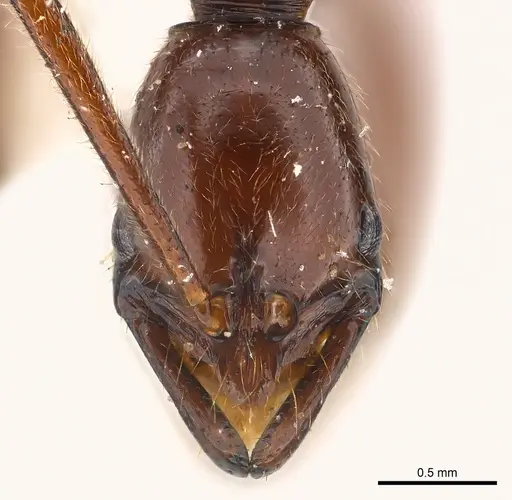
Workers of Leptogenys Tama are small and slender, with a body length of approximately 5-6mm inferred from genus patterns. The body is predominantly brown with a distinctive black coloration on abdominal segments III and IV, giving these ants a striking two-toned appearance [2]. The eyes are convex but relatively small, occupying less than one-fourth of the lateral cephalic margin. The petiole (the narrow 'waist' segment) is relatively dome-shaped when viewed from the side, with its highest point toward the rear. The antennae are notably long, with the scape extending beyond the posterior head margin by almost half its length. The mandibles are elongate and edentate (toothless), which is typical of the genus. This species can be distinguished from related Leptogenys by its unique combination of eye position, petiole shape, and the distinctive black abdominal segments.
Defense Mechanism
Leptogenys belongs to the Ponerinae subfamily, which are primitive hunting ants equipped with a functional stinger. While the sting of this tiny species would be negligible to humans, they possess the anatomical capability to deliver venom if threatened. Their primary defense is likely escape and alarm pheromone release rather than stinging.
Genus-Level Care Guidance
Since no specific biological data exists for Leptogenys Tama, care must be based on general patterns observed across the Leptogenys genus. Leptogenys ants are predatory Ponerines that actively hunt small invertebrates, primarily springtails, mites, and other micro-arthropods. They are typically more active and alert than many captive ant species, with workers constantly patrolling and exploring. The genus generally prefers warm, humid conditions similar to tropical forest floors. Given the complete lack of captive breeding data, keepers should approach this species as experimental and document their observations carefully.
Housing and Nest Setup
Based on genus preferences, Leptogenys Tama likely thrives in humid, naturalistic setups that replicate forest floor conditions. A Y-tong nest with moist plaster or soil substrate works well for Ponerine ants. Alternatively, a naturalistic terrarium-style setup with live moss, leaf litter, and a moisture reservoir allows for natural foraging behaviors. The nest chamber should be appropriately scaled to their small size, tight enough that workers feel secure but with enough space for colony expansion. Provide a water tube and keep the nest substrate consistently moist. Since escape prevention is critical for such small ants, use fine mesh barriers and ensure all connections are sealed. A small outworld for foraging allows you to observe their hunting behavior.
Feeding and Nutrition
As predatory ants, Leptogenys Tama almost certainly requires live small invertebrates as their primary food source. Based on genus patterns, they likely accept springtails, small isopods, booklice, and other micro-arthropods. Offer prey items that are appropriately sized, tiny insects that the workers can subdue and transport. Feed every 2-3 days, removing any uneaten prey after 24 hours to prevent mold. Sugar sources may be accepted occasionally, but Leptogenys are not typically strong foragers on honeydew or sugar water like some other ants. The focus should be on protein-rich live prey.
Temperature and Seasonal Care
Leptogenys Tama originates from a tropical premontane environment at approximately 1250m elevation in northern Colombia. This suggests they prefer warm, stable temperatures in the range of 24-28°C. A heating cable on one side of the nest creates a gentle gradient allowing the colony to regulate its own temperature. Avoid temperature extremes or sudden fluctuations. Regarding diapause (winter rest), tropical ants from this elevation may not require a true hibernation period, but cool the colony slightly (to around 20-22°C) during winter months to simulate seasonal changes. Monitor colony activity, if workers become sluggish, slightly reduce feeding and maintain stable temperatures. The high humidity requirements mean condensation should be visible in the nest setup.
Frequently Asked Questions
How difficult is Leptogenys Tama to keep?
Difficulty level cannot be accurately assessed since this species has never been documented in captivity. Based on genus patterns, it is likely challenging, requiring specific humidity, temperature, and live prey. This is an expert-level species for experienced antkeepers who can experiment with care parameters.
What do Leptogenys Tama ants eat?
Based on genus patterns, they are predatory ants that hunt small live invertebrates. Offer springtails, tiny isopods, booklice, and other micro-arthropods. Protein-rich live prey should be their primary food source.
How long does it take for Leptogenys Tama to produce first workers?
The egg-to-worker timeline is completely unknown for this species. Without any captive data, this cannot be precisely estimated.
Do Leptogenys Tama ants sting?
Ponerine ants like Leptogenys have stingers, though given their small size, any sting would be negligible to humans. They are more likely to use their mandibles if threatened.
Can I keep multiple Leptogenys Tama queens together?
Colony structure is completely unknown for this species. The single known specimen provides no information about whether they are single-queen (monogyne) or multi-queen (polygyne). Do not attempt combining unrelated queens without data.
What temperature should I keep Leptogenys Tama at?
Based on their tropical premontane origin, aim for 24-28°C. Provide a gentle temperature gradient so the colony can self-regulate. Avoid temperatures below 20°C or above 32°C.
What humidity level do Leptogenys Tama ants need?
They require high humidity, likely 70-85% relative humidity. Keep the nest substrate consistently moist but not waterlogged. The humid conditions should reflect their forest floor origin in Tamá National Park.
Are Leptogenys Tama ants aggressive?
Behavior is unconfirmed, but Leptogenys genus members are typically active, alert predators. They are likely more aggressive than many captive ant species when defending their nest or hunting prey. Handle with care and use excellent escape prevention.
How big do Leptogenys Tama colonies get?
Maximum colony size is unknown. The single known specimen provides no colony data. Based on genus patterns, Leptogenys colonies are typically smaller, but this is purely speculative.
Where can I get Leptogenys Tama ants?
This species is extremely rare in the antkeeping hobby. It has only been collected once in the wild and may not be available commercially. Any colonies in captivity would be exceptionally valuable and should be carefully documented.
Do Leptogenys Tama need hibernation?
Diapause requirements are unknown. As a tropical ant from 1250m elevation, they likely do not require true hibernation. A slight cooling period (20-22°C) during winter months may be appropriate, but this is inferred, not confirmed.
What is the best nest type for Leptogenys Tama?
A Y-tong or plaster nest with moist substrate works well for this species. The chambers should be appropriately scaled to their small size. Alternatively, a naturalistic setup with moist soil and leaf litter allows for more natural behaviors.
Report an Issue
The current care sheet is based fully on literature. See inconsistencies, or something that's incorrect? Please , it will be resolved after review from an admin. Contributing to the blogs tab also helps providing information, to make us be able to further improve the caresheets. Thank you for your support!
References

This caresheet is licensed under CC BY-SA 4.0 .
Community Blogs
CASENT0217010
View on AntWeb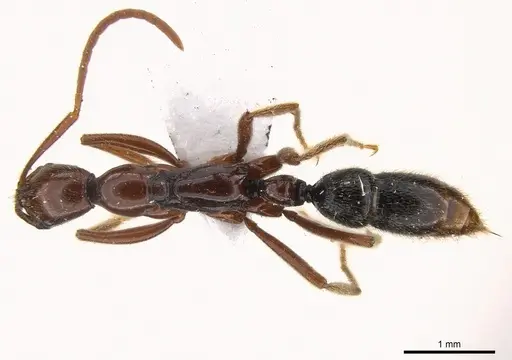
Literature
Loading distribution map...Loading products...