
Leptogenys saussurei
- Sci. Name
- Leptogenys saussurei
- Tribe
- Ponerini
- Subfamily
- Ponerinae
- Author
- Forel, 1891
- Distribution
- Found in 1 countries
Introduction
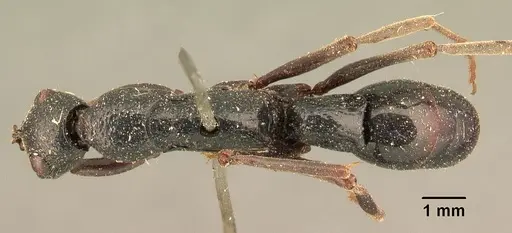
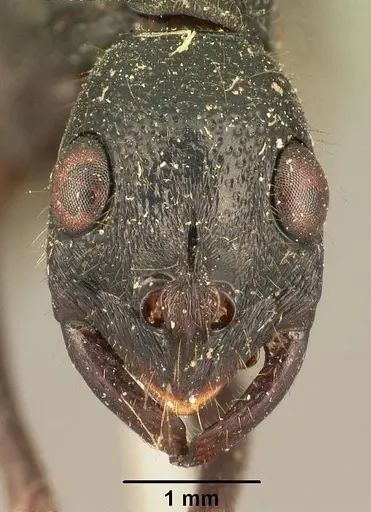
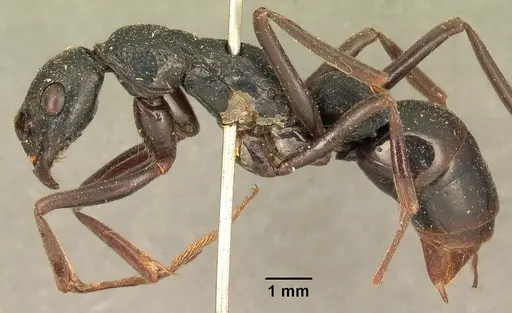
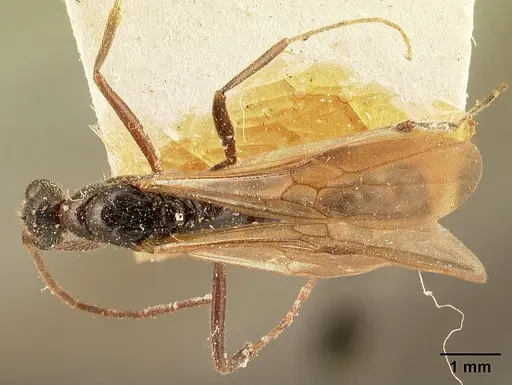
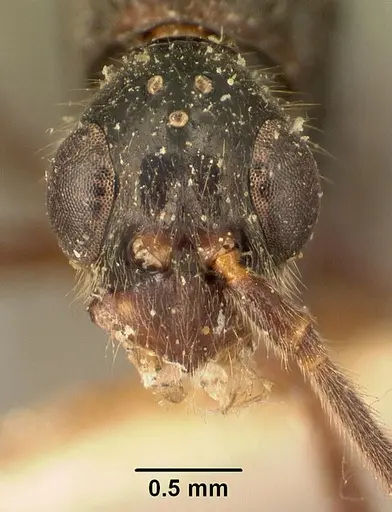
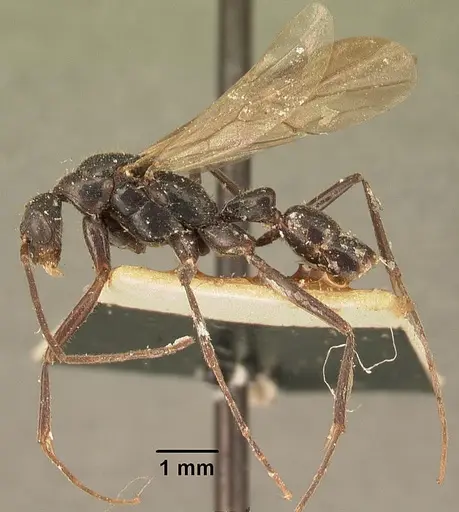
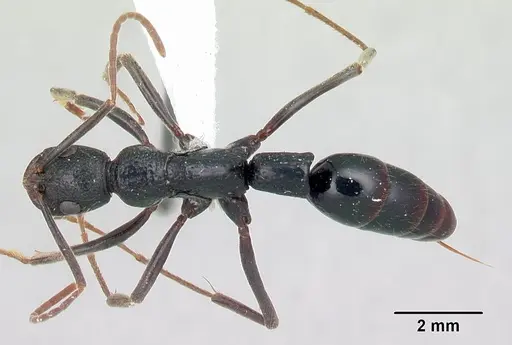
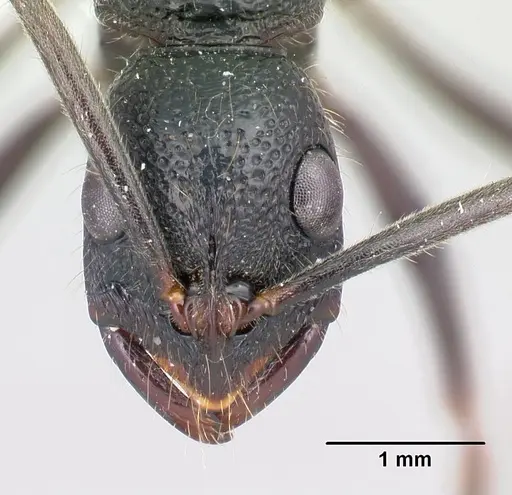
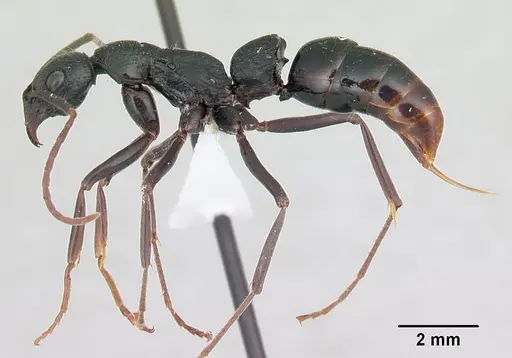
Leptogenys saussurei is a ponerine ant endemic to Madagascar, found in rainforest and montane rainforest habitats from the north to the south of the island . Workers have a bluish reflection on their dark body, large eyes, and robust elongated mandibles . The species is notable for having ergatoid queens - wingless queens with a thorax almost identical to workers .
Quick Summary
- Difficulty: Medium
- Origin & Habitat: Endemic to Madagascar, found in rainforest and montane rainforest habitats, foraging on the forest floor and in leaf litter, and nesting in rotten logs and dead branches on the ground [1].
- Colony Type: Ergatoid queen system, colonies have wingless queens with a simplified thorax similar to workers [1].
- Size & Growth:
- Queen: Size data unavailable
- Worker: Size data unavailable
- Colony: Unknown
- Growth: Moderate, inferred from typical ponerine development
- Development: Estimated 6-10 weeks at optimal temperature, inferred from genus patterns (Development time is inferred as species-specific measurements are not available)
- Antkeeping:
- Temperature: Keep warm, around 24-27°C, based on Madagascar rainforest habitat [1]
- Humidity: Keep nest substrate consistently moist but not waterlogged, as they are forest-floor ants [1]
- Diapause: Unknown
- Nesting: Provide a nest with tight chambers, such as Y-tong or plaster with moisture reservoirs, mimicking rotten logs and dead branches [1]
- Behavior: Leptogenys saussurei is a terrestrial forager and predator, hunting on the forest floor [1]. As a ponerine ant, it has a functional stinger and can be defensive when disturbed. Escape prevention is important due to their agility.
- Common Issues: low humidity can cause colony stress, keep substrate moist but not waterlogged, lack of live prey can lead to starvation, they are predators and need small arthropods, temperature extremes can harm the colony, maintain stable warmth, wild-caught colonies may have parasites, source from reputable breeders
Nest Preferences
In the wild, Leptogenys saussurei nests in rotten logs and dead branches on the ground [1]. In captivity, provide a naturalistic setup with damp substrate or a Y-tong/plaster nest with moisture chambers to mimic their natural habitat.
Feeding and Diet
Leptogenys saussurei is a predator that forages terrestrially on the forest floor [1]. In captivity, offer small live prey such as fruit flies, pinhead crickets, and mealworms. Protein should be the primary food source.
Temperature and Care
Keep temperatures around 24-27°C, based on their rainforest habitat [1]. Use a gentle thermal gradient to allow thermoregulation. Maintain humidity by keeping the nest substrate moist.
Behavior and Temperament
This species is a day-active hunter with large eyes. Ponerine ants like Leptogenys are typically defensive and may use their stinger when threatened. Ensure excellent escape prevention due to their agility. [1]
Colony Structure and Ergatoid Queens
Leptogenys saussurei has ergatoid queens, wingless reproductive females with a thorax almost identical to workers [1]. This allows colonies to continue if the primary queen dies.
Frequently Asked Questions
How long does it take for Leptogenys saussurei to produce first workers?
The exact timeline is not documented. Based on typical ponerine development, expect 6-10 weeks from egg to first worker at optimal temperature [1].
What should I feed my Leptogenys saussurei colony?
Feed them small live prey such as fruit flies, pinhead crickets, and mealworms [1]. Protein is their primary food source.
Are Leptogenys saussurei good for beginners?
This species is rated as Medium difficulty. They require specific humidity and temperature conditions and need live prey, which may be challenging for beginners.
Can I keep multiple Leptogenys saussurei queens together?
The colony structure appears to be single-queen based on the ergatoid system [1]. Combining unrelated queens is not recommended.
What humidity do Leptogenys saussurei need?
Keep the nest substrate consistently moist but not waterlogged, as they are forest-floor ants [1].
When should I move my Leptogenys saussurei to a formicarium?
Wait until the colony is established with several workers. Initially, use a test tube setup to maintain humidity.
Do Leptogenys saussurei need hibernation?
Hibernation requirements are unknown for this species. Madagascar does not have harsh winters, so diapause may not be necessary.
How big do Leptogenys saussurei colonies get?
Exact colony size is not documented. Based on related species, colonies may reach moderate sizes, but data is unavailable.
Why are my Leptogenys saussurei dying?
Common causes include low humidity, temperature extremes, lack of live prey, or stress from disturbance. Ensure proper care conditions [1].
Report an Issue
The current care sheet is based fully on literature. See inconsistencies, or something that's incorrect? Please , it will be resolved after review from an admin. Contributing to the blogs tab also helps providing information, to make us be able to further improve the caresheets. Thank you for your support!
References

This caresheet is licensed under CC BY-SA 4.0 .
Community Blogs
Literature
Loading distribution map...Loading products...