
Leptogenys sahamalaza
- Sci. Name
- Leptogenys sahamalaza
- Tribe
- Ponerini
- Subfamily
- Ponerinae
- Author
- Rakotonirina & Fisher, 2014
- Distribution
- Found in 1 countries
Introduction
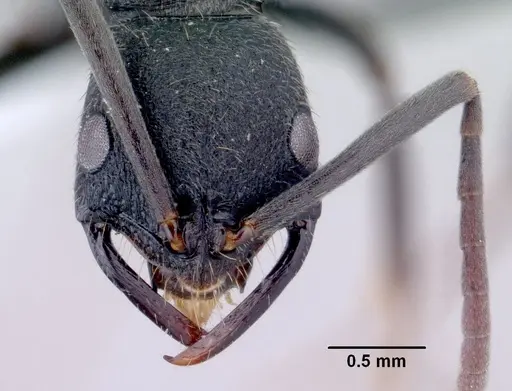
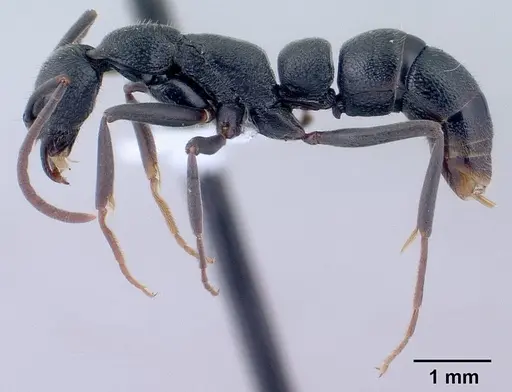
Leptogenys sahamalaza is an extremely rare Ponerine ant from northwestern Madagascar, known only from a single worker specimen collected in the tropical dry forest of Parc National Sahamalaza in 2001 . Workers are small for the genus, with a distinctive black body and brownish leg tips and gaster tip . They belong to the voeltzkowi species complex within the incisa species group, characterized by their narrow rounded clypeal lobe with small peg-like setae, short antennal scapes, and eyes that extend beyond the head margin when viewed head-on . This species is one of the rarest ants in the world - only one specimen has ever been documented, meaning virtually all aspects of their biology in captivity remain speculative or unknown.
Quick Summary
- Difficulty: Expert
- Origin & Habitat: Northwestern Madagascar, Parc National Sahamalaza, tropical dry forest at 120m elevation [1]
- Colony Type: Unknown, only a single worker has ever been documented [1]
- Size & Growth:
- Queen: Undocumented, no queens have been collected or described
- Worker: size data unavailable, only head width (1.32mm) and mesosoma length (2.44mm) measurements exist [1]
- Colony: Unknown, only one worker specimen exists
- Growth: Unknown
- Development: Unconfirmed, no direct observations of colony development exist for this species (Development timeline is entirely unknown for this species)
- Antkeeping:
- Temperature: Keep warm around 24-28°C, this matches the tropical dry forest climate of their native range in Madagascar. Use a heating cable on one side of the nest to create a gentle gradient.
- Humidity: Moderate to high, aim for 60-80% humidity. Provide a moist nest substrate but allow some drying areas. Mist occasionally and keep a water tube attached.
- Diapause: Unknown, no data on seasonal behavior exists. Given their Madagascar origin, they likely do not require true hibernation but may slow down during cooler months.
- Nesting: Y-tong (AAC) nests or plaster nests work well for this size. Provide tight chambers scaled to their small size. They were found foraging on the ground in dry forest, so a naturalistic setup with some soil depth may be appropriate.
- Behavior: Behavior is unstudied in captivity. Based on genus patterns, expect them to be predatory Ponerine ants, active hunters of small invertebrates. They possess a sting but this species is very small so the effect would be minimal. Escape prevention should be moderate since they are small but not among the tiniest ants. Handle gently as Ponerines can be defensive when disturbed.
- Common Issues: only one wild specimen has ever been found, captive colonies do not exist and wild collection is extremely difficult, no information on founding behavior means successful colony establishment is speculative, diet preferences are unknown, must experiment with small live prey, growth rate and colony development timeline are entirely unknown, temperature and humidity requirements are inferred from habitat, not from captive observations, this species is essentially unavailable to antkeepers due to its extreme rarity
Species Discovery and Rarity
Leptogenys sahamalaza was described in 2014 by Rakotonirina and Fisher based on a single worker specimen collected in March 2001 from Parc National Sahamalaza in northwestern Madagascar [1]. The specimen was found in a pitfall trap in tropical dry forest habitat at 120 meters elevation [1]. This species belongs to the voeltzkowi complex within the incisa species group of Leptogenys [1]. The fact that only one specimen has been collected in over two decades of ant surveys in Madagascar suggests this species is either extremely rare in the wild, has very limited distribution, or is difficult to capture with standard sampling methods. For antkeepers, this means captive colonies are essentially nonexistent and this species remains in the realm of scientific curiosity rather than practical husbandry.
Identification and Morphology
Workers are small for the genus Leptogenys. The head is roughly subquadrate with slightly convex sides that diverge toward the front. Their most distinctive features include a narrow, rounded median lobe on the clypeus (front of the head) with small peg-like setae, and eyes that extend beyond the lateral outline of the head when viewed head-on [1]. The mandibles are elongate and noticeably curved near the base. The antennal scape is relatively short, less than one-third extends past the posterior margin of the head [1]. The body is black with brownish coloration on the apical portions of the legs and the tip of the gaster (abdomen) [1]. The third abdominal segment has fine reticulate-rugulose (net-like wrinkle) sculpture.
Native Habitat and Climate
This species is known only from the tropical dry forest of Parc National Sahamalaza in northwestern Madagascar [1]. The region experiences a warm climate with distinct wet and dry seasons. Average temperatures in the area range from 25-30°C year-round, with higher humidity during the wet season (November to March) and drier conditions during the dry season [2]. The 120m elevation suggests they occur in lowland forest rather than highland areas. For captive care, this suggests warm temperatures in the mid-to-high 20s Celsius and moderate humidity, not rainforest-level wet but not arid either.
Inferred Care Requirements
Since no captive husbandry information exists for this species, care must be inferred from related Leptogenys species and their natural history. Leptogenys are predatory Ponerine ants that typically hunt small invertebrates. For feeding, start with small live prey like fruit flies, pinhead crickets, or small mealworms. You may need to offer a variety to determine preferences. Temperature should be warm, aim for 24-28°C with a gradient so ants can self-regulate. Humidity around 60-80% is appropriate, keeping the nest substrate moist but not waterlogged. Use a test tube setup initially or a small Y-tong nest scaled to their tiny size. Given how poorly known this species is, expect a learning curve and be prepared to adjust conditions based on colony behavior and survival.
Related Species in Captivity
While L. sahamalaza itself is not kept in captivity, other Leptogenys species from Madagascar and similar regions have been maintained by advanced antkeepers. The genus is known for active predatory behavior, these ants are efficient hunters that chase down prey rather than relying on mass recruitment. They possess a sting for subduing prey, though this species is small enough that sting severity would be minimal. Leptogenys colonies tend to be smaller than many common ant genera, often reaching only a few hundred workers at maximum. If you ever obtain this species, expect slow growth initially and be patient through the founding phase.
Frequently Asked Questions
Can I keep Leptogenys sahamalaza in captivity?
This species is essentially unavailable to antkeepers, only a single worker has ever been documented in scientific literature, and no colonies exist in captivity. The species was described in 2014 from one specimen, making it one of the rarest and least-studied ants in the world.
What do Leptogenys sahamalaza ants eat?
Diet is completely unconfirmed for this species. Based on typical Leptogenys behavior, they are likely predatory on small invertebrates. Start with small live prey like fruit flies, springtails, or tiny crickets. Sugar sources may or may not be accepted, experiment cautiously.
How long does it take for Leptogenys sahamalaza to develop from egg to worker?
No data exists for this specific species. Development timeline is entirely unknown.
Do Leptogenys sahamalaza ants sting?
Leptogenys are Ponerine ants and possess a sting, but this species is very small. While they likely can sting, the pain would be minimal due to their tiny size. Handle gently regardless.
What temperature do Leptogenys sahamalaza ants need?
No captive data exists. Based on their tropical dry forest habitat in Madagascar, keep them warm at 24-28°C. A heating cable on one side of the nest creates an appropriate gradient.
Are Leptogenys sahamalaza good for beginners?
No. This species is not just difficult, it is essentially unavailable since only one wild specimen has ever been found. Even if colonies existed, the complete lack of species-specific husbandry data would make successful keeping extremely challenging. This is an expert-only species that remains in the realm of scientific curiosity.
How big do Leptogenys sahamalaza colonies get?
Unknown, no colony has ever been documented. Based on related species, Leptogenys colonies typically reach a few hundred workers maximum. This species may never be available to find out.
Do Leptogenys sahamalaza need hibernation?
No data exists on their seasonal behavior. Given their origin in tropical Madagascar, they likely do not require true hibernation. They may slow down during cooler months but probably do not need a diapause period.
Can I keep multiple Leptogenys sahamalaza queens together?
This is completely unknown, no queen has ever been documented for this species, let alone multi-queen colony behavior. Do not attempt combining unrelated queens without any species-specific guidance.
Where does Leptogenys sahamalaza live in the wild?
Only known from Parc National Sahamalaza in northwestern Madagascar, at 120m elevation in tropical dry forest [1]. This is one of the most restricted distributions of any known ant species.
Report an Issue
The current care sheet is based fully on literature. See inconsistencies, or something that's incorrect? Please , it will be resolved after review from an admin. Contributing to the blogs tab also helps providing information, to make us be able to further improve the caresheets. Thank you for your support!
References

This caresheet is licensed under CC BY-SA 4.0 .
Community Blogs
CASENT0416181
View on AntWeb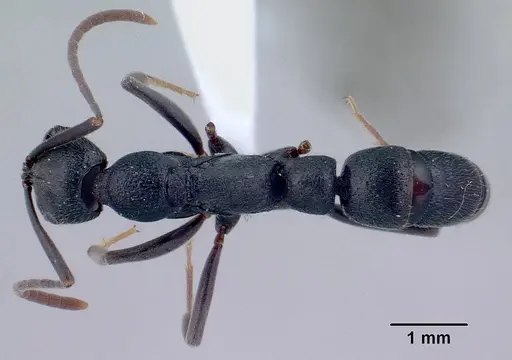
Literature
Loading distribution map...Loading products...