
Leptogenys pruinosa
- Sci. Name
- Leptogenys pruinosa
- Tribe
- Ponerini
- Subfamily
- Ponerinae
- Author
- Forel, 1900
- Distribution
- Found in 1 countries
Introduction
Leptogenys pruinosa is a medium-sized predatory ant native to Sri Lanka and the Philippines. Workers measure 6.8-7 mm and have a distinctive pruinose appearance with fine grayish pubescence . They are found in wet tropical zones, specifically in the wet zone of Sri Lanka and the Philippines . This species is part of the maxillosa species group and is known for its ground-dwelling predatory behavior, hunting small invertebrates with its long, slender mandibles .
Quick Summary
- Difficulty: Medium
- Origin & Habitat: Sri Lanka (wet zone) and Philippines, wet tropical forests [3][4]
- Colony Type: Based on Leptogenys patterns, likely monogyne (single queen colonies)
- Size & Growth:
- Queen: Size data unavailable, inferred from Leptogenys genus (~10-12 mm)
- Worker: 6.8-7 mm [1]
- Colony: No specific data on colony size, estimated based on Leptogenys patterns
- Growth: Moderate, typical for predatory Ponerinae
- Development: Unknown, estimated 6-10 weeks based on related Ponerinae species (Direct development data unavailable, estimate based on genus-level patterns)
- Antkeeping:
- Temperature: Keep warm, roughly 24-28°C, based on tropical wet zone habitat [3]
- Humidity: Keep substrate consistently moist but not waterlogged, as they inhabit wet forests [3]
- Diapause: No, tropical species do not require hibernation [3]
- Nesting: Ground-nesting species, prefer moist soil or nests with good humidity retention [4]
- Behavior: Leptogenys pruinosa is a predatory ant that hunts small invertebrates. Workers are medium-sized (6.8-7 mm), so escape prevention should be moderate. They are active foragers and likely have a functional sting as Ponerinae.
- Common Issues: tropical humidity requirements can lead to mold growth if ventilation is poor, predatory diet means they need live prey, beginners may struggle with feeding, slow colony growth compared to seed-eating ants can lead to keeper frustration, ground-nesting behavior requires proper moisture management in nests, limited available information means some care aspects are estimates rather than confirmed
Appearance and Identification
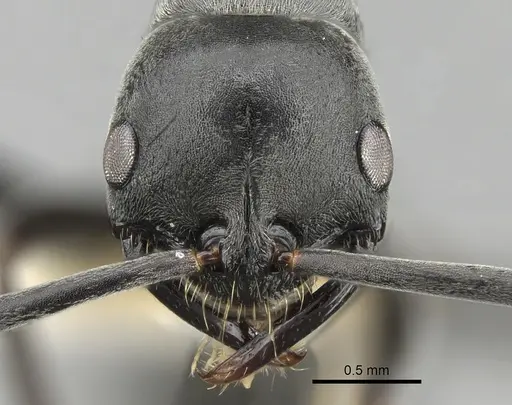
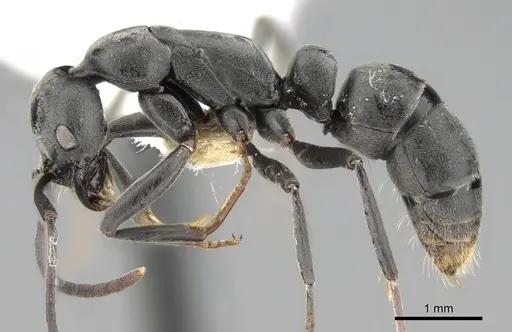
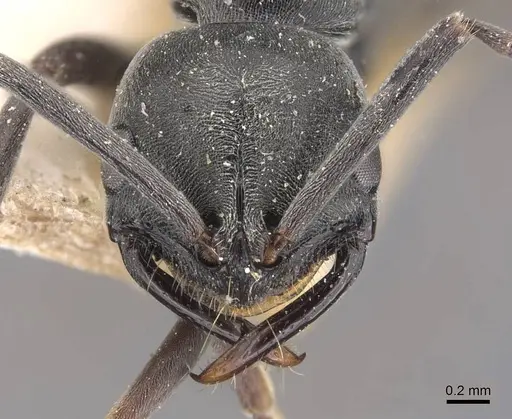
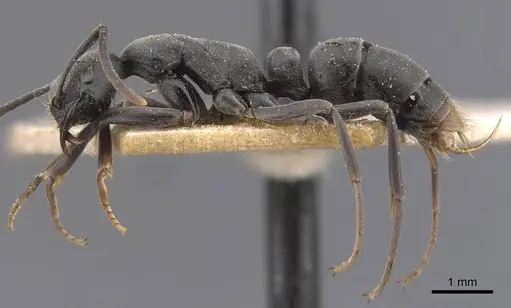
Leptogenys pruinosa workers are medium-sized ants measuring 6.8-7 mm in length [1]. They are easily recognized by their distinctive pruinose appearance, their entire body is covered in a fine grayish frosted pubescence [1][2]. The head is approximately as long as wide, and they possess long, narrow, arched and pointed mandibles adapted for hunting prey [2].
Natural Habitat and Distribution
This species is found in Sri Lanka and the Philippines. In Sri Lanka, they are restricted to the wet zone, characterized by high rainfall and tropical forest vegetation [3]. They are ground-dwelling ants, nesting in soil rather than in trees [4]. Studies confirm their presence in wet zones, with no records in dry zones [3].
Feeding and Diet
As a member of the subfamily Ponerinae, Leptogenys pruinosa is a predatory ant that hunts small invertebrates. Their long, slender mandibles are adapted for capturing prey [2]. In captivity, offer small live prey such as fruit flies or crickets. No specific diet data is available for this species, so feeding advice is based on general Ponerinae patterns.
Temperature and Humidity Requirements
Being a tropical species from Sri Lanka's wet zone, Leptogenys pruinosa requires warm and humid conditions. Maintain temperatures around 24-28°C based on their natural habitat [3]. Humidity is critical, keep substrate moist but not waterlogged, as they inhabit wet forests [3].
Nesting Preferences
Leptogenys pruinosa is a ground-nesting species that naturally excavates chambers in soil [4]. In captivity, use nests that retain humidity well, such as Y-tong or plaster nests. Provide a moisture source to prevent desiccation.
Colony Development
The colony structure likely follows typical Leptogenys patterns with single-queen colonies. Founding behavior is unconfirmed, but most Leptogenys are semi-claustral, meaning queens may leave the nest to hunt during founding. Colony growth is moderate, with development from egg to worker estimated at 6-10 weeks based on related species.
Frequently Asked Questions
How long does it take for Leptogenys pruinosa to produce first workers?
The exact timeline is unconfirmed. Based on related Ponerinae ants, it may take approximately 6-10 weeks from egg to first worker at optimal tropical temperatures.
What do Leptogenys pruinosa eat?
They are predatory ants that hunt small invertebrates. Feed them appropriately sized live prey such as fruit flies or crickets [2].
Can I keep Leptogenys pruinosa in a test tube?
Test tubes can work for founding colonies if high humidity is maintained. Consider transitioning to a humidity-retentive nest like Y-tong or plaster as the colony grows [4].
Are Leptogenys pruinosa good for beginners?
They are considered intermediate difficulty due to predatory diet, humidity needs, and slower growth. Not recommended as a first ant unless prepared for specific care requirements.
Do Leptogenys pruinosa need hibernation?
No, as a tropical species from Sri Lanka's wet zone, they do not require hibernation [3]. Maintain warm temperatures year-round.
How big do Leptogenys pruinosa colonies get?
Colony size data is unavailable. Based on Leptogenys patterns, colonies may reach up to several hundred workers, but no specific numbers are confirmed.
Why is my Leptogenys pruinosa colony declining?
Common causes include low humidity, insufficient protein prey, or stress from disturbance. Ensure proper moisture, warmth, and regular feeding with live prey.
When should I move Leptogenys pruinosa to a formicarium?
Move them when the colony outgrows the test tube setup, typically after reaching a stable number of workers. Use a nest with good humidity retention [4].
Can I keep multiple Leptogenys pruinosa queens together?
This is not recommended, as Leptogenys typically form single-queen colonies. Combining queens may result in aggression, and no data supports multi-queen setups for this species.
Report an Issue
The current care sheet is based fully on literature. See inconsistencies, or something that's incorrect? Please , it will be resolved after review from an admin. Contributing to the blogs tab also helps providing information, to make us be able to further improve the caresheets. Thank you for your support!
References

This caresheet is licensed under CC BY-SA 4.0 .
Community Blogs
CASENT0281920
View on AntWeb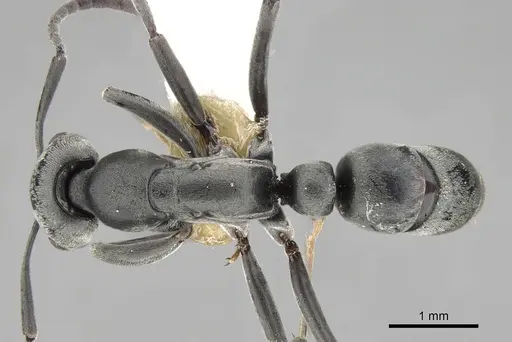
CASENT0907337
View on AntWeb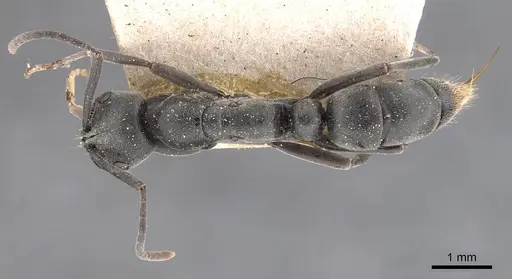
Literature
Loading distribution map...Loading products...