
Leptogenys pavesii
- Sci. Name
- Leptogenys pavesii
- Tribe
- Ponerini
- Subfamily
- Ponerinae
- Author
- Emery, 1892
- Distribution
- Found in 4 countries
Introduction
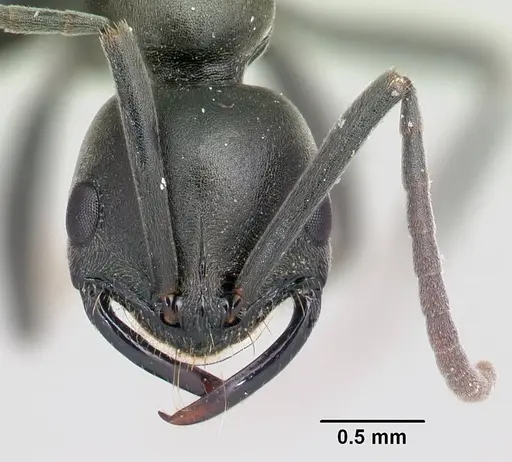
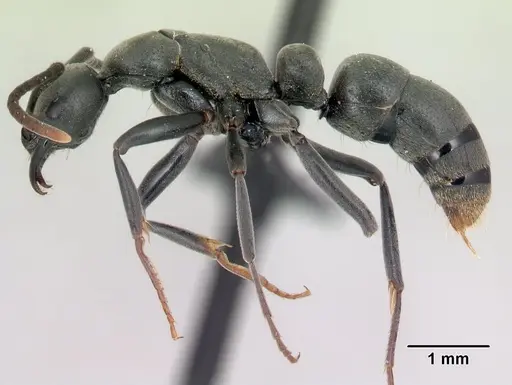
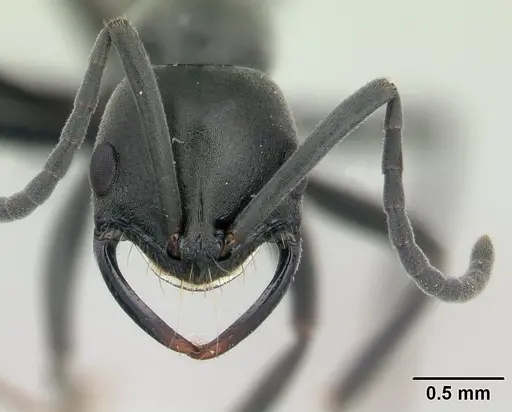
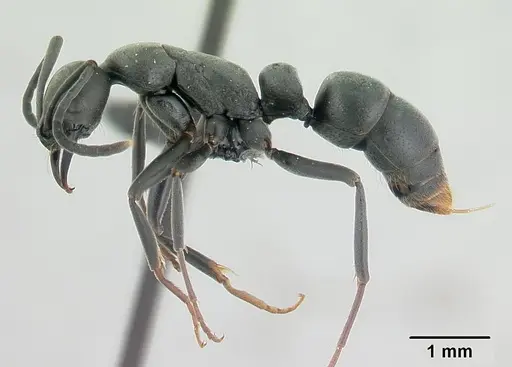
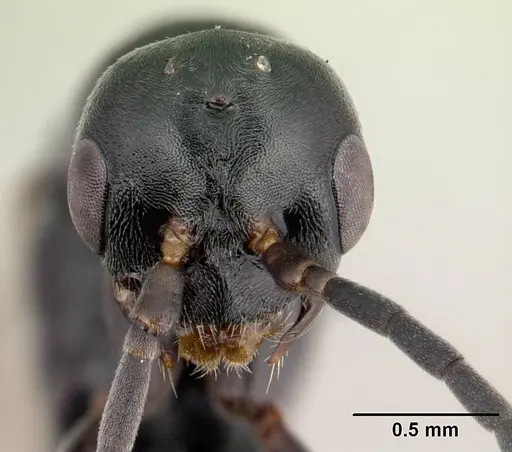
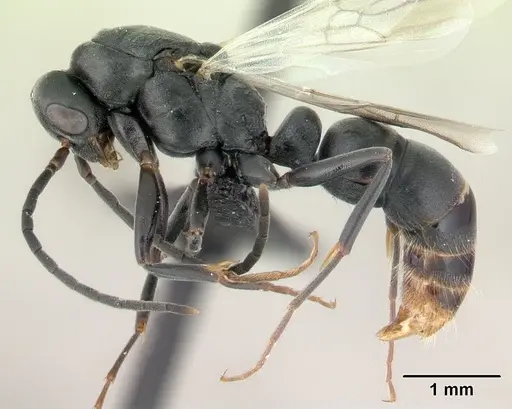
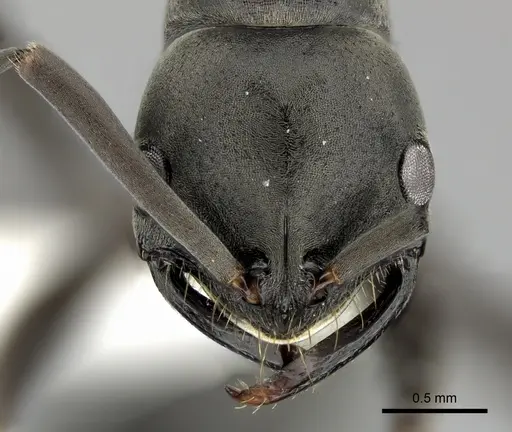
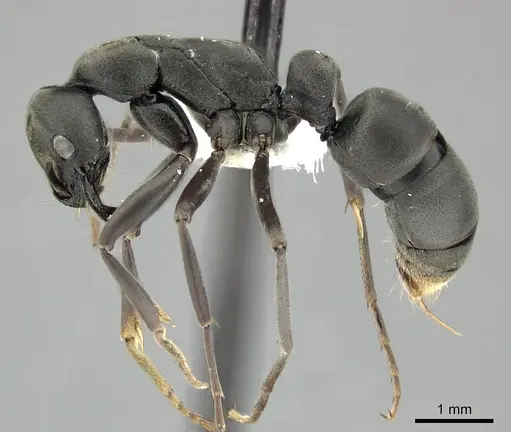
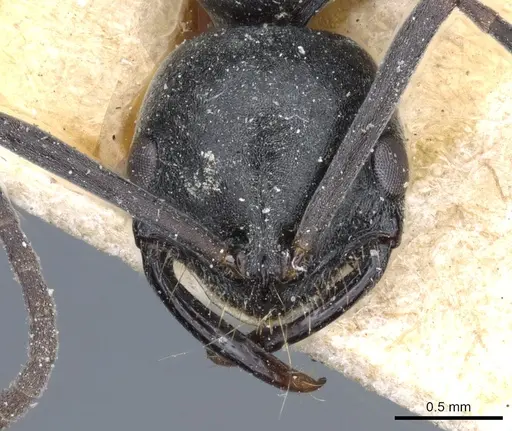
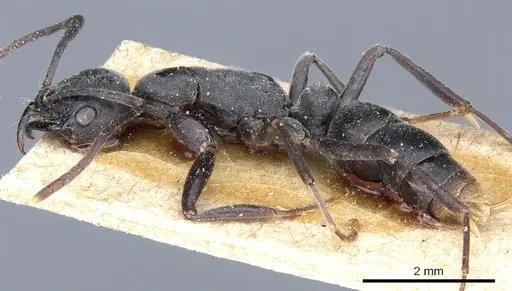
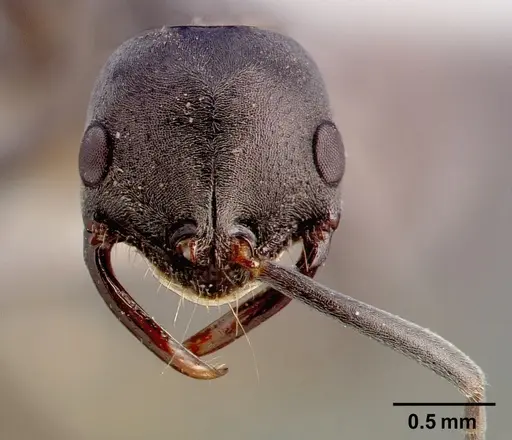
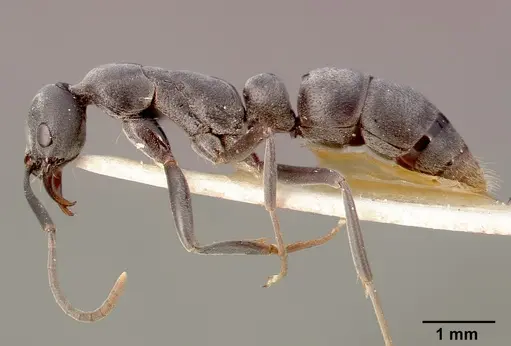
Leptogenys pavesii is a slender ponerine ant found across eastern Africa and the western Indian Ocean islands. Workers have a distinctive black body with dark brown to brown legs and gaster tip, covered with yellowish pubescence rather than standing hairs. The species is identified by its unique clypeal structure - a wide, broadly rounded translucent lamella on the anteromedian lobe. This ant occupies dry forests, mangrove areas, and urban gardens, making it one of the more adaptable Leptogenys species. Workers forage both on the forest floor and on low vegetation, hunting prey in these varied habitats.
Quick Summary
- Difficulty: Medium
- Origin & Habitat: Eastern Africa and western Indian Ocean islands including Madagascar, Mayotte, Mohéli, Somalia, Kenya, Cameroon, and Tanzania. Found in dry forests, mangrove areas, and urban gardens [1]. Workers inhabit rotten logs and tree bark [1].
- Colony Type: Colony structure is unconfirmed. Based on genus patterns, likely monogyne (single queen) colonies.
- Size & Growth:
- Queen: size data unavailable, no documented queen measurements available
- Worker: ~4-6mm, inferred from Leptogenys genus [1]
- Colony: Unknown, rarely collected species with limited colony data
- Growth: Unknown, estimated moderate based on typical Leptogenys patterns
- Development: Unconfirmed, no direct development data available for this species. (Development timeline is estimated from genus-level patterns, not directly studied for this species.)
- Antkeeping:
- Temperature: Keep at 24-28°C. This species occupies warm tropical and subtropical habitats, so provide moderate heat. A heating cable on one side of the nest creates a suitable gradient.
- Humidity: Moderate humidity around 60-75%. Their natural habitats include dry forests and mangroves, so they tolerate some variation. Keep nest substrate slightly moist but allow some drying between waterings.
- Diapause: No, given their tropical and subtropical distribution, they do not require hibernation.
- Nesting: In nature they nest in rotten logs and tree bark. In captivity, a naturalistic setup with rotting wood pieces or a Y-tong/plaster nest with narrow chambers works well. They prefer tight, enclosed spaces scaled to their small size.
- Behavior: Workers are active foragers that hunt on both the ground and low vegetation. As ponerine ants, they have a functional sting for subduing prey. They are likely moderately aggressive when defending the colony. Escape prevention should be good, while small, they are not tiny enough to escape through standard test tube setups.
- Common Issues: limited availability, this is a rarely collected species and may be difficult to acquire, unknown colony structure makes it hard to predict queen behavior in captivity, lack of captive breeding data means established protocols do not exist, predatory diet requirements may be challenging to meet consistently, potential escape through small gaps despite medium size
Nest Preferences and Housing
In the wild, Leptogenys pavesii nests in rotten logs and tree bark, using the decaying wood as both shelter and hunting ground. For captive colonies, provide a naturalistic setup with small pieces of rotting wood or cork, or use a Y-tong/plaster nest with chambers scaled to their small worker size. These ants prefer tight, enclosed spaces rather than open areas. A test tube setup can work for founding colonies, but transfer to a more naturalistic formicarium once the colony reaches 15-20 workers. Ensure the nest material can hold moisture without becoming waterlogged, these ants inhabit areas with periodic humidity but not permanent saturation. [1]
Feeding and Diet
Like other Leptogenys species, L. pavesii is predatory and likely hunts small invertebrates including springtails, mites, and other micro-arthropods. Workers forage on both the forest floor and low vegetation, suggesting they hunt a variety of small prey. In captivity, offer live small prey such as springtails, fruit flies, and other tiny insects. Protein-rich foods should form the basis of their diet. Sugar sources may be accepted occasionally, but do not rely on them as a primary food source. Feed every 2-3 days, adjusting based on colony size and consumption rate. Remove uneaten prey after 24 hours to prevent mold. [1]
Temperature and Seasonal Care
This species occupies warm tropical and subtropical habitats across eastern Africa and the Indian Ocean islands. Keep nest temperatures in the 24-28°C range for optimal activity and brood development. A heating cable placed on one side of the nest creates a temperature gradient allowing ants to self-regulate. Given their distribution spanning Somalia to Madagascar, they likely tolerate temperatures from 22-32°C but perform best in the warmer end of this range. No documented diapause requirement exists, and their tropical distribution suggests year-round activity is appropriate. Reduce feeding slightly during cooler months if colony activity decreases, but do not attempt true hibernation. [1]
Behavior and Colony Dynamics
Leptogenys pavesii workers are active foragers that search for prey both on the ground and on low vegetation. As a ponerine ant, they possess a functional sting for subduing prey, though the sting is likely too weak to cause significant discomfort to humans. The species is rarely collected, suggesting either low colony densities or specialized habitat preferences. Workers likely communicate through chemical signals and may use tandem-running to recruit nestmates to food sources. Colonies probably grow slowly given their predatory lifestyle and the limited available data on this species. Queen behavior during founding has not been documented. [1]
Acquisition and Legal Considerations
Leptogenys pavesii is a rarely collected species with limited distribution in the antkeeping hobby. If available, source from reputable breeders who specialize in African or Malagasy species. This species has been documented in multiple countries including Somalia, Kenya, Tanzania, Cameroon, Madagascar, and the Comoros islands. Before acquiring, verify local regulations regarding keeping this species in your area. Do not release this ant in non-native regions, the species has already shown ability to colonize human-modified habitats and could become invasive in new areas. [1]
Frequently Asked Questions
How long does it take for Leptogenys pavesii to produce first workers?
The exact development timeline is unconfirmed for this species. Based on typical Leptogenys genus patterns, expect several months from egg to first worker at optimal temperature (24-28°C). This is an estimate as no direct development data exists for L. pavesii.
What do Leptogenys pavesii ants eat?
They are predatory ants that hunt small invertebrates. Feed live springtails, fruit flies, and other tiny insects. Protein should be the primary food source. Sugar water may be occasionally accepted but should not be relied upon.
Can I keep Leptogenys pavesii in a test tube?
Test tubes work for founding colonies, but transfer to a more naturalistic setup with rotting wood or a Y-tong nest once the colony reaches 15-20 workers. They prefer tight chambers scaled to their small size.
Are Leptogenys pavesii good for beginners?
This species is not recommended for beginners. It is rarely kept in captivity, meaning established care protocols do not exist. Limited availability and lack of captive breeding data make it challenging even for experienced antkeepers.
What temperature do Leptogenys pavesii need?
Keep them at 24-28°C. A heating cable on one side of the nest creates a gradient. They occupy warm tropical and subtropical habitats, so they need consistent warmth.
How big do Leptogenys pavesii colonies get?
Colony size is unknown, this is a rarely collected species with no documented colony data. Based on typical Leptogenys patterns, colonies likely reach several hundred workers at most.
Do Leptogenys pavesii need hibernation?
No documented diapause requirement exists. Their tropical and subtropical distribution suggests year-round activity is appropriate. They may reduce activity slightly in cooler months but do not require true hibernation.
Where does Leptogenys pavesii live in the wild?
They are found across eastern Africa (Somalia, Kenya, Tanzania, Cameroon, Sudan) and the western Indian Ocean islands (Madagascar, Mayotte, Mohéli). Their habitats include dry forests, mangrove areas, and urban gardens.
When will Leptogenys pavesii be available in the antkeeping hobby?
This species is rarely collected and has limited availability in the antkeeping hobby. When available, source from specialized breeders working with African or Malagasy species. Availability may be sporadic.
Report an Issue
The current care sheet is based fully on literature. See inconsistencies, or something that's incorrect? Please , it will be resolved after review from an admin. Contributing to the blogs tab also helps providing information, to make us be able to further improve the caresheets. Thank you for your support!
References

This caresheet is licensed under CC BY-SA 4.0 .
Community Blogs
CASENT0125597
View on AntWeb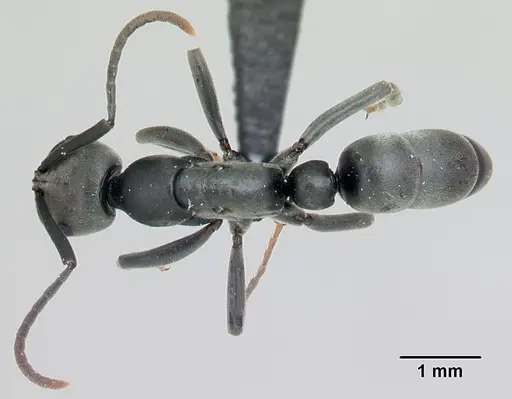
CASENT0132269
View on AntWeb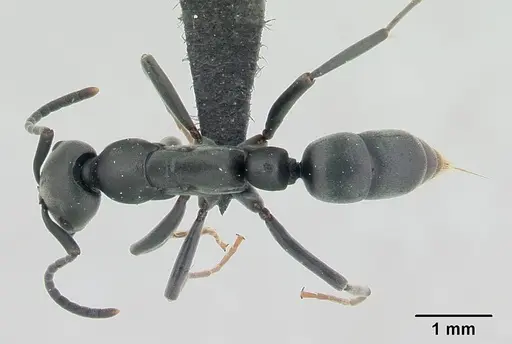
CASENT0132422
View on AntWeb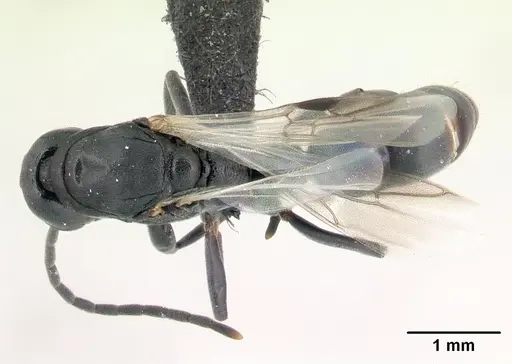
CASENT0270566
View on AntWeb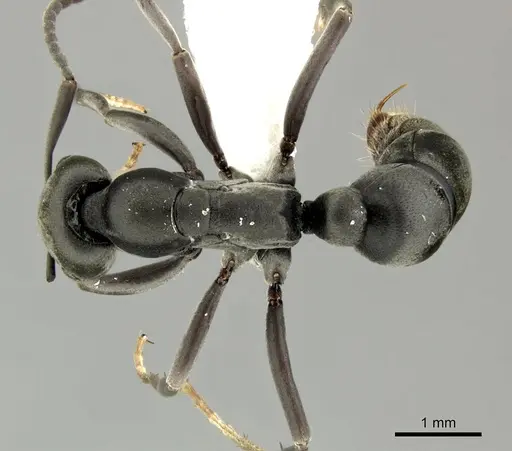
CASENT0903971
View on AntWeb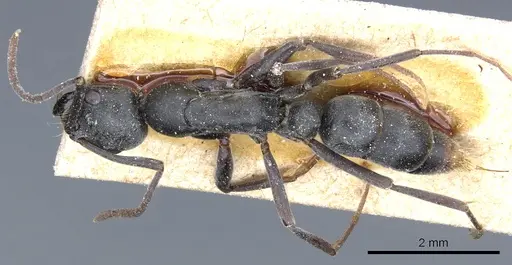
SAM-HYM-C002509
View on AntWeb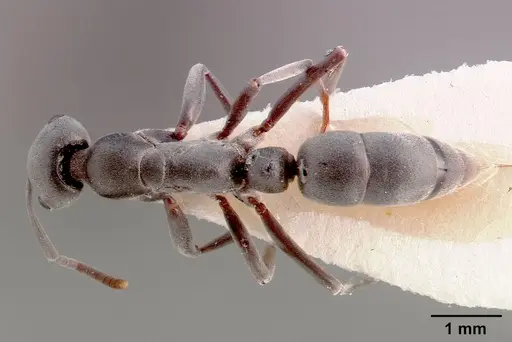
Literature
Loading distribution map...Loading products...