
Leptogenys nigricans
- Sci. Name
- Leptogenys nigricans
- Tribe
- Ponerini
- Subfamily
- Ponerinae
- Author
- Lattke, 2011
- Distribution
- Found in 1 countries
Introduction
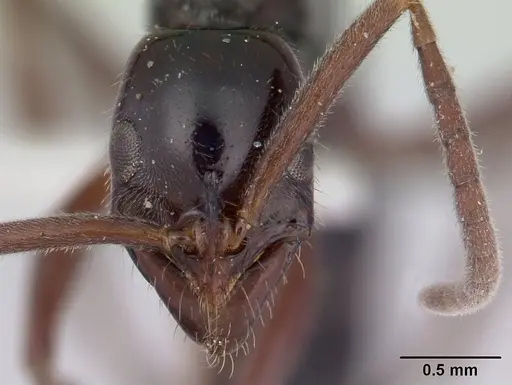
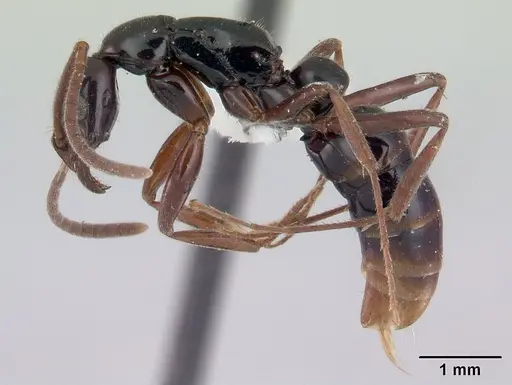
Leptogenys nigricans is a Ponerine ant from the Amazon basin in South America, recorded in Brazil, Colombia, and Ecuador . Workers are jet black with brown appendages (mandibles, antennae, legs). This species belongs to the quiriguana species group and is notable for being one of only two known Leptogenys species where queens retain distinct wing stumps and functional flight sclerites . It inhabits lowland tropical forests of the western and northwest Amazon watershed .
Quick Summary
- Difficulty: Expert
- Origin & Habitat: Amazon watershed in Brazil, Colombia, and Ecuador. Inhabits lowland tropical forests [3][1][2].
- Colony Type: Unknown, colony social structure has not been studied. Queens are winged, suggesting a single queen after mating flights [3].
- Size & Growth:
- Queen: Size data unavailable.
- Worker: Size data unavailable. Head length measurements (1.28-1.52 mm) are given in the literature but do not represent total body length [3].
- Colony: Unknown.
- Growth: Unknown
- Development: Unknown, not documented for this species. (No data available, all estimates are speculative.)
- Antkeeping:
- Temperature: Specific requirements are unknown. As a lowland Amazon species, warm, stable conditions (approx. 24-28°C) are likely. Keep away from cold drafts.
- Humidity: High humidity is inferred from its Amazon rainforest habitat. Keep nest substrate consistently moist but not waterlogged, with a water reservoir or regular light misting.
- Diapause: No diapause required. As a tropical species, it remains active year-round.
- Nesting: Preferred nest type is unknown. In captivity, provide a Y-tong (AAC), plaster, or soil nest with dark, humid chambers. Ensure good moisture retention.
- Behavior: As a Ponerine ant, Leptogenys nigricans is predatory and can sting (subfamily/general defense). Specific temperament and colony behavior are not documented. Given its small size (worker head ~1.3-1.5 mm), standard escape prevention (Fluon) is recommended. There are no keeper reports of aggression.
- Common Issues: very limited availability in the hobby – only known from scientific collections, no established captive care or breeding protocols due to almost no keeper experience, humidity control is critical – guessed to need high moisture based on Amazon habitat, likely requires live protein prey, like other Ponerines, most biological data (colony size, development, founding) is unknown, so care is highly experimental
Housing and Nest Setup
Because no specific nest data exists for Leptogenys nigricans, general Ponerine preferences must be used. Provide a dark, humid nesting area. Suitable materials include Y-tong (AAC) brick, plaster, or soil. Keep the nest substrate consistently moist, as the species originates from the Amazon rainforest floor. The outworld should have escape prevention (Fluon or mineral oil) due to the ants' small size. A naturalistic setup with leaf litter can encourage foraging behavior. [3]
Feeding and Diet
Leptogenys nigricans is a predatory ant (Ponerinae subfamily). In captivity, offer live prey such as fruit flies, pinhead crickets, or small mealworms. They may not accept sugar water or honey. Remove uneaten prey after 24-48 hours to prevent mold. Observations from related Leptogenys species suggest they hunt individually using vision, but no diet studies exist for this species.
Temperature and Heating
Exact temperature needs are unknown. Since Leptogenys nigricans is found in lowland Amazon forests, it likely prefers warm conditions. Keep the nest between 24-28°C as a safe guess. Avoid temperatures below 20°C for extended periods. Use a low-wattage heating mat if room temperature is cool, but provide a gradient so ants can choose. [3]
Humidity Management
High humidity is essential, inferred from its Amazon forest habitat. Keep the nest substrate consistently moist – damp to the touch but not waterlogged. Use a water reservoir connected to the nest or periodic light misting. Ensure good ventilation to prevent mold while maintaining humidity. Relative humidity should be high (estimated 70-85%, but no specific data). [3]
Colony Founding
Founding behavior is unconfirmed for Leptogenys nigricans. The queen is winged with wing stumps [3], suggesting she flies for mating and then founds a colony independently. However, whether she is claustral or semi-claustral is unknown. If kept in captivity, provide a small, dark chamber with damp substrate and no food at first if claustral, or tiny live prey if semi-claustral. Monitor closely and adjust. Minimal published experience exists.
Behavior and Temperament
Leptogenys nigricans has not been observed in captivity. As a member of Ponerinae, it possesses a sting and is predatory. General notes: workers likely hunt small invertebrates on the forest floor. They are probably not aggressive toward humans unless handled, but may sting defensively. Their small size means the sting would be mild. Keepers must take standard precautions with Fluon barriers to prevent escape.
Frequently Asked Questions
How long does it take for Leptogenys nigricans to produce first workers?
This is completely unknown for this species. No captive rearing has been documented.
What do Leptogenys nigricans eat?
It is a predatory ant (Ponerinae). In captivity, offer small live insects such as fruit flies, pinhead crickets, and small mealworms. They likely do not require sugar sources.
Are Leptogenys nigricans good for beginners?
No. This species is rarely available, has no established care protocols, and requires high humidity. Only expert keepers with experience in difficult Ponerine species should attempt it.
What temperature do Leptogenys nigricans need?
Exact requirements are unknown. Safe estimate: maintain warm conditions around 24-28°C. Avoid temperatures below 20°C. No diapause needed.
Do Leptogenys nigricans need hibernation?
No. This is a tropical Amazon species that does not experience cold winters. It should be kept warm year-round.
How big do Leptogenys nigricans colonies get?
Colony size is unknown. No mature colonies have been described in the literature.
Can I keep multiple Leptogenys nigricans queens together?
Pleometrosis (multiple queens) has not been studied. It is best to assume single-queen colonies until evidence suggests otherwise. Do not combine foundresses.
What humidity level do Leptogenys nigricans need?
High humidity is needed – keep the nest substrate consistently moist. Specific percentages are not documented. Monitor for mold and adjust accordingly.
Where is Leptogenys nigricans found in the wild?
Recorded in Brazil (Amazonas), Colombia (Amazonas), and Ecuador. Inhabits lowland forests of the western and northwest Amazon watershed [1][2][3].
When do Leptogenys nigricans have nuptial flights?
Nuptial flight timing is unknown. As a tropical species, it likely flies during the rainy season. Queens are known to have wing stumps, confirming they are winged and presumably mate on the wing [3].
Is Leptogenys nigricans available in the antkeeping hobby?
Very rarely. It is known mostly from museum collections and is not commercially available. Most information comes from scientific descriptions.
Report an Issue
The current care sheet is based fully on literature. See inconsistencies, or something that's incorrect? Please , it will be resolved after review from an admin. Contributing to the blogs tab also helps providing information, to make us be able to further improve the caresheets. Thank you for your support!
References

This caresheet is licensed under CC BY-SA 4.0 .
Community Blogs
CASENT0178796
View on AntWeb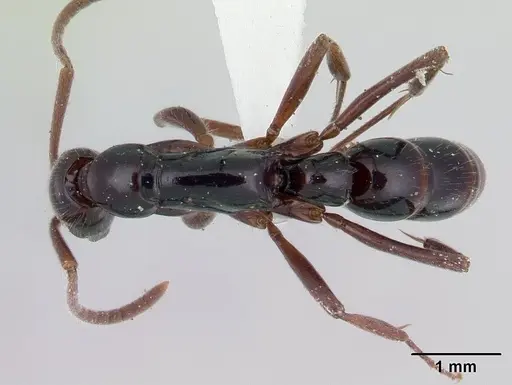
Literature
Loading distribution map...Loading products...