
Leptogenys microps
- Sci. Name
- Leptogenys microps
- Tribe
- Ponerini
- Subfamily
- Ponerinae
- Author
- Bolton, 1975
- Distribution
- Found in 1 countries
Introduction
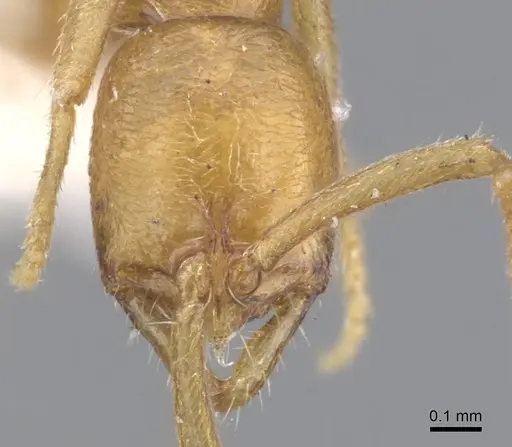
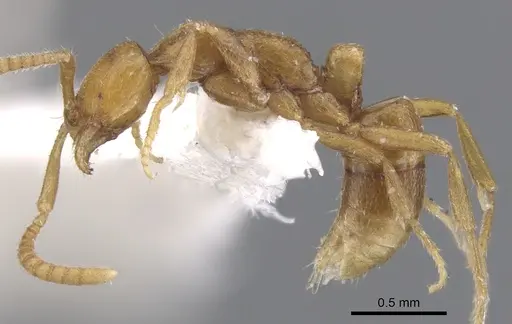
Leptogenys microps is a small predatory ant native to West Africa, specifically Guinea and Ivory Coast . Workers are slender and elongated, typical of the Leptogenys genus, and the species was described from Ivory Coast in 1975 . As a Ponerine ant, it actively hunts small arthropods. This species is poorly studied, with limited collection records from protected areas in Ivory Coast . A notable aspect is its raiding behavior, where workers hunt individually using elongated mandibles .
Quick Summary
- Difficulty: Medium
- Origin & Habitat: West Africa, Guinea and Ivory Coast, found in tropical forest habitats [2][1].
- Colony Type: Unconfirmed, no direct documentation of colony structure for this species.
- Size & Growth:
- Queen: Size data unavailable, no total length measurements in research. Inferred from Leptogenys genus patterns to be around 6-8 mm.
- Worker: Size data unavailable, inferred from genus to be around 3-5 mm.
- Colony: Up to 500 workers (estimated based on genus patterns).
- Growth: Moderate, inferred from related species.
- Development: Estimated 6-10 weeks at optimal temperatures, based on typical Ponerinae development. (Development time is estimated from related Leptogenys species, direct measurements not available for this species.)
- Antkeeping:
- Temperature: Keep warm, around 24-28°C, as inferred from tropical habitat [1].
- Humidity: High humidity required, keep nest substrate consistently moist but not waterlogged, as typical for forest-floor ants [1].
- Diapause: No, tropical species do not require hibernation.
- Nesting: Use Y-tong, plaster, or naturalistic nests with moist substrate, provide humidity control [1].
- Behavior: Active predators, workers hunt individually and are not aggressive toward humans but will defend nests. Escape risk is moderate due to size and activity.
- Common Issues: high humidity requirements can lead to mold if ventilation is poor., predatory diet means they need consistent live prey, failure to feed enough protein can stunt growth., tropical species may struggle in cool or dry environments., colonies grow slowly, which can frustrate beginners expecting rapid development., wild-caught colonies may carry parasites that cause problems in captivity.
Housing and Nest Preferences
Leptogenys microps does well in humid nest setups [1]. Y-tong nests with narrow chambers work well, as do plaster nests that hold moisture [1]. Naturalistic setups with moist soil or coco peat also suit them. The key is maintaining high humidity without stagnation, use adequate ventilation to prevent mold while retaining moisture. A water reservoir connected to the nest helps maintain stable humidity. Since they are a small to medium species, chambers should be appropriately scaled.
Feeding and Diet
As a Ponerine ant, Leptogenys microps is a predator. They primarily hunt small arthropods including isopods, springtails, and small spiders. In captivity, offer live prey such as fruit flies, small crickets, and mealworms. They do not accept sugar water as their primary diet, protein from prey is essential. Feed every 2-3 days, adjusting based on colony size. Remove uneaten prey after 24 hours to prevent mold. [1]
Temperature and Seasonal Care
Keep your colony at 24-28°C for optimal development, as inferred from their tropical habitat [1]. A heating cable on one side of the nest can create a temperature gradient. Avoid temperatures below 20°C for extended periods. Unlike temperate species, they do not require a hibernation period.
Behavior and Colony Dynamics
Leptogenys workers are active hunters that forage individually. They use elongated mandibles to capture prey. Workers are relatively fast-moving and can be skittish when disturbed. They are not particularly aggressive toward keepers but will bite if handled roughly. Colonies grow at a moderate pace, expect several months for the first workers to emerge after founding. [1]
Frequently Asked Questions
How long does it take for Leptogenys microps to get their first workers?
Expect 6-10 weeks from egg to first worker at optimal temperatures (24-28°C), estimated from related Leptogenys species.
What do Leptogenys microps eat?
They are predators that need live prey. Offer small insects like fruit flies, pinhead crickets, and isopods [1].
Can I keep Leptogenys microps in a test tube?
Test tubes can work for founding colonies, but upgrade to a nest with humidity control soon, as this species needs high humidity [1].
How big do Leptogenys microps colonies get?
Based on typical genus behavior, colonies likely reach up to 500 workers at maturity.
Do Leptogenys microps need hibernation?
No, they are a tropical species from West Africa and do not require hibernation [1].
Are Leptogenys microps good for beginners?
They are rated as medium difficulty due to specific care needs like high humidity and live prey diet.
When should I move my colony to a formicarium?
Move to a proper nest once the colony outgrows the founding setup, typically when you have 20-30+ workers, ensuring high humidity is maintained [1].
Why are my Leptogenys microps dying?
Common causes include too low humidity, too cold temperatures, not enough live prey, or poor ventilation causing mold. Check these parameters and adjust accordingly.
Can I keep multiple Leptogenys microps queens together?
This has not been documented. Based on typical genus patterns, they are likely single-queen colonies, and combining unrelated queens is not recommended.
Report an Issue
The current care sheet is based fully on literature. See inconsistencies, or something that's incorrect? Please , it will be resolved after review from an admin. Contributing to the blogs tab also helps providing information, to make us be able to further improve the caresheets. Thank you for your support!
References

This caresheet is licensed under CC BY-SA 4.0 .
Community Blogs
CASENT0902576
View on AntWeb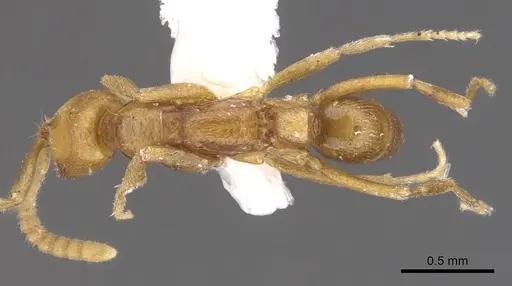
Literature
Loading distribution map...Loading products...