
Leptogenys manongarivo
- Sci. Name
- Leptogenys manongarivo
- Tribe
- Ponerini
- Subfamily
- Ponerinae
- Author
- Rakotonirina & Fisher, 2014
- Distribution
- Found in 1 countries
Introduction
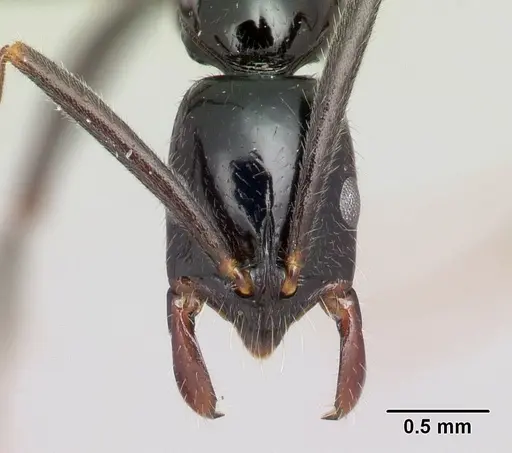
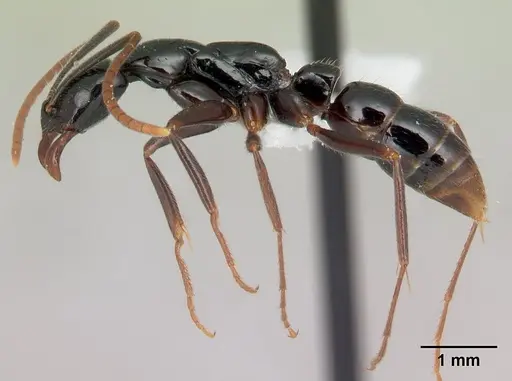
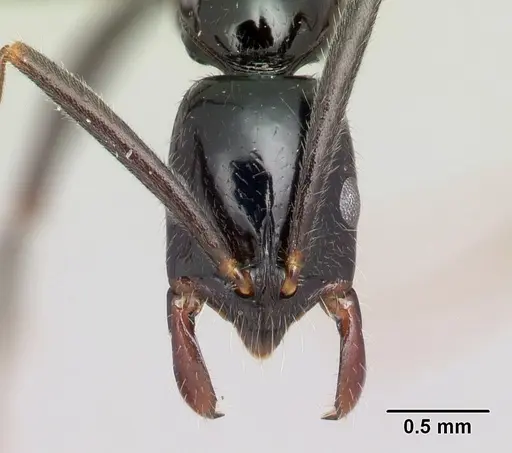
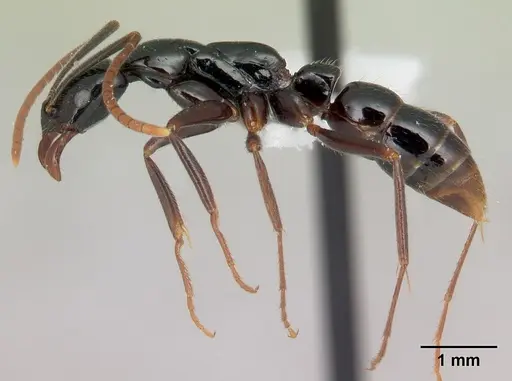
Leptogenys manongarivo is a tiny ponerine ant endemic to the rainforests of northwestern Madagascar. Workers have very long antennae that extend well past the back of the head, medium-sized eyes that break the outline of the head sides, and a petiolar node whose rear corner projects backward and overhangs the posterior margin. The body is dark brown to brown with lighter-colored tips on the legs and abdomen. This species belongs to the attenuata species group and is known only from a single collecting event in the RS Manongarivo reserve at 780m elevation, suggesting it is locally endemic and quite rare .
Quick Summary
- Difficulty: Expert
- Origin & Habitat: Rainforest of RS Manongarivo in northwestern Madagascar at 780m elevation [1]. This species is locally endemic, known only from a single location.
- Colony Type: Unknown. Colony structure has not been documented, only seven workers have ever been collected.
- Size & Growth:
- Queen: Undescribed, no queen specimens have been collected [1].
- Worker: Size data unavailable, the only available measurements are head width (0.96-0.98mm), which does not represent full body length. Based on the Leptogenys genus, workers are likely in the 2-5mm range.
- Colony: Unknown, only seven workers have ever been collected in a single collecting event [1].
- Growth: Unknown
- Development: Unknown, development has not been studied [1]. (No data available on any aspect of colony growth or development.)
- Antkeeping:
- Temperature: Unknown. Based on its rainforest origin in northwestern Madagascar, aim for warm, stable conditions in the low-to-mid 20s°C range. Monitor colony activity to find the optimal temperature.
- Humidity: Unknown. As a rainforest species from Manongarivo, expect high humidity needs, aim for consistently moist substrate without waterlogging.
- Diapause: Unknown. No data on seasonal requirements. Many Malagasy ants from rainforest habitats do not enter true diapause but may reduce activity during cooler months.
- Nesting: In nature, they are ground foragers in rainforest leaf litter. In captivity, a small test tube setup or small plaster nest with tight chambers would be appropriate for their tiny size. Keep substrate consistently moist.
- Behavior: This species is known only as ground foragers in rainforest habitat. Nothing is documented about their temperament, aggression, or foraging behavior in captivity. Given their very small size, escape prevention must be excellent, they can easily slip through standard gaps. Leptogenys species are typically predatory, so expect them to hunt small prey.
- Common Issues: extremely limited data makes captive care highly speculative, no documented successful captive colonies exist, very small size creates significant escape risk, predatory diet requirements may be difficult to meet with appropriate prey sizes, rainforest humidity needs may be challenging to maintain consistently
Species Overview and Identification
Leptogenys manongarivo is a recently described species from Madagascar, formally named in 2014 by Rakotonirina and Fisher. It belongs to the attenuata species group within the genus Leptogenys, a group of predatory ants found throughout Madagascar and surrounding regions. The species is distinguished from similar species like Leptogenys grandidieri by having smooth sides on the mesosoma, whereas L. grandidieri has sculpted sides. The most distinctive features include very long antennae that extend more than one-third of their length past the back of the head, and eyes that break the outline of the head sides rather than being fully contained within it. Workers are dark brown to brown with lighter-colored tips on their appendages and gaster [1].
Distribution and Habitat
This species has an extremely limited known distribution. It has been collected only in the RS Manongarivo in northwestern Madagascar, at an elevation of 780 meters. The habitat is described as rainforest. All specimens were found foraging on the ground during a single collecting event in October 1998. This pattern suggests the species is locally endemic, meaning it is found only in this specific area and nowhere else in the world. The limited collection data makes it one of the least-known Malagasy Leptogenys species [1].
Defense Mechanism
Leptogenys manongarivo belongs to the subfamily Ponerinae, which includes ants equipped with a functional stinger. These ants can deliver potent, peptide-rich venom through their sting, which can cause pain to vertebrates. However, given the extremely small size of this species (likely under 5mm total length), any sting would likely be imperceptible to humans.
Challenges of Keeping This Species
Leptogenys manongarivo presents extreme challenges for antkeepers. This is one of the least-documented ant species in the hobby, only seven workers have ever been collected and described scientifically, and no queen, colony, or biological data exists in the literature. There are no established captive breeding protocols, no documented diet preferences, no known temperature or humidity requirements, and no information about their development timeline. Attempting to keep this species would be essentially experimental and would require significant trial-and-error. For these reasons, it is not recommended for any but the most advanced and dedicated antkeepers who are prepared for the possibility of colony failure due to our complete lack of knowledge about their care requirements. [1]
General Leptogenys Care Notes
While L. manongarivo specifically has no documented care information, the genus Leptogenys consists of predatory ants that typically hunt small invertebrates. In captivity, related species generally accept small live prey such as springtails, fruit fly larvae, and other tiny arthropods. They tend to prefer humid conditions and often nest in soil or rotting wood in captivity. The small size of L. manongarivo workers means they would need correspondingly tiny prey items, likely micro-arthropods like springtails or soil mites. If attempting to keep this species, use excellent escape prevention due to their tiny size, maintain high humidity mimicking rainforest conditions, and offer small live prey regularly. However, these are general genus assumptions and may not apply to this specific species. [1]
Legal and Ethical Considerations
Leptogenys manongarivo is endemic to Madagascar and is not known to be established anywhere else in the world. Any specimens in the antkeeping hobby would likely be from very limited wild collections or descendants thereof. If you were to obtain this species, you should never release it in non-native regions as it could become invasive. Additionally, due to its extremely limited distribution and status as a recently described species with almost no specimens collected, there may be legal protections or export restrictions in Madagascar. Always ensure any specimens were obtained legally and ethically. [1]
Frequently Asked Questions
How do I keep Leptogenys manongarivo ants?
This species cannot be reliably kept. Only seven workers have ever been collected and no biological or captive care data exists. There are no established protocols, no documented diet preferences, no known temperature or humidity requirements, and no information about colony structure or development. Attempting to keep this species would be entirely experimental with a very high likelihood of failure.
What do Leptogenys manongarivo ants eat?
Unknown specifically. Based on the genus Leptogenys, they are likely predatory on small invertebrates. Given their tiny worker size, they would need very small prey like springtails, soil mites, or tiny fruit fly larvae. However, no direct observations exist for this species.
How big do Leptogenys manongarivo colonies get?
Unknown. Only seven workers have ever been collected from a single collecting event. No colony size data exists in the scientific literature.
Are Leptogenys manongarivo good for beginners?
No. This species is absolutely not suitable for beginners or even intermediate antkeepers. It is one of the least-documented ant species in existence, with no captive care information whatsoever. The complete lack of established protocols, combined with the species' extremely limited distribution and tiny size, makes successful captivity extremely unlikely.
What temperature do Leptogenys manongarivo need?
Unknown specifically. Based on its rainforest origin in northwestern Madagascar, aim for warm, stable conditions in the low-to-mid 20s°C range. This is an educated guess based on habitat, no direct observations of temperature preferences exist for this species.
Do Leptogenys manongarivo need hibernation?
Unknown. No data exists on seasonal requirements. Many Malagasy rainforest ants do not enter true hibernation but may reduce activity during cooler periods. The species is from a relatively warm, humid equatorial region.
How long does it take for Leptogenys manongarivo to develop from egg to worker?
Unknown. No development data exists for this species. Even basic information like whether the queen is claustral or semi-claustral has not been studied.
Can I keep multiple Leptogenys manongarivo queens together?
Unknown. No data exists on colony structure, we do not know if they are single-queen or multi-queen colonies. Combining unrelated queens is not recommended given the complete lack of information.
Where is Leptogenys manongarivo found?
Only in the RS Manongarivo reserve in northwestern Madagascar at 780m elevation. This is a locally endemic species, it has only been found in this single location and nowhere else in the world.
Is Leptogenys manongarivo invasive?
No. This species is endemic to Madagascar and has only been collected from a single location. It is not known to be established anywhere else. However, you should never release ant colonies in non-native regions regardless of their status.
What is the best nest type for Leptogenys manongarivo?
Unknown. No captive keeping data exists. Based on their tiny size and ground-foraging behavior in rainforest leaf litter, a small test tube setup or small plaster nest with tight chambers and consistently moist substrate would be the most logical starting point. However, success is entirely speculative.
Report an Issue
The current care sheet is based fully on literature. See inconsistencies, or something that's incorrect? Please , it will be resolved after review from an admin. Contributing to the blogs tab also helps providing information, to make us be able to further improve the caresheets. Thank you for your support!
References

This caresheet is licensed under CC BY-SA 4.0 .
Community Blogs
CASENT0196540
View on AntWeb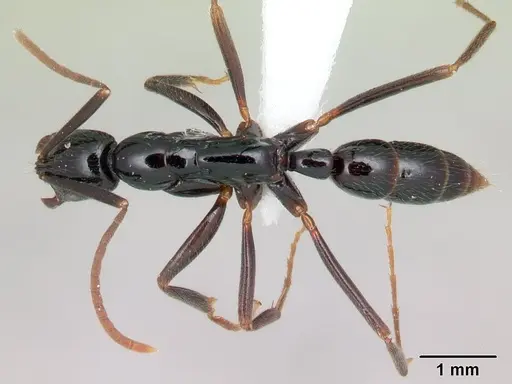
CASENT0247267
View on AntWeb
Literature
Loading distribution map...Loading products...