
Leptogenys lucida
- Sci. Name
- Leptogenys lucida
- Tribe
- Ponerini
- Subfamily
- Ponerinae
- Author
- Rakotonirina & Fisher, 2014
- Distribution
- Found in 1 countries
Introduction
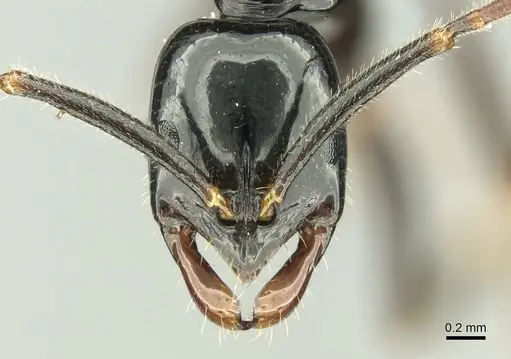
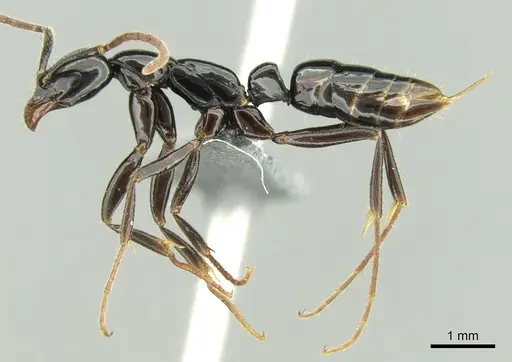
Leptogenys lucida is a medium-sized ponerine ant native to Madagascar. Workers have a distinctive dark brown to brown body with lighter brown legs toward the tips. They belong to the attenuata species group and can be identified by their third antennal segment being less than twice the length of the second segment, and their eyes not breaking the outline of the head . This species inhabits the rainforests of central-eastern Madagascar, where they forage on the ground and in low vegetation while nesting in rotten logs and soil layers . The colony features an ergatoid queen - meaning the queen is wingless and worker-like in appearance, with a broader head and enlarged gastral segments but incompletely developed thoracic sclerites .
Quick Summary
- Difficulty: Medium
- Origin & Habitat: Central-eastern Madagascar, found in montane rainforest of PN Mantadia-Andasibe and PN Zahamena, plus lowland rainforests of PN Mananara-Nord, RS Ambatovaky, and RNI Betampona [1]. They nest in rotten logs and soil layers and forage on the ground and low vegetation [1].
- Colony Type: Ergatoid queen system, the colony has a wingless queen that resembles a worker but with a broader head and enlarged abdomen. This is different from typical fully dealate queens.
- Size & Growth:
- Antkeeping:
- Temperature: Keep at 22-26°C, these are tropical rainforest ants that need warm conditions. A heating cable on one side of the nest creates a suitable gradient.
- Humidity: High humidity required, aim for 70-80%. Keep the nest substrate consistently moist but not waterlogged. Their natural habitat in rainforest and rotten logs indicates high moisture needs.
- Diapause: No, being a tropical species from Madagascar, they do not require hibernation. Maintain warm conditions year-round.
- Nesting: Naturalistic setup works best, they naturally nest in rotten logs and soil. A Y-tong nest or plaster nest with moisture chambers mimics their preferred conditions. Provide rotting wood pieces or cork bark for them to nest in.
- Behavior: Leptogenys lucida is a predatory ponerine ant that forages on the ground and low vegetation. Like other Ponerines, they are active hunters and have a functional stinger for subduing prey. They are moderately aggressive when defending the nest. Workers are medium-sized so escape prevention should be managed with standard barrier methods. They are primarily nocturnal or crepuscular foragers.
- Common Issues: high humidity maintenance is critical, too dry and colonies will decline, predatory diet means they need regular live prey, don't rely on sugar water alone, tropical species requires consistent warmth, cold temperatures can be fatal, ergatoid queens may have different founding requirements than typical queens, small colony size means slow growth, patience is required
Housing and Nest Setup
Leptogenys lucida does best in a naturalistic or semi-naturalistic setup that mimics their natural habitat in rotten logs and soil. A Y-tong nest with a moisture chamber works well, or you can use a plaster nest that holds humidity. Add pieces of rotting wood, cork bark, or leaf litter to the outworld to give them hunting grounds that feel natural. Because they forage on the ground, the outworld should have a substrate layer they can explore. A small water test tube attached to the nest helps maintain humidity. These ants are not extreme escape artists due to their medium size, but standard barrier methods like fluon on the rim of the formicarium are still recommended. [1]
Feeding and Diet
As a Ponerine ant, Leptogenys lucida is a predator that hunts small invertebrates. In captivity, offer small live prey such as fruit flies, pinhead crickets, small mealworms, and other appropriately sized insects. They likely accept protein-rich foods several times per week. While some Ponerines occasionally take sugar water, their primary nutrition comes from prey. Remove uneaten prey after 24-48 hours to prevent mold. A varied diet helps ensure healthy colony development. Unlike many ants, they are not heavily reliant on honeydew or nectars. [1]
Temperature and Humidity
These are tropical rainforest ants from Madagascar and need warm, humid conditions. Keep the nest area at 22-26°C consistently. A heating cable placed on top of one end of the nest creates a temperature gradient so ants can choose their preferred zone. Humidity should be high, aim for 70-80% relative humidity in the nest. The substrate should feel consistently moist but never waterlogged. Mist the nest occasionally and keep the water reservoir filled. Being from a tropical environment, they do not tolerate cold well, room temperature below 20°C for extended periods can stress the colony. [1]
Colony Structure and Development
Leptogenys lucida has an ergatoid queen system, which is unusual among ants. The queen is wingless and worker-like in appearance, with a broader head and enlarged abdomen but incompletely developed thoracic sclerites [1]. This differs from typical ants where the queen is a fully winged reproductive that sheds wings after mating. The ergatoid queen likely mates and founds colonies without the dramatic dealation process of normal queens. Colony growth is expected to be gradual, exact development timelines are not documented for this species.
Behavior and Temperament
Like other Ponerine ants, Leptogenys lucida is an active predator with a functional stinger. Workers forage individually on the ground and in low vegetation, hunting small invertebrates. They are moderately defensive and will sting if threatened, the sting is not dangerous to healthy humans but can be painful. Workers are medium-sized and relatively robust. They are not overly aggressive toward humans but will protect their nest vigorously. Observation is rewarding because you can watch their hunting behavior, they actively search for prey rather than simply collecting stationary food. [1]
Frequently Asked Questions
How long does it take for Leptogenys lucida to produce first workers?
Development timeline data is unavailable for this species. At optimal temperature (around 24-26°C), expect several months before the first workers appear.
What do Leptogenys lucida eat?
They are predatory ants that need live prey. Feed small insects like fruit flies, pinhead crickets, small mealworms, or other appropriately sized invertebrates. Offer protein several times per week. Some keepers report occasional acceptance of sugar water, but protein prey is essential.
Can I keep multiple Leptogenys lucida queens together?
This species has an ergatoid queen system. Combining unrelated queens is not recommended as it has not been documented and could result in fighting.
Do Leptogenys lucida need hibernation?
No, they are tropical ants from Madagascar and do not require hibernation. Keep them warm year-round at 22-26°C. Cold temperatures can be harmful or fatal to this species.
What humidity level do Leptogenys lucida need?
High humidity is essential, aim for 70-80%. Their natural habitat in rainforest and rotten logs indicates they need consistently moist conditions. Keep the nest substrate damp but not waterlogged.
Are Leptogenys lucida good for beginners?
They are considered medium difficulty. The main challenges are maintaining high humidity, providing regular live prey, and keeping them warm. If you have experience with Ponerines or other medium-sized ants, they are manageable. Complete beginners may struggle with their humidity and dietary needs.
When should I move Leptogenys lucida to a formicarium?
You can keep them in a test tube setup initially, but they do well in a Y-tong or plaster nest fairly early since they need humidity control. Move them once the colony reaches a moderate size or if the test tube shows drying issues.
How big do Leptogenys lucida colonies get?
Colony size data is not well documented for this species. They likely remain relatively compact compared to some genera.
What makes Leptogenys lucida different from other ants?
They have an ergatoid queen system, the queen is wingless and worker-like rather than a typical fully winged queen that sheds wings. They also belong to the Ponerinae subfamily, known for their predatory lifestyle and functional stingers.
Report an Issue
The current care sheet is based fully on literature. See inconsistencies, or something that's incorrect? Please , it will be resolved after review from an admin. Contributing to the blogs tab also helps providing information, to make us be able to further improve the caresheets. Thank you for your support!
References

This caresheet is licensed under CC BY-SA 4.0 .
Community Blogs
CASENT0294372
View on AntWeb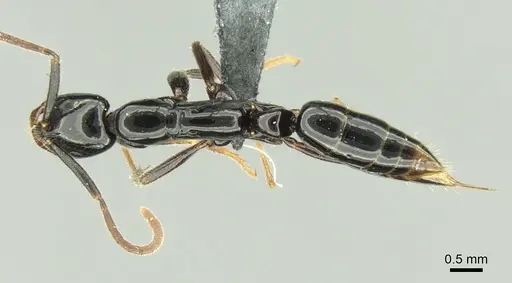
Literature
Loading distribution map...Loading products...