
Leptogenys guianensis
- Sci. Name
- Leptogenys guianensis
- Tribe
- Ponerini
- Subfamily
- Ponerinae
- Author
- Wheeler, 1923
- Distribution
- Found in 1 countries
Introduction
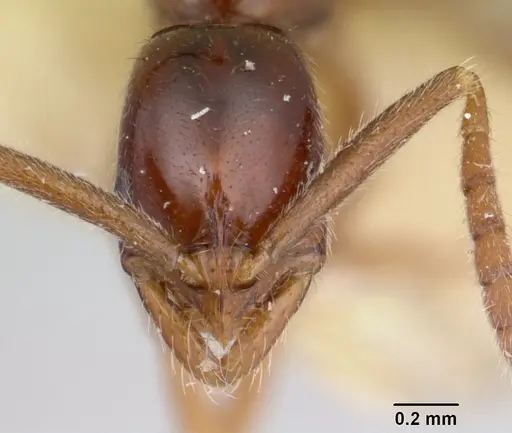
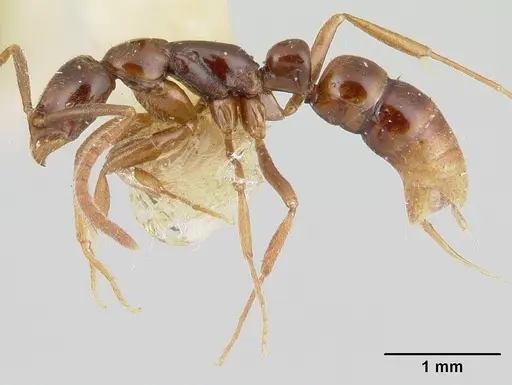
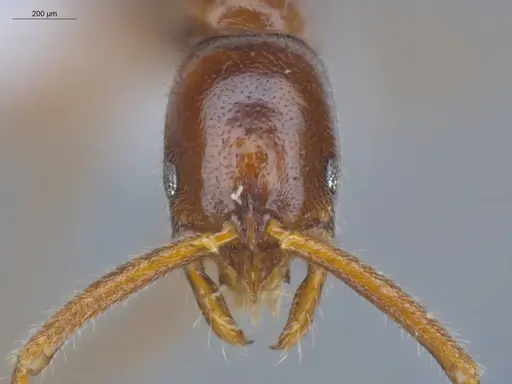
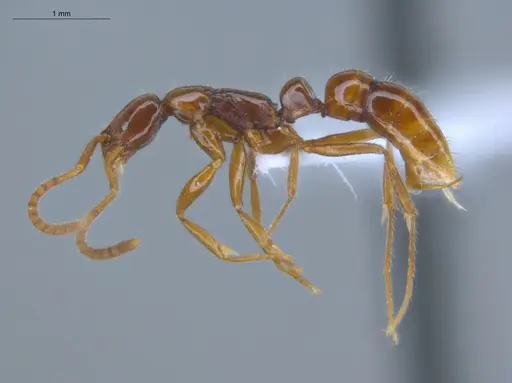
Leptogenys guianensis is a small predatory ant species in the Ponerinae subfamily, found in the Guianas and northern Brazil. Workers have a distinctive rectangular head that is slightly wider toward the front, with flattened eyes placed near the sides, and a trapezoidal petiolar node. The body is mostly smooth and shining with a ferruginous brown coloration. This species belongs to the pusilla species group, which contains small, slender predatory ants. Almost nothing is known about their biology in the wild - queens and males have never been described, and there are no documented observations of colony founding, nuptial flights, or captive behavior .
Quick Summary
- Difficulty: Unknown, too little is known for a difficulty rating
- Origin & Habitat: Northern South America: French Guiana, Guyana, and northern Brazil (Amazon biome). They inhabit tropical rainforest environments [2].
- Colony Type: Unknown, queens have never been documented
- Size & Growth:
- Queen: Unknown, queens have never been described [1]
- Worker: size data unavailable, only head measurements exist in scientific literature
- Colony: Unknown, no colony size data exists
- Growth: Unknown, no development data exists
- Development: Unknown, no published development data exists for this species (No development timing data is available.)
- Antkeeping:
- Temperature: Likely 24-28°C based on their tropical Amazon distribution. Start around 25°C and observe colony activity.
- Humidity: Likely high humidity (70-80%) matching their Amazon rainforest origin. Keep the nest substrate consistently moist but not waterlogged.
- Diapause: Unknown, no seasonal data exists. As a tropical species from northern South America, they likely do not require true hibernation.
- Nesting: No natural nesting observations exist. Based on related species in the pusilla group, they likely nest in rotting wood, under stones, or in soil in humid forest habitats. In captivity, a small test tube setup or Y-tong nest with moist substrate would be appropriate.
- Behavior: Behavior is completely unstudied. Based on genus patterns, Leptogenys are active predators that hunt small arthropods using their mandibles. Ponerine ants have a functional stinger with potent venom, though given their small size, any sting would likely be minimal for humans. Workers are probably moderate in activity level and may show territorial behavior. Escape risk is moderate given their small size, standard barrier precautions apply.
- Common Issues: lack of documented care information makes successful keeping very uncertain, no known queen or colony sources exist in the antkeeping hobby, prey acceptance is completely unknown, may require live micro-prey, humidity requirements are unconfirmed and mold could be an issue, no information on whether they accept sugar sources
Why This Species Is So Challenging
Leptogenys guianensis represents one of the most poorly documented ant species you could consider keeping. Literally nothing has been published about their biology, we do not know what they eat, how they found colonies, when they have nuptial flights, or even what their queens look like. Queens and males have never been described scientifically [1]. This means there are no established care protocols, no documented success stories in captivity, and likely no established colonies in the antkeeping hobby. Before considering this species, you should ask yourself whether you are comfortable being a pioneer with no guidance to follow. That said, if you are experienced with other Ponerine ants and want to attempt something truly experimental, understanding the genus-level patterns from related species can provide some guidance.
What We Know About Their Anatomy
The worker caste has been described in detail. Workers are small with a distinctive rectangular head that is slightly wider toward the front than the back, with eyes that are flattened and placed near the sides of the head. The mesosoma has a broadly convex promesonotal margin, and the propodeal has a straight dorsal margin with a triangular tooth. The petiolar node is trapezoidal when viewed from above, with the front being about half the width of the back. The body is mostly smooth and shining, with a ferruginous brown color. The mandibles, clypeus, antennae, and legs are lighter brown. This morphology is typical of predatory Ponerine ants that hunt small arthropods [1].
Inferred Care Based on Related Species
Since we have no direct data on L. guianensis, we must infer care requirements from what we know about the genus and their pusilla species group. Leptogenys ants are predatory hunters, they do not scavenge like many ants do, they actively hunt and capture prey with their mandibles. Based on related species, they likely accept small live prey like springtails, fruit flies, and other tiny arthropods. Sugar acceptance is uncertain, some Ponerines take it, others do not. Temperature should be warm (24-28°C) matching their tropical Amazon origin. Humidity should be high (70-80%) as they come from damp rainforest environments. Nesting likely prefers humid, dark locations with moist substrate. These are inferences, not certainties, your observations will be genuinely pioneering. [2]
The Challenge of Obtaining This Species
Beyond the care challenges, actually obtaining Leptogenys guianensis presents a major obstacle. Since queens have never been described and no one has documented their nuptial flights, there is no way to target them for collection or to know when mating occurs. There are no documented captive colonies in the antkeeping hobby that we know of. This species is not something you can simply order from a supplier, you would need to collect a founding queen from the wild in French Guiana, Guyana, or northern Brazil during what would essentially be a guessing game of when their flights occur. This makes L. guianensis essentially a theoretical species for antkeepers rather than a practical one. [1]
Frequently Asked Questions
Can I keep Leptogenys guianensis in captivity?
We do not know, no one has documented keeping this species successfully. Their biology is completely unstudied, so there is no established care protocol. This makes them extremely challenging and experimental compared to species with documented captive care.
What do Leptogenys guianensis eat?
Unknown specifically, but based on genus patterns, they are predatory and likely hunt small live prey like springtails, fruit flies, and tiny arthropods. Sugar acceptance is uncertain, some Ponerines accept it, others do not. Start with live prey and experiment with sugar sources.
How long do Leptogenys guianensis take to develop?
No development data exists for this species.
Do Leptogenys guianensis queens need to hibernate?
Unknown, no seasonal data exists. As a tropical species from the Amazon region, they likely do not require true hibernation, but may reduce activity during cooler periods.
Are Leptogenys guianensis aggressive?
Behavior is unstudied. Based on genus patterns, Ponerine ants can be defensive when threatened but are not typically aggressive toward humans. Their small size means any sting would be minimal.
Where can I find a Leptogenys guianensis queen?
This is likely extremely difficult. Queens have never been described, so we do not know when or where their nuptial flights occur. The species is only found in French Guiana, Guyana, and northern Brazil, and no captive colonies are known to exist in the hobby.
What temperature should I keep Leptogenys guianensis at?
No specific data exists. Based on their tropical Amazon distribution, aim for 24-28°C. Start around 25°C and adjust based on colony activity if you ever obtain a colony.
How big do Leptogenys guianensis colonies get?
Unknown, no colony size data exists.
Is Leptogenys guianensis a good species for beginners?
No, this is not a species for beginners or even intermediate keepers. Their complete lack of documented biology means there is no established care path. Even experienced antkeepers would be working with pure speculation.
Report an Issue
The current care sheet is based fully on literature. See inconsistencies, or something that's incorrect? Please , it will be resolved after review from an admin. Contributing to the blogs tab also helps providing information, to make us be able to further improve the caresheets. Thank you for your support!
References

This caresheet is licensed under CC BY-SA 4.0 .
Community Blogs
CASENT0178828
View on AntWeb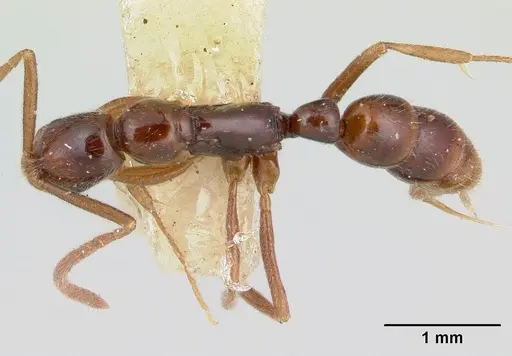
ECOFOG-LA15-0123-03
View on AntWeb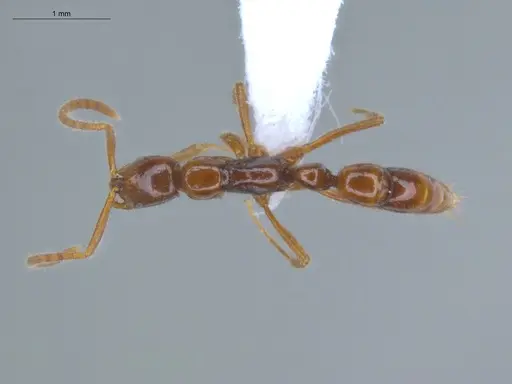
Literature
Loading distribution map...Loading products...