
Leptogenys gaigei
- Sci. Name
- Leptogenys gaigei
- Tribe
- Ponerini
- Subfamily
- Ponerinae
- Author
- Wheeler, 1923
- Distribution
- Found in 5 countries
Introduction
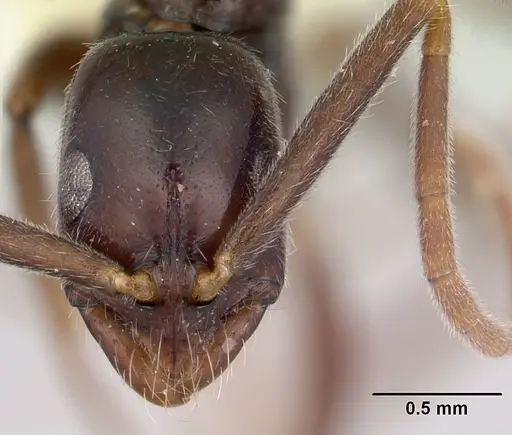
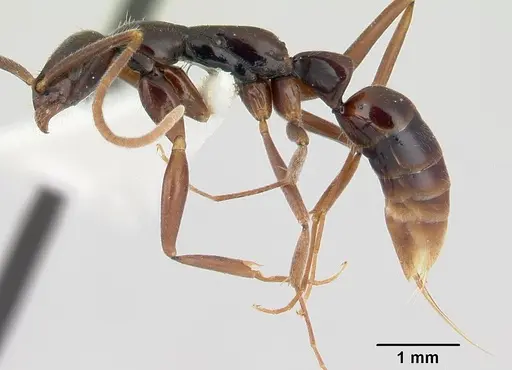
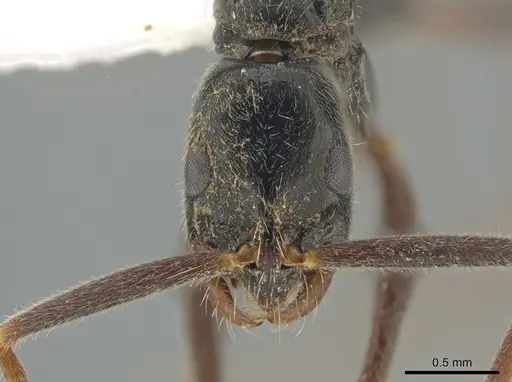
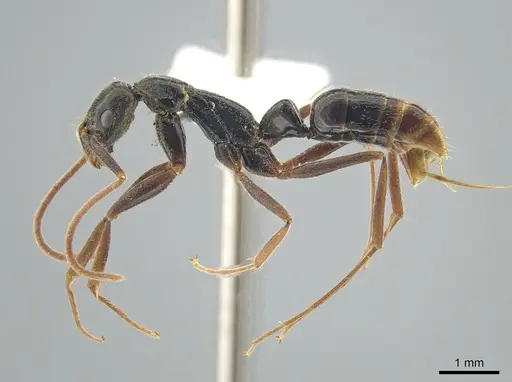
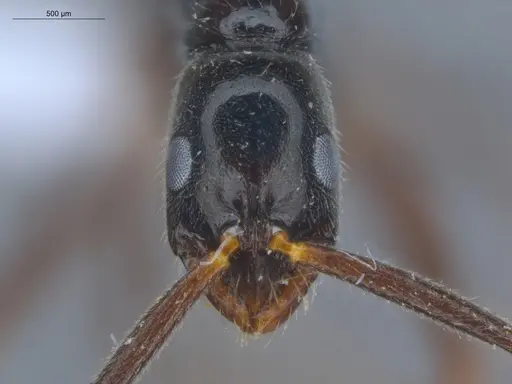
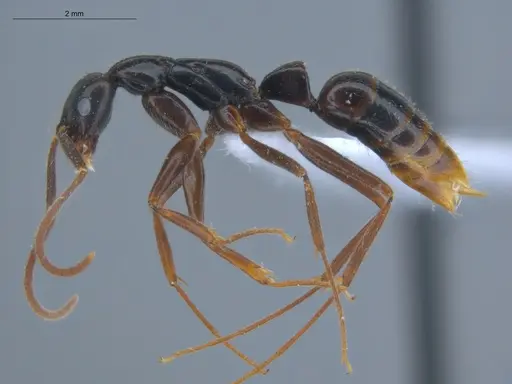
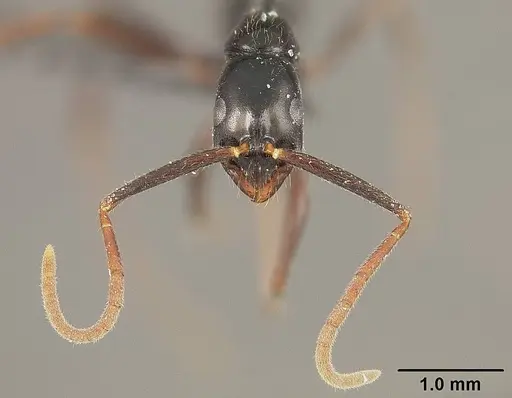
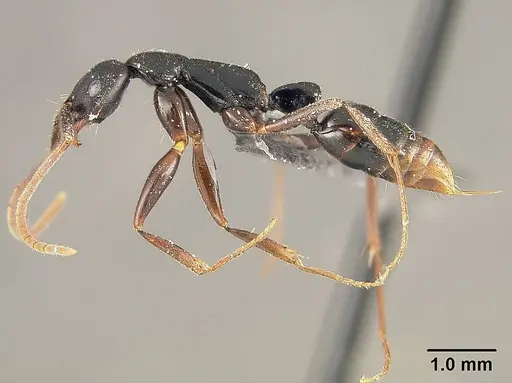
Leptogenys gaigei is a small ponerine ant native to the Amazon-Orinoco watershed in South America, found in Ecuador, Brazil, Suriname, Colombia, French Guiana, and Guyana . Workers measure approximately 5-7mm in total length - inferred from Leptogenys genus patterns since exact measurements are unavailable. They have a distinctive appearance with an elongate head, large flattened eyes positioned dorsolaterally at mid-length, and a smooth black body with a striking blue iridescence or opalescence . The propodeum has low rounded lobes, and the petiolar node is triangular when viewed from the side . This species belongs to the luederwaldti species group within the genus Leptogenys . What makes L. gaigei particularly unusual is its reproductive system - no queen caste has ever been documented for this species. Instead, reproduction occurs through gamergates, which are workers that become reproductive and lay eggs . This is a rare trait in ants and makes this species especially interesting for keepers who want to observe alternative social structures. The related species Leptogenys cuneata may share this reproductive mode .
Quick Summary
- Difficulty: Medium
- Origin & Habitat: Amazon-Orinoco watershed in South America, found in primary forest habitats in Ecuador, Brazil, Suriname, Colombia, French Guiana, and Guyana [1][2]. In Brazil, they have been recorded in both primary forest logged and primary forest logged and burnt areas in the Amazon region [5]. In Colombia, they are found in the Amazonian departments of Amazonas, Caquetá, and Nariño [1][2]. This is a tropical rainforest species adapted to warm, humid conditions.
- Colony Type: Gamergate system, no dedicated queen caste has been documented. Reproduction occurs through gamergates (reproductive workers) rather than a queen [4]. This is a rare and fascinating social structure where workers can lay eggs and perpetuate the colony.
- Size & Growth:
- Queen: Unknown, queen caste has never been described [4]
- Worker: Approximately 5-7mm, inferred from Leptogenys genus patterns since exact total length measurements are unavailable
- Colony: Unknown, no colony size data available in scientific literature
- Growth: Unknown, no development timing data available
- Development: Unknown, development has not been studied (No direct data on egg-to-worker timeline. Based on typical Leptogenys patterns from related species, expect several months for development. More research is needed.)
- Antkeeping:
- Temperature: Keep at warm tropical temperatures around 24-28°C. This matches their native Amazonian habitat [5]. Use a heating cable on one side of the nest to create a gentle gradient if room temperature is below this range.
- Humidity: High humidity is essential, think damp rainforest floor. Keep the nest substrate consistently moist but not waterlogged. The substrate should feel damp to the touch with some slightly drier areas available for the ants to regulate their own moisture exposure.
- Diapause: No, this is a tropical species that does not require hibernation. They remain active year-round in their native habitat.
- Nesting: In nature, they nest in soil and under logs in forest habitats [4]. In captivity, a naturalistic setup with moist substrate or a Y-tong/plaster nest works well. Provide damp soil or sand as the nesting medium.
- Behavior: Leptogenys gaigei is a predatory ponerine ant, like others in the genus. They are active foragers that hunt for small invertebrates. Their large eyes and elongate head are adaptations for spotting prey. Workers are moderately aggressive when defending the nest. As a Ponerinae ant, they possess a functional sting that can be used for defense, this is painful to vertebrates but not medically significant for healthy adults. They are ground-dwelling ants that forage on the forest floor.
- Common Issues: no documented colony size makes growth expectations uncertain, keepers should monitor colony development carefully, queenless reproduction means colonies may grow more slowly than typical ant species with functional queens, tropical humidity requirements can lead to mold problems if ventilation is inadequate, lack of specific dietary studies means acceptance of captive foods may require experimentation, gamergate reproduction is fragile, disturbing the colony too much may disrupt the reproductive workers, acquiring this species is difficult since no queen caste exists, you must find an established colony with gamergates
Understanding Gamergate Reproduction
Leptogenys gaigei is one of the few ant species where a queen caste has never been documented. Instead, reproduction is suspected to occur through gamergates, workers that become reproductive and capable of laying fertilized eggs [4]. This is a fascinating social structure where the typical role of a queen is taken on by one or more workers within the colony. In colonies with gamergate reproduction, you may not see a distinct larger queen figure, the workers look similar to each other, with one or more individuals taking on the reproductive role. This makes the species particularly interesting for observing alternative ant social organization. The related species Leptogenys cuneata may share this reproductive mode [4]. When keeping this species, understand that the colony structure will be different from typical ant species with a clear queen.
Housing and Nest Setup
As a ground-dwelling Amazonian ant, L. gaigei requires a moist, naturalistic setup that mimics their forest floor habitat. A Y-tong nest with chambers filled with damp soil or sand works well, or you can use a fully naturalistic setup with a soil layer deep enough to maintain moisture. The nest should have a water reservoir or be connected to one to maintain humidity without flooding. Provide an outworld area where foragers can hunt and explore. Since they are moderate-sized ants, standard test tube setups may work for founding colonies, but a more naturalistic formicarium will support longer-term colony growth. Ensure the setup allows for proper humidity control while providing adequate ventilation to prevent mold.
Feeding and Diet
Leptogenys ants are predatory by nature, using their large eyes and elongate head to spot and capture prey. In captivity, offer small live prey such as fruit flies, small crickets, mealworms, and other small invertebrates. Since this is a tropical species, their prey should also be appropriate for tropical conditions. The specific dietary preferences of L. gaigei have not been studied, but related Leptogenys species typically accept small arthropods. You may also occasionally offer sugar water or honey as an energy source, though protein-rich prey should form the bulk of their diet. Feed every few days and remove uneaten prey to prevent mold.
Temperature and Humidity Requirements
As a tropical Amazonian species, L. gaigei requires warm and humid conditions. Maintain temperatures around 24-28°C, which matches their native habitat in the Amazon basin [5]. A heating cable placed on one side of the nest can create a temperature gradient, allowing the ants to regulate their own temperature by moving between warmer and cooler areas. Humidity should be kept high, the nest substrate should remain consistently damp but not waterlogged. This mimics the humid conditions of the rainforest floor where they naturally occur. Poor humidity can lead to desiccation and colony decline.
Colony Development Expectations
Because L. gaigei reproduces through gamergates rather than a traditional queen, colony development may differ from typical ant species. Without a dedicated queen caste producing eggs continuously, growth rates may be slower. The exact colony size this species reaches in the wild is unknown, as no large colony series have been documented in scientific literature [4]. Keepers should expect gradual growth and not compare their colony development to faster-growing species like Lasius or Camponotus. The absence of a queen also means founding a colony is challenging, you would need to acquire an established colony with gamergates rather than a founding queen. Patience is essential with this species.
Frequently Asked Questions
Does Leptogenys gaigei have a queen?
No, a queen caste has never been documented for this species. Reproduction is suspected to occur through gamergates, which are workers that become reproductive and lay eggs [4]. This makes them unusual among ants and interesting for observing alternative social structures.
How do I start a Leptogenys gaigei colony?
Since there is no queen caste, you cannot start a colony from a founding queen. You would need to acquire an established colony that already contains gamergates (reproductive workers). Finding this species for sale may be challenging due to their unusual reproductive biology.
What do Leptogenys gaigei ants eat?
Like other Leptogenys species, they are predatory ants that hunt small invertebrates. Offer small live prey such as fruit flies, small crickets, mealworms, and other tiny arthropods. You can also occasionally offer sugar water or honey for energy. Protein-rich prey should form the main diet.
What temperature do Leptogenys gaigei ants need?
Keep them warm at 24-28°C, which matches their native Amazonian habitat. Use a heating cable on one side of the nest to create a gradient if your room temperature is lower.
Do Leptogenys gaigei ants need hibernation?
No, as a tropical species from the Amazon basin, they do not require hibernation. They remain active year-round and should be kept warm continuously.
Are Leptogenys gaigei ants aggressive?
They are typical ponerine ants, moderately aggressive when defending the nest but not considered dangerous to humans. Their sting is not medically significant for healthy adults.
How big do Leptogenys gaigei colonies get?
The maximum colony size is unknown. No large colony series have been documented in scientific literature [4]. Given their gamergate reproductive system, colonies may not reach the sizes seen in typical queen-right ant species.
What makes Leptogenys gaigei special compared to other ants?
Their gamergate reproduction is extremely rare, most ant species have a distinct queen caste. Watching workers take on reproductive roles provides a unique window into alternative ant social evolution. Combined with their striking blue iridescence, they make a fascinating species for advanced antkeepers interested in unusual biology.
Can I keep Leptogenys gaigei in a test tube setup?
A test tube setup can work for a small colony, but given their need for high humidity and their predatory nature, a more naturalistic setup with damp substrate is preferable for long-term success. The test tube should have a water reservoir and be kept warm.
Where is Leptogenys gaigei found in the wild?
They live in the Amazon-Orinoco watershed across South America, Ecuador, Brazil, Suriname, Colombia, French Guiana, and Guyana. They are found in primary forest habitats in the Amazon region [1][2].
Report an Issue
The current care sheet is based fully on literature. See inconsistencies, or something that's incorrect? Please , it will be resolved after review from an admin. Contributing to the blogs tab also helps providing information, to make us be able to further improve the caresheets. Thank you for your support!
References

This caresheet is licensed under CC BY-SA 4.0 .
Community Blogs
CASENT0178804
View on AntWeb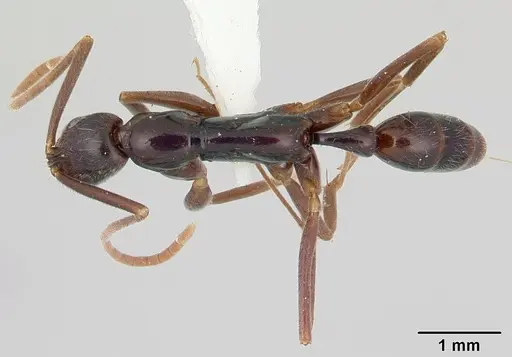
DZUP549120
View on AntWeb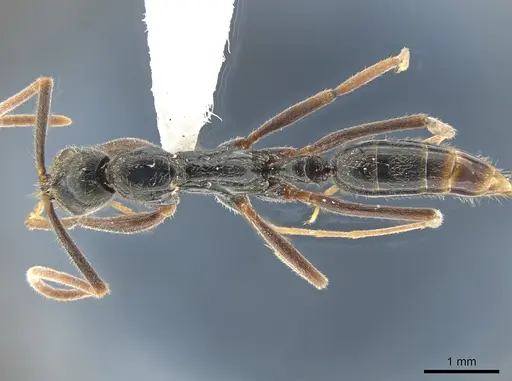
ECOFOG-GRS21-0240-04
View on AntWeb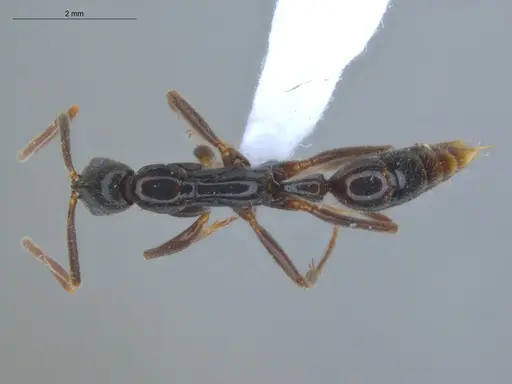
USNMENT01124235
View on AntWeb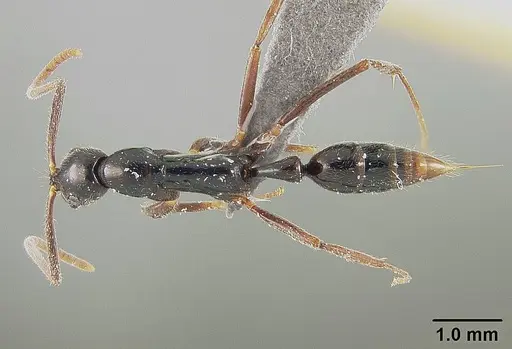
Literature
Loading distribution map...Loading products...