
Leptogenys alamando
- Sci. Name
- Leptogenys alamando
- Tribe
- Ponerini
- Subfamily
- Ponerinae
- Author
- Rakotonirina & Fisher, 2014
- Distribution
- Found in 1 countries
Introduction
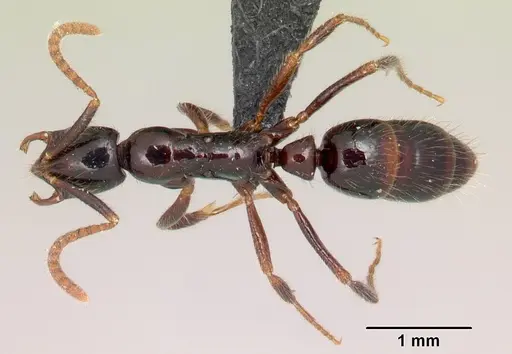
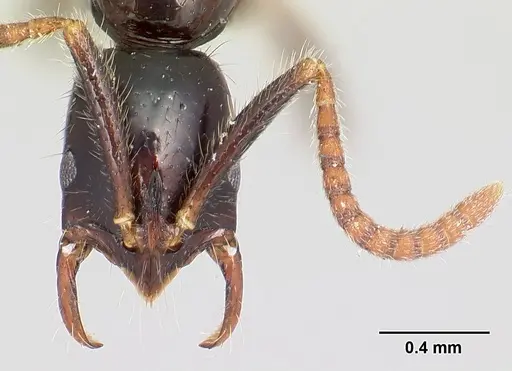
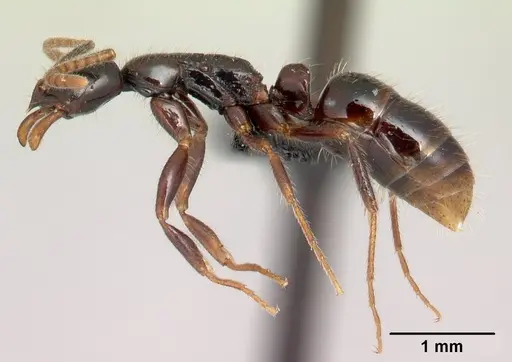
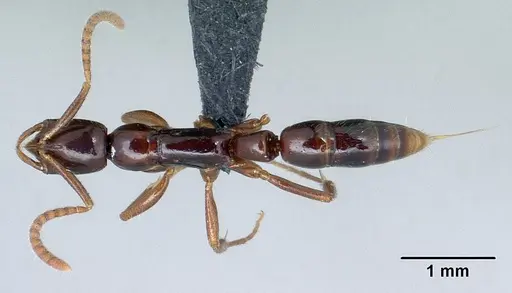
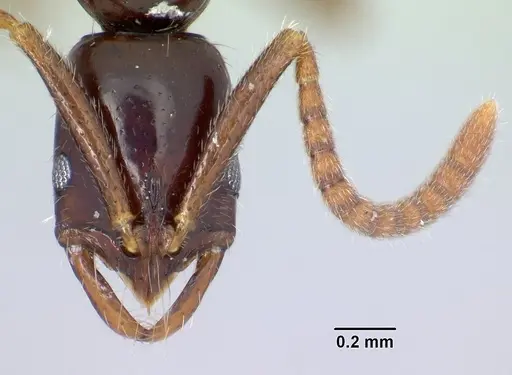
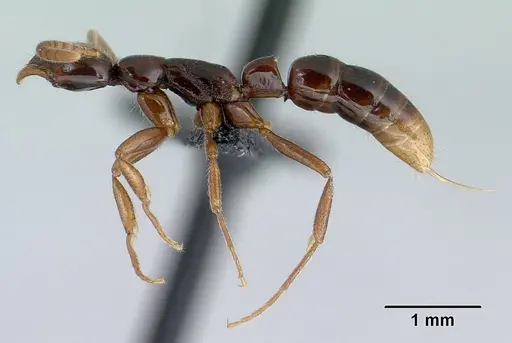
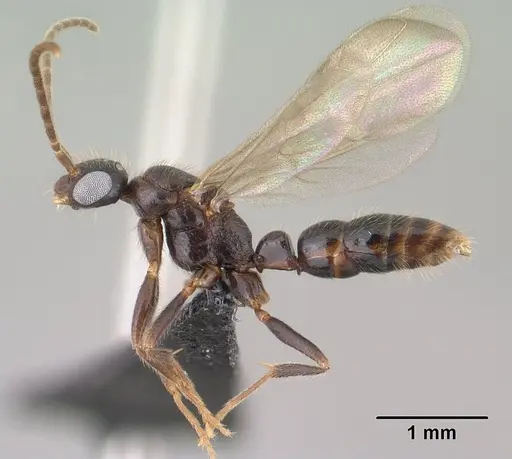
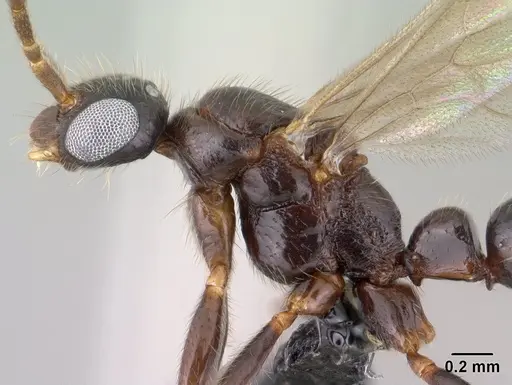
Leptogenys alamando is a tiny predatory ant species native to Madagascar, first described in 2014. Workers have a smooth, shiny dark body with small eyes (maximum width less than the maximum diameter of the antennal scape) and distinctive three-toothed mandibles . These ants inhabit lowland rainforests in northeastern to southeastern Madagascar, where they forage through leaf litter and nest in rotting logs on the forest floor . A notable feature of this species is the presence of ergatoid queens - wingless replacement queens that can take over reproduction if the primary queen dies, a common trait in the genus Leptogenys .
Quick Summary
- Difficulty: Medium
- Origin & Habitat: Northeastern to southeastern Madagascar, in lowland rainforests between 20-775m elevation. Found in Marojejy, Mananara-Nord, Betampona, and Ambalagoavy Nord [1].
- Colony Type: Colonies contain ergatoid (wingless) queens that serve as replacement reproductives. The ergatoid system allows for continuity of reproduction if the primary queen dies [1].
- Size & Growth:
- Queen: size data unavailable, ergatoid (wingless) queens measured, but total body length not provided in literature [1]
- Worker: size data unavailable, only head width (HW 0.61-0.70mm) and mesosoma length (WL 1.38-1.54mm) are documented, not total body length [1]
- Colony: Unknown, no colony size data available in literature
- Growth: Unknown, no development timing data available
- Development: Unknown, no specific development data exists for this species (Development timing has not been documented for this species.)
- Antkeeping:
- Temperature: Keep at 24-28°C, reflecting their tropical rainforest origin in Madagascar. A gentle gradient allows workers to self-regulate [1].
- Humidity: High humidity is essential, these ants come from damp rainforest environments. Keep nest substrate consistently moist but not waterlogged. Provide a water tube for drinking access [1].
- Diapause: No, as a tropical species from Madagascar, they do not require hibernation. Keep temperatures stable year-round [1].
- Nesting: In captivity, they do well in setups that mimic their natural rotten log habitat. Y-tong (AAC) nests or plaster nests with moisture retention work well. Provide narrow chambers scaled to their tiny size. Keep the nest humid and dark [1].
- Behavior: These are small, predatory ants that hunt through leaf litter in search of tiny prey. They are not aggressive toward humans, their tiny size means the stinger cannot effectively penetrate human skin. Workers are active foragers that explore their environment systematically. Because of their tiny size, escape prevention must be excellent, they can squeeze through remarkably small gaps. They are peaceful toward colony members and typically non-aggressive toward other ants of similar size.
- Common Issues: escape prevention is critical due to their very small size, use fine mesh and tight-fitting lids, high humidity requirements can lead to mold if ventilation is poor, balance moisture with airflow, slow growth compared to larger ant species may frustrate beginners expecting rapid development, predatory diet means they need constant access to small live prey, they cannot survive on sugar alone, wild-caught colonies may carry parasites that can decimate the colony in captivity
Housing and Nest Setup
Leptogenys alamando requires careful housing due to their minute size. A Y-tong (AAC) nest or plaster nest works well because these materials hold moisture effectively, which is critical for this rainforest species. The chambers should be small and narrow, these tiny ants feel secure in compact spaces. Avoid tall, open areas that might make them feel exposed. A test tube setup can work for founding colonies if you use a small diameter tube and keep it humid. The outworld should be simple with minimal height to prevent escapes. Cover the setup with a dark cloth when not observing to reduce stress. Escape prevention is absolutely critical, use fine mesh (at least 0.5mm or smaller), tight-fitting lids, and apply fluon or barrier tape to all edges. These ants can squeeze through gaps you wouldn't believe possible [1].
Feeding and Diet
As Ponerine ants, Leptogenys alamando are predators that hunt small invertebrates. In captivity, their primary food should be small live prey such as fruit flies, pinhead crickets, springtails, and other micro-arthropods. They are too small to take down large prey items effectively. Offer prey twice weekly, removing any uneaten items after 24-48 hours to prevent mold. While some Leptogenys species accept sugar water occasionally, their main nutritional needs are met through protein. A small honey droplet can be offered occasionally as a supplement, but do not rely on it as a primary food source. Fresh water should always be available, a small water tube with a cotton wick works well for their tiny size [1].
Temperature and Humidity
These ants come from Madagascar's lowland rainforests, so they need warm, humid conditions. Keep the nest area at 24-28°C, this is ideal for tropical rainforest species. A heating cable on one side of the nest can create a gentle gradient if your room temperature runs cooler, but always place heating on top of the nest, not underneath, to avoid evaporating all the moisture. Humidity is perhaps more important than temperature for this species. The nest substrate should feel consistently damp but never sitting in water. You can achieve this by connecting a water tube to the nest and allowing the ants to control their own moisture levels. Mist the outworld occasionally and consider a moist cotton ball in the outworld to boost humidity. Poor humidity will quickly stress and kill these delicate ants [1].
Colony Development
Leptogenys alamando has ergatoid queens, this means the queens are born without wings and serve as replacement reproductives within the colony. If the primary queen dies, an ergatoid can take over egg-laying duties. This is different from species that have multiple queens simultaneously reproducing. The founding process has not been specifically documented for this species. Colonies grow slowly due to their small size and the time required for each generation. Be patient, small ant species simply develop more slowly than larger ones [1].
Behavior and Temperament
These are gentle, non-aggressive ants that pose no threat to keepers. Their tiny size means they cannot sting effectively, and they are not known to bite aggressively. Workers are active foragers that search through substrate and debris looking for prey. They are terrestrial and prefer to stay on the ground level rather than climbing. In the wild, they forage through leaf litter on the forest floor, so they are adapted to navigating complex, cluttered environments. They are not skittish and will continue their activities even with some disturbance. However, their small size makes them vulnerable, avoid housing them with larger ant species or any predators that could eat them. They are best kept in species-only setups [1].
Frequently Asked Questions
How long does it take for Leptogenys alamando to produce first workers?
The exact timeline is unknown, development timing has not been documented for this species. Patience is required when keeping this species.
Can I keep multiple Leptogenys alamando queens together?
This species has ergatoid (wingless) queens that serve as replacement reproductives within an established colony. However, combining unrelated foundress queens has not been documented and is not recommended. Stick to single-queen colonies for best success.
What do Leptogenys alamando ants eat?
They are predators that need small live prey. Offer fruit flies, pinhead crickets, springtails, and other micro-arthropods twice weekly. They may occasionally accept a small drop of honey, but protein-rich prey should be their primary food.
Are Leptogenys alamando good for beginners?
They are rated as medium difficulty. While not aggressive, they have specific humidity and dietary requirements that make them better suited for keepers who already have some experience with tropical ant species. Their tiny size and escape risk add an extra challenge.
What temperature do Leptogenys alamando need?
Keep them at 24-28°C, reflecting their Madagascar rainforest origin. Room temperature often suffices if your home stays in this range. A gentle temperature gradient is beneficial but not strictly required.
Do Leptogenys alamando need hibernation?
No. As a tropical species from Madagascar, they do not require hibernation or winter cooling. Keep temperatures stable year-round.
Why are my Leptogenys alamando escaping?
Their tiny size means they can squeeze through incredibly small gaps. Check all connections, lids, and mesh. Use fine mesh (0.5mm or smaller), apply fluon to barrier edges, and ensure all fittings are tight. Even a tiny crack is an escape route for these ants.
What type of nest is best for Leptogenys alamando?
Y-tong (AAC) nests or plaster nests work well because they hold moisture effectively. The chambers should be small and narrow. Test tubes can work for founding colonies if kept humid. Avoid dry, open setups.
How big do Leptogenys alamando colonies get?
The maximum colony size is unknown, no colony size data has been documented in the literature.
Report an Issue
The current care sheet is based fully on literature. See inconsistencies, or something that's incorrect? Please , it will be resolved after review from an admin. Contributing to the blogs tab also helps providing information, to make us be able to further improve the caresheets. Thank you for your support!
References

This caresheet is licensed under CC BY-SA 4.0 .
Community Blogs
Literature
Loading distribution map...Loading products...