
Leptanilloides femoralis
- Sci. Name
- Leptanilloides femoralis
- Subfamily
- Dorylinae
- Author
- Borowiec & Longino, 2011
- Distribution
- Found in 1 countries
Introduction
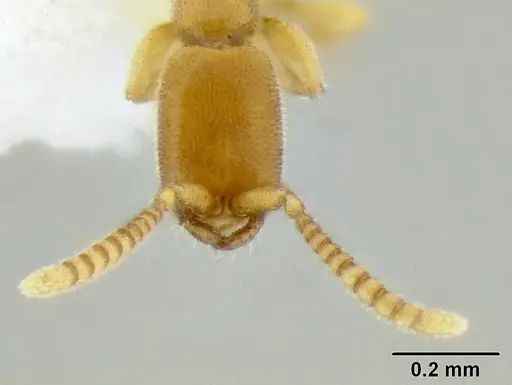
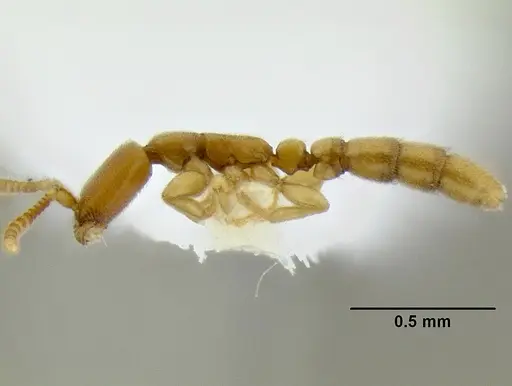
Leptanilloides femoralis is an extremely tiny yellowish ant belonging to the Dorylinae subfamily, the same group that includes army ants. They come from montane cloud forest in Venezuela at around 1500m elevation, where they live in sifted litter and rotten wood on the forest floor . This species has a flexible promesonotal connection, meaning the thorax segments can move independently - a trait shared with army ants that helps them navigate through tight spaces in leaf litter . The genus Leptanilloides is part of a group of ants that show army-ant-like behaviors including colony emigrations and modified queens . What makes this species particularly interesting is how poorly known it is - it's only known from worker specimens, with no documented queens or males ever described. This means there's a lot we don't know about their basic biology. They belong to a group of specialized predatory ants, and their tiny size suggests they likely hunt very small prey like springtails or other micro-arthropods in the leaf litter layer . The type series includes 22 paratype workers collected together, giving some indication of natural colony size .
Quick Summary
- Difficulty: Expert
- Origin & Habitat: Montane cloud forest in Venezuela (Pico Periquito, Henri Pittier National Park) at 1500m elevation. Collected from sifted litter and rotten wood on the forest floor [1].
- Colony Type: Unknown, only worker caste has been described. Related Dorylinae are typically single-queen but this is unconfirmed for this species.
- Size & Growth:
- Queen: Unknown, queens have not been described [1]
- Worker: Extremely tiny, inferred from Leptanilloides genus (~2mm total length)
- Colony: At least 22 workers known from type series, actual colony size unknown [1]
- Growth: Unknown, no development data available
- Development: Unknown, no development data exists for this species. (Development timeline is completely unstudied.)
- Antkeeping:
- Temperature: Keep cool like their cloud forest home, aim for 18-22°C. Avoid warm conditions. A room-temperature setup around 20°C is likely ideal, with no additional heating needed [1]
- Humidity: High humidity is essential. These ants come from damp cloud forest litter. Keep the nest substrate consistently moist but not waterlogged, think damp forest floor. Provide a water tube but ensure no flooding [1]
- Diapause: Unknown, no data on seasonal behavior. Given their high-elevation cloud forest origin, they likely experience cooler temperatures seasonally and may benefit from a slight cool period in winter, but this is unconfirmed.
- Nesting: Natural nesting is in leaf litter and rotting wood. In captivity, a test tube setup with moist substrate works well. Given their tiny size, use small chambers and avoid large open spaces. A naturalistic setup with small passages scaled to their minute size would be most appropriate [1]
- Behavior: Very little is known about their behavior in captivity. Based on their subfamily (Dorylinae), they are likely predatory on small invertebrates. Workers are extremely small and slow-moving. They probably forage individually or in small groups through leaf litter rather than forming large raiding columns like army ants. Escape prevention is critical, their tiny size means they can squeeze through gaps invisible to the naked eye. Use fine mesh and excellent barrier methods [1].
- Common Issues: tiny size makes escape prevention extremely difficult, they can slip through standard barrier setups, complete lack of captive care data means trial-and-error is inevitable, no documented diet acceptance, you must experiment to find what they will eat, colony founding behavior is completely unknown, queens have never been described, no hibernation or diapause data exists, seasonal care is uncertain, slow or nonexistent growth due to unknown requirements kills colonies
Why This Species Is Challenging
Leptanilloides femoralis is not a species for beginners. In fact, it's barely suitable for experts because we know almost nothing about their basic biology. They've only been collected once, from a single location in Venezuela, and only worker specimens exist in museum collections. No queens have ever been described, no nuptial flights documented, no colony size estimates available, and no captive husbandry records exist. This means you're essentially pioneering all aspects of their care through experimentation. The genus Leptanilloides as a whole is poorly studied, and this species sits at the extreme end of that knowledge gap. If you're looking for a species with established care protocols, this is not it. If you're interested in discovering and documenting entirely new ant biology, this could be a fascinating project, but be prepared for high failure rates as you figure out what they need to survive [1][2].
Housing and Setup
Given their tiny size and natural habitat in leaf litter and rotting wood, you'll need to think small. Test tube setups work well for founding colonies, but the chambers must be appropriately scaled, these ants are minute. Use fine mesh on any ventilation holes because they can slip through gaps that other ants couldn't. The nest material should be kept consistently moist to replicate the damp cloud forest floor they naturally inhabit. A small water reservoir in the test tube setup helps maintain humidity without flooding. Avoid large formicarium chambers designed for bigger ants, these workers need tight, confined spaces. Some keepers of similar tiny Dorylines use plaster nests or small acrylic setups with very narrow tunnels. Whatever you choose, ensure escape prevention is airtight, their small size is their greatest escape asset [1].
Feeding and Diet
This is one of the biggest unknowns. As Dorylinae (army ant relatives), they are almost certainly predatory, likely hunting small invertebrates in nature. Their tiny size suggests they target micro-prey like springtails, mites, and other small arthropods found in leaf litter. In captivity, you should experiment with very small live prey items, pinhead crickets are likely too large. Try live springtails, fruit flies, or other tiny insects. Given their unknown acceptance, start with small live prey and observe. Sugar sources may or may not be accepted, some Dorylinae take honeydew or nectar, but many are strictly predatory. Offer sugar water occasionally but don't rely on it. The key is experimentation and careful observation of what workers actually accept and consume [1][2].
Temperature and Humidity
Coming from montane cloud forest at 1500m elevation in Venezuela, these ants expect cool, damp conditions. Room temperature around 18-22°C is likely ideal, avoid heating the nest. They probably experience relatively stable temperatures year-round in their natural habitat, with perhaps some seasonal variation during wet and dry periods. High humidity is essential, their cloud forest home is constantly moist. Keep the nest substrate damp but not waterlogged. A water tube connected to the nest helps maintain humidity through evaporation. Avoid dry conditions entirely. If workers seem sluggish, they may be too cold, if they avoid the moist areas, it may be too warm or too wet. This species is not tolerant of temperature extremes or dry air [1].
Behavior and Temperament
We know very little about their behavior, but based on related species, they likely forage individually or in small groups through leaf litter rather than forming the large raiding columns characteristic of army ants. Their flexible promesonotal connection (the ability for the thorax segments to move independently) helps them navigate through tight spaces in their litter-dwelling habitat. Workers are slow-moving given their tiny size. They probably aren't aggressive, their size makes them vulnerable, so they likely avoid confrontation. The biggest behavioral concern is escape, their minute size means they can and will find any gap in your setup. Excellent, fine-mesh escape prevention is non-negotiable. Beyond that, observe your colony carefully and document what you see, any observations you make could be new scientific knowledge since so little is known about this species [1][2].
Frequently Asked Questions
How hard is Leptanilloides femoralis to keep?
This is an expert-level species, possibly the most challenging ant you could attempt to keep. We know almost nothing about their captive care, no queens have ever been described, no diet preferences documented, no development timeline known. You're essentially pioneering all aspects of their husbandry through experimentation. Expect high failure rates while you figure out what they need [1].
What do Leptanilloides femoralis eat?
Unknown with certainty, but as Dorylinae (army ant relatives), they are predatory. Their tiny size suggests they hunt micro-prey like springtails and mites. Experiment with very small live prey, fruit flies, springtails, and other tiny arthropods. Sugar acceptance is uncertain, some Dorylinae take it but many don't. Start with live prey and observe carefully [1][2].
What temperature do they need?
Keep them cool, around 18-22°C seems ideal based on their cloud forest origin at 1500m elevation in Venezuela. Room temperature is likely appropriate. Avoid heating the nest. They come from a stable, relatively cool mountain environment, not warm tropical conditions [1].
How big do colonies get?
Unknown, no colony size data exists for this species. The type series includes 22 workers, but we don't know if this represents a small fragment or typical colony size. Related Dorylinae can form large colonies, but this species is too poorly known to estimate [1].
Do they need hibernation?
Unknown, no data exists on their seasonal behavior. Their high-elevation cloud forest origin suggests they may experience seasonal temperature changes, but we don't know if they require a cool period. Observe your colony for signs of seasonal slowing and adjust accordingly, but no specific protocol exists [1].
Can I keep multiple queens together?
Unknown, queens have never been described for this species, so we have no information about colony founding or queen behavior. We don't even know if they are single-queen or multi-queen colonies in nature. This is entirely unstudied [1].
How long until first workers?
Unknown, no development timeline has been documented for this species. Without any baseline data, even rough estimates would be speculative [1].
Are they good for beginners?
Absolutely not. This species has no established care protocols, no described queens, and no captive husbandry records. Even experienced antkeepers would struggle with the complete lack of baseline information. If you want a challenging species, choose one where at least the basic biology is known. If you want to discover entirely new ant biology through trial and error, this could be a project, but accept that your colony will likely fail while you learn [1].
What makes them different from other ants?
They belong to the Dorylinae subfamily (army ant relatives) but are tiny litter-dwellers rather than the large, conspicuous army ants most people know. They display some army-ant-like traits including colony emigration behavior and modified queens, but in a much smaller package. They are also one of the most poorly known ant species in existence, almost everything about their biology remains to be discovered [1][2].
Report an Issue
The current care sheet is based fully on literature. See inconsistencies, or something that's incorrect? Please , it will be resolved after review from an admin. Contributing to the blogs tab also helps providing information, to make us be able to further improve the caresheets. Thank you for your support!
References

This caresheet is licensed under CC BY-SA 4.0 .
Community Blogs
CASENT0106180
View on AntWeb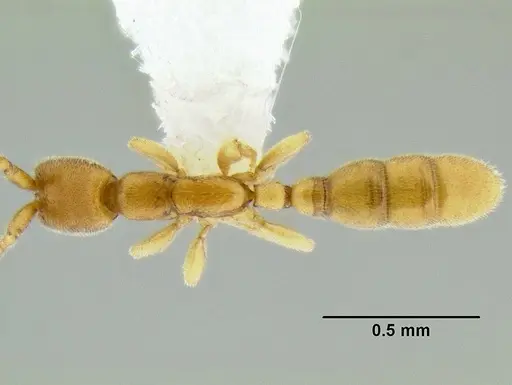
Literature
Loading distribution map...Loading products...