
Leptanilla zaballosi
- Sci. Name
- Leptanilla zaballosi
- Tribe
- Leptanillini
- Subfamily
- Leptanillinae
- Author
- Barandica <i>et al.</i>, 1994
- Distribution
- Found in 1 countries
Introduction
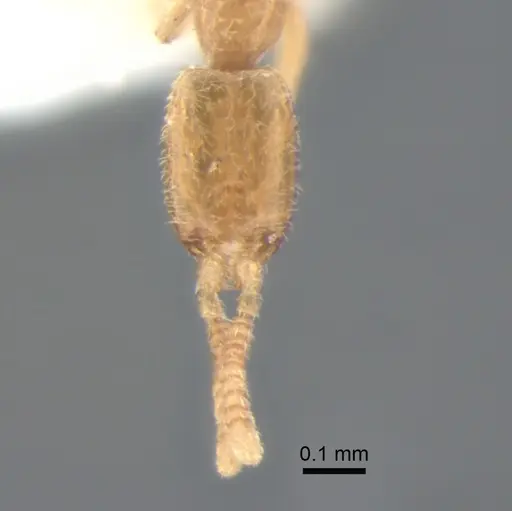
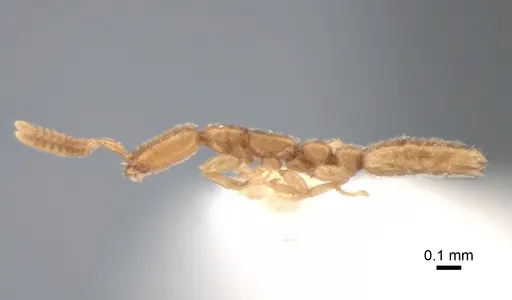
Leptanilla zaballosi is one of the smallest ants you can keep, workers measure just 1.21–1.55 mm in total length . They are pale yellow to slightly orange, with brownish margins on the alitrunk, petiole, and postpetiole . This species belongs to the subfamily Leptanillinae, a group of rarely seen subterranean ants. It was described from Spain in 1994 and is known only from the Iberian Peninsula, living in soil samples taken from slopes of seasonal water courses and irrigation ditches at elevations between 250 and 700 meters . What makes this species notable is its extreme elusiveness, Leptanilla ants are among the rarest in Europe because they live almost entirely underground. Workers have 12‑segmented antennae with slender, distally swollen scapes, and long narrow mandibles with four teeth . Their larvae have been studied and shown to overwinter, with final‑instar larvae collected in both December and May . The species name honors Dr. Juan P. Zaballos, who collected many of the specimens .
Quick Summary
- Difficulty: Expert
- Origin & Habitat: Iberian Peninsula, Spain, known from provinces of Cáceres, Madrid, Ávila, and Ciudad Real at altitudes of 250–700 m. Collected from soil near seasonal water courses and irrigation ditches [1][2].
- Colony Type: Colony structure is unconfirmed, no queen or colony size data has been documented in scientific literature.
- Size & Growth:
- Queen: Unknown, queen has not been described.
- Worker: 1.21–1.55 mm total length [1].
- Colony: Unknown, only worker samples have been collected, typically fewer than 100 workers per sample [4].
- Growth: Unknown
- Development: Unconfirmed, no development data exists for this species. (Larvae overwinter [3], so development may span multiple months, but this is entirely speculative.)
- Antkeeping:
- Temperature: Unconfirmed, no thermal studies exist. Based on the Mediterranean distribution, they likely experience warm summers and cool winters. No specific temperature data is available.
- Humidity: Unknown but likely high, given their subterranean soil habitat, keep the nest substrate consistently moist but not waterlogged.
- Diapause: Likely yes, larvae have been documented overwintering [3], suggesting a winter rest period is needed. Exact requirements are unconfirmed.
- Nesting: Must replicate their subterranean lifestyle. A naturalistic setup with fine, moist substrate is most appropriate. Plaster, Y‑tong, or 3D‑printed nests with extremely tight chambers may also work, but escape prevention is absolutely critical given their tiny size.
- Behavior: Behavior is unconfirmed, no behavioral studies exist for this species. Based on the Leptanilla genus, they likely forage underground for small prey. Tiny size means escape risk is extremely high.
- Common Issues: escape prevention is critical, workers are only 1.2–1.5 mm and can slip through gaps invisible to the naked eye., no captive husbandry information exists, you are pioneering care for this species., subterranean lifestyle makes them extremely difficult to observe and maintain., high humidity requirements may promote mold if ventilation is poor., diet is completely unknown, prey size and type are a complete guess.
Why This Species Is Challenging
Leptanilla zaballosi is one of the most difficult ant species to keep in captivity, possibly the most difficult non‑parasitic ant you could attempt. These are not just small ants, they are subterranean specialists that live almost entirely underground and are rarely encountered even by researchers. The entire Leptanilla genus is poorly studied, and L. zaballosi specifically has virtually no captive husbandry information [1][4].
Workers measure just 1.21–1.55 mm in total length, smaller than many springtails and soil mites that other tiny ants prey on [1]. This extreme smallness creates enormous practical challenges. Standard ant‑keeping equipment is designed for ants at least 3–4 mm, and even fine mesh that works for other tiny species may not contain these ants. Additionally, because they live in soil and have never been observed foraging above ground, we have no information about what they eat in captivity or how they behave in a formicarium.
The practical reality is that keeping L. zaballosi is experimental husbandry, you will be pioneering all aspects of their care with no established baseline. This makes them suitable only for expert antkeepers with extensive experience and resources to experiment.
Housing and Escape Prevention
Housing Leptanilla zaballosi presents unique challenges due to their minute size and subterranean nature. In the wild, they have been collected from soil samples using specialized extraction methods like the Lavage de Terre technique, which processes roughly 40 kg of soil [5]. This suggests they live deep within soil substrates rather than in pre‑formed cavities.
For captivity, you need a naturalistic setup with very fine, moist substrate, likely a mix of soil and sand that holds humidity well. Standard test tubes may work if the water reservoir is small and the cotton is packed extremely tight, but the tiny workers could squeeze through standard cotton fibers. Consider using cotton alternatives or very tightly packed material. Plaster, Y‑tong, or 3D‑printed nests with chambers no wider than 2–3 mm are also options, but any nest must be sealed to an extraordinary standard.
Escape prevention cannot be overstated, these ants are approximately 1.2–1.5 mm total length [1]. They can and will escape through gaps that are virtually invisible to the human eye. All connections, lids, and barriers must be examined under magnification. Even standard ‘ant‑proof’ equipment may not be sufficient. Apply barrier substances like fluon to all edges multiple times and regularly check for escapes.
A small naturalistic formicarium with a deep substrate layer (at least 5–10 cm) best replicates their natural environment. The chamber should be completely enclosed with no gaps larger than 0.5 mm anywhere in the setup.
Feeding and Diet, The Unknown Factor
What Leptanilla zaballosi eats in captivity is completely unknown, this is perhaps the biggest knowledge gap for potential keepers. Related Leptanilla species are known to be predators of small soil arthropods, but no specific prey records exist for L. zaballosi [3].
The larvae of this species have been studied and possess outwardly‑directed mandibles used for digging into prey, confirming they are predators [3]. However, we don't know what specific prey they accept, how often they feed, or how they tend brood.
Given their tiny size (1.2–1.55 mm workers), any prey offered would need to be microscopic. Springtails are the most likely candidate, they are commonly accepted by small predatory ants, but even typical ‘small’ springtails may be too large. You might need to culture the smallest possible springtail species or other micro‑arthropods.
Sugar sources are unlikely to be accepted, their subterranean predatory lifestyle suggests they are strict carnivores. Do not expect them to accept honey or sugar water. Your feeding experiments should focus entirely on small live prey items.
You will need to experiment extensively and document your findings carefully. There is simply no baseline information available.
Temperature and Seasonal Care
Temperature requirements for L. zaballosi are unconfirmed, no thermal studies exist. However, we can make educated guesses based on their geographic range and habitat.
They are found across several provinces in central Spain (Cáceres, Madrid, Ávila, Ciudad Real) at elevations of 250–700 m [1]. This region experiences hot summers and cold winters with temperatures regularly dropping below freezing. The larvae have been documented overwintering in the wild, with final‑instar larvae collected in both December and May [3]. This strongly suggests they require a winter diapause period.
For captive care, consider a summer active‑season temperature in the range of 20–24°C, which aligns with typical Mediterranean soil temperatures during their active season. During winter, allow temperatures to drop significantly, perhaps to 10–15°C or even cooler, mimicking natural conditions. The exact duration and temperature range of this dormancy is unknown but should likely last several months based on the overwintering larvae data.
Keep temperatures stable during the active season to reduce stress, avoid fluctuations and direct heat sources that could dry out the substrate. A room‑temperature setup with no additional heating during summer and a natural drop during winter may be appropriate, but monitor closely.
Humidity and Substrate
Given their subterranean soil‑dwelling lifestyle, L. zaballosi almost certainly requires high humidity. They have been collected from moist soil samples in irrigation ditches and seasonal water‑course slopes [1][2].
The substrate should be kept consistently moist but never waterlogged, think damp forest floor, not swamp. Allow the substrate to dry slightly in areas but maintain overall moisture. Because of their tiny size and likely shallow foraging depth, surface drying will affect them more quickly than larger ants.
A naturalistic setup with a deep substrate layer allows for humidity gradients, keep the lower portions moister while the surface dries slightly. The substrate should be fine enough to hold moisture well but not so compact that it becomes anaerobic.
Ventilation must be balanced against humidity, some airflow is necessary to prevent mold, but excessive airflow will dry out the setup. This is a delicate balance that will require experimentation. Consider using small ventilation holes that can be opened or closed to adjust airflow.
Frequently Asked Questions
Can I keep Leptanilla zaballosi in a test tube?
Possibly, but it is extremely challenging due to their minute 1.21–1.55 mm size. Standard test tubes may work if you use extremely tight cotton packing and apply multiple escape barriers. However, their subterranean nature suggests a naturalistic setup with fine moist substrate is more appropriate. If using test tubes, examine all potential gaps under magnification.
How long does it take for Leptanilla zaballosi to develop from egg to worker?
This is completely unconfirmed, no development data exists for this species. Larvae have been documented overwintering [3], which may indicate extended development spanning multiple months, but this is entirely speculative.
What do Leptanilla zaballosi eat?
This is unknown, no feeding records exist. Based on related species, they are likely predators of small soil micro‑arthropods. Their larvae have outwardly‑directed mandibles used for digging into prey [3]. You would need to experiment with tiny live prey like springtails, but even typical small springtails may be too large. Sugar sources are unlikely to be accepted.
Are Leptanilla zaballosi good for beginners?
No, this species is absolutely not suitable for beginners. They are among the most challenging ants to keep due to their extreme small size (1.2–1.55 mm), completely unknown captive requirements, subterranean lifestyle, and total lack of husbandry information. Even experienced antkeepers should approach this species with caution.
Do Leptanilla zaballosi need hibernation?
Likely yes, larvae have been documented overwintering in the wild, with final‑instar larvae collected in December and May [3]. This strongly suggests they require a winter rest period. During winter, allow temperatures to drop significantly (perhaps to 10–15°C or cooler) for several months. Exact requirements are unconfirmed.
How big do Leptanilla zaballosi colonies get?
Unknown, colony size has not been documented. In scientific samples, typically fewer than 100 workers have been collected per sample, with one sample yielding 84 workers [4]. Wild colonies may be larger, but we simply don't know.
Can I keep multiple queens together?
Unknown, queen biology is completely unstudied for this species. No queen has ever been described in scientific literature. The colony structure (monogyne, polygyne) is entirely unknown. Do not attempt combining unrelated queens without any baseline information.
Do Leptanilla zaballosi sting?
Unknown, no sting records exist. Workers possess a long sting [1], but at 1.2–1.55 mm they are far too small to penetrate human skin. Even if they could sting, the amount of venom would be negligible. They are not considered dangerous to humans.
Why are my Leptanilla zaballosi dying?
Without any captive baseline, diagnosing problems is extremely difficult. Likely causes include: escape (they are minute and will escape through tiny gaps), improper humidity (too dry or too wet), temperature stress, starvation (if not offering acceptable prey), or mold from poor ventilation. Document everything and experiment systematically. Mortality is expected given the complete lack of husbandry information.
When should I move Leptanilla zaballosi to a formicarium?
There is no established guidance for this species. Given their subterranean nature, keeping them in a naturalistic setup from the start may be preferable to moving them. If you start with a test tube, only move them when you observe clear signs of stress or when the tube conditions deteriorate, but have a well‑prepared receiving setup ready, as moves are risky for such tiny ants.
Report an Issue
The current care sheet is based fully on literature. See inconsistencies, or something that's incorrect? Please , it will be resolved after review from an admin. Contributing to the blogs tab also helps providing information, to make us be able to further improve the caresheets. Thank you for your support!
References

This caresheet is licensed under CC BY-SA 4.0 .
Community Blogs
CASENT0842629
View on AntWeb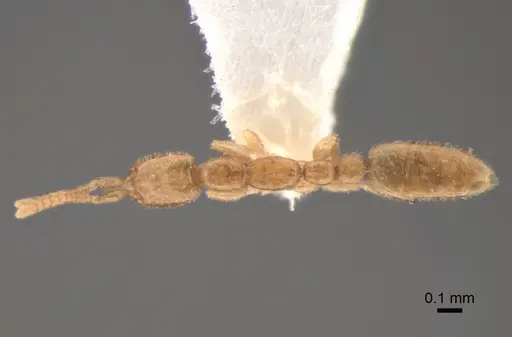
Literature
Loading distribution map...Loading products...