
Leptanilla theryi
- Sci. Name
- Leptanilla theryi
- Tribe
- Leptanillini
- Subfamily
- Leptanillinae
- Author
- Forel, 1903
- Distribution
- Found in 1 countries
Introduction
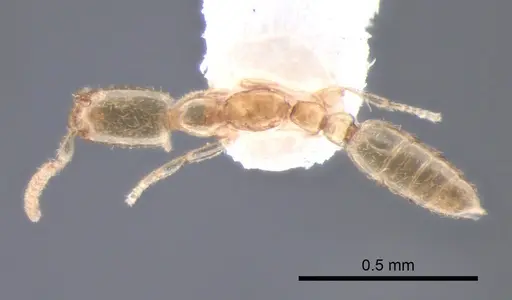
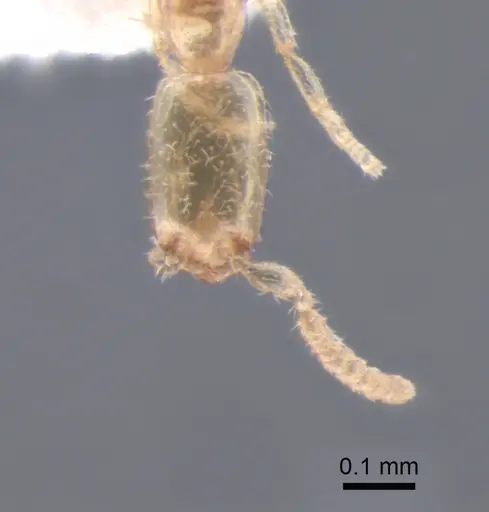
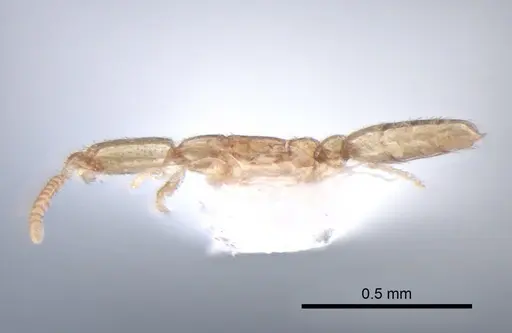
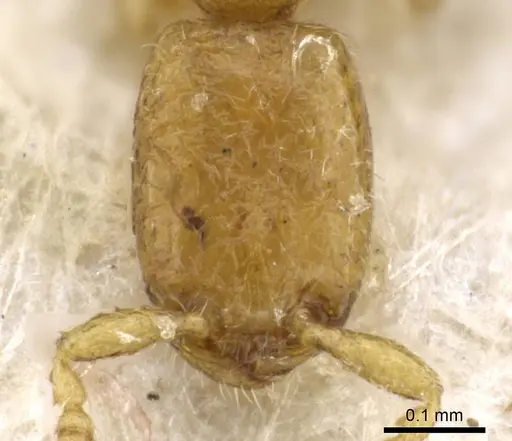
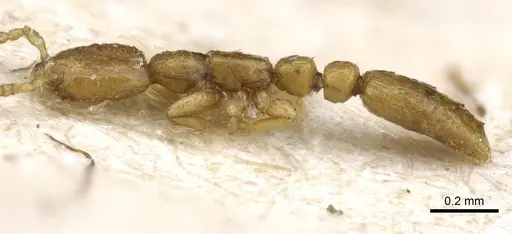
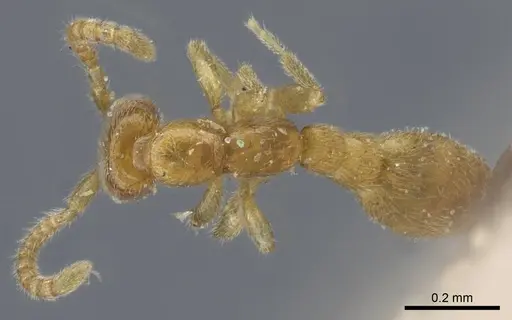
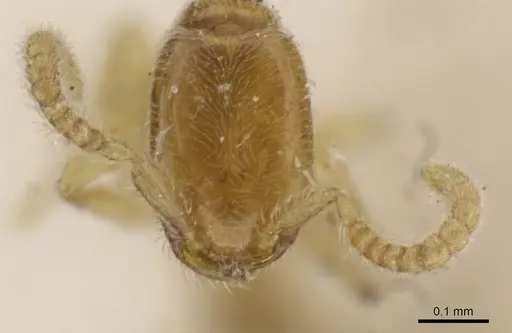
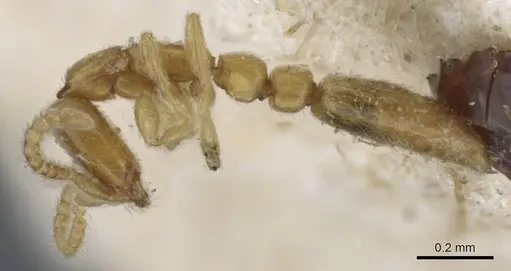
Leptanilla theryi is an extremely rare subterranean ant from the Leptanillinae subfamily, found only in the Mediterranean region of North Africa. Workers are tiny at about 1.5mm, with a distinctive shape: a subquadrangular petiole (as long as wide), concave back of the head, and long hairs on the inner mandibles . The species was first described from Algeria, with confirmed records also in Tunisia and a possible record from Spain (Murcia) that might be a misidentification . Like all Leptanilla species, these ants live deep underground and are almost never seen on the surface, making them one of the most elusive ants in the Mediterranean.
Quick Summary
- Difficulty: Expert
- Origin & Habitat: North African Mediterranean region, Algeria (type locality) and Tunisia, with a possible but unconfirmed record from Spain [1][2][3]. These ants live strictly underground in Mediterranean soil habitats [4][5].
- Colony Type: Unconfirmed, likely single-queen (monogyne) based on typical genus patterns. The queen was described by Santschi in 1915 [6].
- Size & Growth:
- Queen: Unknown, queen described but no size data available.
- Worker: About 1.5mm [1]
- Colony: Unknown, likely under 100 workers based on genus patterns (estimated)
- Growth: Unknown, likely slow to moderate (inferred from genus patterns)
- Development: Unknown, no direct data. Based on related Leptanilla species, estimate 6-10 weeks at optimal temperature (speculative). (Development timeline is unconfirmed. Leptanillinae generally develop slower than surface-dwelling ants.)
- Antkeeping:
- Temperature: No specific data. Start with room temperature (20-24°C) and adjust based on observation. A gentle gradient is recommended.
- Humidity: Keep the nest substrate consistently moist but not waterlogged. Provide a moisture gradient so the colony can choose.
- Diapause: Unknown, no documented requirement. Given the North African origin (Algeria, Tunisia), they likely have reduced activity during cool months but may not need true hibernation.
- Nesting: Strictly subterranean. Use a naturalistic setup with soil or a plaster/Y-tong nest with very narrow chambers scaled to the 1.5mm workers. A simple soil-filled test tube setup works too. Never use acrylic nests.
- Behavior: Virtually nothing is documented about the behavior of Leptanilla theryi specifically. Based on genus patterns, they are likely predators of tiny soil animals like springtails and mites. They are not aggressive and almost never come to the surface. Escape prevention is critical due to their tiny size, they can squeeze through extremely small gaps. Do not expect to see typical ant activity like surface foraging.
- Common Issues: extreme difficulty in finding and acquiring this species, it is rarely collected and not available in the antkeeping trade., tiny size makes escape prevention very hard, use fine mesh and seal all gaps., no captive breeding data exists, wild colonies are the only source, and they are almost impossible to find., subterranean lifestyle means you will rarely see the ants, this is normal, not a sign of colony failure., no information on specific dietary needs, related species suggest predation on tiny soil animals, but success is uncertain.
Why Leptanilla theryi is an Expert-Only Species
This is one of the most challenging ant keeping projects possible. Leptanilla theryi has never been kept in captivity, and there is no reliable care information available. The species is extremely rare in the wild, confirmed only from Algeria and Tunisia (and possibly Spain) [2][1][3]. Even professional myrmecologists rarely find them. The main problem is simply getting a colony, they are not sold anywhere. And because they live completely underground, you will hardly ever see your ants, making it hard to tell if they are healthy. Unless you are a researcher with access to wild colonies, this species is effectively impossible to keep.
Natural History and Distribution
Leptanilla theryi lives in the Mediterranean region of North Africa. It was first described from Algeria, and is also confirmed from Tunisia [2][1]. Some sources mention a record from Spain (Murcia), but this might be a misidentification of a similar species [1]. The species is classed as an Iberian/Maghrebian zoogeographic element, meaning it is restricted to the coastal Mediterranean areas of North Africa and possibly nearby [4][5]. As a member of the Leptanillinae subfamily, these ants are strictly underground, living in soil tunnels. They are never found on the surface and are only collected through special methods like soil washing or digging up nests [3].
Morphology and Identification
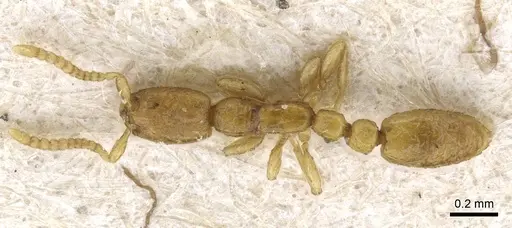
Workers measure about 1.5mm in length, among the smallest ants in the Mediterranean [1]. Key features include: a petiole that is almost as long as wide when viewed from above, a concave back of the head, and a long hair on the inside of each jaw. The groove between the thorax segments is fairly deep, and the nodes (petiole and postpetiole) are rounded rather than angular. This species looks similar to Leptanilla plutonia and Leptanilla ortunoi, but can be told apart by tiny differences like the shape of the head and the hairs on the mandibles [1][6]. The queen has been described but is rarely seen.
Nesting and Habitat Preferences
No specific nesting data is available for Leptanilla theryi. Like all Leptanillinae, they live underground in soil [3]. In captivity, use a naturalistic setup with moist soil. The nest chambers should be very small and tight, matching the 1.5mm worker size. A plaster or Y-tong nest with narrow galleries, or a simple soil-filled test tube, would work. Keep the nest soil consistently moist but never waterlogged. Because no one has successfully kept this species, any attempt would be experimental.
Feeding and Diet
The diet of Leptanilla theryi has not been studied. Based on what we know about related species, they likely hunt tiny soil animals like springtails (Collembola), mites, and other microscopic bugs. Their small size (1.5mm) limits them to very tiny prey. In captivity, you could try offering small live prey like springtails, mites, or tiny fly larvae, but whether they will accept them is completely unknown. Sugar is probably not part of their diet. Any feeding should be treated as an experiment.
Frequently Asked Questions
Is Leptanilla theryi available for purchase?
No. This species is extremely rare and has never been offered in the antkeeping trade. There are no commercial sources, and wild colonies are almost impossible to find due to the species' restricted distribution (Algeria and Tunisia) and underground lifestyle.
How big do Leptanilla theryi colonies get?
The maximum colony size is unknown. Based on the genus, colonies are likely small, probably under 100 workers.
Do Leptanilla theryi ants sting?
Given their tiny size (1.5mm), any sting would be negligible even if they have one. They are not known for painful stings and are harmless to humans.
What do Leptanilla theryi eat?
Unconfirmed, but based on genus patterns, they likely hunt tiny soil animals like springtails and mites. In captivity, you could try offering tiny live prey, but success is uncertain.
Can beginners keep Leptanilla theryi?
No. This species is rated Expert because there is no captive care information, it is extremely rare, tiny, and lives completely underground. There is no documented successful keeping of this species.
Do Leptanilla theryi need hibernation?
Unknown. Given their North African origin (Algeria, Tunisia), they likely experience mild seasonal changes rather than true hibernation. No diapause requirements have been documented.
How do I keep Leptanilla theryi in captivity?
No established protocols exist. A naturalistic setup with moist soil and very small chambers scaled to 1.5mm workers would be most appropriate. Room temperature (20-24°C) and moderate humidity are reasonable starting points. Success would require an experimental approach and careful documentation.
Where does Leptanilla theryi live in the wild?
Only in North Africa, Algeria (type locality) and Tunisia, with a possible unconfirmed record from Spain. They are strictly underground, living in Mediterranean soil habitats.
How long does it take for Leptanilla theryi to develop from egg to worker?
Unknown. No development data exists. Based on related Leptanilla species, a rough estimate is 6-10 weeks, but this is purely speculative.
Are Leptanilla theryi aggressive?
Unlikely. Leptanilla species are not known for aggression. Their tiny size and underground lifestyle suggest they are secretive and focus on hunting small soil organisms rather than defending a territory.
Report an Issue
The current care sheet is based fully on literature. See inconsistencies, or something that's incorrect? Please , it will be resolved after review from an admin. Contributing to the blogs tab also helps providing information, to make us be able to further improve the caresheets. Thank you for your support!
References

This caresheet is licensed under CC BY-SA 4.0 .
Community Blogs
Literature
Loading distribution map...Loading products...