
Lepisiota spinisquama
- Sci. Name
- Lepisiota spinisquama
- Tribe
- Plagiolepidini
- Subfamily
- Formicinae
- Author
- Kuznetsov-Ugamsky, 1929
- Distribution
- Found in 3 countries
Introduction
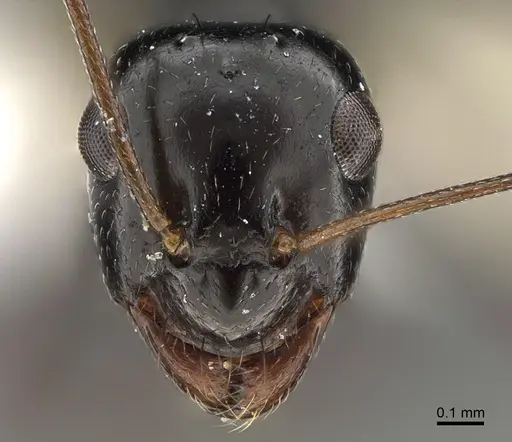
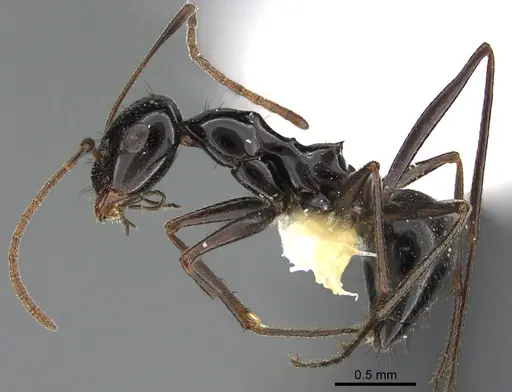
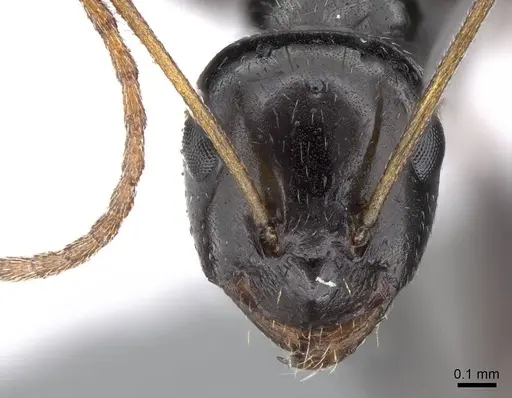
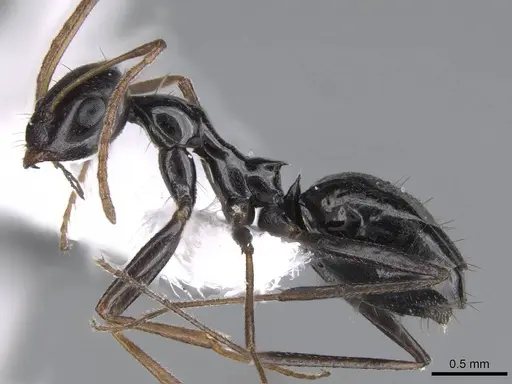
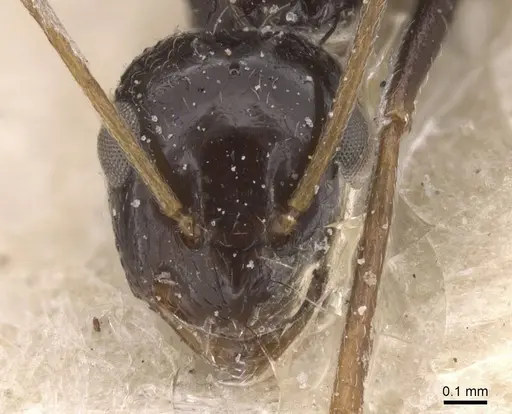
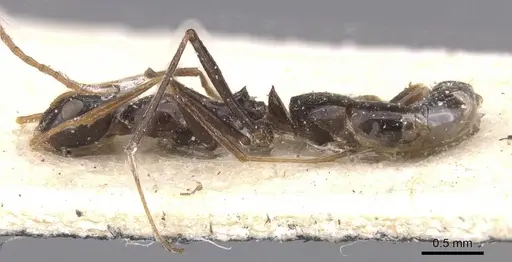
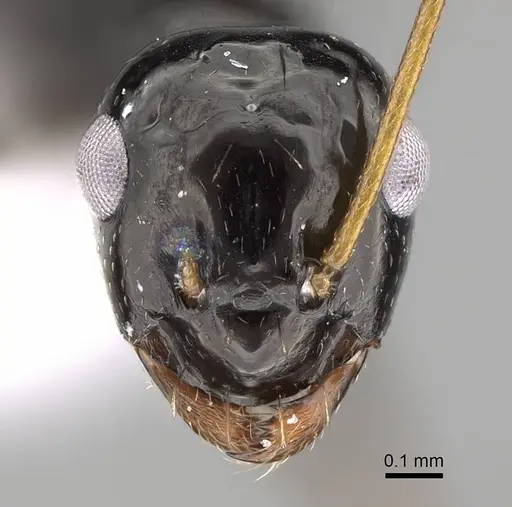
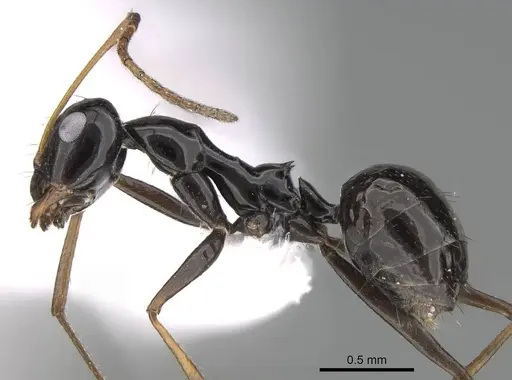
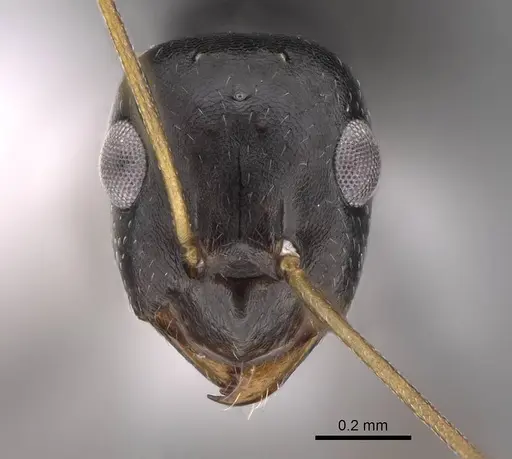
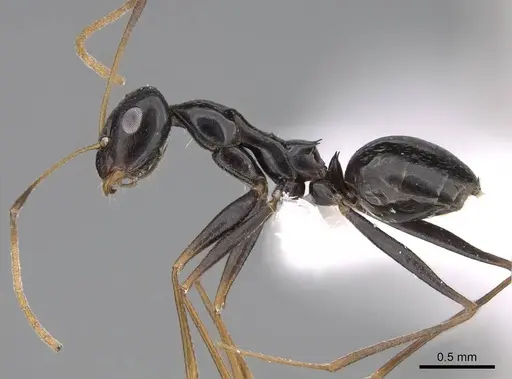
Lepisiota spinisquama is a small ant native to central Asia and the Arabian Peninsula. Workers have a shiny black to dark brown body with distinctive spines on both the propodeum and the petiole. Their antennae, tibiae, and tarsi are yellowish, giving them a two-toned appearance. This species is found across Kazakhstan, Iran, Oman, Saudi Arabia, Yemen, and the Socotra Archipelago . It is one of the commonest ants on Socotra Island, where it thrives in diverse conditions from dry sandy ground to moist soil under dead palm trees .
Quick Summary
- Difficulty: Easy
- Origin & Habitat: Native to central Asia (Kazakhstan) with populations in Iran, Oman, Saudi Arabia, Yemen, and Socotra Archipelago. Found in dry habitats including sandy soil under date palms, under stones, and in moist organic-rich soil under dead palm trees [3][4][5].
- Colony Type: Multi-queen colonies with several queens and many hundreds of workers [1].
- Size & Growth:
- Queen: size data unavailable, no specific measurements found for this species
- Worker: size data unavailable, no specific measurements found for this species
- Colony: Many hundreds of workers per colony [1]
- Growth: Moderate
- Development: Estimated 6-8 weeks based on related Lepisiota species (Development time is estimated from genus patterns, specific data for this species is not available)
- Antkeeping:
- Temperature: Keep at 22-26°C. This species tolerates warm conditions and is found in montane areas with moderate rainfall in Iran and dry habitats across its range [5][3].
- Humidity: Provide a humidity gradient, some areas slightly moist, others dry. They nest both in dry sandy soil and moist compact clay under stones, so they adapt to varying conditions [3].
- Diapause: Unknown, likely requires reduced activity in cooler months based on Palearctic distribution, but specific requirements unconfirmed [4].
- Nesting: Will readily nest in test tubes, Y-tong nests, or plaster nests. Provide a dry to slightly moist substrate with some damp areas. They naturally nest under stones in compact soil [3].
- Behavior: General scavengers that actively forage and will attack other insects. Workers are active foragers, observed hunting on tree trunks and ground. They are not particularly aggressive toward keepers but will defend their nest. They are small ants, use standard escape prevention with fluon on container rims [1][3].
- Common Issues: colonies may decline if kept too cold, maintain warm temperatures, wild-caught colonies may have parasites that can devastate captive populations, multi-queen colonies can be sensitive to disturbance during founding, dry habitat preference means overwatering is a common mistake that kills colonies, slow initial growth may cause keepers to overfeed or disturb the nest prematurely
Housing and Nest Setup
Lepisiota spinisquama is adaptable and will accept most standard nest types. Test tubes work well for founding colonies, fill one end with a water reservoir and cotton plug, leaving the rest dry for the queen to seal herself into. For established colonies, Y-tong or plaster nests with chambers work nicely. The key is providing a humidity gradient, some areas should be slightly moist while others stay dry. In the wild, they nest under stones in everything from dry sandy soil to moist clay, so they tolerate a range of conditions [3]. A small outworld for foraging is essential since these ants are active hunters and scavengers.
Feeding and Diet
These ants are generalist scavengers and predators. They will readily accept sugar sources (honey water, sugar water) and protein foods like small insects (fruit flies, small crickets, mealworms). In captivity, offer a drop of honey or sugar water every few days, plus small insects twice weekly. Remove uneaten prey after 24 hours to prevent mold. Workers have been observed foraging on tree trunks in the wild, actively hunting insects, so live prey is appreciated but not strictly required once colonies are established [1][3].
Temperature and Seasonal Care
Keep your colony warm at 22-26°C. This species comes from warm regions across central Asia and the Arabian Peninsula, including areas with moderate rainfall in Iran and very dry habitats in Socotra and Oman. A heating cable on one side of the nest can create a temperature gradient, allowing ants to self-regulate. Place the heating on top of the nest, not underneath, to avoid drying out the substrate too quickly. Regarding diapause, specific requirements are unconfirmed, but given their Palearctic distribution, a brief cool period (15-18°C for 2-3 months) during winter months may benefit established colonies [4][5][3].
Colony Structure and Growth
L. spinisquama forms multi-queen colonies with several queens and many hundreds of workers [1]. This polygynous structure means founding colonies may have multiple queens together, though some may eventually be eliminated. Growth is moderate, expect 6-10 months from founding to a healthy first generation of workers, then several months more to reach significant numbers. The presence of multiple queens can speed up colony growth once workers establish, as egg production is higher. Be patient with founding colonies and minimize disturbances.
Behavior and Handling
Workers are active foragers and will readily explore their outworld in search of food. They are not among the most aggressive ants, but they will defend their nest if threatened. When foraging, they actively hunt small insects rather than just scavenging, showing predatory behavior. Their small size means they can squeeze through small gaps, use standard escape prevention with fluon on container rims and fine mesh on any ventilation. They are diurnal and most active during daylight hours, though they adjust to artificial lighting schedules in captivity. [1][3]
Frequently Asked Questions
Can I keep Lepisiota spinisquama in a test tube?
Yes, test tubes work well for founding colonies. Use a water reservoir at one end with a cotton plug, then leave the rest dry for the queen to seal herself into. Keep the tube in a warm, dark place and wait for the first workers to emerge before considering any move to a larger nest.
How long until Lepisiota spinisquama has first workers?
Expect first workers (nanitics) in about 6-8 weeks after the queen lays eggs, assuming optimal temperatures around 24-26°C. This is an estimate based on related Lepisiota species, specific development data for this species is not available.
Are Lepisiota spinisquama good for beginners?
Yes, this species is rated as easy to keep. They are adaptable to various nest types, generalist feeders, and tolerate a range of humidity levels. Their main requirements are warm temperatures and not overwatering.
Can I keep multiple Lepisiota spinisquama queens together?
Yes, this species naturally forms multi-queen colonies in the wild, so keeping multiple queens together is appropriate. However, introducing unrelated queens to an established colony may result in aggression, it's best to let them establish together from the start or leave wild colonies intact.
What do Lepisiota spinisquama eat?
They are generalist scavengers. Offer sugar water or honey regularly, plus small insects like fruit flies, small crickets, or mealworms as protein. They will also scavenge on dead insects. Remove uneaten food promptly to prevent mold.
Do Lepisiota spinisquama need hibernation?
Specific diapause requirements are unconfirmed. However, given their Palearctic distribution, a brief cool period (15-18°C for 2-3 months) during winter may benefit established colonies. Observe your colony's behavior, if they naturally slow down in winter, you can mimic this.
Why are my Lepisiota spinisquama dying?
Common causes include: temperatures too cold (below 20°C), overwatering causing mold or drowning, disturbance during founding, or parasites from wild-caught colonies. Ensure warm temperatures, appropriate humidity without saturation, and minimal disturbance during the founding phase.
How big do Lepisiota spinisquama colonies get?
Colonies can reach many hundreds of workers. In the wild, nests include several queens and many hundreds of workers. In captivity, well-established colonies can reach several hundred workers over 1-2 years.
When should I move Lepisiota spinisquama to a formicarium?
Wait until the colony has at least 50-100 workers before moving to a larger nest. Test tubes work well for colonies under 50 workers. When moving, connect the test tube to the formicarium and let them move themselves, do not force them.
Report an Issue
The current care sheet is based fully on literature. See inconsistencies, or something that's incorrect? Please , it will be resolved after review from an admin. Contributing to the blogs tab also helps providing information, to make us be able to further improve the caresheets. Thank you for your support!
References

This caresheet is licensed under CC BY-SA 4.0 .
Community Blogs
ANTWEB1041923
View on AntWeb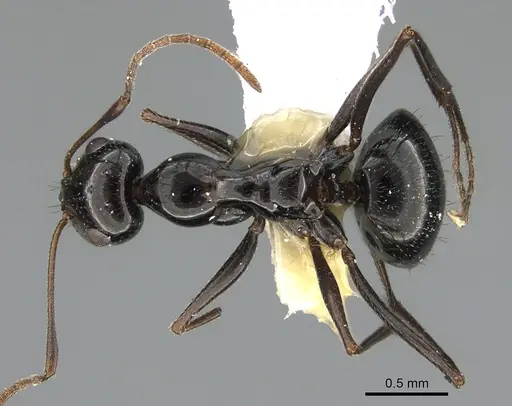
CASENT0265364
View on AntWeb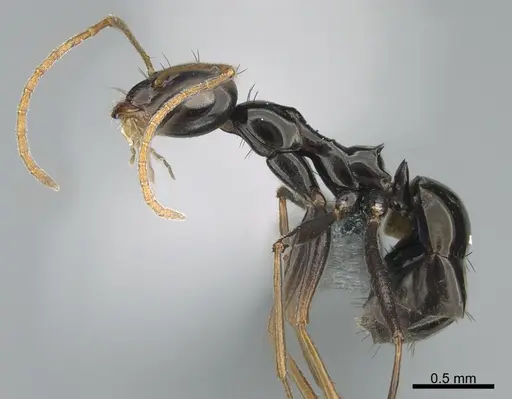
CASENT0746630
View on AntWeb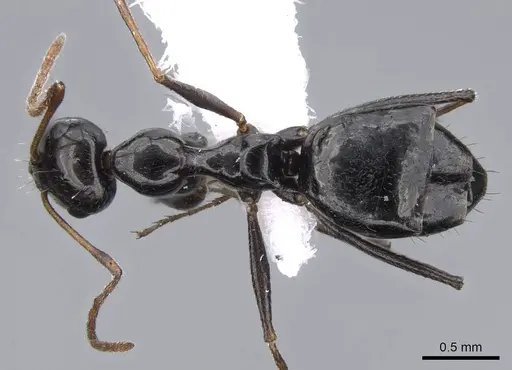
CASENT0912407
View on AntWeb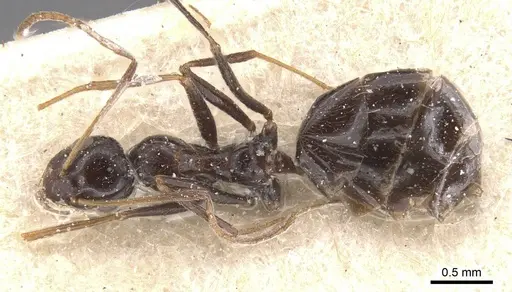
CASENT0922270
View on AntWeb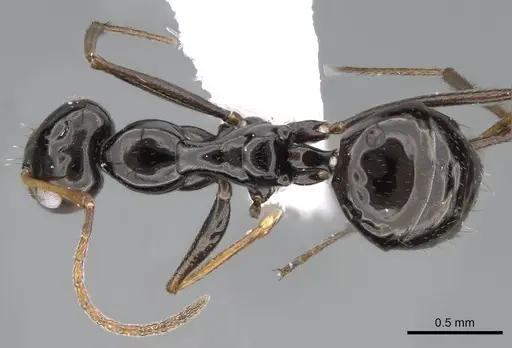
CASENT0922842
View on AntWeb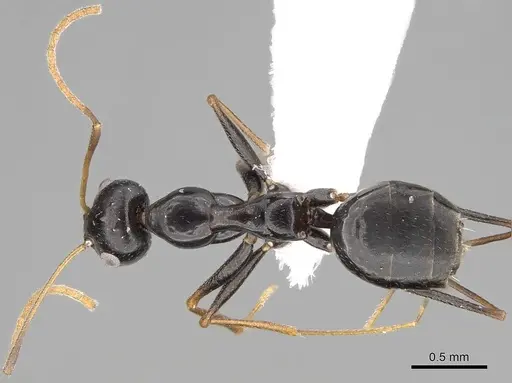
Literature
Loading distribution map...Loading products...