
Lepisiota obtusa
- Sci. Name
- Lepisiota obtusa
- Tribe
- Plagiolepidini
- Subfamily
- Formicinae
- Author
- Emery, 1901
- Distribution
- Found in 1 countries
Introduction
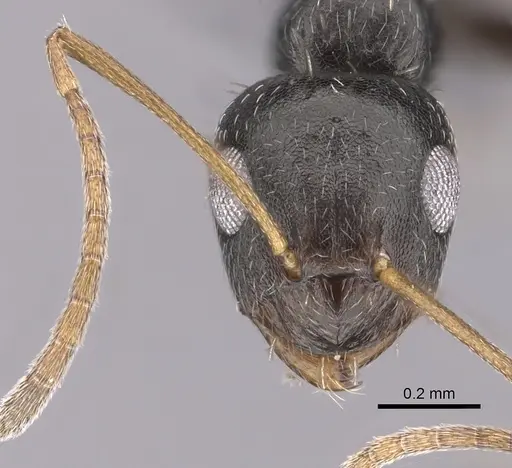
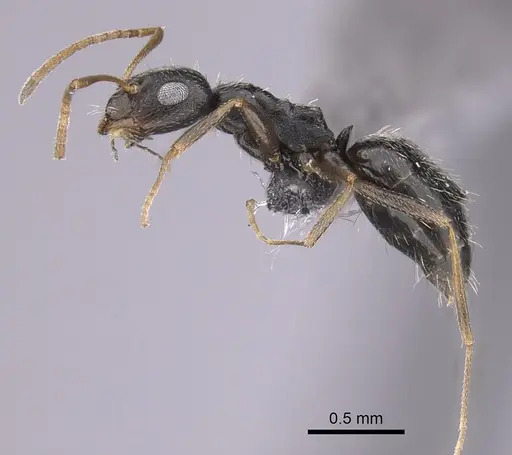
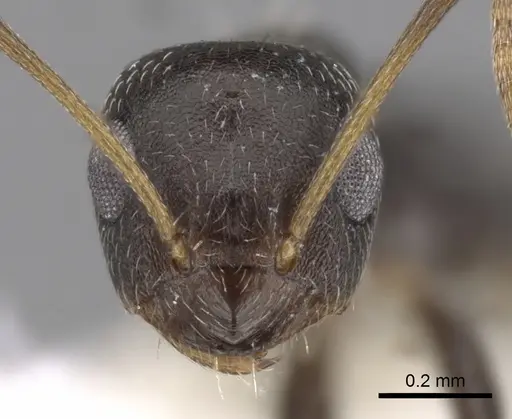
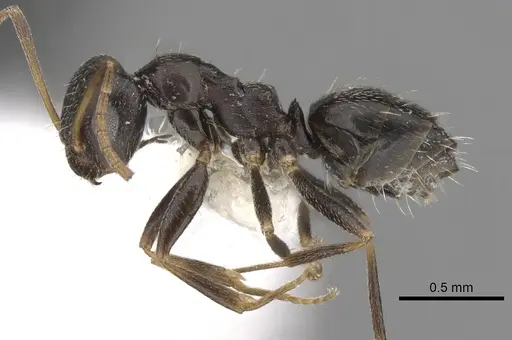
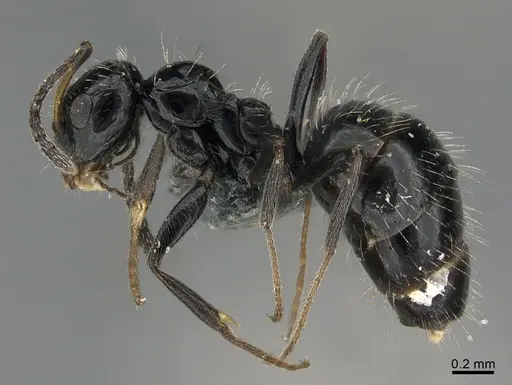
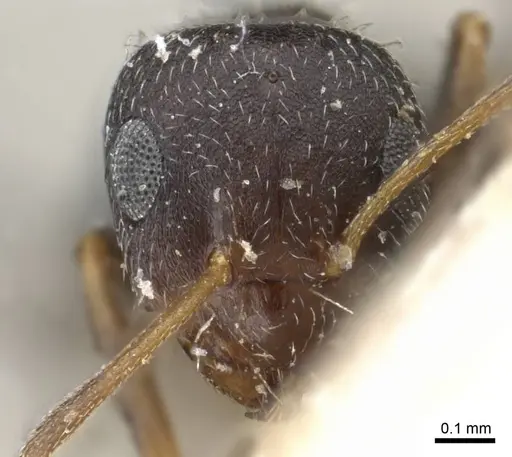
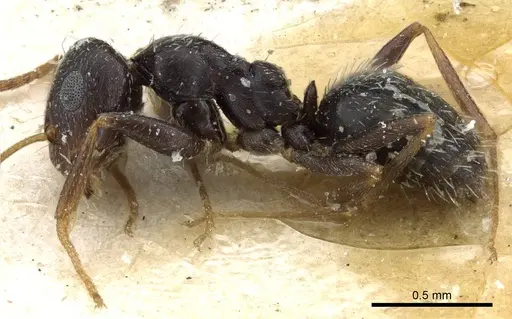
Lepisiota obtusa is a small, dark ant species native to arid regions of Northeast Africa and the Arabian Peninsula. Workers are dark brown to black with paler appendages, and their body is covered in distinctive pale hairs across the mesosoma and gaster. They have reduced or indistinct propodeal spines and a simply dentate petiole. This species is known for its facultative relationship with the critically endangered Sinai Baton Blue butterfly, tending the butterfly larvae in exchange for sugar secretions. In the wild, they nest under rocks next to Vachellia trees .
Quick Summary
- Difficulty: Medium
- Origin & Habitat: Native to arid regions of Northeast Africa and the Arabian Peninsula, including Eritrea, Ethiopia, Saudi Arabia, Oman, Yemen, and Israel. They inhabit dry, rocky areas and are typically found nesting under stones near Acacia/Vachellia trees [3][4][5][1][6].
- Colony Type: Colony structure is unconfirmed. No specific data on whether they are single-queen or multi-queen colonies.
- Size & Growth:
- Queen: size data unavailable
- Worker: small species [7]
- Colony: Unknown, no colony size data available
- Growth: Unknown
- Development: Unconfirmed, no development data available for this species (Development timeline has not been studied for this species.)
- Antkeeping:
- Temperature: Based on their origin in hot, arid regions, keep them warm around 24-28°C. A gentle gradient allowing them to choose warmer or cooler areas is ideal.
- Humidity: Prefers dry to moderate conditions. Allow the nest area to dry out between waterings, think arid habitat, not tropical rainforest.
- Diapause: Unknown, their arid origin suggests they may not require a true hibernation, but cooler temperatures during winter months may slow activity.
- Nesting: In captivity, they do well in Y-tong nests or plaster nests with some dry areas. Provide a naturalistic setup with flat stones or soil chambers. They prefer nesting under objects in the wild.
- Behavior: This is a small, generally calm ant species. They are known to tend lycaenid butterfly larvae in the wild, showing a facultative mutualistic relationship. Workers forage on plants and are active hunters. Their small size means they can escape through tiny gaps, excellent escape prevention is essential. They are not aggressive toward keepers.
- Common Issues: escape prevention is critical due to their very small size, use fine mesh and tight-fitting lids, rare in the hobby, finding a colony may be difficult, sensitive to excessive humidity, keep nesting areas relatively dry, slow colony growth may frustrate beginners expecting quick results, wild-caught colonies may carry parasites that can cause colony failure
Housing and Nest Setup
Lepisiota obtusa does well in Y-tong nests or plaster formicariums. Because they naturally nest under rocks in arid areas, provide some dry chambers alongside areas with slight moisture. A naturalistic setup with a soil layer and flat stones works well. They are small ants, so ensure your outworld has excellent escape prevention, fine mesh on all openings is essential. A shallow water dish for drinking and a small foraging area are sufficient for the outworld. [1][7]
Feeding and Diet
In the wild, these ants are predators and also tend lycaenid butterfly larvae for sugar secretions. In captivity, offer small live prey like fruit flies, pinhead crickets, or mealworms. Sugar water or honey can be offered occasionally, especially if you notice workers tending any larvae. Feed protein prey 2-3 times per week and keep a sugar source available. Remove uneaten prey promptly to prevent mold. [2]
Temperature and Heating
As a species from hot, arid regions (Ethiopia, Saudi Arabia, Oman, Israel), Lepisiota obtusa prefers warm conditions. Keep the nest around 24-28°C. A heating cable on one side of the nest creates a temperature gradient, allowing ants to self-regulate. Avoid temperatures below 20°C for extended periods. Room temperature in most homes should suffice, but you may need supplemental heating in cooler climates. [3][4]
Humidity and Water
This is a dry-region species. Keep humidity lower than you would for tropical ants. The nest substrate should be mostly dry with only slight moisture in one area. Mist the outworld occasionally but avoid creating damp conditions in the nest. Always provide a shallow water dish in the outworld. The key is balance, some moisture is needed, but wet conditions will cause problems. [1]
Behavior and Colony Life
Workers are small, dark ants covered in pale hairs. They are generally calm and not aggressive toward keepers. In the wild, they form facultative relationships with butterflies like the Sinai Baton Blue, tending larvae and gaining sugar. This suggests they are adapted to foraging on vegetation. Workers are active foragers and will hunt small prey. Their small size means they can squeeze through tiny gaps, inspect all enclosures carefully. [2][1][7]
Seasonal Care
Based on their distribution in hot, arid regions, they likely do not require a true hibernation. During winter, you can reduce temperatures slightly to around 18-20°C, which will slow activity. Do not cool them dramatically or keep them cold for extended periods. Maintain normal feeding but reduce portions. Watch for any signs of stress if temperatures drop too low. [3][6]
Frequently Asked Questions
How long does it take for Lepisiota obtusa to produce first workers?
The development timeline is unconfirmed for this species. There is no specific data on development time. Patience is key, small ant species often develop slowly.
What do Lepisiota obtusa ants eat?
They are predators and will accept small live prey like fruit flies, pinhead crickets, and small mealworms. They also tend to accept sugar sources like honey water, likely due to their wild relationship with butterflies. Offer protein prey 2-3 times weekly and keep sugar water available.
Can I keep multiple Lepisiota obtusa queens together?
Colony structure is unconfirmed for this species. There is no data on whether they are single-queen or multi-queen colonies. It is not recommended to combine unrelated queens as this has not been studied.
What temperature do Lepisiota obtusa need?
Keep them warm at 24-28°C. They come from hot, arid regions and prefer warmth. A heating cable on part of the nest creates a gradient they can self-regulate around.
Are Lepisiota obtusa good for beginners?
They are rated as medium difficulty. They are rare in the hobby and require specific dry, warm conditions. Their slow growth and small size may challenge beginners. If you can provide warm, dry housing with excellent escape prevention, they can be rewarding.
How big do Lepisiota obtusa colonies get?
Colony size is unknown, no data is available on maximum colony size for this species.
Why are my Lepisiota obtusa dying?
Common causes include excessive humidity (keep nesting areas dry), temperatures that are too cold (below 20°C), escape through tiny gaps, or parasites from wild-caught colonies. Ensure proper warm, dry conditions and excellent escape prevention.
Do Lepisiota obtusa need hibernation?
Hibernation requirements are unknown. Their arid origin suggests they may not need a true dormancy period. You can reduce temperatures slightly in winter to around 18-20°C, but dramatic cooling is not recommended.
When should I move Lepisiota obtusa to a formicarium?
Wait until the colony has at least 20-30 workers and is actively foraging. A test tube setup works well for founding colonies. Move to a Y-tong or plaster nest when the colony outgrows the test tube or when you see workers exploring beyond the water chamber.
Report an Issue
The current care sheet is based fully on literature. See inconsistencies, or something that's incorrect? Please , it will be resolved after review from an admin. Contributing to the blogs tab also helps providing information, to make us be able to further improve the caresheets. Thank you for your support!
References

This caresheet is licensed under CC BY-SA 4.0 .
Community Blogs
CASENT0263672
View on AntWeb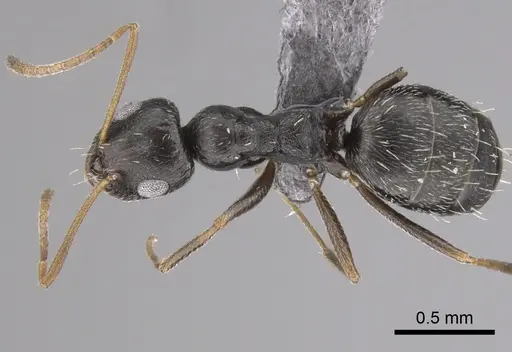
CASENT0280477
View on AntWeb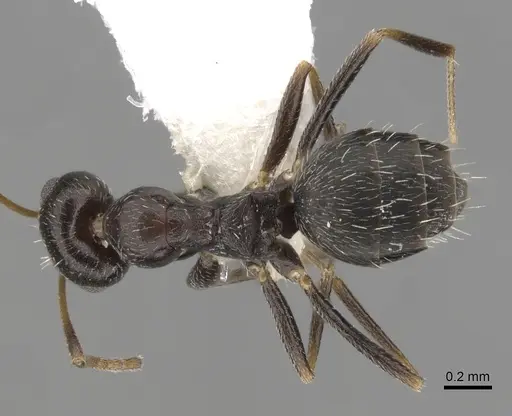
CASENT0824941
View on AntWeb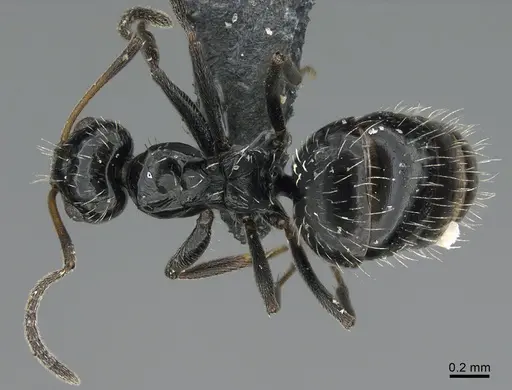
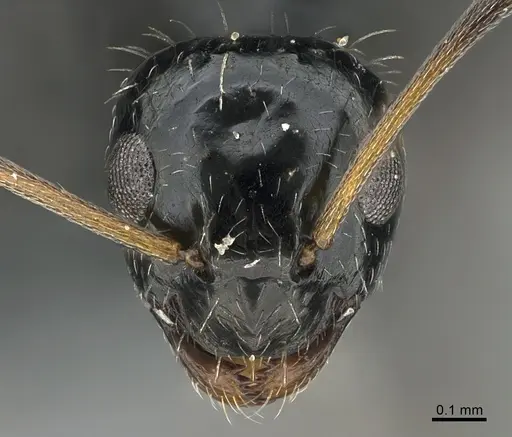
CASENT0905150
View on AntWeb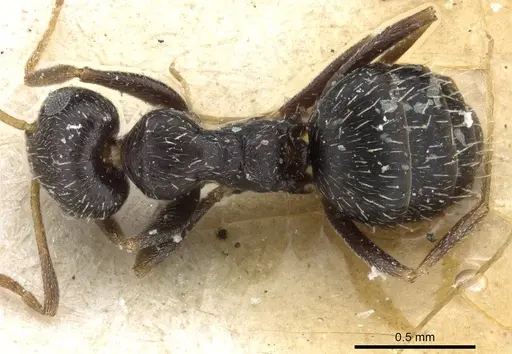
Literature
Loading distribution map...Loading products...