
Blackish Small Sugar Ant
Lepisiota melas
- Sci. Name
- Lepisiota melas
- Tribe
- Plagiolepidini
- Subfamily
- Formicinae
- Author
- Emery, 1915
- Common Name
- Blackish Small Sugar Ant
- Distribution
- Found in 3 countries
Introduction
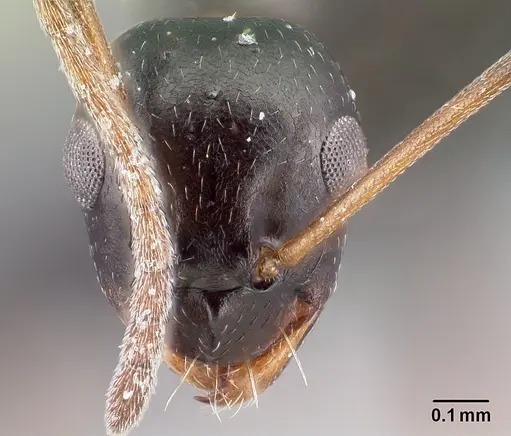
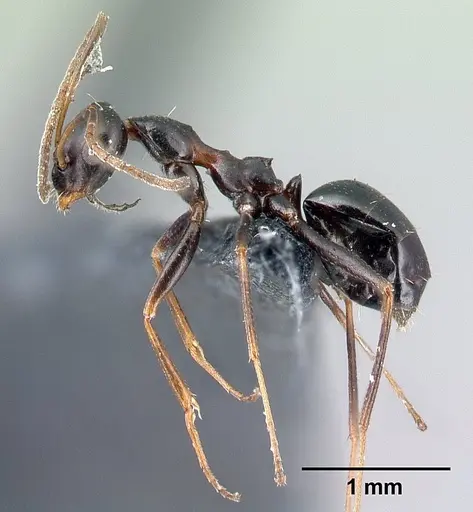
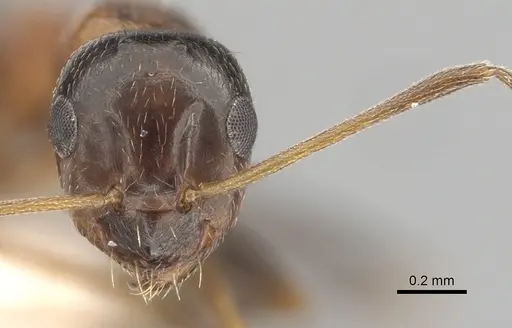
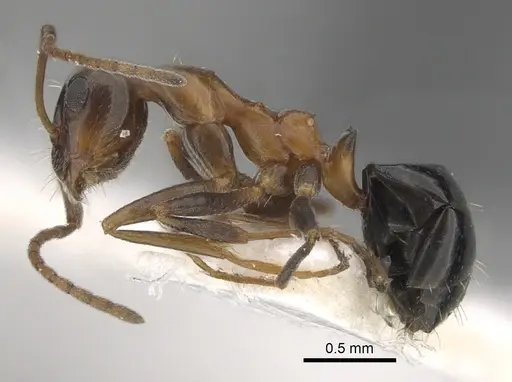
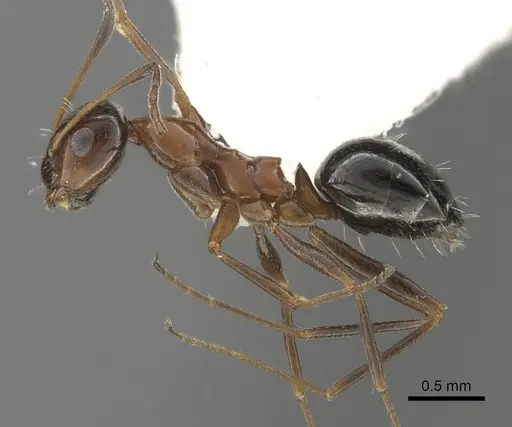
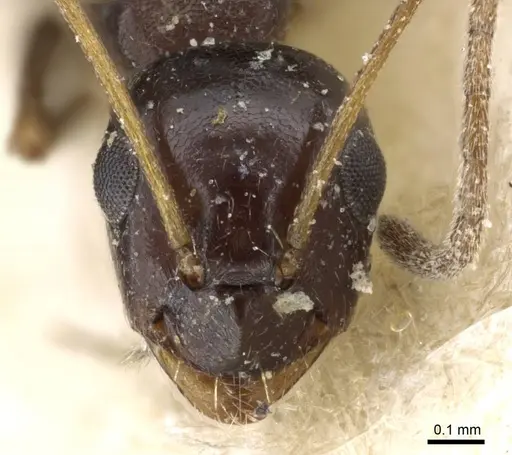
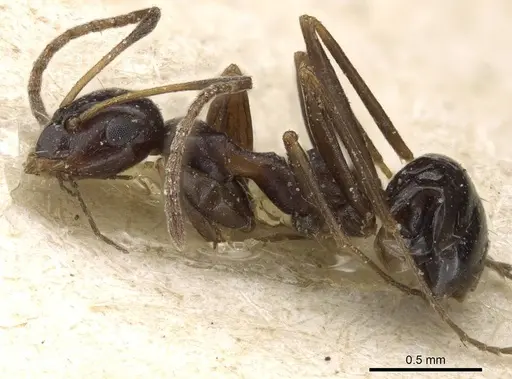
Lepisiota melas is a small ant native to Greece, Turkey, and surrounding Mediterranean regions. Workers measure 3.3-3.6mm total length with a distinctive dark brown to black body and a reddish mesonotal constriction (the middle body section). This species is polygynous, meaning colonies contain multiple queens that coexist peacefully. In the wild, they nest under flat stones and in rock rubble across warm, dry Mediterranean habitats from sea level up to 766m altitude. The species has recently become established as an introduced population in Barcelona's port area, where it nests under pavement and concrete surfaces - this is an invasive population that should not be spread to other regions.
Quick Summary
- Difficulty: Medium
- Origin & Habitat: Native to the Mediterranean region, Greece (including Crete, Cyclades, Dodecanese, Ionian Islands, Peloponnese), Serbia, Turkey, and Iran. Inhabits warm, dry open habitats including olive plantations, pastures, coastal frygana, deciduous forests, and rocky areas from sea level to 766m altitude [1][2][3][4].
- Colony Type: Polygynous, colonies contain multiple queens (4-6 documented in wild colonies) that work together. This is a permanent multi-queen system. Queens are ergatoid (wingless) [5][6].
- Size & Growth:
- Queen: Ergatoid (wingless) queens, measurements not specified in available literature [5]
- Worker: 3.3-3.6mm total length [3]
- Colony: Colony size not specifically documented in available literature
- Growth: Moderate
- Development: Development time not documented for this species (Queens begin laying eggs immediately after mating. Cocoons measure approximately 3mm x 1.2mm [5].)
- Antkeeping:
- Temperature: Keep at 22-28°C. This is a warmth-loving Mediterranean species that can tolerate high surface temperatures in the wild, including asphalt and cement. Provide a warm area in the nest with a gentle gradient [5][4].
- Humidity: Low to moderate, they naturally inhabit dry Mediterranean environments. Keep nest substrate moderately dry with occasional misting. Allow areas to dry out between waterings [4].
- Diapause: No, these ants remain active year-round in their Mediterranean range. The Barcelona population showed no outdoor activity November-January but resumed when temperatures reached 16°C in February, suggesting they slow down in cool weather but do not require true hibernation [5].
- Nesting: Nests under flat stones and in rock rubble in the wild. In captivity, a naturalistic setup with flat stones or a Y-tong/plaster nest with narrow chambers works well. They can adapt to test tube setups but prefer tighter spaces that mimic their natural rock crevices [6][4].
- Behavior: Workers are small and fast-moving. They show no aggression toward conspecifics from different nests (tested in laboratory encounters) and readily coexist with other ant species in the wild. Workers forage individually and carry dead insects solitarily or in loose groups, they do not use mass recruitment trails. They are not aggressive defenders and rarely sting. Their small size means they can slip through small gaps, but they are not particularly adept escape artists [5][7].
- Common Issues: colonies may fail if kept too cold, they need warm conditions to remain active, small worker size means escape prevention should be taken seriously, use tight-fitting lids and fine mesh barriers, polygynous colonies can be sensitive to disturbance, avoid frequently moving nests, no hibernation required but cool temperatures will slow activity significantly, WARNING: this species is invasive in Barcelona, Spain, do not release in non-native regions
Housing and Nest Setup
Lepisiota melas adapts well to various nest types but thrives in setups that match their natural preferences. In the wild, they nest under flat stones and in rock rubble, preferring areas that stay warm and relatively dry. For captivity, a Y-tong or plaster nest with narrow chambers works well. Test tube setups can work but provide some formicarium expansion as the colony grows. These ants do not need high humidity, a naturalistic setup with flat stones on dry substrate mimics their Mediterranean habitat. The Barcelona population successfully nests under pavement and concrete, demonstrating their adaptability to urban environments. Ensure the nest has a warm area (around 24-28°C) and a cooler area for workers to self-regulate. [6][5][4]
Feeding and Diet
Workers are generalist scavengers and predators. In the wild, they carry dead insects (coccinellids, grasshoppers, other hymenopterans) both solitarily and in loose groups. They also tend to honeydew-producing insects and likely exploit sugar sources. In captivity, offer a varied diet: protein sources like small insects (fruit flies, pinhead crickets, mealworms) and sugar water or honey. They are not aggressive hunters but will readily consume dead prey. Feed protein 2-3 times per week and keep sugar water available constantly. Unlike some tropical ants, they do not require specialized diets, standard ant feeding protocols work well. [5]
Temperature and Seasonal Care
As a Mediterranean species, Lepisiota melas prefers warm conditions. Keep nest temperatures between 22-28°C, with a warm spot around 26-28°C and a gradient to cooler areas. They tolerate high temperatures well, in the wild, they colonize asphalt and cement surfaces that reach very high temperatures. Unlike temperate species, they do not require hibernation. The Barcelona population showed no outdoor activity during November-January when temperatures dropped, but resumed activity in February when temperatures reached 16°C. This suggests they can tolerate cool periods but prefer warmth. If your room temperature falls below 20°C, consider using a heating cable on one side of the nest to maintain warmth. [5][4]
Colony Structure and Multi-Queen Care
This is a polygynous species, colonies naturally contain multiple queens (typically 4-6 documented in wild colonies). Unlike species where multiple queens fight, these queens coexist peacefully and all contribute to reproduction. The Barcelona population showed zero aggression in laboratory encounters between workers from nests over 150m apart. When keeping this species, you do not need to separate queens, they work cooperatively. Wingless (ergatoid) queens have been observed in established colonies. Queens begin laying eggs immediately after mating. This social structure makes the species relatively forgiving of disturbance compared to single-queen species. [5][6]
Behavior and Foraging
Workers are small, fast-moving ants that forage individually rather than in recruitment trails. Unlike species like fire ants, they do not exhibit mass recruitment, when food is found, workers either work alone or in loose groups without the dramatic trail-forming behavior. They are not particularly aggressive and coexist peacefully with other ant species in the wild (documented living alongside at least 8 other species in Barcelona). Workers can exploit very hot surfaces and are tolerant of dry conditions. They are not known for stinging and pose no danger to keepers. Their small size and fast movement can make them seem nervous, but they are generally calm in captivity. [5][7]
Frequently Asked Questions
Is Lepisiota melas a good ant for beginners?
Yes, this species is beginner-friendly. They are polygynous (multiple queens), which makes colony founding more forgiving. They are generalist feeders, tolerate warm dry conditions, and do not require hibernation. Their main needs are simple: warmth (22-28°C), moderate humidity, and standard protein/sugar feeding. The main considerations are escape prevention due to their small size and avoiding temperatures below 20°C.
How long does it take for Lepisiota melas to produce first workers?
Exact development time is not documented in scientific literature. At optimal temperatures (around 24-28°C), expect several weeks from egg to worker. The polygynous structure may speed up colony growth compared to single-queen species.
Can I keep multiple Lepisiota melas queens together?
Yes, this is a naturally polygynous species. Wild colonies contain 4-6 queens that coexist peacefully. Laboratory tests showed zero aggression between workers from different nests. You can keep multiple unrelated queens together when starting a colony, and they will likely remain together as the colony grows.
What temperature do Lepisiota melas need?
Keep them warm: 22-28°C is ideal. This is a Mediterranean species that tolerates high temperatures, in the wild, they colonize hot asphalt and cement surfaces. If your room is consistently below 20°C, use a heating cable on one side of the nest to create a warm area. They become less active in cool weather but do not require hibernation.
Do Lepisiota melas need hibernation?
No, they do not require hibernation. As a Mediterranean species, they remain active year-round in warm climates. The Barcelona population showed reduced activity in winter (November-January) but resumed when temperatures reached 16°C in February. If kept at room temperature (20°C+), they will remain active throughout the year.
What do Lepisiota melas eat?
They are generalist feeders. Offer small insects (fruit flies, pinhead crickets, mealworms) as protein 2-3 times per week, and keep sugar water or honey available constantly. In the wild, they scavenge dead insects and likely tend honeydew-producing insects. They do not require specialized diets.
How big do Lepisiota melas colonies get?
Exact maximum colony size is not documented, but polygynous colonies typically reach moderate to large sizes. The Barcelona population is extensive (12 hectares) with multiple nesting sites. Expect a few hundred workers in a well-established captive colony.
When should I move Lepisiota melas to a formicarium?
Start them in a test tube setup for founding. Once the colony reaches 20-30 workers and you see consistent activity, you can offer a formicarium (Y-tong or plaster nest). They prefer tighter spaces than some ants, so do not give them overly large enclosures initially. A gradual transition works best.
Why are my Lepisiota melas not moving much?
Check your temperatures, they may be too cool. This species prefers 22-28°C and becomes sluggish below 20°C. They also reduce activity in winter conditions. Ensure they have access to warmth and that the nest area is not in a cold location. If temperatures are adequate, they may simply be resting between foraging bouts.
Are Lepisiota melas escape artists?
Moderate escape risk, their small size (3.3-3.6mm) means they can slip through small gaps, but they are not as prolific escape artists as some tiny species. Use tight-fitting lids and consider fine mesh barriers if needed. They are not particularly aggressive about escaping.
Report an Issue
The current care sheet is based fully on literature. See inconsistencies, or something that's incorrect? Please , it will be resolved after review from an admin. Contributing to the blogs tab also helps providing information, to make us be able to further improve the caresheets. Thank you for your support!
References

This caresheet is licensed under CC BY-SA 4.0 .
Community Blogs
CASENT0179894
View on AntWeb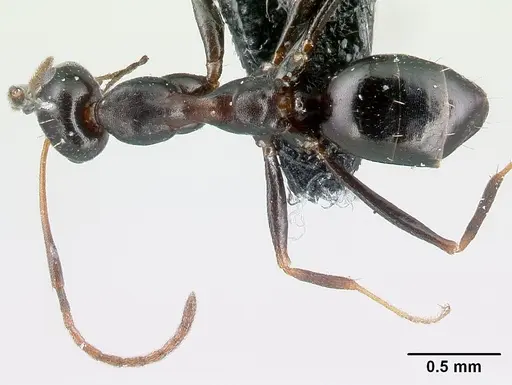
CASENT0249408
View on AntWeb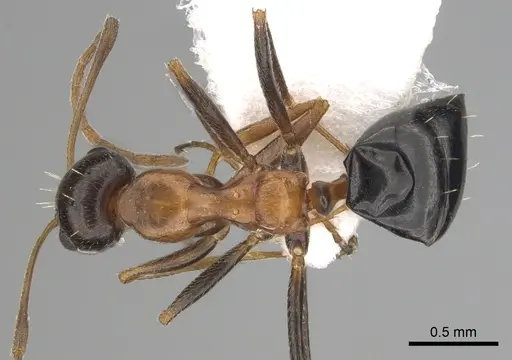
CASENT0249412
View on AntWeb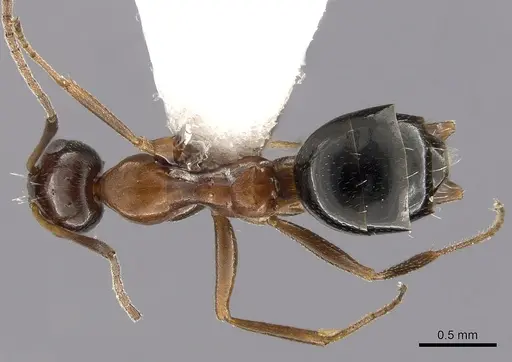
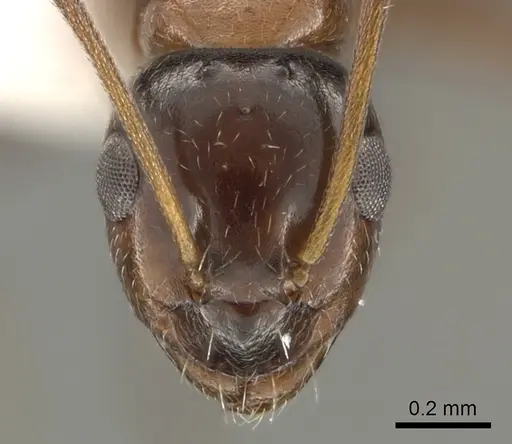
CASENT0905146
View on AntWeb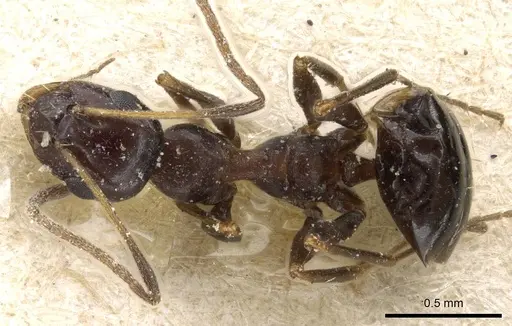
Literature
Loading distribution map...Loading products...