
Lasius productus
- Sci. Name
- Lasius productus
- Tribe
- Lasiini
- Subfamily
- Formicinae
- Author
- Wilson, 1955
- Distribution
- Found in 1 countries
Introduction
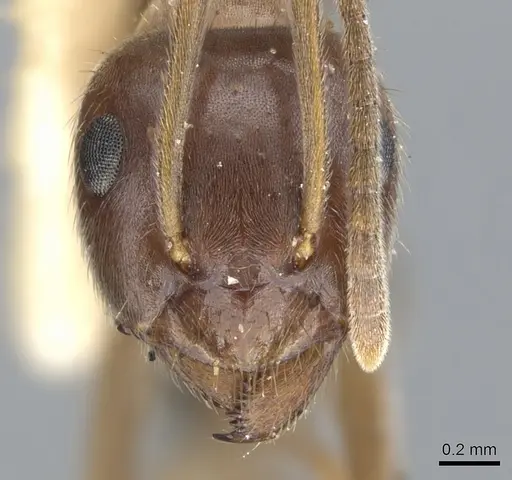
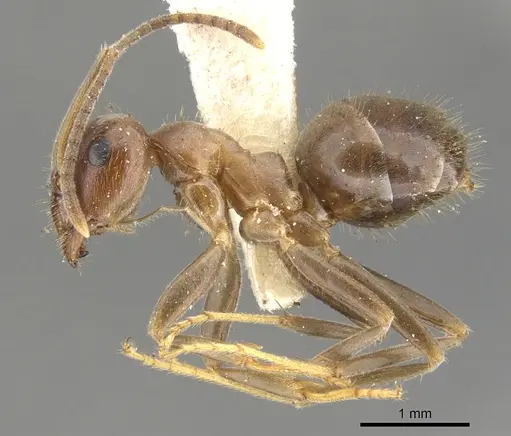
Lasius productus is a Japanese endemic ant in the Lasius niger clade. Workers are 3.5-4.5 mm in total length and are unmistakable due to their extraordinarily long scapes (antenna segments) and maxillary palps – the longest of any Lasius species across the Holarctic . The head and gaster are dark brown, while the mesosoma ranges from brown to yellowish-reddish . Queens are much larger than any other Japanese Lasius species, though exact body length has not been recorded directly; they have scapes over 1.4 mm, far exceeding related species . This species is closely related to Lasius emarginatus and inhabits broad-leaved deciduous forests in Japan.
Quick Summary
- Difficulty: Medium
- Origin & Habitat: Endemic to Japan – found on Honshu, Shikoku, Kyushu, and Tsushima islands in broad-leaved deciduous forests at elevations from 50-1000 m [2][3]. Nests in rotting wood, stumps, and dead portions of tree trunks, often around root systems or inside hollow tree trunks [1][3][2].
- Colony Type: Single-queen colonies (monogyne), typical of the subgenus Lasius s.str. [3]. Ergatoid replacement queens have not been documented.
- Size & Growth:
- Queen: Unknown – no total length measurement recorded, scape length (antenna segment) over 1.4 mm, far larger than other Japanese Lasius [3].
- Worker: 3.5-4.5 mm total length [1].
- Colony: Not documented in research, no maximum colony size has been reported.
- Growth: Moderate – development timeline unconfirmed but likely 8-12 weeks based on related species.
- Development: Estimated 8-12 weeks at optimal temperature (inferred from related Lasius). (Direct data unavailable, estimate based on genus-level patterns for Lasius s.str.)
- Antkeeping:
- Temperature: Keep at room temperature, around 20-25°C, consistent with its forest habitat. A gentle gradient allows self-regulation.
- Humidity: Keep the nest substrate consistently moist but not waterlogged. Their natural nests in rotting wood retain moisture well [1][2].
- Diapause: Yes, based on its temperate Japanese habitat. Provide 3-4 months at 5-10°C during winter (November-February in the Northern Hemisphere). This is inferred from typical Lasius s.str. requirements [3].
- Nesting: Y-tong (AAC) or plaster nests with narrow chambers scaled to their worker size (3.5-4.5 mm). Natural setups with rotting wood pieces also work well [1][2].
- Behavior: Generally peaceful – they forage primarily for honeydew from aphids and hunt small insects. Like other Formicinae, they spray formic acid as a defense, they do not sting [4][5]. Workers are active in the evenings and at night. Escape risk is moderate due to their small size: use standard barriers like Fluon or tight-fitting lids.
- Common Issues: colonies may fail without proper winter diapause – this is inferred from their temperate distribution., escape prevention is necessary but standard barriers (Fluon, tight lids) are sufficient., founding queens are not directly observed in research, follow typical claustral procedures but be prepared for possible delays., humidity management critical – too dry causes brood loss, too wet promotes mold., wild-caught colonies may carry parasites, quarantine is recommended.
Nest Preferences and Housing
In the wild, Lasius productus nests in rotting wood, stumps, and dead portions of tree trunks within broad-leaved deciduous forests [1][2]. They often build nests around root systems of living trees or inside hollow trunks [3]. For captive care, Y-tong (AAC) or plaster nests with narrow chambers work well. Scale the chambers to their worker size (3.5-4.5 mm). You can also use natural setups with pieces of rotting wood. Provide darkness and privacy – these ants prefer sheltered spots. A test tube setup is suitable during founding, with a move to a formicarium once the colony exceeds 30-40 workers.
Feeding and Diet
Like other Lasius, this species is a generalist. It tends aphids for honeydew, especially Stomaphis hirukawai [4][5]. The Formicinae subfamily, to which it belongs, has strong mutualistic relationships with aphids (66.84% of all ant-aphid associations) [4]. In captivity, provide constant access to sugar water or honey, and offer protein-rich foods like fruit flies, small mealworms, or cricket pieces 2-3 times per week. Fresh protein is important during brood development.
Temperature and Seasonal Care
Maintain the nest around 20-25°C, which matches their forest habitat. A heating cable on one side creates a beneficial temperature gradient. Because Lasius productus is a temperate Japanese species, it likely requires a winter diapause. Provide 3-4 months at 5-10°C (November-February in the Northern Hemisphere) to simulate natural conditions [3]. Reduce feeding during diapause and avoid disturbing the colony. Resume normal care when temperatures rise in spring.
Behavior and Colony Dynamics
Lasius productus workers have extraordinarily long scapes and maxillary palps – the longest of any Lasius species, making them easy to identify [3][2]. They are relatively peaceful, focusing on foraging and aphid tending rather than territorial aggression. They are active mainly at dusk and night. Colonies grow moderately, the exact founding behavior has not been studied, but based on related species, a claustral founding phase lasting several months is expected. Once established, colonies can reach substantial (but unrecorded) sizes over several years.
Nuptial Flights and Reproduction
Nuptial flights occur in August and September, making this the latest-flying Japanese Lasius species [3][1][2]. Alates (winged reproductives) emerge in mid-summer, with flights peaking in late August through September. After mating, newly mated queens seek nesting sites in rotting wood or dead tree portions. If you wish to collect queens legally, search during this flight window. Their founding behavior is not directly documented, but it is likely claustral like other Lasius s.str. species.
Frequently Asked Questions
How long does it take for Lasius productus to go from egg to first worker?
The exact timeline has not been directly studied, but based on related Lasius s.str. species, expect approximately 8-12 weeks from egg to first nanitic worker at optimal temperatures (20-25°C). The founding phase may take several months before eggs are even laid, as the queen establishes her chamber.
What temperature range is best for Lasius productus?
Keep them at typical room temperature, around 20-25°C. A slight gradient allowing workers to choose their preferred spot is ideal. Avoid prolonged temperatures above 28°C or below 15°C outside of hibernation.
Do Lasius productus need hibernation?
Based on their temperate Japanese homeland, a winter diapause is strongly recommended. Provide 3-4 months at 5-10°C (typically November-February). This helps maintain natural colony cycles. This guidance is inferred from related species, as direct studies are lacking.
Can I keep multiple Lasius productus queens together?
This species is monogyne (single-queen) based on the subgenus pattern [3]. Combining unrelated queens is not recommended as they would likely fight. In the wild, each colony is founded by one queen.
What do Lasius productus eat?
They are generalist feeders. Provide constant access to sugar water or honey, and offer small insects (fruit flies, pinhead crickets, small mealworms) 2-3 times per week. They naturally tend aphids for honeydew, and in captivity you can offer a sugar source. They also feed on Stomaphis hirukawai aphids in the wild [4][5].
Is Lasius productus a good species for beginners?
It's a medium-difficulty species. While not as challenging as some exotic or parasitic ants, it requires proper winter diapause and humidity management. The long founding phase also tests patience. Beginners should be comfortable with a several-month wait for first workers.
What is the maximum colony size for Lasius productus?
The maximum colony size is not documented in scientific literature. Based on related Lasius s.str. species, colonies could reach several thousand workers, but this is only an estimate.
When do Lasius productus nuptial flights occur?
Nuptial flights happen in August and September, making this the latest-flying Japanese Lasius s.str. species [3][1][2]. This is well-documented.
How do I set up a nest for Lasius productus?
Start with a test tube setup for founding. Once the colony has 30-40 workers, transfer to a Y-tong (AAC) or plaster nest with narrow chambers. Provide a moist section (but not waterlogged) and a dry area. Natural rotting wood pieces can be added to mimic their natural environment [1][2].
Report an Issue
The current care sheet is based fully on literature. See inconsistencies, or something that's incorrect? Please , it will be resolved after review from an admin. Contributing to the blogs tab also helps providing information, to make us be able to further improve the caresheets. Thank you for your support!
References

This caresheet is licensed under CC BY-SA 4.0 .
Community Blogs
CASENT0903217
View on AntWeb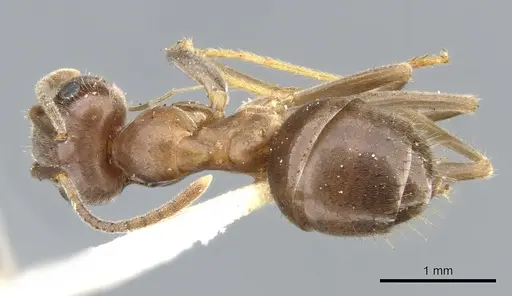
Literature
Loading distribution map...Loading products...