
Lasius hirsutus
- Sci. Name
- Lasius hirsutus
- Tribe
- Lasiini
- Subfamily
- Formicinae
- Author
- Seifert, 1992
- Distribution
- Found in 0 countries
Introduction
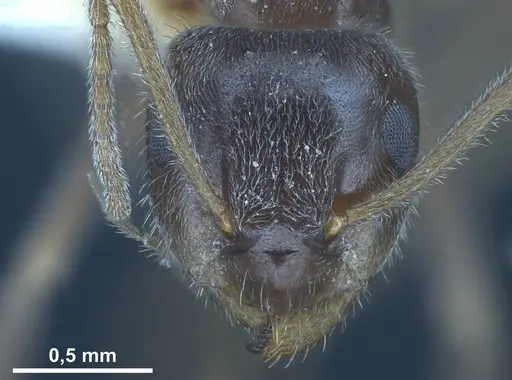
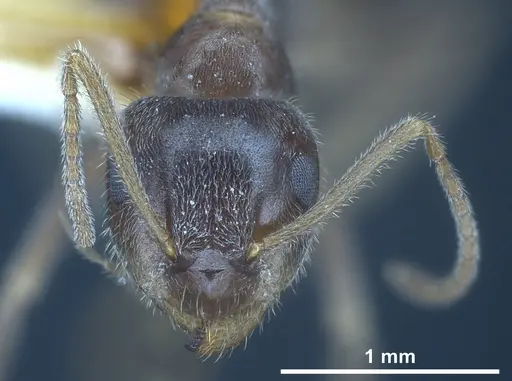
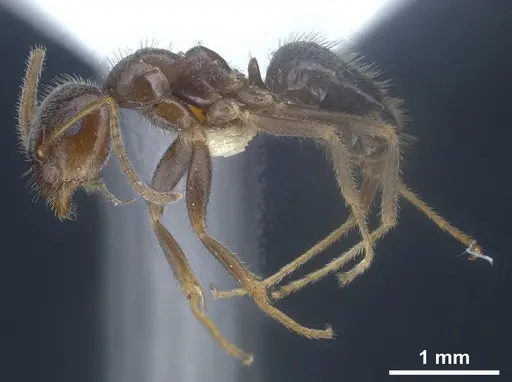
Lasius hirsutus is a rare ant species endemic to the high altitudes of the western Himalayas. Workers have an unusually long scape and remarkably long hairs on the underside of the head - the longest gular hairs of any Palaearctic Lasius species . Coloration includes a dark brown head, medium brown body, and yellowish antennae and leg joints. This species is easily identified by the combination of very long scape, extremely long gular pilosity, and high seta counts on the cheeks, head underside, and hind tibiae . What makes this species particularly interesting is its extreme rarity - it is only known from a single collection site at 2700m elevation in the Chitral region of Pakistan, making it one of the most geographically restricted Lasius species .
Quick Summary
- Difficulty: Unknown, data too limited for difficulty assessment
- Origin & Habitat: High altitude Himalayas (2700m) in the Chitral region of Pakistan. Found on the southwestern flank of the western Himalayas at coordinates 35.78°N,72.03°E [2][3]. This is a cool, mountainous habitat in the Indomalaya region.
- Colony Type: Unconfirmed, colony structure has not been documented for this species.
- Size & Growth:
- Queen: Size data unavailable, no queen specimens have been described [1][2]
- Worker: ~3-4mm, inferred from Lasius genus worker size range (2-5mm). No total length measurement is available in the literature.
- Colony: Unknown, no colony size data exists for this species
- Growth: Unknown, development has not been studied
- Development: Unconfirmed, no development data exists for this species. (Development timeline is unconfirmed. The genus-level estimate of 6-10 weeks is speculative.)
- Antkeeping:
- Temperature: Likely prefers cooler conditions given high-altitude origin (2700m). Start around 18-22°C and observe colony activity.
- Humidity: Moderate humidity likely sufficient. Provide a moist test tube setup but avoid waterlogging. The Himalayan mountain habitat suggests adaptation to variable humidity conditions.
- Diapause: Likely requires a winter dormancy period given high-altitude origin. Related temperate Lasius species require 3-4 months of cold storage around 5-10°C. However, this is inferred and not confirmed for this specific species.
- Nesting: Natural nesting is undocumented. Likely nests in soil or under stones like other Lasius species. A test tube setup works well for founding colonies. A small formicarium with narrow chambers scaled to their tiny size would suit established colonies.
- Behavior: Behavior is unstudied in captivity. Based on genus patterns, they are likely docile and not aggressive. Workers are small so escape prevention is critical, standard mesh may not contain them. Foraging style is likely similar to other Lasius, they probably tend aphids for honeydew and collect small insects. They are not known to sting and pose no danger to keepers.
- Common Issues: extremely limited data makes care recommendations uncertain, no documented colony sizes or development timelines exist, high-altitude origin means temperature requirements are unclear, escape prevention is critical due to small worker size, no confirmed diet preferences, only inferred from genus patterns, no queen specimens have ever been described
Distribution and Rarity
Lasius hirsutus is one of the rarest and most geographically restricted ant species in the Lasius genus. It is only known from a single collection site in the Chitral district of Pakistan, at an elevation of 2700 meters above sea level on the southwestern flank of the western Himalayas [2][3]. The exact coordinates are 35.78°N,72.03°E. This extreme restriction makes it a truly unique species within the genus. The type series was collected by Besuchet and Löbl on May 26,1983 [1]. Subsequent surveys have not expanded its known range, and it remains endemic to this specific Himalayan location [3]. The high-altitude mountain habitat (2700m) suggests adaptation to cooler, potentially more variable climatic conditions than many lowland Lasius species [4].
Identification and Morphology
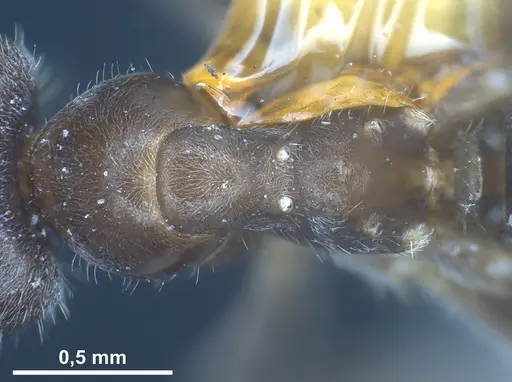
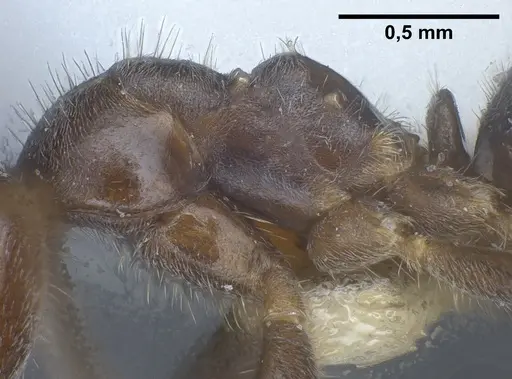
This species is easily identified among Himalayan and Tibetan Lasius species by a combination of unique morphological characters. The most distinctive feature is the extremely long scape (antenna segment), with SL/CS900 measuring 1.022, the longest relative scape length among all Palaearctic Lasius species [2]. Workers also have extremely long gular pilosity (hairs on the underside of the head), with GuHL/CS900 measuring 0.154, also the longest of any Palaearctic Lasius [1][2]. Additionally, they have very high seta counts: 19.9 setae on the genae (cheeks),19.2 on the underside of the head, and 31.2 on the hind tibiae [2]. Coloration is distinctive: dorsum of head is blackish brown, genae and clypeus are medium brown, mandibles and mandibular corners are yellowish, mesosoma and legs are medium brown, while the antennae and leg joints are yellowish [1]. The propodeum (middle body section) has a brilliantly shining posterior slope due to the complete absence of pubescence [1].
Taxonomic Relationships
Lasius hirsutus was originally described by Bernhard Seifert in 1992 and has no close relatives among the Himalayan-Tibetan species [2]. It was originally placed in the Lasius niger clade, which includes many common Holarctic species like Lasius niger and Lasius neoniger [1]. Seifert suggested it may be related to Lasius sakagamii, sharing similar mesosomal and petiolar shape and overall pilosity conditions [1]. However, it differs from Lasius sakagamii in having a pubescent and finely transversally striate posterior propodeal slope, much denser pubescence particularly on the clypeus and dorsum of tergites, microsculpture of frons and tergites, and a much lower UHL/HL ratio [1]. The species was validly described by Seifert in 1992 and remains a recognized species in subsequent taxonomic revisions [5].
Keeping Considerations
Because this species has never been kept in captivity and has no documented biology beyond the original type series collection, any care recommendations must be treated as highly speculative. The high-altitude Himalayan origin suggests preference for cooler temperatures than typical lowland Lasius, consider starting around 18-22°C and adjusting based on colony activity. The small worker size means escape prevention must be excellent, standard mesh may not contain them. For housing, a test tube setup works well for founding colonies. For diet, offer sugar water and small protein sources like fruit flies or small mealworm pieces, following typical Lasius feeding patterns. Given the complete lack of captive data, this species is not recommended for beginners, the care requirements are essentially unknown and would require significant experimentation. If you obtain a colony, careful observation and documentation of behavior, preferences, and development would contribute valuable knowledge to antkeeping.
Legal and Ethical Considerations
Lasius hirsutus is endemic to Pakistan and should not be collected or exported without proper permits. If you obtain captive-reared colonies from legal sources, do not release them in regions outside their natural range (Pakistan/India Himalayas) as this could cause ecological disruption. The species is not listed as endangered, but its extremely restricted distribution (known from a single locality) makes any collection potentially significant for conservation. Always ensure any ant purchases come from reputable breeders who can document legal acquisition. [3]
Frequently Asked Questions
How do I keep Lasius hirsutus ants?
Care is essentially unknown since this species has never been documented in captivity. Start with a test tube setup, keep temperatures cool (18-22°C), and offer sugar water and small protein sources. This is experimental antkeeping, expect to learn through observation.
What do Lasius hirsutus eat?
Diet is unconfirmed, but based on typical Lasius behavior, they likely accept sugar water, honey, and small insects like fruit flies or pinhead crickets. They probably tend aphids for honeydew like other Lasius species.
How big do Lasius hirsutus colonies get?
Colony size is unknown, no colony data exists for this species. Related Lasius species in the niger clade typically reach several thousand workers, but this may not apply to this rare high-altitude species.
What temperature do Lasius hirsutus need?
Likely prefers cooler conditions than typical Lasius due to high-altitude origin (2700m in the Himalayas). Start around 18-22°C and observe colony behavior. This is an estimate based on habitat, not confirmed requirements.
Do Lasius hirsutus need hibernation?
Likely requires a winter dormancy period given their high-altitude Himalayan origin. Related temperate Lasius species need 3-4 months around 5-10°C. However, this is inferred, not confirmed for this specific species.
How long does it take for Lasius hirsutus to develop from egg to worker?
Development timeline is unconfirmed. No direct data exists for this species.
Is Lasius hirsutus good for beginners?
No, this species is not recommended for beginners due to completely unconfirmed care requirements. The extreme rarity and lack of any captive data means keeping this species is essentially experimental.
Can I keep multiple Lasius hirsutus queens together?
Colony structure is unconfirmed. Most Lasius in the niger clade are single-queen (monogyne) species. Combining unrelated queens has not been documented for this species and is not recommended.
Where is Lasius hirsutus found?
Only known from a single locality in the Chitral region of Pakistan at 2700m elevation on the southwestern flank of the western Himalayas. It is endemic to this area [2][3].
Report an Issue
The current care sheet is based fully on literature. See inconsistencies, or something that's incorrect? Please , it will be resolved after review from an admin. Contributing to the blogs tab also helps providing information, to make us be able to further improve the caresheets. Thank you for your support!
References

This caresheet is licensed under CC BY-SA 4.0 .
Community Blogs
ANTWEB1041442
View on AntWeb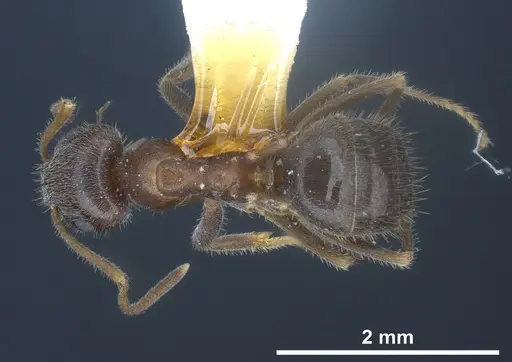
Literature
Loading distribution map...Loading products...