
Lachnomyrmex regularis
- Sci. Name
- Lachnomyrmex regularis
- Tribe
- Attini
- Subfamily
- Myrmicinae
- Author
- Feitosa & Brandão, 2008
- Distribution
- Found in 1 countries
Introduction
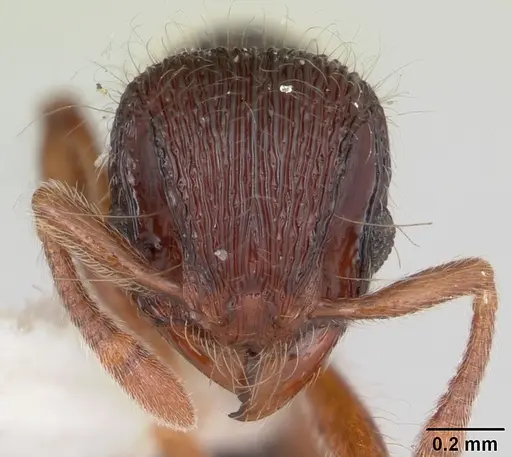
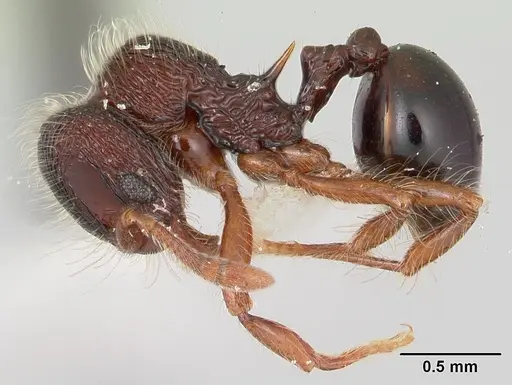
Lachnomyrmex regularis is a tiny Neotropical ant species described in 2008,found only in northern Costa Rica at 700m elevation in submontane wet forests. Workers measure 3.57-4.11mm total length and have a distinctive appearance: a densely wrinkled (rugose) body ranging from light reddish-brown to dark brown, with a strikingly darker blackish abdomen that contrasts sharply with the rest of the body. The postpetiole is unusually smooth and shiny compared to the rest of the ant, and the first abdominal segment lacks the long hairs seen in many related species. This is a leaf-litter ant belonging to the Attini tribe, living in wet forest environments where it forages alone through the leaf litter rather than forming recruitment trails .
Quick Summary
- Difficulty: Expert
- Origin & Habitat: Northern Costa Rica (Guanacaste province), found only at Estación Pitilla at 700m elevation in submontane wet forest leaf litter [1][2].
- Colony Type: Apparently monogyne (single queen colonies). Colonies are relatively small. Only known from worker caste, no queens have been described [2].
- Size & Growth:
- Antkeeping:
- Temperature: Unconfirmed. Based on the wet forest habitat in Costa Rica, keep in the low-to-mid 20s°C range (around 22-26°C). Monitor colony activity and adjust accordingly.
- Humidity: High humidity required, these are leaf-litter ants from wet forests. Keep the nest substrate consistently moist but not waterlogged, with some drier areas available.
- Diapause: Unknown, no seasonal data exists. Costa Rica has minimal temperature variation, so they likely do not require a true diapause. A slight reduction in temperature during winter months may be appropriate.
- Nesting: In nature, they nest in soil, among rotten leaves, and inside fallen logs. A naturalistic setup with moist substrate (like a terrarium-style formicarium) works best. They forage in leaf litter, so providing a debris layer is beneficial.
- Behavior: Workers forage alone on the ground or within leaf litter, and do not recruit nestmates or form pheromone trails [2]. This is a cryptic, solitary forager, not an aggressive or territorial species. Escape prevention is important due to their small size, though they are not strong climbers. As a member of the Attini tribe, they possess a stinger, though it is less medically significant to humans.
- Common Issues: no biological data exists, this is one of the least-studied ant species in captivity, queen has never been described, so obtaining a founding colony is extremely difficult, small colony size means colonies are fragile and slow to recover from losses, high humidity requirements can lead to mold issues if ventilation is poor, solitary foraging means they may have difficulty locating food in captivity, place food directly in their foraging area
Species Identification and Appearance
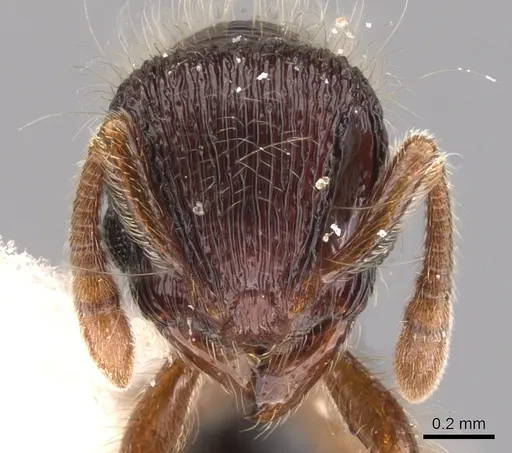
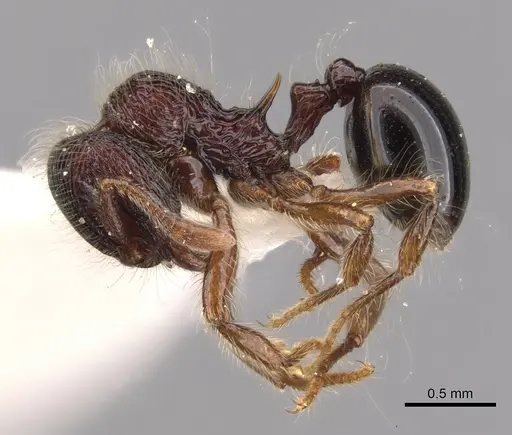
Lachnomyrmex regularis is a distinctive tiny ant. Workers measure 3.57-4.11mm total length with a body covered in fine, continuous wrinkles (rugae) that are exceptionally dense on the head [1]. The body color ranges from light reddish-brown to dark brown, but the gaster (abdomen) is distinctly darker, almost black, creating a striking two-tone appearance. The appendages are slightly lighter than the body. One unique feature is the postpetiole (the segment behind the petiole): unlike the rest of the body which is densely wrinkled, the postpetiole dorsum is entirely smooth and shining, with around four long hairs. The first segment of the gaster completely lacks the long flexuous hairs found in many related species. The eyes are relatively well-developed with about 10 facets at maximum diameter.
Natural History and Distribution
This species is known only from northern Costa Rica, specifically from the Guanacaste province at Estación Pitilla,9km south of Santa Cecilia, at 700m elevation [3][1]. The entire scientific knowledge of this species comes from eight worker specimens collected in August 1993. The genus Lachnomyrmex belongs to the tribe Attini and is distributed throughout the Neotropical region from southern Mexico to northern Argentina, though this particular species has a very restricted range [2]. They are typically found in the leaf litter of submontane wet forests, where they nest in the ground, among rotten leaves, and inside fallen logs [2]. Workers forage alone on the ground or within leaf litter, and have been recorded on tree trunks. Notably, they do not recruit nestmates or form pheromone trails, they are solitary foragers.
Colony Structure
Based on the genus-level data, Lachnomyrmex colonies are relatively small and apparently monogynic, meaning they have a single queen [2]. However, since only workers have been described for L. regularis specifically, the exact colony structure for this species is not fully confirmed. No queens or males have been collected or described, making captive breeding from wild-caught queens essentially impossible at this time. The small colony size and solitary foraging behavior suggest this is not a species that will produce massive worker populations. Keepers interested in this species would need to acquire an established colony if one becomes available, but such opportunities are extremely rare.
Housing and Care Requirements
Since no captive husbandry data exists for this species, care recommendations must be inferred from its natural habitat. It is a leaf-litter ant from wet forests in Costa Rica, so high humidity is essential. A naturalistic setup with moist substrate, such as a terrarium-style formicarium with soil, rotting wood, and leaf litter, would best mimic its natural environment. The nest area should remain consistently moist but not waterlogged. Temperature should be in the low-to-mid 20s°C (around 22-26°C), consistent with a Costa Rican cloud forest environment. Since workers forage alone and do not form recruitment trails, food should be placed directly in their foraging areas rather than expecting them to discover distant food sources. Provide protein sources like small insects and potentially sugar water, though sugar acceptance is unconfirmed for this species. [2]
Challenges for Antkeepers
Lachnomyrmex regularis presents significant challenges for antkeepers. First and most critically, no queens have ever been described, meaning there is no documented way to obtain founding colonies, this species is essentially unavailable in the antkeeping hobby. Second, even if a colony were obtained, almost no biological data exists: we do not know their founding behavior, development time, temperature preferences, or exact dietary needs. Third, their natural history suggests small, fragile colonies that would be difficult to maintain. This is a species for advanced antkeepers with a research interest, not for beginners seeking a straightforward pet. If you are interested in Lachnomyrmex, you may have better success with better-studied related species in the Attini tribe. [1][2]
Frequently Asked Questions
Can I keep Lachnomyrmex regularis as a pet?
No, this species is essentially unavailable in the antkeeping hobby. Only eight worker specimens have ever been collected, and no queens have been described. There is no documented source for obtaining a colony of this species.
What do Lachnomyrmex regularis ants eat?
Their exact diet is unconfirmed. Based on genus behavior, they are likely generalist foragers that accept protein (small insects) and possibly sugar sources. Workers forage alone in leaf litter, likely hunting small prey.
How big do Lachnomyrmex regularis colonies get?
Colony size is unknown but described as relatively small. The genus Lachnomyrmex is known for small colonies compared to other Attini ants.
What temperature do Lachnomyrmex regularis ants need?
Not directly studied. Based on their Costa Rican wet forest habitat, aim for 22-26°C. This is a starting point, adjust based on colony activity.
Do Lachnomyrmex regularis need hibernation?
Unknown. Costa Rica has minimal seasonal temperature variation, so they likely do not require a true diapause. A slight temperature reduction during winter may be appropriate.
How long does it take for Lachnomyrmex regularis to develop from egg to worker?
Unknown, no development data exists for this species.
Are Lachnomyrmex regularis good for beginners?
No. This is an expert-level species due to: no availability in the hobby, no biological data to guide care, and small fragile colonies. Even experienced antkeepers would struggle to keep this species.
Can I keep multiple Lachnomyrmex regularis queens together?
Unknown. The genus appears to be monogynic (single queen), but this has not been studied for L. regularis specifically. Do not attempt combining unrelated queens.
What is the best nest type for Lachnomyrmex regularis?
A naturalistic setup with moist soil, rotting wood, and leaf litter debris. They nest in soil and fallen logs in the wild. A terrarium-style formicarium would be most appropriate.
Report an Issue
The current care sheet is based fully on literature. See inconsistencies, or something that's incorrect? Please , it will be resolved after review from an admin. Contributing to the blogs tab also helps providing information, to make us be able to further improve the caresheets. Thank you for your support!
References

This caresheet is licensed under CC BY-SA 4.0 .
Community Blogs
INBIOCRI001613661
View on AntWeb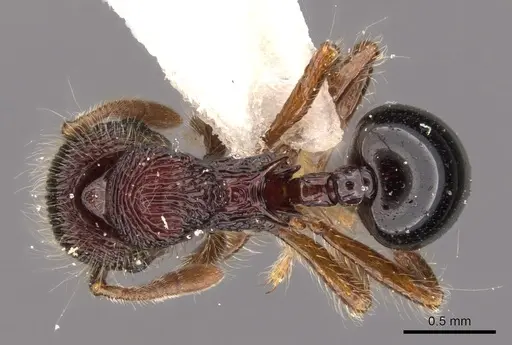
INBIOCRI001613693
View on AntWeb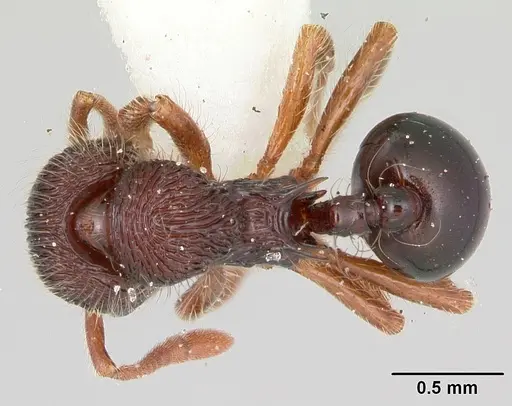
Literature
Loading distribution map...Loading products...