
Lachnomyrmex platynodus
- Sci. Name
- Lachnomyrmex platynodus
- Tribe
- Attini
- Subfamily
- Myrmicinae
- Author
- Feitosa & Brandão, 2008
- Distribution
- Found in 0 countries
Introduction
Lachnomyrmex platynodus is an extremely rare Neotropical ant species described in 2008,known from only a single specimen collected in Guyana. Workers are tiny at just 3.28mm total length, with a predominantly black body featuring rusty reflections and distinctive long hairs on the abdomen. The species gets its name from its uniquely flat petiolar node. This ant belongs to the leaf-cutter ant tribe Attini but is not a leaf-cutter itself - it's a small litter-dwelling species that forages alone on the forest floor. The genus Lachnomyrmex is found across the Neotropics from southern Mexico to northern Argentina, typically in humid mountain forests.
Quick Summary
- Difficulty: Expert
- Origin & Habitat: Mt. Ayanganna, Guyana at 1300m elevation in submontane wet forest leaf litter [1][2]
- Colony Type: Apparently monogyne (single queen) based on related species in the genus [2]
- Size & Growth:
- Queen: Unknown, queen has never been described [1]
- Worker: 3.28mm total length [1]
- Colony: Likely small, colonies of related species in the genus are relatively small [2]
- Growth: Unknown
- Development: Unknown, no colony has ever been documented in captivity (This species has never been kept in captivity. All estimates are based on related Lachnomyrmex species and typical Myrmicinae development patterns.)
- Antkeeping:
- Temperature: Likely needs moderate temperatures around 20-25°C based on its submontane wet forest origin in Guyana, the mountain habitat suggests stable, moderate conditions rather than extreme heat or cold.
- Humidity: Likely requires high humidity, these are leaf litter ants from wet forests. Keep the nest substrate consistently moist but not waterlogged. Provide a humidity gradient so ants can choose their preferred zone.
- Diapause: Unknown, no seasonal data exists for this species. Given its Guyanan origin near the equator, it may not require diapause, but this is unconfirmed.
- Nesting: In nature, colonies nest in ground, among rotten leaves, and inside fallen logs. In captivity, a small naturalistic setup with moist substrate would work. The key is maintaining high humidity while allowing some ventilation.
- Behavior: Workers forage alone on the ground and in leaf litter, they do not recruit nestmates or form pheromone trails [2]. This makes them cryptic and hard to spot. They are not aggressive and likely have minimal defense capabilities due to their tiny size. Escape prevention is critical because they are very small, standard test tube setups may need fine mesh barriers. [2]
- Common Issues: this species has never been documented in captivity, there is no established care protocol, the extreme rarity means virtually no specimens exist in the antkeeping hobby, no information exists on what food they accept or how to encourage queens to found colonies, their tiny size makes them extremely difficult to house and observe properly, no nuptial flight data exists, mating behavior is completely unknown, keeping conditions are inferred from genus patterns, not species-specific research
Why This Species Is Extremely Difficult to Keep
Lachnomyrmex platynodus is one of the rarest ants in the world from a keeping perspective, only ONE specimen has ever been collected since the species was described in 2008. There is no established captive population, no documented care protocols, and no information about what these ants eat, how they reproduce, or what conditions they need to survive. This is not a species you can purchase or attempt to keep. Even most professional myrmecologists have never seen this ant in person. The entire global knowledge base consists of measurements from a single dead worker and general observations about the genus Lachnomyrmex as a whole. Any attempt to keep this species would be purely experimental and likely doomed to fail without wild-caught queens. [1]
What We Know About the Genus
While Lachnomyrmex platynodus specifically is virtually unknown in captivity, we can make educated guesses based on the genus. Lachnomyrmex species are small litter-dwelling ants found in humid Neotropical forests from Mexico to Argentina. Colonies are relatively small and appear to have single queens. Workers forage alone on the ground and in leaf litter, they do not recruit nestmates or form pheromone trails to food. Nests are found in the ground, among rotten leaves, and inside fallen logs. They are most often encountered in submontane wet forests at higher elevations. The genus is recognizable by its raised bicarinate midclypeus, distinct antennal scrobes and clubs, and variably rugose integument. [2]
Natural Habitat and Collection Notes
The only known Lachnomyrmex platynodus specimen was collected from a leaf litter sample in a submontane wet forest at 1300m elevation on Mt. Ayanganna in Guyana. This is in the Essequibo region of the country. The specimen was collected in October 2002 along with other ant specimens as part of a scientific survey. The habitat type, submontane wet forest, suggests this species prefers cool, humid, shaded conditions typical of mountain forests in the Guyanan highlands. The elevation of 1300m would provide temperatures cooler than lowland tropical areas. [1][2]
Appearance and Identification
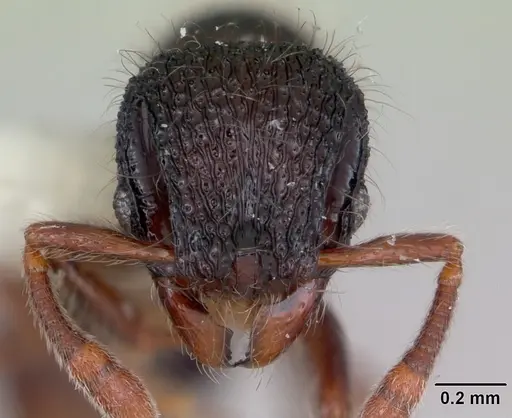
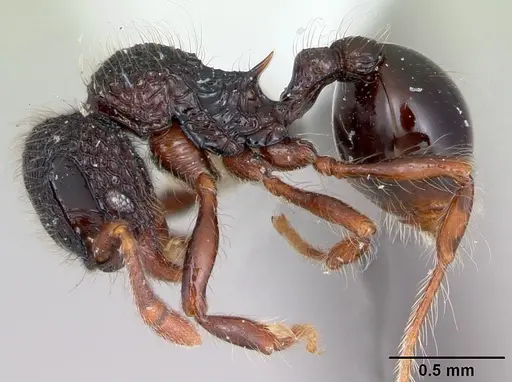
Workers are tiny at just 3.28mm total length. The body is predominantly black with rusty (ferruginous) reflections, and the appendages are dark brown. The body surface is covered in irregular worm-like rugae (wrinkles). The most distinctive feature is the flat petiolar node, this is what the species name 'platynodus' means (Greek 'platy' = flat, Latin 'nodus' = node). The promesonotum (the front part of the thorax) is strongly convex and raised high above the level of the propodeum. There are about five long, sparse hairs on the first abdominal segment. The eyes are very small, with only about five facets visible. This combination of features makes it unlikely to be confused with any other Lachnomyrmex species. [1]
Frequently Asked Questions
Can I keep Lachnomyrmex platynodus ants?
No. This species has never been documented in captivity and is virtually impossible to obtain. Only a single specimen has ever been collected since the species was described in 2008. There is no established captive population in the antkeeping hobby.
Where does Lachnomyrmex platynodus live?
It is known only from Mt. Ayanganna in Guyana at 1300m elevation in submontane wet forest. The entire species range consists of a single collection point in leaf litter.
What do Lachnomyrmex platynodus ants eat?
Unknown, no feeding observations exist for this species. Based on genus patterns, they likely forage alone for small prey items in leaf litter, possibly tiny insects or arthropods. Sugar acceptance is completely unconfirmed.
How big do Lachnomyrmex platynodus colonies get?
Unknown for this species, but likely small, under 100 workers based on related species in the genus. Lachnomyrmex colonies are described as relatively small.
What temperature do Lachnomyrmex platynodus ants need?
Unconfirmed, but likely around 20-25°C based on their submontane wet forest origin in Guyana. The mountain habitat suggests moderate temperatures rather than hot tropical conditions.
How long do Lachnomyrmex platynodus ants live?
Unknown, no life cycle information exists for this species. Development from egg to worker has never been documented.
Are Lachnomyrmex platynodus good for beginners?
Absolutely not. This is an expert-only species in theory, but in practice it is essentially unavailable and completely unstudied. No one has ever kept this species successfully. If you want to keep Lachnomyrmex, look for more common species in the genus that have documented care requirements.
Can I find Lachnomyrmex platynodus in the wild?
Extremely unlikely. Only one specimen has ever been collected despite extensive ant surveys across the Guyanan region. Finding a live colony would require extraordinary effort and luck in remote mountain forest.
Do Lachnomyrmex platynodus queens have wings?
Unknown, the queen caste has never been described for this species. Only the worker is known from the single holotype specimen.
Report an Issue
The current care sheet is based fully on literature. See inconsistencies, or something that's incorrect? Please , it will be resolved after review from an admin. Contributing to the blogs tab also helps providing information, to make us be able to further improve the caresheets. Thank you for your support!
References

This caresheet is licensed under CC BY-SA 4.0 .
Community Blogs
CASENT0173881
View on AntWeb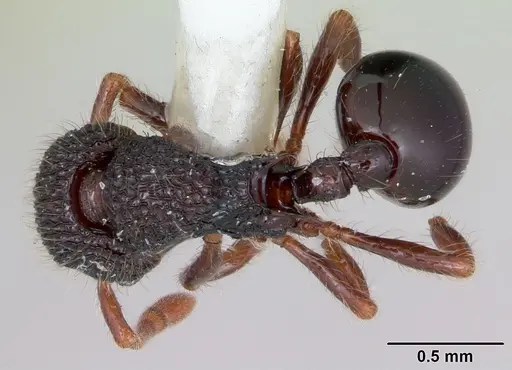
Literature
Loading distribution map...Loading products...