
Lachnomyrmex pilosus
- Sci. Name
- Lachnomyrmex pilosus
- Tribe
- Attini
- Subfamily
- Myrmicinae
- Author
- Weber, 1950
- Distribution
- Found in 8 countries
Introduction
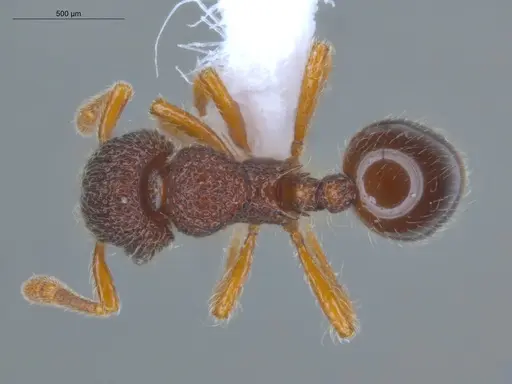
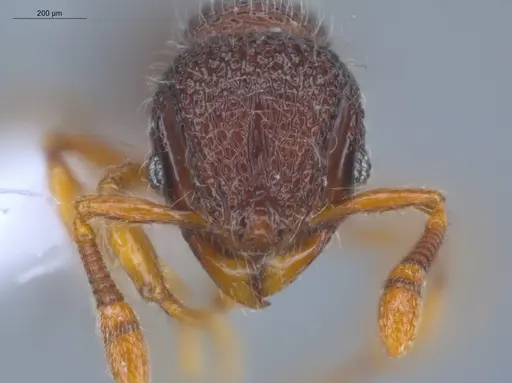
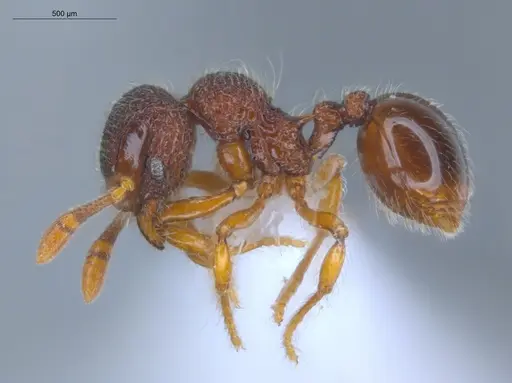
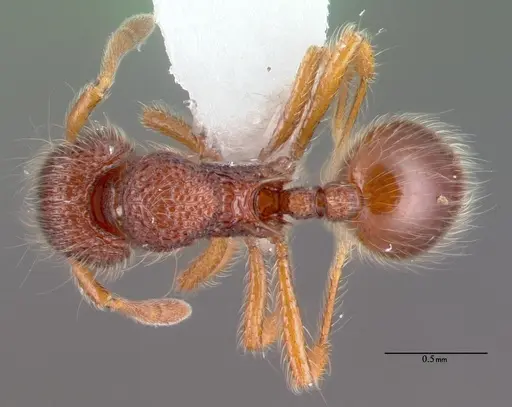
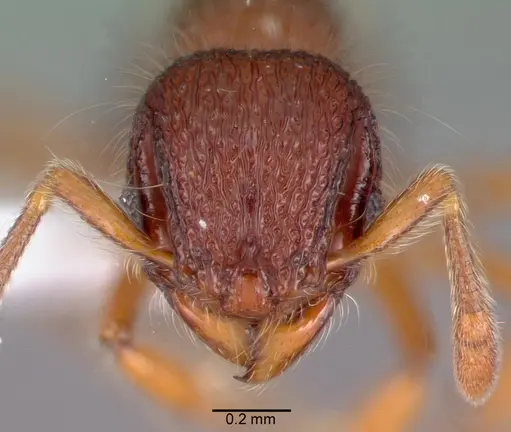
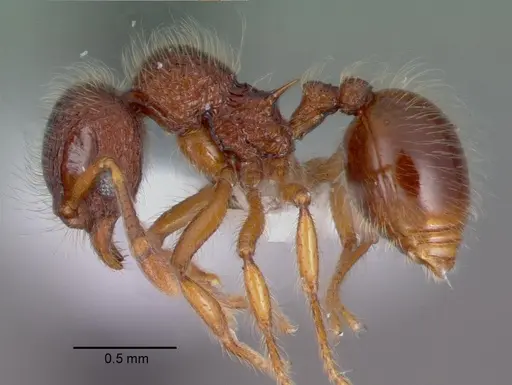
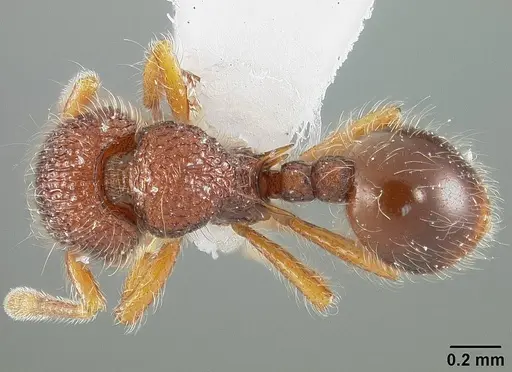
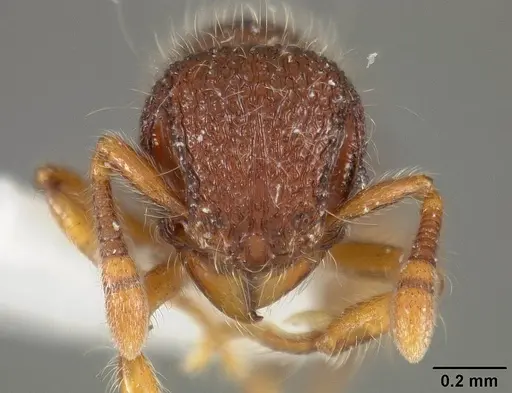
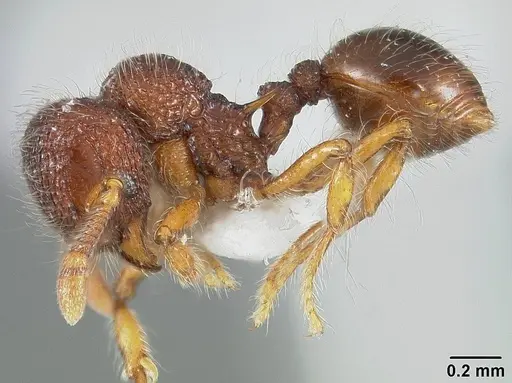
Lachnomyrmex pilosus is a tiny myrmicine ant, with workers measuring 2.4–3.3 mm and queens 3.0–3.7 mm in total length . They range from light reddish-brown to dark brown, with lighter legs and antennae . The species gets its name 'pilosus' (Latin for hairy) from the dense covering of long, flexible hairs on the body, especially the first segment of the gaster . Workers have a strongly rounded upper body, a deeply indented groove between the thorax segments, and propodeal spines that curve upward at the tips . These ants are leaf-litter specialists found in wet forests across northern South America, from Costa Rica down to Brazil, including Bolivia, Colombia, Ecuador, Peru, Trinidad, Venezuela, French Guiana, and Grenada . They live at elevations of 200–1430 m . Unlike many ants, Lachnomyrmex pilosus workers forage alone and do not recruit nestmates or follow pheromone trails . They are rarely seen in large numbers and typically appear as one or two individuals in leaf litter samples .
Quick Summary
- Difficulty: Hard
- Origin & Habitat: Wet forests of northern South America, from Costa Rica to central Brazil, at elevations of 200–1430 m [1][2]. They inhabit leaf litter, rotting wood, and soil cavities [6].
- Colony Type: Likely monogyne (single queen) and small. Colonies are described as 'apparently monogynic' [6]. The largest field collection contained only a few adults along with 7 larvae and 3 pupae [2], suggesting mature colonies stay under 50–100 workers [3][4].
- Size & Growth:
- Queen: 3.0–3.7 mm [1]
- Worker: 2.4–3.3 mm [1]
- Colony: Estimated under 100 workers, likely much smaller based on field observations [3][4]
- Growth: Unknown, likely slow given small colony sizes
- Development: Estimated 6–10 weeks based on typical Myrmicinae development at warm temperatures (no specific data available) (No direct development studies exist for this species. Estimate based on genus patterns and related small Myrmicinae.)
- Antkeeping:
- Temperature: Keep at 22–26°C. They come from warm, humid tropical forests, so aim for the warmer end. Use a heating cable on one side of the nest to create a gentle gradient if room temperature drops below 22°C.
- Humidity: High humidity is essential, these are leaf-litter ants from wet forests. Keep the nest substrate consistently moist but not waterlogged. Mist the outworld regularly and provide a water source. The substrate should feel damp to the touch.
- Diapause: No, as a tropical species, they do not need hibernation. Keep temperatures stable year-round.
- Nesting: Provide a naturalistic setup with small chambers. They nest in rotting wood, leaf litter, and soil cavities in the wild [6]. A Y-tong nest, plaster nest, or test tube setup with damp substrate works well. Include rotten wood fragments and leaf litter for cover.
- Behavior: These ants are very small and shy. Workers forage alone and do not recruit nestmates or lay pheromone trails [6]. You won't see the dramatic columns of other species. They are not aggressive and will flee from threats. Their tiny size makes them excellent escape artists, they can squeeze through tiny gaps. Handle with care as they are fragile.
- Common Issues: escape prevention is critical, their tiny size (under 4 mm) means they can pass through standard barrier gels and poorly sealed edges, colonies stay small and grow slowly, which can be frustrating for keepers expecting fast growth, high humidity requirements can lead to mold problems if ventilation is inadequate, they are rarely available in the ant hobby since colonies are small and queens are hard to find, solitary foraging means you may miss feeding them, they do not recruit to food, so check the entire setup
Housing and Nest Setup
Lachnomyrmex pilosus needs a setup that mimics its natural leaf-litter microhabitat. Because they are tiny (under 4 mm) and live in small colonies, a small nest is best, something like a Y-tong or plaster nest with tiny, tight chambers that make them feel secure. In the wild, they nest in the ground, among rotten leaves, and inside fallen logs [6]. Provide a layer of damp substrate mixed with rotting wood fragments and leaf litter in the outworld.
Escape prevention is critical. These ants are extremely small and can squeeze through gaps that seem sealed to larger ants. Use fine mesh (openings under 0.5 mm) on ventilation holes, apply fluon to all edges, and check lid seals and tubing connections regularly.
Feeding and Diet
In the wild, Lachnomyrmex pilosus workers forage alone for small prey in the leaf litter [6]. They likely eat tiny arthropods like springtails, mites, and small insects. They probably also collect honeydew from sap-feeding insects and scavenge dead insects.
In captivity, offer small protein sources like flightless fruit flies, pinhead crickets, tiny mealworms, and other appropriately sized live prey. Since they don't recruit, place food in multiple spots in the outworld, or directly near workers. Sugar water or honey water may be accepted occasionally, but don't rely on it as a main food. Remove uneaten prey after 24–48 hours to prevent mold.
Temperature and Humidity
As a tropical species from wet forests, Lachnomyrmex pilosus needs warmth and high humidity. Keep the nest area at 22–26°C, aiming for the warmer end. A small heating cable on one side of the nest creates a gentle gradient, letting the ants choose their preferred temperature.
Humidity should be high (70–85% relative humidity in the nest). These ants come from constantly moist forest floors. Keep the substrate consistently damp but not waterlogged. A water tube or moist cotton ball in the outworld helps. Mist the outworld regularly but avoid standing water. Don't let temperatures drop below 20°C for long. No diapause is needed. [1][6]
Behavior and Colony Dynamics
Lachnomyrmex pilosus has a unique foraging style. Workers search alone and do not recruit nestmates or leave pheromone trails [6]. You won't see the crowded foraging columns of other species. Instead, individual workers slowly explore the leaf litter on their own.
Colonies are small and appear to be monogyne (single queen) [6]. The largest wild collection included only a few adults with 7 larvae and 3 pupae [2], indicating mature colonies probably have fewer than 100 workers. They produce winged queens (gynes) at various times of year, suggesting an extended reproductive season [2]. This makes finding a mated queen tough.
Acquiring and Founding a Colony
Lachnomyrmex pilosus is rarely available in the ant hobby. Small colony sizes and the difficulty of finding queens make them uncommon. If you do get a queen, house her in a small test tube setup with a water reservoir. Founding type is unconfirmed, but based on most Myrmicinae, she is likely claustral, she seals herself in and lives off stored fat reserves until the first workers emerge. Keep the tube warm and humid, and leave her alone until workers appear.
Colonies grow slowly. Don't expect rapid growth, these ants naturally maintain small populations. Be patient and don't overfeed or disturb them. [2][6]
Frequently Asked Questions
How long does it take for Lachnomyrmex pilosus to develop from egg to worker?
The exact development time is unknown, but based on typical Myrmicinae patterns and their small size, expect approximately 6–10 weeks from egg to first worker at optimal temperatures (around 24–26°C). Growth will be slower at cooler temperatures.
Are Lachnomyrmex pilosus good for beginners?
No, this species is not recommended for beginners. They are very small (under 4 mm), require high humidity, have small slow-growing colonies, and are rarely available. Their demanding escape prevention and shy behavior make them better for experienced keepers.
How big do Lachnomyrmex pilosus colonies get?
Colonies remain small, likely under 100 workers at maturity. Wild collections usually yield only one or two workers at a time [3][4]. A complete colony found in Venezuela had just 7 larvae and 3 pupae with the adults [2].
Can I keep multiple Lachnomyrmex pilosus queens together?
This has not been studied. Based on the evidence that colonies are 'apparently monogynic' (single queen), it's best to keep only one queen per colony. Combining unrelated queens is not recommended and could lead to fighting [6].
What do Lachnomyrmex pilosus eat?
They likely eat small live prey such as springtails, mites, and tiny insects found in leaf litter. In captivity, offer small protein sources like flightless fruit flies, small mealworms, or other appropriately sized live prey. They may accept sugar water occasionally but don't rely on it as a primary food source [6].
Do Lachnomyrmex pilosus need hibernation?
No, they are a tropical species from wet forests and do not need hibernation or diapause. Keep temperatures stable year-round in the 22–26°C range. Do not expose them to cold temperatures.
Why are my Lachnomyrmex pilosus escaping?
Their tiny size (under 4 mm) makes them excellent escape artists. They can squeeze through gaps that seem sealed to larger ants. Use fine mesh (openings under 0.5 mm), apply fluon to all edges, and check that lids and tubing connections are sealed properly.
When should I move Lachnomyrmex pilosus to a formicarium?
Wait until the colony has at least 15–20 workers before moving to a small formicarium. Given their small colony sizes, some keepers keep them in the original test tube setup with an added outworld rather than moving to a full nest. A small Y-tong or plaster nest works well when they outgrow the founding setup.
Where can I find Lachnomyrmex pilosus queens to buy?
This species is rarely available in the ant hobby due to small colony sizes and the difficulty of finding queens. They are not commonly bred by commercial ant farms. When available, you may need to pay a premium. Check specialty ant sellers and forums, but don't expect to find them easily.
Report an Issue
The current care sheet is based fully on literature. See inconsistencies, or something that's incorrect? Please , it will be resolved after review from an admin. Contributing to the blogs tab also helps providing information, to make us be able to further improve the caresheets. Thank you for your support!
References

This caresheet is licensed under CC BY-SA 4.0 .
Community Blogs
Literature
Loading distribution map...Loading products...