
Labidus auropubens
- Sci. Name
- Labidus auropubens
- Subfamily
- Dorylinae
- Author
- Santschi, 1920
- Distribution
- Found in 1 countries
Introduction
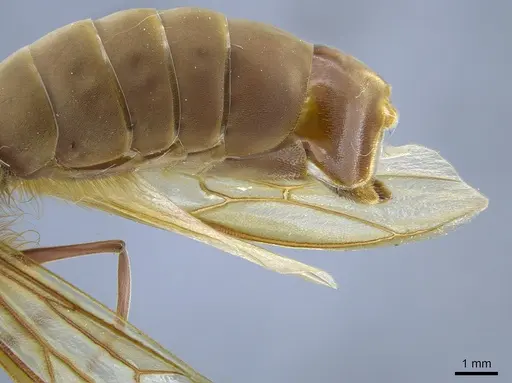
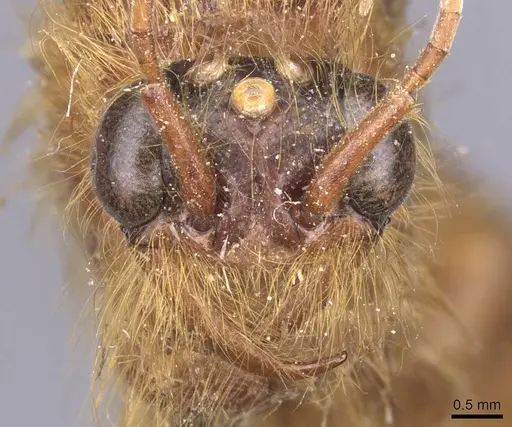
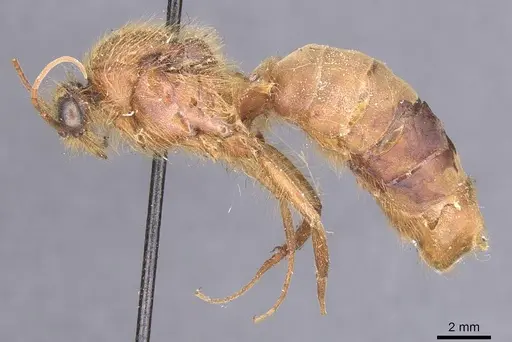
Labidus auropubens is a Neotropical army ant species found in French Guiana and Peru . As a member of the Dorylinae subfamily, these ants are part of the famous army ant group known for their nomadic lifestyle and predatory raiding behavior. The species was originally described by Santschi in 1920 from French Guiana, with the specific epithet 'auropubens' referring to golden or golden-haired characteristics . Only the male caste has been formally described - workers and queens remain undescribed in scientific literature . This species represents a significant knowledge gap in ant biology. Unlike many army ant species that have been extensively studied, L. auropubens remains poorly understood, with no captive husbandry information available. The lack of described castes makes this one of the most challenging army ant species to maintain, as specific requirements cannot be determined.
Quick Summary
- Difficulty: Expert
- Origin & Habitat: Neotropical region, French Guiana and Peru [1][2]. Found in lowland tropical rainforests.
- Colony Type: Unknown, army ant colony structure is unconfirmed for this species. Only males have been described scientifically.
- Size & Growth:
- Queen: Size data unavailable, queen caste has not been described [1]
- Worker: Size data unavailable, worker caste has not been described [1]
- Colony: Unknown, colony size data unavailable for this species
- Growth: Unknown, development timeline unconfirmed for this species
- Development: Unknown for this species (Army ant development is typically fast, but specific timelines for L. auropubens are unconfirmed.)
- Antkeeping:
- Temperature: Keep at 24-28°C, maintain warm tropical conditions year-round [1]
- Humidity: High humidity recommended, aim for 70-85%. Army ants naturally live in damp forest environments [1]
- Diapause: No, being tropical, this species does not require hibernation. Maintain warm conditions year-round [1]
- Nesting: Army ants do not build traditional nests. In captivity, they require a large naturalistic enclosure with both a dark, humid retreat area and a spacious foraging area. Avoid test tubes, they need space to form temporary clusters.
- Behavior: Army ants are predatory and conduct coordinated raids on other ant colonies and arthropods. Workers are largely blind and rely on chemical trails. However, specific behavior for L. auropubens is unconfirmed, only males have been scientifically described. These ants are constantly on the move, making them challenging to maintain in captivity.
- Common Issues: only male caste described, worker and queen biology unknown, no captive husbandry information exists for this species, army ant colonies require constant prey availability, without it, colonies decline rapidly, maintaining proper humidity without mold is challenging, army ants are nocturnal and most active at night, these ants produce no lasting nest structure, they must be provided with appropriate space to form temporary clusters
Understanding Labidus auropubens
Labidus auropubens belongs to the Dorylinae subfamily, commonly known as army ants. Unlike typical ants that build permanent nests, army ants are typically nomadic, they form temporary bivouacs and relocate regularly. However, the specific behavior of L. auropubens is unconfirmed because only the male caste has been formally described [1]. The genus Labidus contains several Neotropical army ant species, but this particular species remains poorly studied. The lack of described worker and queen castes means that much of what we know about army ant biology cannot be specifically applied to L. auropubens.
Housing Requirements
Keeping army ants like L. auropubens is significantly different from keeping typical ant species. They cannot be housed in standard test tube setups or formicariums designed for stationary ants. Instead, you need a large naturalistic enclosure with both a dark, humid retreat area and a spacious foraging area. The enclosure should have multiple chambers or hides, plenty of substrate for workers to explore, and a reliable hydration system. Temperature control is critical, maintain 24-28°C using a heating cable or mat if your room temperature is below this range. Humidity should be high (70-85%), achieved through moist substrate and regular misting, but ensure adequate ventilation to prevent mold. Lighting should be dim, as army ants are primarily nocturnal. [1]
Feeding and Nutrition
Army ants are obligate predators and scavengers. In captivity, they require a constant supply of protein-rich prey. This means regularly adding insects (live or freshly killed), other ant colonies, or other arthropods to the foraging area. A well-fed army ant colony will consume enormous quantities compared to typical ants. Feed prey in the evening when the colony is most active. Remove uneaten prey after 24-48 hours to prevent mold. Sugar water is generally not required or accepted, as army ants get their carbohydrates from the bodies of their prey. However, specific feeding requirements for L. auropubens are unconfirmed. [1]
Colony Establishment
Acquiring and establishing an army ant colony presents unique challenges. Unlike most ant species where you can catch a founding queen and raise a colony, army ant colonies typically reproduce through budding (colony fission) rather than nuptial flights. However, this is unconfirmed for L. auropubens specifically since the queen caste has not been described [1]. For this species specifically, no captive-bred colonies are known to exist in the hobby. The lack of described workers and queens means that colony establishment methods cannot be specifically tailored to this species. This makes L. auropubens an expert-only species that is rarely, if ever, kept in captivity.
Behavior and Observation
Observing army ants is a unique experience. The most spectacular behavior in many army ant species is the raid, when hundreds or thousands of workers emerge in a coordinated swarming pattern. Workers are largely blind, navigating by chemical signals. The colony may be almost constantly on the move, with workers carrying brood, food, and the queen between locations. However, specific behavior for L. auropubens is unconfirmed, only males have been described, and no behavioral observations have been published. The bivouac behavior typical of army ants may or may not be exhibited by this species. [1]
Frequently Asked Questions
Can I keep Labidus auropubens in a test tube?
No, army ants cannot be kept in test tubes or standard formicariums. They need a large naturalistic enclosure with space to form temporary clusters and conduct raids. Additionally, since only males have been described for this species, obtaining workers may be impossible.
How long does it take for first workers to appear?
The development timeline for this species is unconfirmed. Only males have been described, worker and queen castes are unknown to science. Any development timeline would be speculative.
Can I keep multiple queens together?
Army ant colony structure for this species is unconfirmed. Only males have been scientifically described, so queen behavior and colony structure cannot be determined.
What do Labidus auropubens eat?
They are presumed to be obligate predators based on army ant biology. However, specific feeding behavior for this species is unconfirmed since workers have not been described.
Are Labidus auropubens good for beginners?
No, this species is rated Expert difficulty. Only males have been described, meaning worker biology is completely unknown. No captive husbandry information exists. Army ants require specialized setups, constant prey availability, and experienced keepers.
Do Labidus auropubens need hibernation?
No, as a tropical species from French Guiana and Peru, they do not require hibernation. Keep them warm year-round at 24-28°C.
Why are my army ants dying?
Common causes include: insufficient prey, incorrect humidity, temperature outside optimal range, stress from excessive disturbance, or inappropriate enclosures. However, for L. auropubens specifically, there is no established husbandry information to guide keepers.
When should I move them to a formicarium?
Army ants do not use traditional formicariums. They need naturalistic setups with multiple chambers, dark retreat areas, and spacious foraging areas. However, since workers are undescribed for this species, standard recommendations cannot be made.
Report an Issue
The current care sheet is based fully on literature. See inconsistencies, or something that's incorrect? Please , it will be resolved after review from an admin. Contributing to the blogs tab also helps providing information, to make us be able to further improve the caresheets. Thank you for your support!
References

This caresheet is licensed under CC BY-SA 4.0 .
Community Blogs
CASENT0650533
View on AntWeb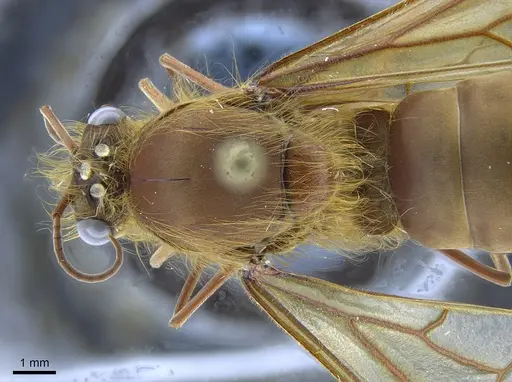
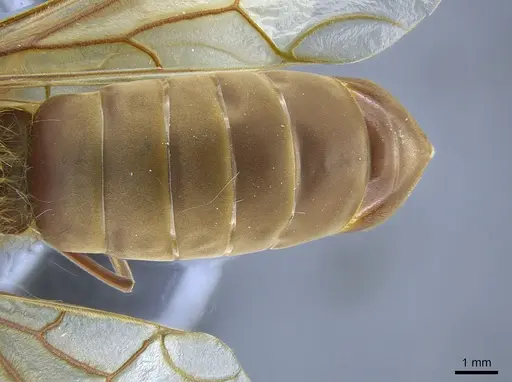
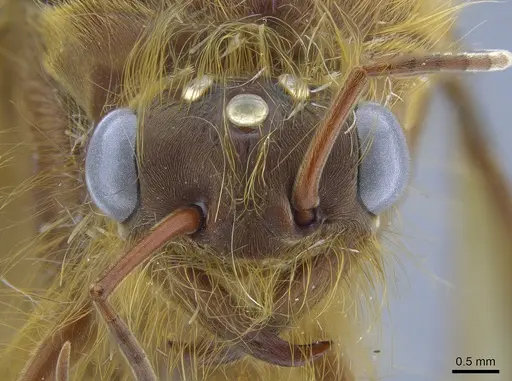
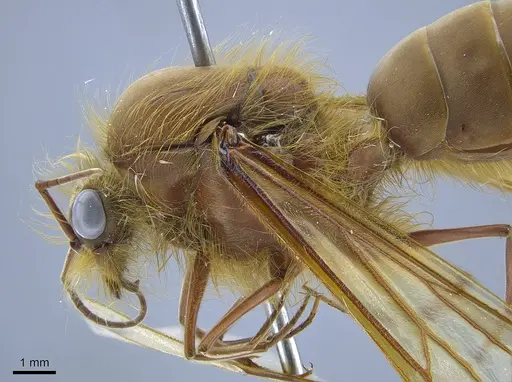
CASENT0911391
View on AntWeb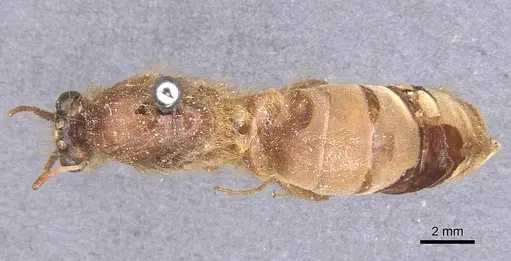
Literature
Loading distribution map...Loading products...