
Iridomyrmex trigonoceps
- Sci. Name
- Iridomyrmex trigonoceps
- Tribe
- Leptomyrmecini
- Subfamily
- Dolichoderinae
- Author
- Heterick & Shattuck, 2011
- Distribution
- Found in 1 countries
Introduction
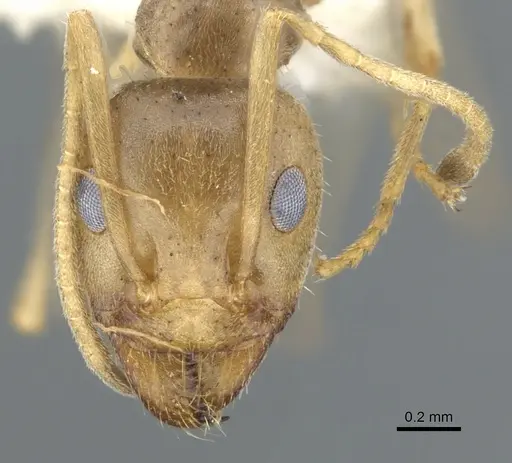
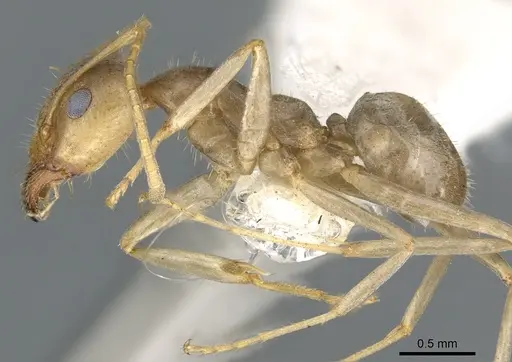
Iridomyrmex trigonoceps is one of the most unusual-looking ants in the genus Iridomyrmex, with a distinctly triangular head shape that makes it impossible to confuse with any other species . Workers are brown with pale yellow erect setae and measure approximately 9-10mm in total length . This species is relatively uncommon but has a broad distribution across Western Australia, South Australia, and the Northern Territory, primarily in desert and semi-arid regions . The only documented nesting site was in a sand dune with mallee and Triodia vegetation, with the nest indicated by a small mound . This species was only described in 2011,making it one of the newer additions to the ant-keeping hobby.
Quick Summary
- Difficulty: Unknown, likely challenging due to very limited data
- Origin & Habitat: Desert and semi-arid regions of Western Australia, South Australia, and Northern Territory. Nests in sand dunes with mallee and Triodia vegetative cover [1][2].
- Colony Type: Colony structure is unconfirmed. No data on queen number or colony size.
- Size & Growth:
- Queen: Size data unavailable, queen measurements not documented [1]
- Worker: Approximately 9-10mm total length [1]
- Colony: Unknown, no colony size data available
- Growth: Unknown, no development data available
- Development: Unconfirmed, no development data exists for this species [1] (Development time is unknown. Monitor your colony for signs of growth and adjust conditions as needed.)
- Antkeeping:
- Temperature: Inferred: Desert species, likely tolerates warm conditions. Start with room temperature around 24-26°C and observe colony activity.
- Humidity: Inferred: Desert/semi-arid origin suggests low to moderate humidity needs. Keep nest substrate dry to moderately moist, with a dry area available.
- Diapause: Unknown, desert species may have reduced activity during extreme heat rather than cold. Observe seasonal changes.
- Nesting: Natural nesting is in sand dunes, indicated by small mound [1]. In captivity, a sandy substrate with some moisture retention would be appropriate. Y-tong or naturalistic setups with sand-based substrate likely work well.
- Behavior: No specific behavioral data available. As an Iridomyrmex species, they likely have typical dolichoderine traits: moderate activity, may tend honeydew-producing insects, and may have workers that patrol actively. This species lacks a functional sting, like other Dolichoderinae ants, it defends itself by secreting defensive chemical compounds from a slit-like opening at the tip of the abdomen. Escape risk is moderate given worker size around 10mm, standard barrier precautions recommended.
- Common Issues: very limited species-specific data makes care recommendations uncertain, proceed with caution, no documented colony founding behavior, unknown if claustral or semi-claustral, desert origin suggests sensitivity to excess moisture, avoid waterlogging, no information on queen or colony size limits, start small and be prepared to upgrade gradually, this species is rarely kept in captivity, limited community experience to draw from
Appearance and Identification
Iridomyrmex trigonoceps is unmistakable due to its severely triangular head shape when viewed from the front, no other Iridomyrmex species looks quite like this [1]. The small eyes are positioned high on the sides of the head capsule, and the mandibles are notably large compared to related species [1]. Workers are brown with pale yellow erect setae covering much of their body [1]. The species also has uniquely elongated second and third maxillary palps, which is a distinguishing feature even to ant taxonomists [1]. Workers measure approximately 9-10mm in total length, placing them in the smaller to medium size range for the genus.
Natural Habitat and Distribution
This species is found across a wide but sparse range in arid and semi-arid Australia, including Western Australia, South Australia, and the Northern Territory [1][2]. Most records come from desert or semi-arid areas in the northern parts of its range, though a single collection from Renmark in South Australia suggests it may occur across a broader area than collection data indicates [1]. The only detailed ecological note describes the habitat as a sand dune with mallee (a type of eucalyptus) and Triodia (a genus of spinifex grass) vegetative cover [1][2]. The nest was indicated by a small mound, typical of many ground-nesting ants in sandy soils.
Housing and Nesting
In the wild, these ants nest in sand dunes, so a naturalistic setup with a sandy substrate would best mimic their natural conditions [1]. A formicarium with a sand-based mixture that allows for some moisture retention while drying relatively quickly would be appropriate. Given their desert origin, ensure the nest has areas that can dry out completely. Test tube setups may work for founding colonies but may need to be upgraded as the colony grows. Provide a water source but avoid constant high humidity. Standard escape prevention is advisable given their moderate worker size.
Feeding and Diet
No specific dietary studies exist for this species. As an Iridomyrmex ant, they likely follow typical genus feeding patterns: they probably consume honeydew from aphids and scale insects, and will scavenge protein from dead insects and other small prey. Offer sugar water or honey water as a carbohydrate source, and provide small insects or other protein sources. Given their small worker size, prey items should be appropriately sized, small fruit flies, pinhead crickets, or similar small arthropods would be suitable. Start with modest offerings and adjust based on what the colony accepts. [2]
Temperature and Seasonal Care
As a desert and semi-arid species, Iridomyrmex trigonoceps likely tolerates warmer temperatures than many temperate ants. Based on the arid habitat, aim for temperatures in the warm range (around 24-30°C) during active periods. Avoid cold temperatures and drafts. The species may reduce activity during extreme heat or dry periods, similar to other desert ants, this is not true diapause but rather a behavioral response to harsh conditions. Monitor your colony's activity levels and adjust temperature accordingly. If workers become lethargic or cluster away from heat sources, reduce temperature slightly. [1]
Defense Mechanism
Like all ants in the subfamily Dolichoderinae, Iridomyrmex trigonoceps lacks a functional sting. Instead, this species defends itself by secreting defensive chemical compounds from a slit-like opening at the tip of the abdomen. This is the primary defense mechanism for the tribe Leptomyrmecini, to which this species belongs. The chemical secretion is used to deter predators and rival colonies.
Challenges and Considerations
This is one of the least-studied ant species in the hobby, with very limited scientific data and essentially no captive breeding history to draw from [1]. Care recommendations are largely inferential based on habitat and genus-level knowledge. Be prepared for a learning curve and document your observations carefully. The species may have specific requirements not yet understood. Start with a small colony if possible, and be patient as growth may be slow. Consider connecting with other antkeepers who have attempted this species to share knowledge and learn from collective experience.
Frequently Asked Questions
How do I identify Iridomyrmex trigonoceps ants?
Look for the distinctive triangular head shape when viewed from the front, this is the most unique feature [1]. Workers are brown with pale yellow erect setae and measure around 9-10mm in total length. The small eyes are positioned high on the sides of the head, and the mandibles are notably large.
Where is Iridomyrmex trigonoceps found in the wild?
This species is found in desert and semi-arid regions of Western Australia, South Australia, and the Northern Territory [1][2]. They nest in sand dunes with mallee and Triodia vegetation.
What do Iridomyrmex trigonoceps ants eat?
No specific dietary studies exist, but as an Iridomyrmex species, they likely eat honeydew from aphids and scale insects, plus small insects and scavenged protein. Offer sugar water or honey water and small insects like fruit flies.
What temperature do Iridomyrmex trigonoceps ants need?
Based on their desert habitat, aim for warm conditions around 24-30°C. Avoid cold temperatures. Start with room temperature around 24-26°C and adjust based on colony activity.
How big do Iridomyrmex trigonoceps colonies get?
Colony size is unknown, no data exists on maximum colony size for this species [1].
Do Iridomyrmex trigonoceps ants need hibernation?
Diapause requirements are unknown. As a desert species, they may have reduced activity during extreme heat rather than cold. Observe your colony's seasonal behavior and adjust care accordingly.
What type of nest should I use for Iridomyrmex trigonoceps?
A naturalistic setup with sandy substrate would best match their natural habitat in sand dunes [1]. Y-tong nests or acrylic nests with sand-based substrate work well. Ensure some areas can dry out completely.
Is Iridomyrmex trigonoceps good for beginners?
No, this species is not recommended for beginners due to very limited data on captive care, unknown colony founding behavior, and lack of community experience. Choose a better-documented species first.
How long does it take for Iridomyrmex trigonoceps to develop from egg to worker?
Development time is unconfirmed, no species-specific data exists [1].
Can I keep multiple queens together?
Colony structure (monogyne vs polygyne) is unconfirmed for this species [1]. Do not combine unrelated queens without evidence they can coexist.
Why is Iridomyrmex trigonoceps so hard to find care information?
This is a relatively uncommon species with very limited scientific study [1]. It was only described in 2011 and has minimal ecological data. There is essentially no captive breeding history in the antkeeping hobby.
Report an Issue
The current care sheet is based fully on literature. See inconsistencies, or something that's incorrect? Please , it will be resolved after review from an admin. Contributing to the blogs tab also helps providing information, to make us be able to further improve the caresheets. Thank you for your support!
References

This caresheet is licensed under CC BY-SA 4.0 .
Community Blogs
CASENT0903087
View on AntWeb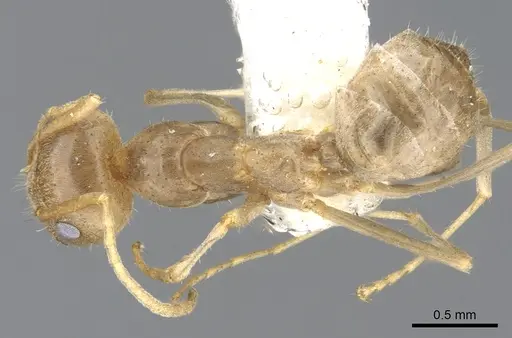
Literature
Loading distribution map...Loading products...