
Iridomyrmex setoconus
- Sci. Name
- Iridomyrmex setoconus
- Tribe
- Leptomyrmecini
- Subfamily
- Dolichoderinae
- Author
- Shattuck & McMillan, 1998
- Distribution
- Found in 1 countries
Introduction
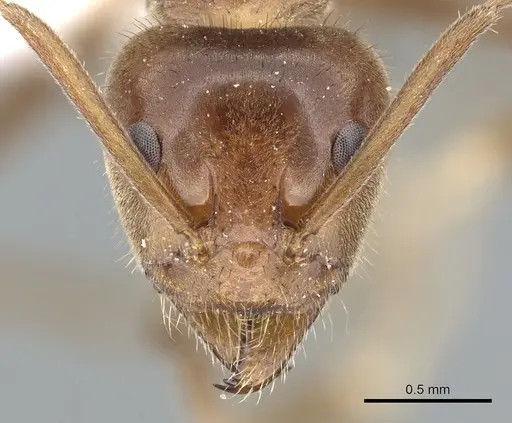
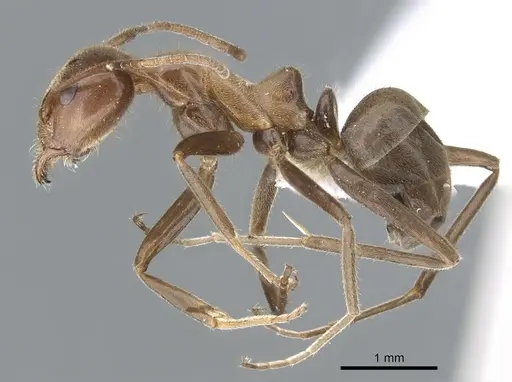
Iridomyrmex setoconus is a medium-sized Australian ant belonging to the Dolichoderinae subfamily. Workers have a distinctive reddish-brown coloration - the head fades from brown at the back to yellowish-red toward the front, while the dorsal pronotum, mesonotum and propodeum are brown, with the gaster and legs being dark brown . This species is easily recognized by the short, straight or only weakly curved erect hairs on the sides of the head capsule, which distinguishes it from the similar Iridomyrmex turbineus that has longer, strongly curved hairs . This is an extremely rare species known from only two small populations in Western Australia - at Yokinup Bay and Thomas River, both east of Esperance. Both collection sites feature calcareous or sandy soils, and the species may require such substrates for nesting. The limited distribution and specific habitat requirements make this a challenging species to keep, and it is not commonly available in the antkeeping hobby.
Quick Summary
- Difficulty: Expert
- Origin & Habitat: Restricted to two small populations at Yokinup Bay and Thomas River, east of Esperance in Western Australia. Found in dune shrubland habitats on calcareous or sandy soils [1][2].
- Colony Type: Colony structure is unconfirmed, this species is known only from a handful of specimens and no colony structure data exists.
- Size & Growth:
- Queen: Unknown, queen has not been described
- Worker: size data unavailable, only head measurements (HL 1.10-1.17mm, HW 1.04-1.17mm) are available [1][2]
- Colony: Unknown, only two collections of workers exist
- Growth: Unknown
- Development: Unknown, no development data exists for this species (Development timeline is unconfirmed.)
- Antkeeping:
- Temperature: Unconfirmed, likely prefers warm conditions similar to other Australian Iridomyrmex species. Start around 24-28°C and observe colony activity.
- Humidity: Likely prefers dry to moderate conditions given the sandy/calcareous soil habitat where it was found. Keep nest substrate relatively dry with some moisture available.
- Diapause: Unknown, Western Australian species may not require strong diapause, but related temperate Iridomyrmex species benefit from a cool period.
- Nesting: Natural nesting is in sandy soils, likely prefers dry, sandy substrates. A Y-tong or plaster nest with sandy areas would be appropriate. Avoid overly humid conditions.
- Behavior: Behavior is unstudied in captivity. Based on genus patterns, likely a generalist forager with moderate aggression. Workers are medium-sized and should be contained with standard escape prevention. The extremely limited distribution and specific habitat requirements suggest this species has specialized needs that are not well understood.
- Common Issues: this species is rarely if ever available in the antkeeping hobby due to its extremely limited distribution, specific soil requirements, may only nest in calcareous or sandy substrates which are difficult to replicate, no colony structure data exists, queen and founding behavior are unknown, no captive breeding data, wild-caught colonies may struggle in captivity, difficulty replicating natural habitat conditions from dune shrubland environments
Distribution and Rarity
Iridomyrmex setoconus is one of the rarest ant species in the antkeeping hobby, known from only two small populations in Western Australia. The first collection was from an above-ground nest on a sand dune at Thomas River, and the second from a pitfall trap at Yokinup Bay in Cape Arid National Park [1]. Both sites are east of Esperance in southwestern Australia. This extremely limited distribution means the species is virtually never available in the antkeeping hobby, and most keepers will never encounter it. The restricted range also means the species may be vulnerable to environmental changes.
Identification and Distinction
This species is most easily recognized by the short, straight or only weakly curved erect hairs (setae) on the sides of the head capsule. These hairs are distinct from the similar species Iridomyrmex turbineus, which has longer and strongly curved hairs. In I. setoconus, the hairs are straight or only very slightly bent basally, relatively short, and usually evenly distributed along the entire outer head margin [1]. The coloration is also distinctive: the head fades gradually from brown posteriorly to yellowish-red anteriorly, with the mandibles and scapes being yellowish-red. The dorsal pronotum, anterior mesonotum and dorsal propodeum are brown, while the posterolateral pronotum, lateral and posterior mesonotum and lateral and ventral propodeum are yellowish-red. The petiole, gaster and legs are brown [1].
Habitat and Substrate Requirements
Iridomyrmex setoconus has been collected exclusively on calcareous or otherwise sandy soils. The second collection site at Yokinup Bay was specifically from pitfall traps placed on calcareous sand soils in an area with dune shrubland vegetation [1]. This soil specificity suggests the species may require sandy or calcareous substrates for nesting, similar to what is observed in the related Iridomyrmex conifer group species. If keeping this species, providing a sandy substrate in the nest would likely be important. Avoid humid, compact soils, this species appears to prefer well-drained, sandy conditions.
Care and Keeping
Since this species has never been documented in captivity and basic biology is unknown, any keeping recommendations are speculative. Based on the habitat data (sandy soils in a temperate to warm region of Western Australia), the species likely prefers warm conditions with relatively dry nesting substrate. A Y-tong or plaster nest with areas of sandy substrate would be the most appropriate setup. Temperature around 24-28°C is a reasonable starting point. However, given the complete lack of captive data and the extreme rarity of this species in the wild, successful captive husbandry would be extremely challenging and would require significant experimentation. This species is not recommended for any but the most experienced and dedicated antkeepers who have access to properly sourced specimens.
Frequently Asked Questions
Is Iridomyrmex setoconus available in the antkeeping hobby?
No. This is an extremely rare species known from only two small populations in Western Australia near Esperance. It is virtually never available in the antkeeping hobby, and most antkeepers will never encounter it for sale.
What does Iridomyrmex setoconus look like?
Workers have a distinctive reddish-brown coloration with the head fading from brown at the back to yellowish-red toward the front. The most distinguishing feature is the short, straight erect hairs on the sides of the head capsule. The gaster and legs are dark brown.
Where does Iridomyrmex setoconus live?
This species is restricted to two small areas in Western Australia: Yokinup Bay and Thomas River, both east of Esperance. It lives in dune shrubland habitats on calcareous or sandy soils.
What substrate does Iridomyrmex setoconus need?
Based on collection data, this species requires sandy or calcareous soils. It has only been found in areas with calcareous sand or dune environments. Replicating these conditions in captivity would likely be important for success.
How do I keep Iridomyrmex setoconus?
Care recommendations are speculative since this species has never been documented in captivity. Based on habitat data, provide warm temperatures (around 24-28°C), relatively dry nesting conditions, and sandy or calcareous substrate. However, this species is not recommended for captive keeping due to its extreme rarity and unknown biology.
What is the colony structure of Iridomyrmex setoconus?
Unknown. The queen has never been described, and no colony structure data exists.
How long does Iridomyrmex setoconus take to develop?
Unknown. No development data exists for this species.
Is Iridomyrmex setoconus aggressive?
Behavior is unstudied. Based on genus patterns, Iridomyrmex ants are generally moderate in aggression and are active foragers. However, nothing specific is known about this species' temperament.
Report an Issue
The current care sheet is based fully on literature. See inconsistencies, or something that's incorrect? Please , it will be resolved after review from an admin. Contributing to the blogs tab also helps providing information, to make us be able to further improve the caresheets. Thank you for your support!
References

This caresheet is licensed under CC BY-SA 4.0 .
Community Blogs
CASENT0903085
View on AntWeb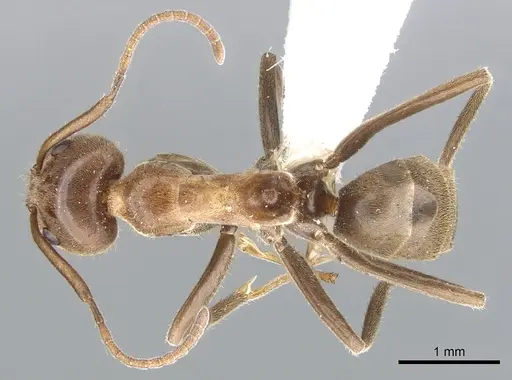
Literature
Loading distribution map...Loading products...