
Iridomyrmex prismatis
- Sci. Name
- Iridomyrmex prismatis
- Tribe
- Leptomyrmecini
- Subfamily
- Dolichoderinae
- Author
- Shattuck, 1993
- Distribution
- Found in 1 countries
Introduction
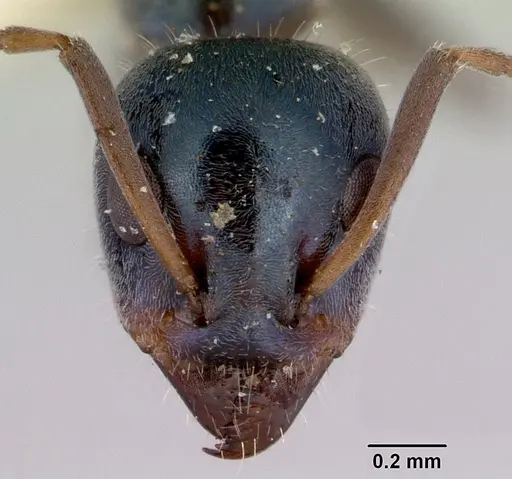
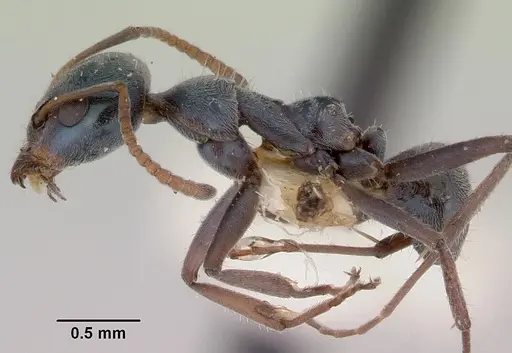
Iridomyrmex prismatis is a small ant native to Australia, found across New South Wales, Victoria, South Australia, and Western Australia (near Esperance). Workers are approximately 4-5mm in total length, based on genus patterns. They range from brown to black in color, with pale bluish iridescence on the head and body, and eastern populations show orange coloration around the mandibles and antennal flagellum. This species is well-defined within Iridomyrmex, a genus known for active, aggressive ants that often dominate their local ecosystems.
Quick Summary
- Difficulty: Medium
- Origin & Habitat: Australia, found across NSW, Victoria, South Australia, and Western Australia (Esperance region). Inhabits open woodland and forest areas, typically nesting in soil or under stones [1][2].
- Colony Type: Colony structure is unconfirmed for this species. Iridomyrmex species vary in their colony organization.
- Size & Growth:
- Queen: ~5-7mm, inferred from Iridomyrmex genus patterns [1]
- Worker: ~4-5mm, inferred from Iridomyrmex genus patterns [1]
- Colony: Colony size data unavailable for this specific species
- Growth: Growth rate data unavailable
- Development: Development time unconfirmed for this species (Specific development data is not available in the research literature)
- Antkeeping:
- Temperature: Keep at 24-28°C. These Australian ants are adapted to temperate to warm conditions. A heating cable on one side of the nest creates a suitable gradient.
- Humidity: Moderate humidity around 50-60%. Provide a water tube and allow the nest to dry slightly between waterings. Avoid overly damp conditions.
- Diapause: Likely required. Australian temperate ants typically need a winter rest period of 8-12 weeks at 10-15°C during the cooler months.
- Nesting: Y-tong (AAC) nests or plaster nests work well. Provide a connection to an outworld for foraging. These ants are active foragers and need space to move between nest and feeding areas.
- Behavior: Active and aggressive foragers typical of the Iridomyrmex genus. Workers are fast-moving and will defend their colony vigorously. They readily swarm to food sources and can dominate competing insects. Escape prevention is important, they are agile and will exploit any gaps. This species lacks a functional sting, instead, it defends by secreting defensive chemical compounds from a slit-like opening at the tip of the abdomen (smear defense), typical of Dolichoderinae ants.
- Common Issues: colonies may fail if temperature drops too low during winter, proper hibernation management is essential, fast growth can lead to overcrowding if not given sufficient nesting space, escape artists, check for small gaps around connections and lids, wild-caught colonies may carry parasites that can devastate captive colonies, queens can be difficult to locate as they don't form large visible nuptial flights
Housing and Nest Setup
Iridomyrmex prismatis adapts well to various nest types in captivity. Y-tong (AAC) nests provide excellent visibility and work well for observing colony behavior. Plaster nests maintain humidity consistently, which these ants appreciate. A test tube setup works for founding colonies, but plan to move them to a proper formicarium once the colony reaches 20-30 workers. Connect the nest to a spacious outworld using tubing, these active foragers need room to move and hunt. Ensure all connections are secure, these ants will find and exploit any loose connections. [1]
Feeding and Diet
Like other Iridomyrmex species, these ants are omnivorous and will accept a varied diet. Offer sugar water or honey regularly, they have a strong sweet tooth and will readily consume carbohydrates. Protein sources like small crickets, mealworms, and fruit flies should be provided 2-3 times per week. They are active hunters and will aggressively pursue prey items. In the wild, they also consume honeydew from aphids and scale insects, so offering a honey/water mixture satisfies this natural feeding behavior. Remove uneaten prey within 24-48 hours to prevent mold.
Temperature and Seasonal Care
Maintain warm temperatures between 24-28°C for optimal colony development. These Australian ants are adapted to temperate conditions but benefit from summer-like warmth. During winter (roughly May-September in the Southern Hemisphere), reduce temperature to 10-15°C for a diapause period. This rest period is important for colony health and queen reproduction. If keeping in the Northern Hemisphere, simulate seasons by cooling the colony for several months each year. Watch for behavioral changes, workers becoming less active signals the onset of dormancy.
Behavior and Colony Dynamics
Iridomyrmex prismatis displays typical genus behavior: active, aggressive, and highly territorial. Workers move quickly and will readily attack perceived threats. They use chemical alarm signals to recruit nestmates, so disturbing a colony quickly brings multiple workers to the defense. Colonies grow rapidly once established, and you will see workers constantly patrolling the outworld. They establish well-defined foraging trails. This species is not suitable for those wanting a passive, observational colony, these ants are always busy. [1][2]
Frequently Asked Questions
How long does it take for Iridomyrmex prismatis to produce first workers?
Specific development time data is not available for this species. Expect several months for nanitics to emerge, depending on temperature conditions.
Can I keep multiple queens together in one colony?
Colony structure (single-queen vs multi-queen) is unconfirmed for this specific species. It is safer to start with a single queen colony.
What temperature range is best for Iridomyrmex prismatis?
Keep them warm at 24-28°C during the active season. This mimics Australian summer conditions. During winter, allow a cooling period to 10-15°C for 8-12 weeks.
Are Iridomyrmex prismatis good for beginners?
They are rated Medium difficulty. They are more challenging than simple species like Lasius due to their need for warm conditions, proper hibernation, and active foraging space. However, they are not as difficult as exotic tropical species requiring high humidity.
How big do Iridomyrmex prismatis colonies get?
Colony size is not specifically documented for this species. Iridomyrmex species can form moderately large colonies.
Do they need hibernation or diapause?
Yes, likely required. As Australian temperate ants, they need a winter rest period of several months at reduced temperatures (10-15°C) to remain healthy.
What do Iridomyrmex prismatis eat?
They are omnivorous. Offer sugar water or honey constantly, and provide protein (small insects like fruit flies, crickets, mealworms) 2-3 times per week. They are active hunters and will readily take live prey.
When should I move my colony to a formicarium?
Move from a test tube setup once the colony reaches 20-30 workers and you see the water tube becoming depleted quickly. A Y-tong or plaster nest provides better space for growth.
Why are my Iridomyrmex prismatis dying?
Common causes include: temperature too low or unstable, improper humidity (too dry or waterlogged), lack of protein in diet, parasites from wild-caught colonies, or escape-related losses. Check all environmental parameters and ensure proper feeding.
Report an Issue
The current care sheet is based fully on literature. See inconsistencies, or something that's incorrect? Please , it will be resolved after review from an admin. Contributing to the blogs tab also helps providing information, to make us be able to further improve the caresheets. Thank you for your support!
References

This caresheet is licensed under CC BY-SA 4.0 .
Community Blogs
CASENT0172064
View on AntWeb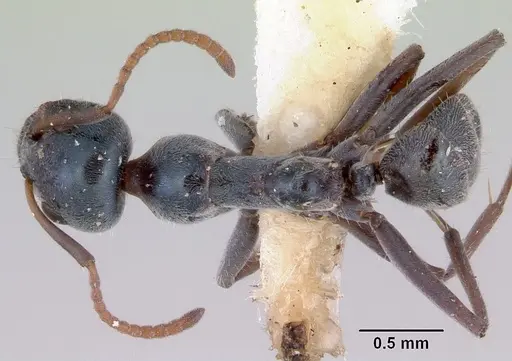
Literature
Loading distribution map...Loading products...