
Iridomyrmex longisoma
- Sci. Name
- Iridomyrmex longisoma
- Tribe
- Leptomyrmecini
- Subfamily
- Dolichoderinae
- Author
- Heterick & Shattuck, 2011
- Distribution
- Found in 1 countries
Introduction
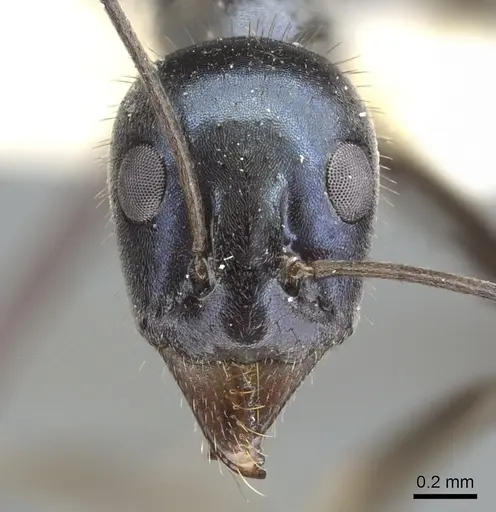
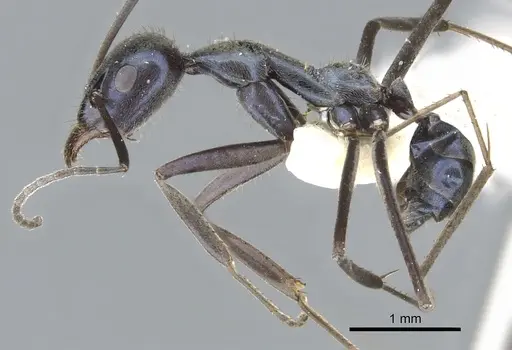
Iridomyrmex longisoma is a small ant native to the coast of south-western Western Australia. Workers have a distinctive appearance with very long hind tibiae and hairy (hirsute) antennal scapes, features that help distinguish them from the similar Iridomyrmex bicknelli. Their coloration is uniformly medium to dark chocolate brown with a subtle iridescence that can show hints of yellow-green, bluish, or purple depending on the light. These ants nest directly into sandy soil, often in coastal sand-dunes and vegetated areas near the ocean. Like their close relative I. bicknelli, they are a timorous (shy) species that tends to avoid confrontation rather than engage in aggressive defense of their nest.
Quick Summary
- Difficulty: Medium
- Origin & Habitat: South-western Western Australia, coastal areas including vegetated sand-dunes near the ocean [1]. They nest in sandy soil in sclerophyll woodland on white sand and heathland [2].
- Colony Type: Colony structure is unconfirmed. Based on genus patterns, likely single-queen (monogyne) colonies, but this has not been directly studied.
- Size & Growth:
- Queen: Size data unavailable, no queen measurements exist. Based on Iridomyrmex genus patterns, queens likely around 6-8mm.
- Worker: Size data unavailable, the research provides head measurements (HL 1.01-1.07mm, HW 0.81-0.85mm) but not total body length. Based on Iridomyrmex genus patterns, workers likely 2.5-4mm total length.
- Colony: Unknown, no colony size data available.
- Growth: Unknown, no development data available.
- Development: Unconfirmed. Based on typical Iridomyrmex patterns and Australian climate, estimate 6-10 weeks at warm room temperature. (No direct development studies exist for this species. Estimates are based on genus-level patterns.)
- Antkeeping:
- Temperature: Keep at room temperature, roughly 20-26°C. As a coastal Western Australian species, they likely tolerate a range from cool (15°C) to warm (28°C). A gentle heat gradient allows workers to choose their preferred temperature.
- Humidity: Moderate. Their natural coastal habitat suggests they prefer drier conditions than rainforest ants. Keep nest substrate lightly moist but well-drained, sandy soil that dries between waterings. Avoid waterlogging.
- Diapause: Unconfirmed. Western Australian coastal species may have reduced activity during cooler winter months but likely do not require true hibernation. Keep at mild temperatures year-round (15-20°C minimum).
- Nesting: Natural nesting is directly in sandy soil, identical to I. bicknelli nests. In captivity, a naturalistic setup with sandy substrate works well. Y-tong (AAC) nests with sand-filled chambers or plaster nests with sand mixed in are suitable options. They prefer tight, enclosed chambers over open spaces.
- Behavior: Timorous (shy) species that avoids conflict. Workers are small and fast-moving, likely foraging individually or in small groups. They are not aggressive and will retreat from threats rather than defend. Their small size means escape prevention is critical, they can squeeze through tiny gaps. Use fine mesh and tight-fitting barriers. They are likely generalist feeders, collecting honeydew and small insects like other Iridomyrmex species.
- Common Issues: escape prevention is critical due to their tiny size, they easily slip through standard barrier setups, shy temperament means they may be stressed by excessive disturbance or observation, no colony size data makes it hard to predict growth patterns, sandy soil nesting requirements mean standard test tube setups may not be ideal long-term, limited availability in the antkeeping hobby means established care protocols do not exist yet
Housing and Nest Setup
Iridomyrmex longisoma requires a setup that mimics their natural coastal sand-dune habitat. A naturalistic terrarium-style formicarium with a sandy substrate works best. Fill the nest area with coarse sand that holds its shape when workers dig tunnels. The substrate should drain well, avoid compacted clay or constantly wet soil. A layer of gravel under the sand helps with drainage. For the outworld, provide a simple foraging area with a water source (like a cotton ball in a small container) and protein food. Because they are timorous, keep the setup in a quiet location away from vibrations and excessive foot traffic. The nest should have tight-fitting barriers, these tiny ants are excellent escape artists and will find any gap larger than 0.5mm. [1][2]
Feeding and Diet
Like other Iridomyrmex species, they are likely generalist feeders that accept both sugar sources and protein. Offer sugar water (1:4 ratio with water) or diluted honey as a constant energy source. For protein, small soft-bodied insects like fruit flies, small mealworms, or chopped crickets work well. They are small ants, so prey items should be appropriately sized, tiny fragments are better than large chunks. In the wild, they likely tend aphids or scale insects for honeydew, so offering a small artificial honeydew substitute (sugar water with a pinch of yeast) can supplement their diet. Feed protein 2-3 times per week, and keep sugar water available at all times. Remove any uneaten prey after 24-48 hours to prevent mold.
Temperature and Seasonal Care
As a coastal species from south-western Western Australia, Iridomyrmex longisoma likely prefers moderate temperatures with some variation. Keep the nest area at roughly 20-26°C during the active season. A heating cable on one side of the nest creates a temperature gradient, letting workers regulate their own body temperature by moving between warmer and cooler areas. They probably tolerate temperatures down to 15°C during cooler periods but should be kept warmer for active growth. True hibernation is unlikely given their coastal habitat, but you may notice reduced activity during winter months. If this occurs, simply reduce temperatures slightly (to around 15-18°C) rather than attempting full hibernation. Avoid temperatures above 30°C. [1]
Behavior and Handling
This is a timorous (shy) species, they will not bite or sting aggressively and prefer to flee from threats rather than engage. This makes them fascinating to observe but also means they can be easily stressed. Avoid poking, shaking, or frequently disturbing the nest. Workers are fast-moving and small, making them challenging to handle during transfers. When moving colonies, use gentle techniques and provide dark, enclosed spaces where they can retreat. They are not suitable for species that want interactive ants that will readily explore outworlds, these are more of a watch-and-observe species. Their small size also means they have many natural predators, so keep them away from other insects or animals. [1][2]
Colony Establishment
Since this species is rarely kept, founding colonies may be difficult to obtain. If you acquire a mated queen, she will likely seal herself in a small chamber and raise the first workers alone (claustral founding, based on genus patterns). Provide a small container with sandy, lightly moist soil. Place the queen in a dark location and do not disturb her for 4-8 weeks. Once workers emerge, they will gradually begin foraging. The first workers (nanitics) will be smaller than mature workers. Growth rate is unknown but likely moderate, expect several months before the colony reaches 20-30 workers. Patience is essential, as this species has not been widely kept in captivity and established protocols do not exist.
Frequently Asked Questions
How long does it take for Iridomyrmex longisoma to have first workers?
The egg-to-worker timeline is unconfirmed for this species. Based on typical Iridomyrmex patterns, expect 6-10 weeks from egg to first worker at warm room temperature (around 24-26°C). The first workers will be small (nanitics) and the colony will grow gradually from there.
What do Iridomyrmex longisoma ants eat?
They are generalist feeders. Offer sugar water or diluted honey as a constant energy source, and protein like small insects (fruit flies, small mealworms, cricket pieces) 2-3 times per week. They are small ants, so keep prey items appropriately sized.
Can I keep Iridomyrmex longisoma in a test tube?
Test tubes are not ideal long-term. This species naturally nests in sandy soil, so a naturalistic setup with sandy substrate works better. A small test tube can work for founding colonies, but transfer to a sand-based formicarium once workers emerge.
Are Iridomyrmex longisoma good for beginners?
This species is not ideal for beginners. Limited data exists on their care, they are rarely available in the hobby, and their tiny size requires excellent escape prevention. They are better suited for experienced antkeepers interested in keeping less common species.
What temperature do Iridomyrmex longisoma need?
Keep them at room temperature, roughly 20-26°C. A gentle heat gradient (around 20-28°C across the nest) allows workers to choose their preferred temperature. They likely tolerate cooler temperatures (down to 15°C) but grow best when kept warm.
How big do Iridomyrmex longisoma colonies get?
Colony size is unknown, no published colony data exists for this species. Based on typical Iridomyrmex patterns, colonies likely reach several hundred workers. Expect moderate growth over many months to years.
Do Iridomyrmex longisoma need hibernation?
True hibernation is unlikely. As a coastal species from Western Australia, they probably do not require cold dormancy. You may notice reduced activity during cooler months, simply reduce temperatures slightly (to around 15-18°C) if this occurs.
Why are my Iridomyrmex longisoma escaping?
Their tiny size makes them excellent escape artists. Use fine mesh (0.5mm or smaller), tight-fitting lids, and barrier gel or fluon on all edges. Check for any gaps around water tubes and feeding dishes.
Where is Iridomyrmex longisoma found?
This species is only found in south-western Western Australia, specifically along the coast. They inhabit coastal sand-dunes and vegetated areas near the ocean, nesting in sandy soil.
Report an Issue
The current care sheet is based fully on literature. See inconsistencies, or something that's incorrect? Please , it will be resolved after review from an admin. Contributing to the blogs tab also helps providing information, to make us be able to further improve the caresheets. Thank you for your support!
References

This caresheet is licensed under CC BY-SA 4.0 .
Community Blogs
CASENT0903090
View on AntWeb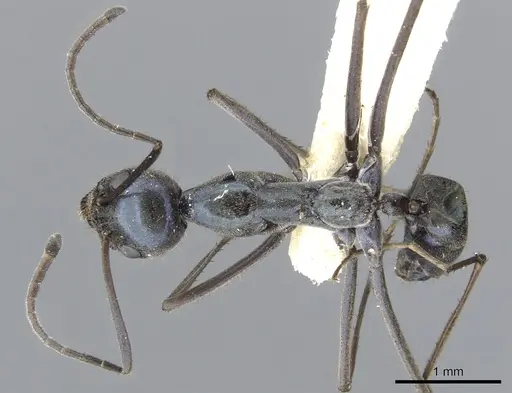
Literature
Loading distribution map...Loading products...