
Iridomyrmex hartmeyeri
- Sci. Name
- Iridomyrmex hartmeyeri
- Tribe
- Leptomyrmecini
- Subfamily
- Dolichoderinae
- Author
- Forel, 1907
- Distribution
- Found in 1 countries
Introduction
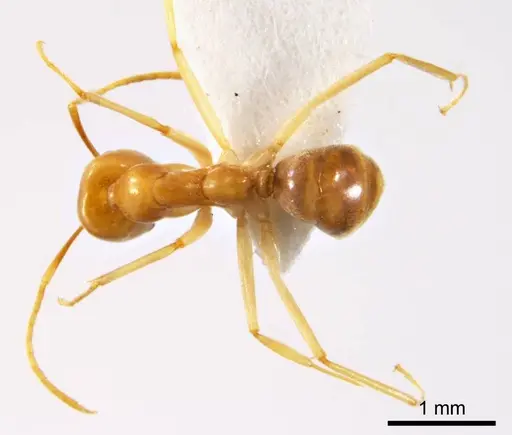
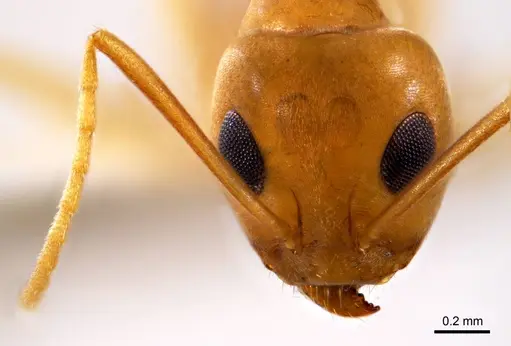
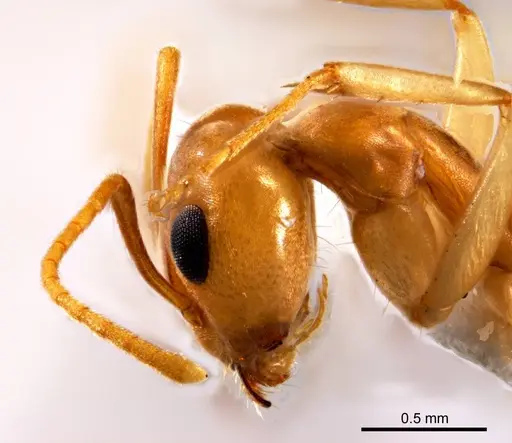
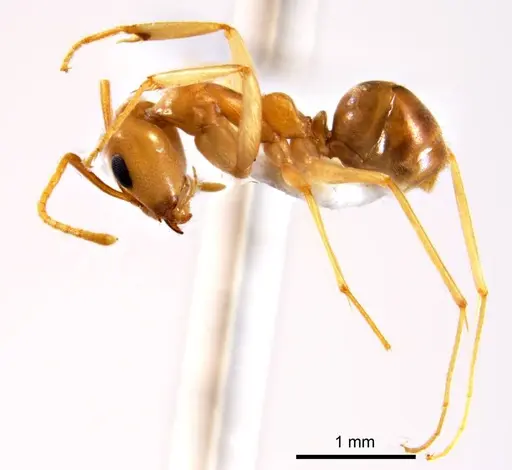
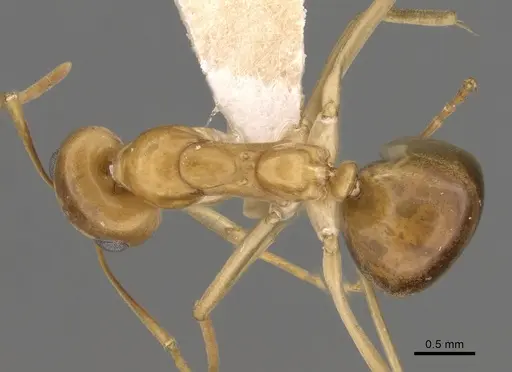
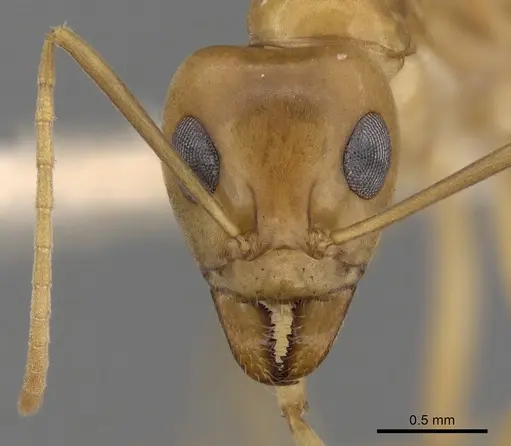
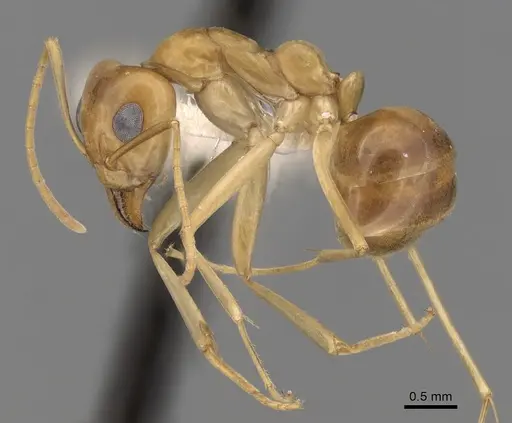
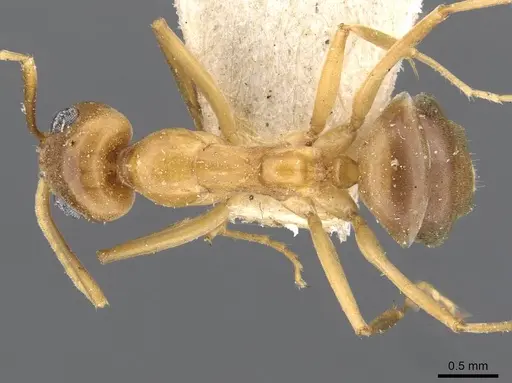
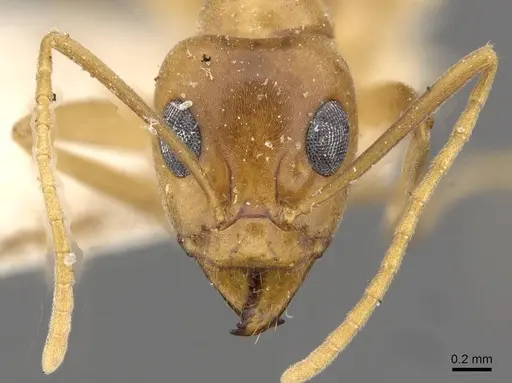
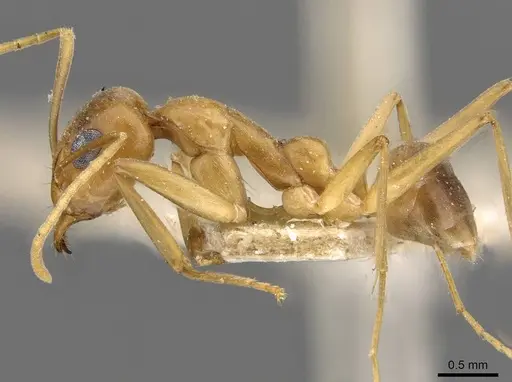
Iridomyrmex hartmeyeri is a large Australian ant species known for its distinctive pale yellowish to dull orange coloration and unusually large, asymmetrical compound eyes . Workers can reach impressive sizes, approaching those of small meat ants in some populations . This species has a remarkably broad distribution across most of arid Australia, though it avoids the wetter southwest and southeast coastal regions . Like its close relatives, Iridomyrmex hartmeyeri is largely nocturnal, actively foraging at night when temperatures are cooler . The species is identified by its large size, indented posterior margin of the head, smooth hind tibia, and mostly smooth upper body surface .
Quick Summary
- Difficulty: Medium
- Origin & Habitat: Arid Australia, found throughout most of the Australian continent but avoids the wetter southwest and southeast corners [1]. In Western Australia, it occurs mainly in drier areas and has been recorded in the North Kimberley region [2]. It inhabits arid and semi-arid environments with preference for open landscapes.
- Colony Type: Colony structure is not well documented for this species. Based on typical Iridomyrmex patterns, colonies are likely single-queen with moderate worker populations.
- Size & Growth:
- Queen: Size data unavailable, queen measurements not documented in available literature
- Worker: Workers measure approximately 4-6 mm in total length based on genus patterns for large Iridomyrmex species
- Colony: Colony size data unavailable, likely several thousand workers based on large worker size
- Growth: Moderate
- Development: Development timeline unconfirmed for this species (Actual development time may vary based on temperature and conditions)
- Antkeeping:
- Temperature: Keep at 24-28°C during active season. Based on arid Australian distribution, they prefer warm conditions but can tolerate room temperature (22-24°C). Provide a gentle temperature gradient.
- Humidity: Low to moderate, this is an arid-adapted species that avoids wetter regions. Keep nest substrate relatively dry, with a small water chamber for drinking access. Avoid excessive moisture.
- Diapause: Diapause requirements unconfirmed for this species, Australian ants may require winter rest period but specific requirements unknown
- Nesting: Natural nesting occurs in soil and under stones in arid areas. In captivity, a plaster or Y-tong nest works well. Provide sand or soil substrate for burrowing if naturalistic setup desired.
- Behavior: This is a largely nocturnal species that becomes active at night when temperatures drop [1]. Workers are large and relatively bold foragers. They are not particularly aggressive but will defend the nest if threatened. Escape risk is moderate, their large size makes them easier to contain than tiny ants, but they are active and may explore for escape routes. They form mutualistic relationships with aphids and scale insects, harvesting honeydew [3]. As a Dolichoderinae ant, they lack a functional sting and instead use defensive chemical secretions from the abdomen.
- Common Issues: colonies may fail if kept too humid, this is an arid species that needs dry conditions, nocturnal activity means you may not see much movement during daylight hours, wild-caught colonies may be difficult to establish in captivity due to stress, limited captive breeding information makes care optimization challenging, large workers require appropriately sized enclosures and feeding spaces
Housing and Nest Setup
Iridomyrmex hartmeyeri does well in a variety of captive setups. A Y-tong nest works excellently for this species, providing good visibility and easy maintenance. Alternatively, a naturalistic setup with a sand and soil mixture allows them to burrow naturally. Because they are an arid-adapted species, keep the nest relatively dry, a small water chamber for drinking is sufficient without maintaining high substrate moisture. The large worker size means you should use appropriately sized chambers and foraging areas. A test tube setup can work for founding colonies, but be prepared to move them to a larger formicarium as the colony grows. [1][2]
Feeding and Diet
As a Dolichoderinae ant, Iridomyrmex hartmeyeri has typical ant diet preferences. They are known to tend aphids and harvest honeydew, so sugar sources are important, offer sugar water, honey water, or diluted honey regularly [3]. They also need protein from insect prey. Offer small crickets, mealworms, fruit flies, or other appropriately sized insects a few times per week. Because they are nocturnal, place food in the foraging area in the evening and check the next morning. Remove uneaten prey to prevent mold issues. Fresh water should always be available.
Temperature and Seasonal Care
This Australian arid-zone species prefers warm conditions. Maintain temperatures between 24-28°C during the active season for optimal colony growth and brood development. Room temperature (22-24°C) is acceptable but may slow development slightly. Provide a temperature gradient so ants can choose their preferred spot. During winter, monitor colony behavior, diapause requirements are unconfirmed for this species but may benefit from a cooler period. Do not feed during deep dormancy but ensure water is available. [1]
Behavior and Activity Patterns
Iridomyrmex hartmeyeri is largely nocturnal, meaning you will see most activity in the evening and overnight hours [1]. Workers are efficient foragers and will readily explore their environment for food. They are not particularly aggressive toward keepers but will defend the nest if disturbed. The large eye size (asymmetrical) is a distinctive morphological feature that may relate to their nocturnal vision [1]. Colonies establish well once the queen begins laying eggs, and workers are relatively long-lived. Expect to see the most activity during feeding times and in the evening hours.
Colony Establishment
If you obtain a founding colony (queen with workers), give her time to establish. Do not disturb the founding chamber until workers emerge. Initial colony growth may seem slow as the queen invests energy in producing her first brood. Once the first workers arrive, growth typically accelerates. Provide sugar water and small prey items once workers are active, but keep disturbances minimal during the founding phase. [1]
Frequently Asked Questions
How long does it take for Iridomyrmex hartmeyeri to produce first workers?
Development timeline is unconfirmed for this species. Large Dolichoderinae ants typically take several months from egg to first worker, but exact timing varies with temperature.
Can I keep multiple Iridomyrmex hartmeyeri queens together?
Not recommended. While colony structure is not fully documented for this species, combining unrelated queens often leads to fighting. It is best to keep one queen per colony.
What do Iridomyrmex hartmeyeri eat?
They need a balanced diet of sugar (honey water, sugar water, or diluted honey) and protein (small insects like crickets, mealworms, or fruit flies). As Dolichoderinae, they also form mutualistic relationships with aphids in the wild and harvest honeydew.
Are Iridomyrmex hartmeyeri good for beginners?
They are rated as medium difficulty. While not the most challenging species, their nocturnal activity and specific humidity requirements may take some adjustment. Their large size makes them easier to handle than tiny ants.
Do Iridomyrmex hartmeyeri need hibernation?
Diapause requirements are unconfirmed for this species. Based on their Australian distribution, they may benefit from a cooler winter period but specific duration and temperature requirements are not documented.
When should I move Iridomyrmex hartmeyeri to a formicarium?
Move them when the colony reaches several hundred workers or when the test tube becomes crowded. This species can grow large, so plan for a spacious formicarium.
Why is my Iridomyrmex hartmeyeri colony dying?
The most common issues are keeping them too humid (this is an arid species), improper temperature, or insufficient food. Ensure the nest is dry, temperatures are warm (24-28°C), and offer both sugar and protein regularly.
How big do Iridomyrmex hartmeyeri colonies get?
Colony size data is unavailable for this species. Based on their large worker size, colonies likely reach several thousand workers. Some populations produce workers approaching small meat ant size.
Report an Issue
The current care sheet is based fully on literature. See inconsistencies, or something that's incorrect? Please , it will be resolved after review from an admin. Contributing to the blogs tab also helps providing information, to make us be able to further improve the caresheets. Thank you for your support!
References

This caresheet is licensed under CC BY-SA 4.0 .
Community Blogs
Literature
Loading distribution map...Loading products...