
Iridomyrmex exsanguis
- Sci. Name
- Iridomyrmex exsanguis
- Tribe
- Leptomyrmecini
- Subfamily
- Dolichoderinae
- Author
- Forel, 1907
- Distribution
- Found in 2 countries
Introduction
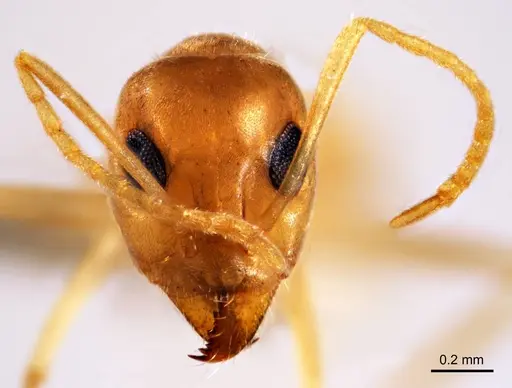
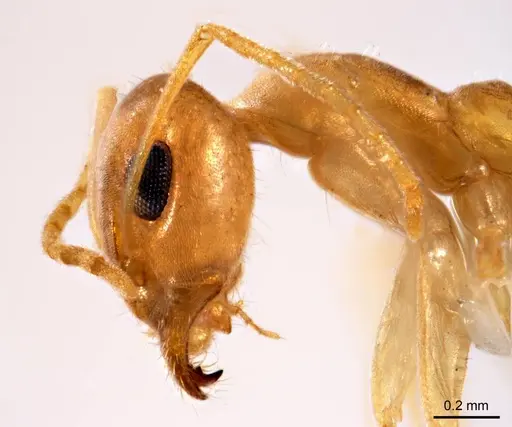
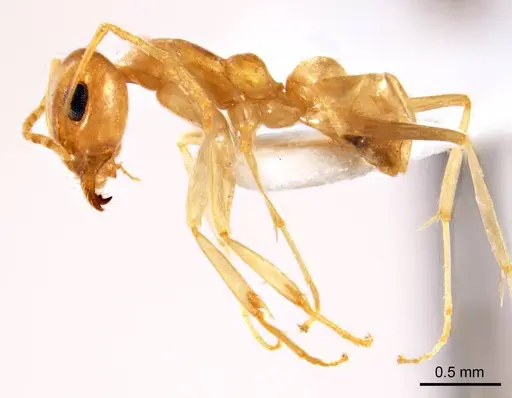
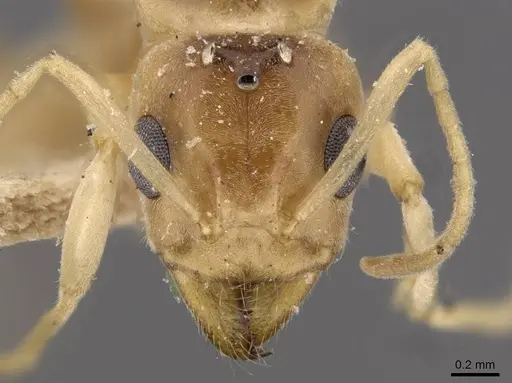
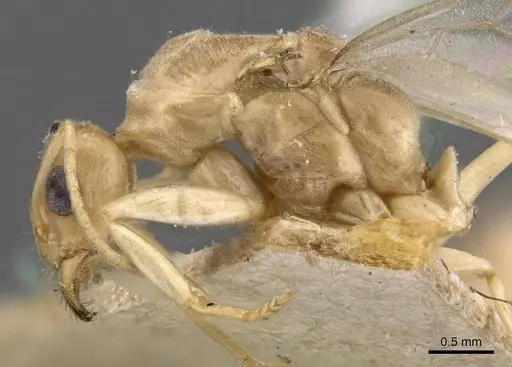
Iridomyrmex exsanguis is a small ant native to Australia, belonging to the Dolichoderinae subfamily. Workers are pale yellow to yellowish-brown in color, typically small in size, though workers from the far Kimberley region tend to be larger and darker . The species is closely related to Iridomyrmex dromus and can be distinguished by its more truncate propodeum when viewed in profile . These ants are nocturnal foragers but can become diurnally active under suitable conditions - in New South Wales, workers have been observed foraging at 8am when conditions permit . These ants are timorous by nature and tend to block their nest entrances during the day, leaving only a small pile of spoil to reveal their location. They prefer nesting in sandy soil, particularly on dunes, and can be found across Western Australia from Carnarvon along the west coast to Mandurah. Their distribution extends into South Australia, though they are rarely found south of 30°S in Western Australia .
Quick Summary
- Difficulty: Medium
- Origin & Habitat: Native to Australia, particularly Western Australia. Found in sandy soil, especially on dunes, from Carnarvon along the west coast to Mandurah. Rarely collected south of 30°S in WA, though recorded as far south as 32km north of Renmark, South Australia [1][2].
- Colony Type: Colony structure is unconfirmed. No data available on queen number or colony organization.
- Size & Growth:
- Queen: Size data unavailable, queen measurements not documented in available literature
- Worker: Approximately 2.5-4mm total length, inferred from Iridomyrmex genus range [1]
- Colony: Unknown, no colony size data available
- Growth: Unknown, development timeline has not been studied
- Development: Unconfirmed, no direct development data available for this species (Development timeline is unknown for this species.)
- Antkeeping:
- Temperature: Based on Australian distribution, these ants likely prefer warm conditions. Aim for roughly 22-28°C, which is typical for many Iridomyrmex species. Room temperature within this range should be suitable. Observe colony activity to fine-tune.
- Humidity: Found in sandy soil and dune environments suggest they prefer moderately dry to dry conditions. Keep nest substrate lightly moist but allow it to dry between waterings. Avoid overly damp conditions.
- Diapause: Unknown, no specific data on overwintering requirements. Australian ants from temperate regions may benefit from a cool period during winter months, but this has not been confirmed for this species.
- Nesting: In nature they nest in sandy soil, particularly on dunes. A naturalistic setup with sandy substrate or a Y-tong/plaster nest with dry to moderately humid chambers works well. They are small ants, so ensure chambers are appropriately scaled.
- Behavior: These ants are timorous (shy) by nature and may block their nest entrances during daylight hours [1]. They are primarily nocturnal foragers but can be active during the day in suitable conditions [3][1]. Workers are small and can squeeze through small gaps, use fine mesh and excellent escape prevention. They are not aggressive and will retreat rather than engage when threatened. Foraging occurs primarily at night, so ensure food is available during evening hours. As a Dolichoderinae ant, they lack a functional stinger and instead use chemical defense through abdominal secretions.
- Common Issues: escape prevention is critical due to their small size, they can squeeze through tiny gaps, timorous nature means they may not readily accept food in bright conditions, offer food in darker periods, slow colony growth due to unknown development timeline may frustrate beginners, no data on founding behavior makes it difficult to establish wild-caught colonies, lack of specific temperature/humidity data means keepers must experiment carefully
Nest Preferences and Housing
In the wild, Iridomyrmex exsanguis nests in sandy soil, particularly on dunes [1]. They create small nest openings that they block during the day, leaving only a small pile of spoil to reveal their location. For captive care, a naturalistic setup with sandy substrate works well, or you can use a Y-tong nest with appropriately sized chambers. Because workers are small, ensure any artificial nest has small, tight-fitting chambers. Plaster nests with moderate humidity also work for this species. The key is providing a dry to moderately humid environment that mimics their dune habitat.
Feeding and Diet
Like other Iridomyrmex species, these ants are likely omnivorous, feeding on honeydew, small insects, and nectar. They are nocturnal foragers, so offer food during evening and night hours for best acceptance [3]. A sugar source (honey water or sugar water) should be available at all times. For protein, offer small prey items like fruit flies, small crickets, or other tiny insects. Since they are timorous, they may not compete aggressively for food, so ensure prey is small enough for them to handle and is left in accessible locations.
Temperature and Seasonal Care
Based on their Australian distribution, these ants prefer warm conditions. Aim for temperatures in the 22-28°C range, which is typical for many Iridomyrmex species. Room temperature within this range should be suitable for most colonies. They can be active during the day in suitable conditions, as evidenced by observations in New South Wales where workers were attracted to honey baits at 8am [1]. For winter care, there is no specific data on diapause requirements. If kept in a temperate climate, a slight reduction in temperature during winter months (to around 15-18°C) may be beneficial, but this has not been confirmed as necessary.
Behavior and Colony Dynamics
Iridomyrmex exsanguis is a timorous species that exhibits cautious behavior around the nest. They may block their nest entrances during the day, emerging primarily at night to forage [1]. This behavior is similar to their close relative Iridomyrmex dromus. Workers are small and pale yellow, making them difficult to spot in the wild. They are not aggressive and will retreat when threatened rather than engage. As a Dolichoderinae ant, this species lacks a functional stinger. Instead, they defend by secreting chemical compounds from a slit-like opening at the tip of the abdomen, a smear defense mechanism. The lack of documented colony size data makes it difficult to predict maximum colony development.
Identification and Similar Species
Workers of Iridomyrmex exsanguis can be difficult to distinguish from Iridomyrmex dromus. The primary distinguishing feature is the more truncate (cut-off) appearance of the propodeum in I. exsanguis when viewed in profile [1]. They lack the erect hind tibial setae that distinguish Iridomyrmex cupreus and Iridomyrmex macrops. The moderately abundant short, bristly, erect setae on the mesosomal dorsum separate them from Iridomyrmex hartmeyeri [1]. Most workers are a depigmented yellow color, though workers from the far Kimberley region are larger and darker [1]. This morphological similarity to I. dromus means careful examination of the propodeum is necessary for accurate identification.
Frequently Asked Questions
How long does it take for Iridomyrmex exsanguis to produce first workers?
The egg-to-worker development timeline has not been documented for this species. Without specific data, expect several weeks to a few months at warm temperatures, but this is an estimate rather than confirmed data.
What do Iridomyrmex exsanguis ants eat?
They are likely omnivorous like other Iridomyrmex species. Offer a constant sugar source (honey water or sugar water) and small protein prey like fruit flies or tiny crickets. They are nocturnal foragers, so place food in the evening for best acceptance.
Can I keep Iridomyrmex exsanguis in a test tube?
Test tubes can work for founding colonies, but due to their small size and preference for sandy soil nesting, a naturalistic setup or small-chambered Y-tong nest may be more appropriate. Ensure any setup has appropriately sized chambers for their tiny workers.
Are Iridomyrmex exsanguis good for beginners?
This species is rated as Medium difficulty. While not the most challenging ant to keep, the lack of specific care data and their timorous nature may present challenges. Their small size also requires excellent escape prevention. Beginners may want to start with more documented species.
Do Iridomyrmex exsanguis need hibernation?
Diapause requirements are unconfirmed for this species. Based on their Australian distribution, they may not require a true hibernation but could benefit from a cooler period during winter months. Monitor colony behavior and adjust accordingly.
How big do Iridomyrmex exsanguis colonies get?
Colony size data is not available for this species. Without documented data, it is difficult to predict maximum colony size.
Why is my Iridomyrmex exsanguis colony not growing?
Without specific data on their requirements, ensure you are providing: warm temperatures (22-28°C), appropriately sized prey, sugar constantly available, and a suitable nest environment. Their timorous nature may also mean they are not consuming visible amounts of food, try offering prey at night and ensure the colony is not disturbed during feeding.
When should I move Iridomyrmex exsanguis to a formicarium?
Move to a larger nest setup once the colony reaches several dozen workers and the test tube or founding setup becomes crowded. For this species, a naturalistic setup with sandy substrate or a small-chambered artificial nest works well once established.
Can I keep multiple queens together?
Colony structure (monogyne vs polygyne) has not been documented for this species. Without data on their natural colony organization, it is not recommended to combine unrelated queens. It is best to establish single-queen colonies.
Report an Issue
The current care sheet is based fully on literature. See inconsistencies, or something that's incorrect? Please , it will be resolved after review from an admin. Contributing to the blogs tab also helps providing information, to make us be able to further improve the caresheets. Thank you for your support!
References

This caresheet is licensed under CC BY-SA 4.0 .
Community Blogs
ANTWEB1008644
View on AntWeb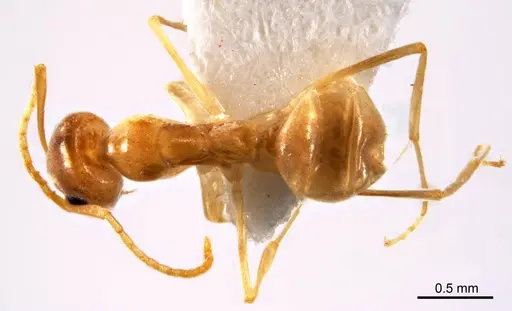
CASENT0909526
View on AntWeb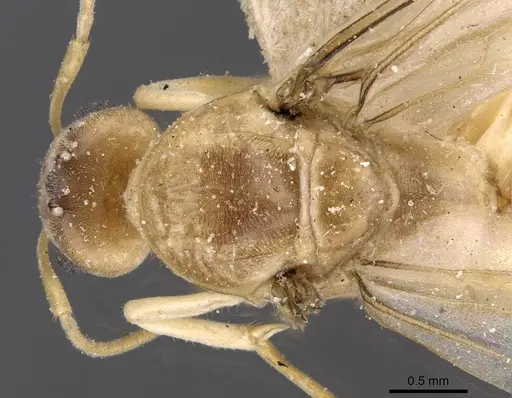
Literature
Loading distribution map...Loading products...