
Iridomyrmex elongatus
- Sci. Name
- Iridomyrmex elongatus
- Tribe
- Leptomyrmecini
- Subfamily
- Dolichoderinae
- Author
- Heterick & Shattuck, 2011
- Distribution
- Found in 1 countries
Introduction
Iridomyrmex elongatus is a small, slender ant native to northern Australia. Workers are approximately 4-5mm in total length, based on genus-level patterns, though no exact measurements exist for this species. They have a distinctive appearance with tawny orange-brown foreparts and dark brown to dark brown gaster and legs. The species gets its name from the Latin 'elongatus' meaning elongated, referring to their gracile build. A key identifying feature is the erect setae on their hind tibiae, which distinguishes them from the similar Iridomyrmex bicknelli. This ant has been collected in scattered locations across Western Australia and the Northern Territory, where it forages on the ground. Almost nothing is known about their specific biology, colony size, or behavior in the wild .
Quick Summary
- Difficulty: Unknown, likely Medium
- Origin & Habitat: Native to northern Australia, specifically Western Australia and the Northern Territory. Found in terrestrial habitats, pitfall trap data indicates they forage on the ground. The exact habitat type is unclear due to limited collection data [1][2].
- Colony Type: Unknown. No data exists on whether colonies have single or multiple queens.
- Size & Growth:
- Queen: Unknown, no queen specimens have been described [1].
- Worker: Approximately 4-5mm, inferred from Iridomyrmex genus patterns [1].
- Colony: Unknown, no colony size data exists for this species.
- Growth: Unknown, no development data available.
- Development: Unknown. Based on typical Iridomyrmex patterns, expect 6-10 weeks at warm Australian temperatures, but this is an estimate only. (No direct development data exists for this species.)
- Antkeeping:
- Temperature: Based on their Australian range (Western Australia and Northern Territory), they likely prefer warm conditions. Aim for 24-28°C as a starting point, with a slight gradient if possible. Room temperature in heated homes (22-25°C) is likely suitable.
- Humidity: No specific data exists. As terrestrial foragers from northern Australia, they probably tolerate drier conditions than rainforest species. Standard antkeeping humidity (40-60% ambient) is likely appropriate, with a moist nest chamber available.
- Diapause: Unknown. Northern Australian ants may have reduced activity during dry seasons rather than true hibernation. Monitor your colony for seasonal slowdowns.
- Nesting: No natural nesting data exists. As terrestrial foragers, they likely nest in soil or under ground cover. In captivity, a standard test tube setup or Y-tong nest works well. Given their small size, ensure chambers are appropriately scaled.
- Behavior: Behavior is unstudied. As an Iridomyrmex species, they are likely generalist foragers that scavenge and tend aphids for honeydew, similar to other members of this genus. They probably not aggressive but may defend food sources. Their small size means escape prevention is important, use fine mesh and tight-fitting barriers. They are likely active foragers that search for food rather than waiting for it to be delivered. Like other Dolichoderinae ants, they lack a functional sting and instead use chemical defense, secreting defensive compounds from a slit-like opening at the tip of the abdomen.
- Common Issues: no biological data means all care is based on genus-level inference, expect to adjust based on your colony's actual behavior, small size makes escape likely without proper barriers, colony size is unknown, start small and expand as needed, no data on founding behavior, queen may be claustral like most Iridomyrmex, humidity and temperature preferences are inferred, not confirmed
Appearance and Identification
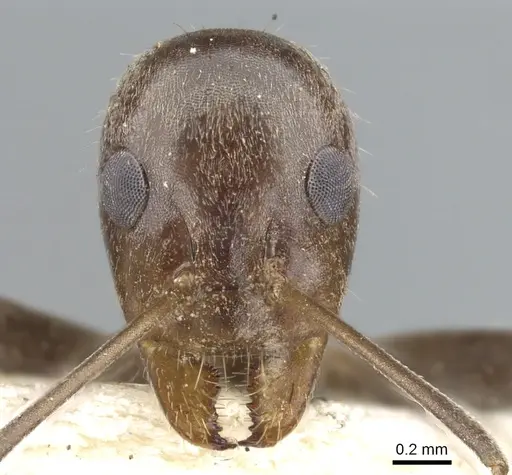
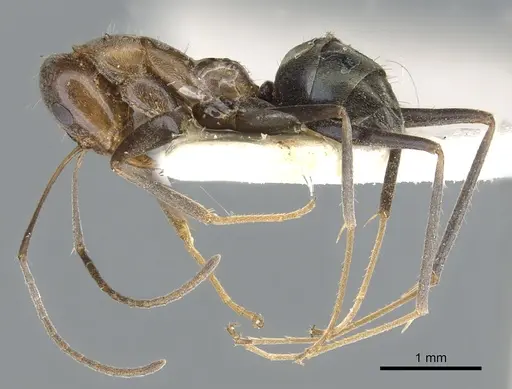
Iridomyrmex elongatus is a small, slender ant with workers approximately 4-5mm in total length. Their head is distinctive with a strongly convex posterior margin, a feature they share with the similar Iridomyrmex bicknelli. The most reliable identifying feature is the presence of erect setae on their hind tibiae, Iridomyrmex bicknelli lacks these. Their coloration is striking: the head and mesosoma are tawny orange-brown, while the gaster and legs are brown to dark brown. The erect body hairs are pale yellow. Workers are allometric, meaning they don't show the size variation that some ant species have between different worker castes. Males have not been described, and the queen caste remains unknown [1][2].
Distribution and Habitat
This species has a scattered distribution across northern Australia, with confirmed collections in Western Australia and the Northern Territory. The known sites are widely separated, suggesting either a fragmented population or simply limited sampling. The species appears to be a terrestrial forager based on pitfall trap data, this means they actively walk along the ground rather than climbing vegetation. Beyond this, almost nothing is known about their natural habitat preferences. They may inhabit savanna, woodland, or arid scrubland typical of northern Australia, but specific microhabitat data does not exist [1][2].
Defense Mechanism
Like other Dolichoderinae ants, Iridomyrmex elongatus lacks a functional sting. Instead, they defend themselves by secreting defensive chemical compounds from a slit-like opening at the tip of the abdomen. This is a smear defense, the ant releases chemicals that deter predators or rivals. Their small size means this is their primary defense, as they cannot rely on stinging.
What We Don't Know
Iridomyrmex elongatus is one of the least-studied Australian ant species. We have no information on: colony size, queen number, founding behavior, development time, diet preferences, nuptial flight timing, overwintering requirements, aggression levels, or any aspect of their social biology. The original species description (Heterick & Shattuck 2011) is the primary source, and subsequent researchers have not filled in these gaps. This makes it both an exciting and challenging species to keep, you will be contributing to our knowledge of this ant. Expect to learn through observation and be prepared to adjust care based on what your colony tells you [1][3].
Keeping This Species in Captivity
Since we have no specific care data, you'll need to rely on genus-level guidance and observation. Iridomyrmex ants are generally adaptable and not difficult to keep. Start with a standard setup: a test tube with a water reservoir for founding colonies, transitioning to a small formicarium as the colony grows. Given their small worker size, ensure your setup has no gaps that would allow escape. Feed a varied diet of sugar water or honey, and protein sources like small insects. Monitor your colony's behavior, if workers cluster in warmer areas, increase temperature slightly, if they avoid certain areas, adjust accordingly. There are no documented cases of this species in the antkeeping hobby, so you are essentially pioneering its captive care.
Related Species and Context
Iridomyrmex is a large genus of ants found throughout Australia and parts of Asia. The most familiar member in Australia is Iridomyrmex purpureus, commonly called the meat ant due to its scavenging habits. Most Iridomyrmex species are generalist foragers that eat nectar, honeydew, and small insects. They typically form moderate-sized colonies with a single queen. The similar species Iridomyrmex bicknelli is also found in Australia and can be distinguished by its glabrous hind tibiae. Understanding this genus context helps set expectations for Iridomyrmex elongatus behavior, though this particular species may have unique traits we have not discovered yet [1][2].
Frequently Asked Questions
How do I care for Iridomyrmex elongatus ants?
Since almost nothing is known about this species, care is based on genus-level inference. Use a standard test tube setup for founding colonies, keep at 24-28°C, and feed sugar water plus small insects. Monitor your colony and adjust conditions based on their behavior. This is essentially pioneering captive care for a species with no documented husbandry history.
What do Iridomyrmex elongatus eat?
No specific diet data exists. As an Iridomyrmex species, they likely accept sugar sources (honey, sugar water) and protein (small insects like fruit flies, pinhead crickets, mealworms). Start with these standard ant foods and observe what your colony prefers.
How big do Iridomyrmex elongatus colonies get?
Unknown, no colony size data exists for this species. Most Iridomyrmex species form moderate colonies of several hundred to a few thousand workers. Your colony's maximum size will likely be discovered through keeping them.
How long does it take for Iridomyrmex elongatus to produce first workers?
Unknown, no development data exists. Based on related Iridomyrmex species, expect 6-10 weeks from egg to worker at warm temperatures. This is an estimate only.
Is Iridomyrmex elongatus a good species for beginners?
Probably not ideal for beginners due to the complete lack of documented care information. However, if you are experienced with other Iridomyrmex species and comfortable adapting to an unknown species, this could be an interesting challenge.
Where does Iridomyrmex elongatus live in the wild?
Western Australia and the Northern Territory in Australia. They are terrestrial foragers (walk on the ground), but specific habitat details are unknown. Northern Australia has varied climates from arid to tropical depending on location [1][2].
How do I identify Iridomyrmex elongatus?
Workers have a convex posterior head margin and distinctive erect setae on their hind tibiae. The foreparts are tawny orange-brown while the gaster and legs are dark brown. They are small, approximately 4-5mm total length. The similar Iridomyrmex bicknelli lacks the hind tibial setae [1][2].
Can I keep multiple Iridomyrmex elongatus queens together?
Unknown. No data exists on their colony structure. Most Iridomyrmex species are single-queen (monogyne), but polygyny has been documented in some species. Without data, combining unrelated queens is not recommended.
Does Iridomyrmex elongatus need hibernation?
Unknown. Northern Australian ants may have reduced activity during dry seasons rather than cold-induced hibernation. Monitor your colony for seasonal slowdowns and adjust feeding accordingly.
Report an Issue
The current care sheet is based fully on literature. See inconsistencies, or something that's incorrect? Please , it will be resolved after review from an admin. Contributing to the blogs tab also helps providing information, to make us be able to further improve the caresheets. Thank you for your support!
References

This caresheet is licensed under CC BY-SA 4.0 .
Community Blogs
CASENT0903091
View on AntWeb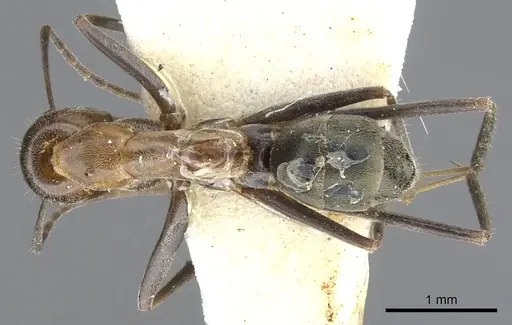
Literature
Loading distribution map...Loading products...