
Iridomyrmex continentis
- Sci. Name
- Iridomyrmex continentis
- Tribe
- Leptomyrmecini
- Subfamily
- Dolichoderinae
- Author
- Forel, 1907
- Distribution
- Found in 1 countries
Introduction
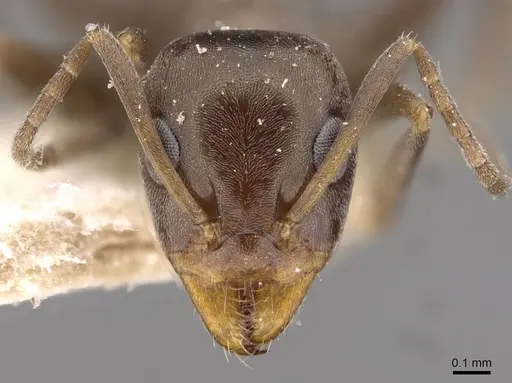
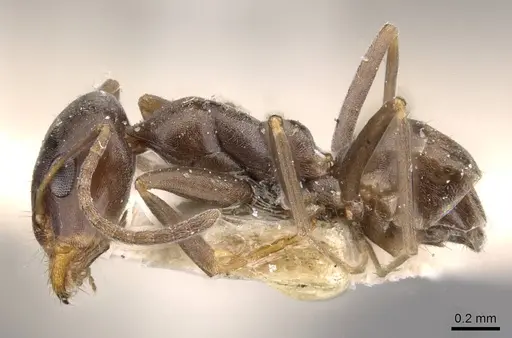
Iridomyrmex continentis is a small-medium ant native to Australia, frequently encountered in drier areas across the continent, particularly in Western Australia where they are described as ubiquitous in most habitats in drier areas of the State . They have a medium to dark metallic brown coloration with coppery reflections, making them relatively distinctive within their range . The species was raised to full species status in 2011 from its previous classification as a subspecies of Iridomyrmex mattiroloi . They can be identified by their slightly longer antennae compared to the similar Iridomyrmex mjobergi (with which they often share territory) and their posteriorly flattened propodeum with the propodeal spiracle positioned near the dorsum .
Quick Summary
- Difficulty: Easy
- Origin & Habitat: Australia, found in drier areas across the continent, particularly ubiquitous in Western Australia [1][2]
- Colony Type: Colony structure is unconfirmed, Iridomyrmex species vary, but most Australian species in this genus are single-queen colonies
- Size & Growth:
- Queen: size data unavailable
- Worker: size data unavailable, the research provides head measurements (HL 0.60-0.83mm, HW 0.52-0.71mm) but no total body length data [2]
- Colony: Unknown, no colony size data available
- Growth: Moderate, inferred from typical Iridomyrmex patterns
- Development: Estimated 6-8 weeks based on related Iridomyrmex species development (Development time is estimated, not directly studied for this species. Related Dolichoderinae ants typically develop in 6-8 weeks at warm temperatures.)
- Antkeeping:
- Temperature: Keep at 22-28°C, they are adapted to Australia's warmer, drier climates. Room temperature is likely suitable for most of the year, with supplemental heating beneficial during cooler months
- Humidity: Low to moderate, drier habitat preference means they prefer drier conditions. Keep substrate moderately dry, allowing some areas to dry out completely between waterings
- Diapause: Likely reduced activity in winter months but true diapause is not documented for this species. In captivity, a cool period around 15-18°C during winter months may be beneficial
- Nesting: Natural nesting occurs in soil and under stones in arid areas. In captivity, standard formicariums with moderate dryness work well. Test tubes with cotton-plug water reservoirs are suitable for founding colonies
- Behavior: This species is relatively non-aggressive and moderate in activity level. Workers are foragers that likely collect honeydew and small insects. They are not known to be particularly aggressive or territorial. They lack a functional sting and instead secrete defensive chemical compounds from a slit-like opening at the tip of the abdomen (typical for Dolichoderinae). Escape risk is moderate due to their small size, standard barriers should be sufficient but fine mesh is recommended.
- Common Issues: colonies may fail if kept too humid, their drier habitat preference means excess moisture can cause fungal problems, slow founding phase, queens may take several weeks to seal and begin laying, escape prevention needed despite moderate size, small workers can fit through standard gaps, limited available information means keepers must adapt care from related species, winter mortality possible if temperature drops too sharply without gradual acclimation
Natural History and Identification
Iridomyrmex continentis is a small-medium ant that was elevated to full species status in 2011 from its previous classification as a subspecies of Iridomyrmex mattiroloi [2][3]. Workers have a medium to dark metallic brown coloration with distinctive coppery reflections on the head and body, and their erect body hairs are brownish-yellow [2]. They are frequently encountered in drier areas throughout Australia and are particularly common in Western Australia, where they are described as ubiquitous in most habitats in drier areas of the State [1][2]. They are often found sympatrically (in the same areas) with the similar-looking Iridomyrmex mjobergi, but can be distinguished by their slightly longer antennae and the posteriorly flattened propodeum with the propodeal spiracle positioned near the dorsum [2]. They are collected in pitfall traps and by hand, indicating ground-nesting behavior [2].
Housing and Nest Preferences
In the wild, Iridomyrmex continentis nests in soil and under stones in arid to semi-arid habitats. For captive care, standard formicariums work well, but given their drier habitat preference, the substrate should be allowed to dry out between waterings. Test tube setups are suitable for founding colonies, use a water reservoir with cotton plug but allow the foraging area to remain relatively dry. Avoid overly humid conditions that can lead to fungal growth. A small outworld area for foraging completes the setup. Because they are small ants, ensure that connections between nest areas and outworld are secure.
Feeding and Diet
Like other Iridomyrmex species, I. continentis likely feeds on honeydew collected from aphids and scale insects, along with small insects and arthropods. In captivity, offer sugar water or honey water as a constant energy source, along with small protein sources like fruit flies, small crickets, or mealworm pieces. They are not large predators, so prey items should be appropriately sized to their small worker caste. Feed protein 2-3 times per week, and keep sugar water available at all times. Remove uneaten prey after 24-48 hours to prevent mold.
Temperature and Seasonal Care
Iridomyrmex continentis originates from Australia's drier regions, which means they are adapted to warm conditions. Keep the nest area at 22-28°C for optimal activity and brood development. Room temperature is likely suitable for most of the year in heated indoor spaces. During winter months in temperate climates, a slight reduction in temperature to around 18-22°C is appropriate, but avoid sudden drops. Unlike temperate species that require true hibernation, this species likely experiences reduced activity rather than a deep diapause. If you notice workers becoming less active in winter, reduce feeding frequency and ensure the colony is not too cold. Supplemental heating via a heating cable on one side of the nest can create a beneficial temperature gradient.
Behavior and Colony Dynamics
Workers of Iridomyrmex continentis are foragers that actively search for food both on the ground and possibly on low vegetation. They are not particularly aggressive ants, colonies typically focus on foraging rather than territorial defense. The species lacks a functional sting. Instead, they secrete defensive chemical compounds from a slit-like opening at the tip of the abdomen, which is typical for ants in the Dolichoderinae subfamily. Colonies likely grow moderately over time, though exact maximum colony size is unknown. Founding behavior is unconfirmed for this species.
Frequently Asked Questions
How long does it take for Iridomyrmex continentis to produce first workers?
The time from egg to first worker is estimated at 6-8 weeks based on related Iridomyrmex species, though this has not been directly documented for I. continentis.
Can I keep multiple Iridomyrmex continentis queens together?
The colony structure of this species is not well-documented. Most Iridomyrmex species are single-queen colonies, but combining unrelated foundress queens is not recommended unless you have specific evidence that they can found colonies pleometrotically. Start with one queen per colony for best success.
What do Iridomyrmex continentis ants eat?
They likely feed on honeydew and small insects like other Iridomyrmex species. In captivity, offer sugar water or honey water constantly, along with small protein sources like fruit flies, small crickets, or mealworm pieces 2-3 times per week.
What temperature should I keep Iridomyrmex continentis at?
Keep them at 22-28°C. They are adapted to Australia's warmer, drier climates, so room temperature is typically suitable. A slight temperature gradient is beneficial, warmer on one side, cooler on the other.
Do Iridomyrmex continentis need hibernation?
True hibernation is not documented for this species. In the wild, they experience reduced activity during cooler months rather than a deep diapause. In captivity, a cool period around 15-18°C during winter months is appropriate but not strictly required.
How big do Iridomyrmex continentis colonies get?
The maximum colony size is unknown, this data has not been documented in scientific literature.
Are Iridomyrmex continentis good for beginners?
Yes, they are considered an easy species to keep. They are not aggressive, don't require extreme humidity, and tolerate a range of temperatures. The main challenges are their slow founding phase and the limited specific information available about their care.
When should I move Iridomyrmex continentis to a formicarium?
Keep them in a test tube setup through the founding phase and until the colony has 20-30 workers. Once the colony is established and growing actively, you can move them to a formicarium if desired, but they can also thrive in test tube setups long-term.
Why are my Iridomyrmex continentis dying?
The most common causes are excess humidity (they prefer drier conditions), temperature stress from being too cold, or poor nutrition. Ensure the nest substrate is allowed to dry between waterings, maintain temperatures above 20°C, and provide consistent access to sugar water and protein.
Report an Issue
The current care sheet is based fully on literature. See inconsistencies, or something that's incorrect? Please , it will be resolved after review from an admin. Contributing to the blogs tab also helps providing information, to make us be able to further improve the caresheets. Thank you for your support!
References

This caresheet is licensed under CC BY-SA 4.0 .
Community Blogs
CASENT0909546
View on AntWeb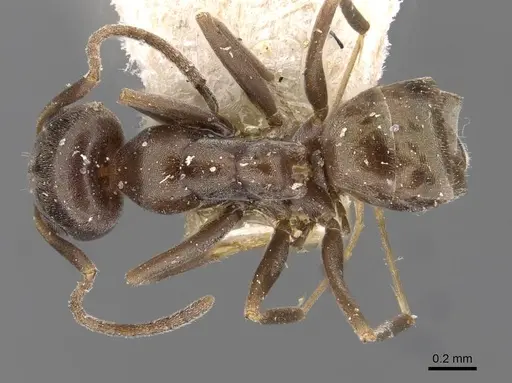
Literature
Loading distribution map...Loading products...