
Iridomyrmex coeruleus
- Sci. Name
- Iridomyrmex coeruleus
- Tribe
- Leptomyrmecini
- Subfamily
- Dolichoderinae
- Author
- Heterick & Shattuck, 2011
- Distribution
- Found in 2 countries
Introduction
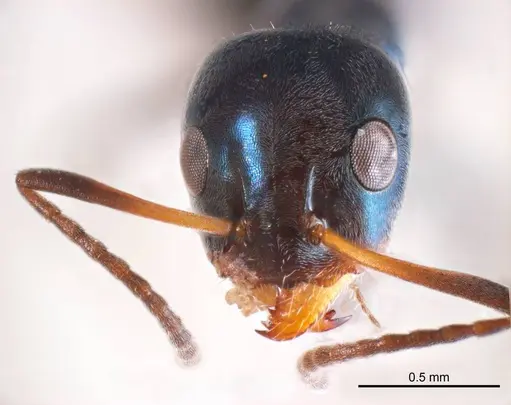
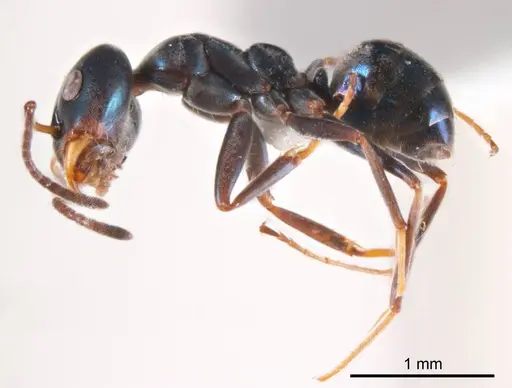
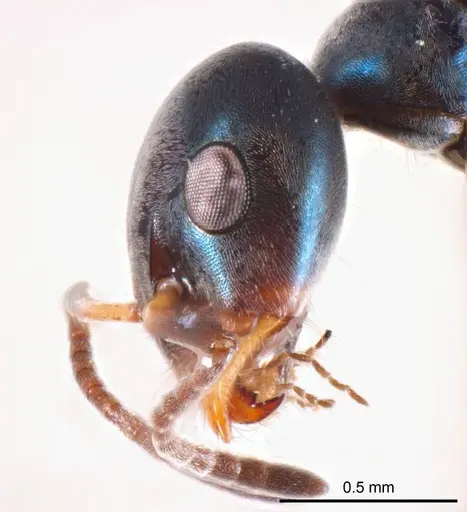
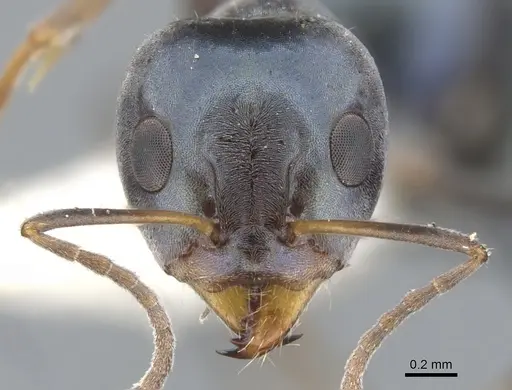
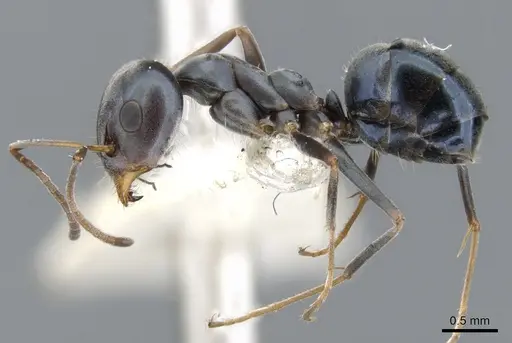
Iridomyrmex coeruleus is a striking ant species native to northern Australia, New Guinea, and the islands off Queensland. They are easily recognized by their dark brown to black coloration with a distinctive blue to blue-green iridescence that gives them their common name - 'coeruleus' literally means 'blue' in Latin . They have large eyes, a broad head, and short bristly whitish setae on their mesosoma. The antennal scapes are noticeably paler than the head capsule, and fine long whitish setae are present on the underside of the head . This species is nowhere particularly common in the wild, with workers typically foraging on trees and vegetation .
Quick Summary
- Difficulty: Medium
- Origin & Habitat: Northern Australia, New Guinea, and islands off Queensland. Workers forage on trees and vegetation in tropical and subtropical regions [1].
- Colony Type: Colony structure is unconfirmed. Multiple morphological variants (morphotaxa A-D) have been identified across their range, suggesting significant variation in population structure [2].
- Size & Growth:
- Queen: Size data unavailable, no queen measurements documented in available literature
- Worker: ~5-7mm inferred from Iridomyrmex genus patterns (total length data not available)
- Colony: Unknown, no colony size data available in literature
- Growth: Moderate, inferred from typical Dolichoderinae development patterns
- Development: Unknown, direct development data not available for this species (Development time is unconfirmed. Estimates based on genus-level patterns for Iridomyrmex would be speculative.)
- Antkeeping:
- Temperature: Keep at 24-28°C, based on northern Australian distribution suggesting warm conditions preference. Use a heating cable on one side of the nest to create a gentle gradient.
- Humidity: Moderate humidity around 50-70%. Provide a water tube and allow the colony to self-regulate moisture levels within the nest.
- Diapause: Likely not required, northern Australia experiences mild winters. Monitor colony activity and adjust accordingly.
- Nesting: Y-tong (AAC) nests work well for this size. Provide narrow chambers and passages scaled to their worker size. Test tube setups are suitable for founding colonies.
- Behavior: Workers are active foragers on vegetation and trees in the wild [1]. They are generalist foragers with typical Dolichoderinae behavior. Their small size means escape prevention is important, use fine mesh barriers and tight-fitting lids. Dolichoderinae ants lack a functional sting and instead secrete defensive chemical compounds from a slit-like opening at the tip of the abdomen (smear defense). They are not known to be particularly aggressive but will defend their colony if threatened.
- Common Issues: escape prevention is critical due to their small worker size, they can squeeze through tiny gaps, limited availability in the antkeeping hobby since they are not common in the wild, morphological variation across populations means colonies may have different appearances, wild-caught colonies may have parasites that affect captive survival, founding phase may be slow, patience required during colony establishment
Appearance and Identification
Iridomyrmex coeruleus is one of the more visually striking Australian ants thanks to its blue iridescence, the feature that gave it the species name 'coeruleus' meaning blue in Latin [1]. Workers are dark brown to black with most populations displaying a beautiful blue to blue-green sheen across their body. Some populations, particularly in northern Western Australia, show a more coppery appearance instead of blue [1]. Key identification features include large eyes, a broad head, and short bristly whitish setae on the mesosoma. The antennal scapes are noticeably paler than the dark head capsule, and fine long whitish setae are present on the underside of the head [1]. There is significant morphological variation across their range, with researchers identifying at least four distinct morphotaxa (morphological variants A-D) that differ in size, iridescence intensity, head shape, and other features [2]. This variation can reach up to 12% genetic divergence in some cases, and three different morphotaxa have been recorded from a single locality [2].
Natural History and Distribution
This species has a wide distribution throughout northern Australia, extending into New Guinea and the islands off Queensland [1]. Despite their broad range, they are nowhere particularly common, they make up a small portion of ant communities even in suitable habitat [1]. Workers are typically found foraging on trees and vegetation, rather than on the ground, which is why they are often collected using pan traps and sweeping methods rather than ground foraging surveys [1]. The various morphotaxa are associated with different soil types and habitats: morphotaxa A and B are known from specific localities in the Northern Territory and Western Australia on clay and sandy soils respectively, while morphotaxa C and D are found in the Victoria River Region and Gove Peninsula [2]. Barrow Island populations show distinct bluish iridescence [3].
Housing and Nest Setup
For a species of this size, Y-tong (AAC) nests with appropriately scaled chambers work well. The chambers should be narrow enough that workers feel secure but wide enough for normal traffic. Test tube setups are suitable for founding colonies, use a standard test tube with a water reservoir at one end, plugged with cotton. Foraging areas should be simple and easy to clean. Because of their small size, escape prevention must be excellent, use tight-fitting lids and consider applying Fluon to the edges of the outworld. Provide a gradient of humidity within the nest by offering both moist and drier areas so the colony can self-regulate. A shallow water dish should always be available in the outworld.
Feeding and Diet
As a Dolichoderinae species, Iridomyrmex coeruleus is likely a generalist forager. In the wild, they probably feed on honeydew from aphids and scale insects, as well as small insects and other protein sources. For captive colonies, offer a mix of sugar water or honey as an energy source, and protein sources like small insects (fruit flies, pinhead crickets, small mealworms). Feed protein 2-3 times per week, and keep sugar water available at all times. Remove uneaten prey after 24-48 hours to prevent mold. Since they forage on vegetation in the wild, they may benefit from having their food placed at elevated positions in the outworld rather than on the floor.
Temperature and Seasonal Care
Based on their northern Australian distribution, these ants prefer warm conditions. Aim for temperatures in the range of 24-28°C in the nest area. A heating cable placed on one side of the nest can create a gentle thermal gradient, allowing workers to regulate their temperature by moving between warmer and cooler chambers. Place the heating on top of the nest, not underneath, to avoid excessive evaporation. Room temperature may be sufficient if your home is in this range. Regarding winter care, northern Australia has mild winters, so a true diapause is likely not necessary. However, if you notice reduced activity during cooler months, you can reduce temperatures slightly to around 20-22°C for a few months. Monitor colony behavior, if they remain active, continue normal care.
Colony Establishment and Growth
Direct information on founding behavior is not available for this species. Dolichoderinae ants typically have semi-claustral founding, where the queen must leave the nest periodically to forage for food during the founding phase, unlike claustral species that seal themselves in and live off stored fat reserves. Expect the founding phase to be slower than many common hobby species, this is normal for Dolichoderinae. Queens will need regular protein offerings during founding if they are semi-claustral. The first workers (nanitics) will likely be smaller than mature workers. Growth rate is estimated as moderate based on genus patterns. Colonies may take several months to establish firmly, so patience is essential. Do not disturb the founding chamber excessively or check too frequently, as this can cause stress.
Frequently Asked Questions
How long does it take for Iridomyrmex coeruleus to produce first workers?
Direct data is not available. Development time for this specific species has not been documented in available literature.
What do Iridomyrmex coeruleus ants eat?
They are generalist foragers. Offer sugar water or honey as an energy source, and protein sources like small insects (fruit flies, small mealworms, pinhead crickets). Feed protein 2-3 times per week with sugar water always available.
Are Iridomyrmex coeruleus ants good for beginners?
They are rated as medium difficulty. They are not as commonly kept as some other species, and limited information is available about their specific care requirements. They require good escape prevention due to their small size. Some experience with ant keeping is recommended.
Do Iridomyrmex coeruleus ants need hibernation?
Northern Australia has mild winters, so a true diapause is likely not required. You may reduce temperatures slightly (to around 20-22°C) for a few months in winter if the colony shows reduced activity, but this is optional.
How big do Iridomyrmex coeruleus colonies get?
Colony size is not documented in available literature. Based on their rarity in the wild and typical Iridomyrmex patterns, colonies likely reach several hundred workers at most.
Can I keep multiple Iridomyrmex coeruleus queens together?
Colony structure (monogyne vs polygyne) has not been documented for this species. Without specific information, combining unrelated queens is not recommended.
What temperature should I keep Iridomyrmex coeruleus at?
Keep nest areas at 24-28°C based on their northern Australian distribution. A heating cable on one side of the nest creates a useful gradient. Room temperature within this range is acceptable.
Why is my Iridomyrmex coeruleus colony dying?
Common issues include: escape through tiny gaps due to small size, stress from excessive disturbance during founding, improper humidity (too wet or too dry), and temperatures outside their preferred range. Ensure excellent escape prevention and minimal disturbance during founding.
When should I move my colony to a formicarium?
Wait until the colony has at least 20-30 workers and is actively foraging in the outworld. Moving too early can stress the colony. Test tube colonies can be maintained for extended periods, only move when the test tube becomes overcrowded.
What makes Iridomyrmex coeruleus special compared to other ants?
Their stunning blue iridescence makes them one of the most visually striking Australian ant species. The name 'coeruleus' means blue in Latin, referring to this beautiful coloration. They also show significant morphological variation across their range with multiple distinct morphotaxa identified.
Where is Iridomyrmex coeruleus found in the wild?
They are native to northern Australia, New Guinea, and islands off Queensland. They are not common anywhere in their range and are typically found foraging on trees and vegetation rather than on the ground.
Report an Issue
The current care sheet is based fully on literature. See inconsistencies, or something that's incorrect? Please , it will be resolved after review from an admin. Contributing to the blogs tab also helps providing information, to make us be able to further improve the caresheets. Thank you for your support!
References

This caresheet is licensed under CC BY-SA 4.0 .
Community Blogs
ANTWEB1008642
View on AntWeb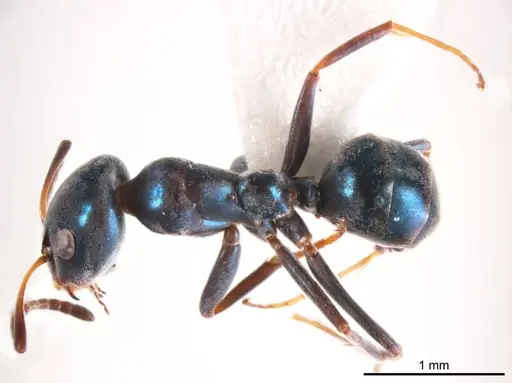
CASENT0903105
View on AntWeb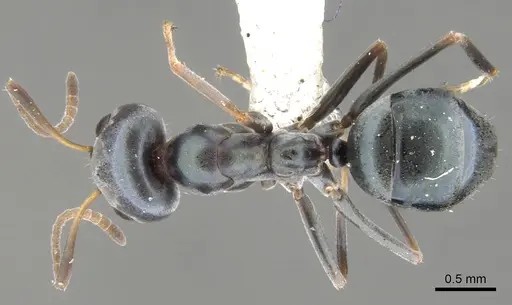
Literature
Loading distribution map...Loading products...