
Iridomyrmex brunneus
- Sci. Name
- Iridomyrmex brunneus
- Tribe
- Leptomyrmecini
- Subfamily
- Dolichoderinae
- Author
- Forel, 1902
- Distribution
- Found in 1 countries
Introduction
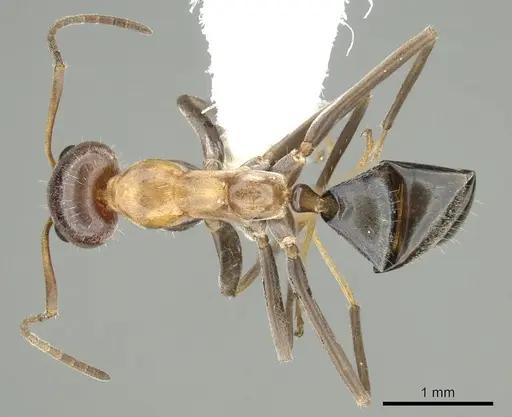
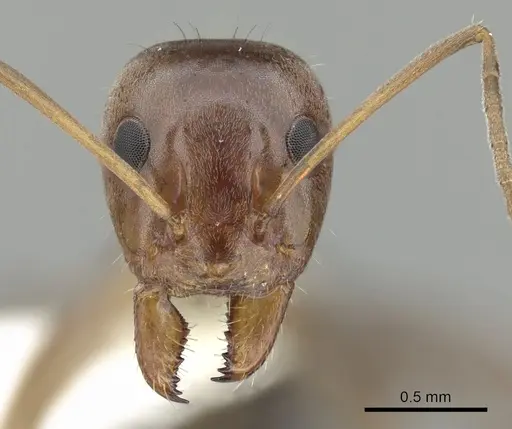
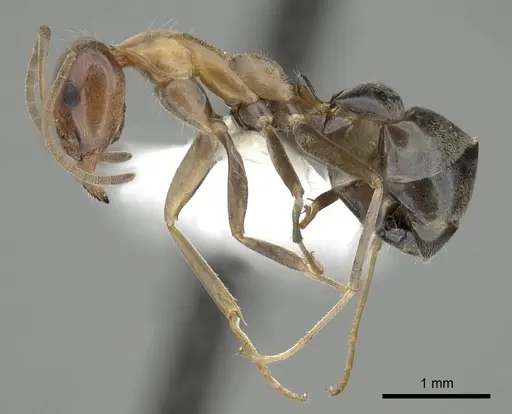
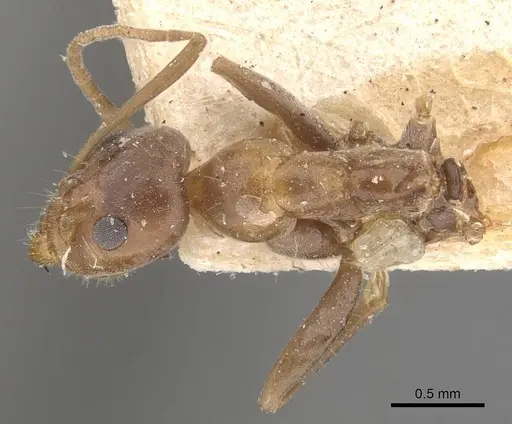
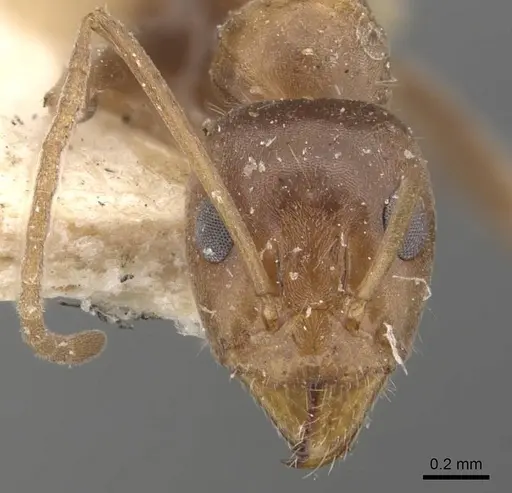
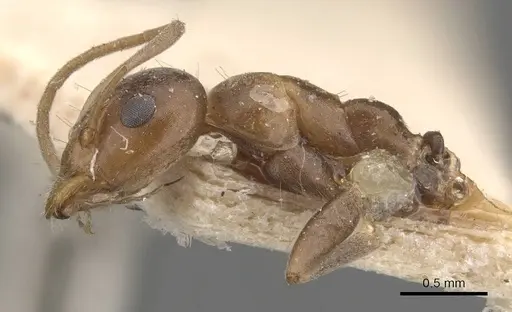
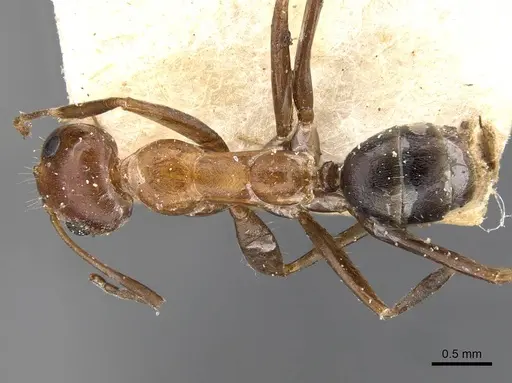
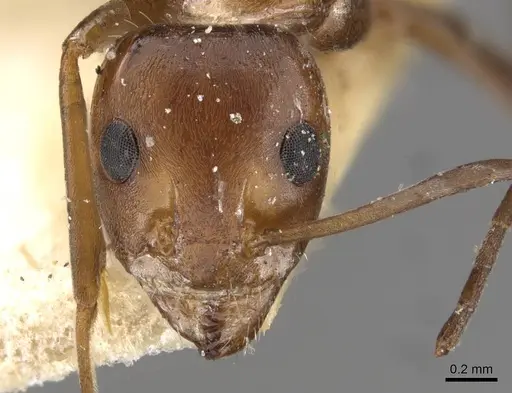
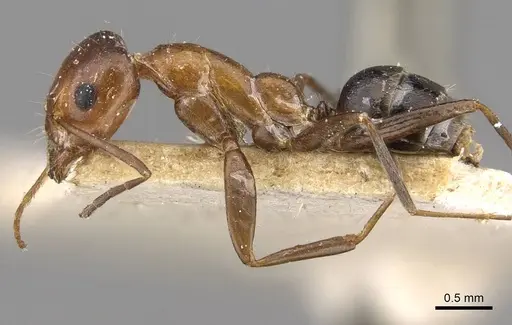
Iridomyrmex brunneus is a medium-sized brown ant native to Australia. Workers have distinctive tawny to dark reddish-brown coloring on the foreparts with a darker brown gaster, and pale whitish erect setae across the body . This species is widespread throughout Australia and particularly common in southwestern woodlands, where workers are frequently seen foraging on the trunks and branches of eucalypt trees or fallen timber . The easiest way to identify this species is by checking the anteromedial clypeal process - in I. brunneus this is very weak to vestigial, whereas similar species like Iridomyrmex minor and Iridomyrmex anceps have a prominent triangular process . These ants can persist in settled areas and have been recorded as a house pest in Alice Springs, entering dwellings in country towns .
Quick Summary
- Difficulty: Medium
- Origin & Habitat: Australia, widespread throughout the continent, particularly common in southwestern woodlands. In Western Australia, they are quite common in woodlands and often encountered foraging on eucalypt trunks and fallen timber [2][1].
- Colony Type: Colony structure is unconfirmed, the species has not been studied for queen number or colony social organization.
- Size & Growth:
- Queen: size data unavailable, queen measurements have not been documented in available research
- Worker: ~5-7mm inferred from Iridomyrmex genus patterns (no total length measurement available)
- Colony: Unknown, colony size has not been documented
- Growth: Unknown, growth rate has not been studied
- Development: Unknown, development time has not been directly measured for this species. (Development timeline is unconfirmed. Related Dolichoderine ants typically develop in 6-10 weeks under warm conditions, but this varies by species.)
- Antkeeping:
- Temperature: Based on Australian distribution, aim for warm conditions around 24-28°C. Room temperature (22-26°C) is likely suitable.
- Humidity: Moderate humidity is typical. Keep nest substrate slightly moist but not waterlogged. Being a tree-foraging species, they likely tolerate drier conditions than ground-nesting ants.
- Diapause: Unlikely, as an Australian species from temperate to subtropical regions, they likely do not require true hibernation. May show reduced activity in cooler months.
- Nesting: In nature, they nest in soil, under bark, or in rotting wood. For captivity, a Y-tong (AAC) nest, plaster nest, or naturalistic setup with some moisture retention works well. They prefer narrow chambers and often forage on vertical surfaces.
- Behavior: These ants are active foragers, commonly seen climbing on tree trunks and fallen timber in the wild. They are not particularly aggressive but will defend their nest using chemical defenses, as a Dolichoderine ant, they lack a functional sting and instead secrete defensive compounds from a slit-like opening at the tip of the abdomen. Workers are medium-sized and good climbers. Escape prevention should be moderate, they are not extremely small but can squeeze through small gaps. They communicate using chemical trails like other Iridomyrmex species.
- Common Issues: colony structure is poorly documented, making it difficult to determine if your setup matches their natural social organization, queen size and colony founding behavior are unknown, so providing proper founding conditions is challenging, development timeline is unconfirmed, making it hard to track colony progress, they are recorded as house pests in Australia, indicating they can be persistent and adaptable, this may translate to escape attempts in captivity, related species can be aggressive defenders, so expect some territorial behavior
Identification and Distinguishing Features
Iridomyrmex brunneus workers are medium-sized brown ants that can be confused with several other Iridomyrmex species, most notably Iridomyrmex minor and Iridomyrmex anceps. The key identifying feature is the anteromedial clypeal process, in I. brunneus this is very weak to vestigial, while in both I. minor and I. anceps it forms a prominent triangle [1]. Most I. brunneus workers also have erect genal setae (hairs on the sides of the head), which are absent from many I. minor workers and almost all I. anceps workers [1]. When viewed from the side, the pronotum and mesonotum of I. brunneus form an even, smooth curve, whereas in I. minor and I. anceps the mesosomal outline is less regular, either more domed at the junction or elongate and flattened [1]. Color-wise, workers are tawny to dark reddish brown, with the upper vertex of the head often darker than the clypeal region and mesosoma. The gaster is dark brown, and the legs are typically a deeper shade than the mesosoma [1].
Natural History and Distribution
Iridomyrmex brunneus is common and widespread throughout Australia [1]. In southwestern Australia, particularly in Western Australia, the species is quite common in woodlands and is frequently encountered foraging on the trunks and branches of eucalypt trees or fallen timber [2][1]. This arboreal and ground-foraging behavior means they are often found climbing vertical surfaces in their natural habitat. Notably, these ants can persist in settled areas and have been recorded entering dwellings, they have been noted as a house pest in Alice Springs, particularly in country towns [1]. This adaptability to urban environments suggests they are flexible in their nesting and foraging requirements. The species was originally described as a subspecies of Iridomyrmex bicknelli but was raised to full species status in the 2011 revision by Heterick and Shattuck [1].
Housing and Nest Setup
In captivity, Iridomyrmex brunneus can be kept in various nest types that provide appropriate humidity and protection. Based on their natural nesting preferences (foraging on tree trunks and fallen timber), they likely prefer nests with some vertical space or surfaces. A Y-tong (AAC) nest works well for this species, as do plaster nests or naturalistic setups. The nest should have chambers that are appropriately scaled to their medium size, not too large or too small. Since they are known to forage on vertical surfaces in the wild, providing some vertical space or structures in the outworld may encourage natural foraging behavior. Humidity should be moderate, keep the nest substrate slightly moist but avoid waterlogging. These ants are adaptable and can tolerate some variation in conditions, which is consistent with their ability to persist in urban areas in the wild. [2][1]
Feeding and Diet
While specific dietary studies are lacking for Iridomyrmex brunneus, Iridomyrmex species are typically omnivorous, feeding on honeydew, nectar, and small insects. In captivity, offer a varied diet including sugar water or honey as an energy source, and protein sources such as small insects (fruit flies, small crickets, mealworms). Since they are active foragers, they will likely accept regular feedings. Feed protein roughly twice weekly, and provide a constant sugar source. Remove uneaten prey after 24-48 hours to prevent mold. Their tree-trunk foraging behavior in the wild suggests they may be particularly good at finding and exploiting food sources in their environment.
Temperature and Seasonal Care
Based on their Australian distribution, Iridomyrmex brunneus likely prefers warm conditions. Aim for temperatures in the range of 24-28°C for optimal colony activity and development. Room temperature (22-26°C) is likely suitable for this species. If needed, a heating cable on one side of the nest can create a temperature gradient, allowing the ants to self-regulate. As an Australian species from temperate to subtropical regions, they likely do not require true diapause or hibernation. However, they may show reduced activity during cooler winter months. Monitor colony behavior, if workers become less active, a slight temperature reduction may be appropriate, but avoid cold conditions that could harm the colony.
Behavior and Colony Dynamics
Iridomyrmex brunneus is an active forager, commonly seen climbing on vertical surfaces in the wild, particularly tree trunks and fallen timber [2][1]. This behavior should be reflected in captivity by providing adequate foraging space and potentially vertical structures. As a Dolichoderine ant, they lack a functional stinger and instead use chemical defense, secreting defensive compounds from a slit-like opening at the tip of the abdomen. They are not typically aggressive toward keepers but will defend their nest if threatened. Workers are medium-sized and capable climbers. Escape prevention should be moderate, while not extremely small, they can squeeze through small gaps, so standard barrier methods (Fluon, petroleum jelly) are recommended. The colony structure and social organization remain unconfirmed, so observing your colony's development will contribute to our understanding of this species.
Frequently Asked Questions
How long does it take for Iridomyrmex brunneus to produce first workers?
The exact development timeline is unconfirmed for this species. Based on typical Dolichoderinae development patterns, expect first workers (nanitics) to emerge in approximately 6-10 weeks under warm conditions (24-28°C). However, this is an estimate since specific development data for Iridomyrmex brunneus has not been documented.
What do Iridomyrmex brunneus ants eat?
Like other Iridomyrmex species, they are omnivorous. Feed them sugar water or honey as a constant energy source, and offer protein such as small insects (fruit flies, small crickets, mealworms) roughly twice weekly. Remove uneaten prey after 24-48 hours.
What temperature do Iridomyrmex brunneus ants need?
Aim for warm conditions around 24-28°C. Room temperature (22-26°C) is likely suitable. Provide a gentle heat gradient if possible, allowing the colony to self-regulate.
Do Iridomyrmex brunneus ants need hibernation?
Unlikely. As an Australian species from temperate to subtropical regions, they likely do not require true hibernation. They may show reduced activity in cooler months but should be kept at moderate temperatures year-round.
How big do Iridomyrmex brunneus colonies get?
The maximum colony size is unknown, this has not been documented in available research.
Are Iridomyrmex brunneus ants good for beginners?
They are rated as Medium difficulty. While they are adaptable and can persist in various conditions, much of their biology (colony structure, founding behavior, development timeline) remains unconfirmed, making it challenging to provide optimal care. Some experience with antkeeping is recommended.
Can I keep multiple Iridomyrmex brunneus queens together?
The colony structure (monogyne/polygyne) is unconfirmed for this species. Without documented information on their natural colony organization, combining unrelated queens is not recommended.
What is the best nest type for Iridomyrmex brunneus?
A Y-tong (AAC) nest, plaster nest, or naturalistic setup works well. They prefer moderate humidity and narrow chambers scaled to their medium size. Provide some vertical foraging space since they naturally climb on tree trunks.
Why are my Iridomyrmex brunneus dying?
Without specific data on this species, common issues may include: incorrect humidity (too wet or too dry), temperature stress (too cold or too hot), or stress from inadequate nesting space. Since so much of their biology is unconfirmed, experimental approaches to care may be needed. Ensure proper escape prevention and avoid disturbing the colony frequently.
Report an Issue
The current care sheet is based fully on literature. See inconsistencies, or something that's incorrect? Please , it will be resolved after review from an admin. Contributing to the blogs tab also helps providing information, to make us be able to further improve the caresheets. Thank you for your support!
References

This caresheet is licensed under CC BY-SA 4.0 .
Community Blogs
Literature
Loading distribution map...Loading products...