
Hypoponera venusta
- Sci. Name
- Hypoponera venusta
- Tribe
- Ponerini
- Subfamily
- Ponerinae
- Author
- Bolton & Fisher, 2011
- Distribution
- Found in 1 countries
Introduction
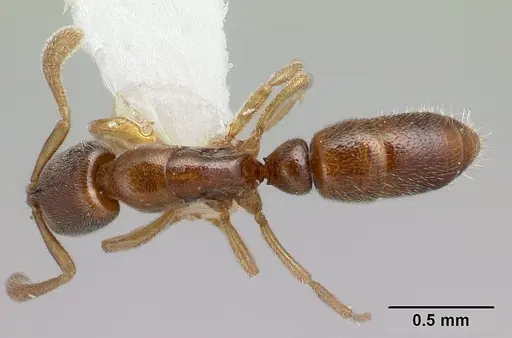
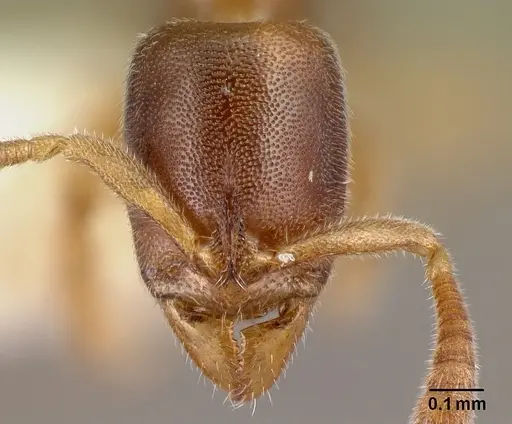
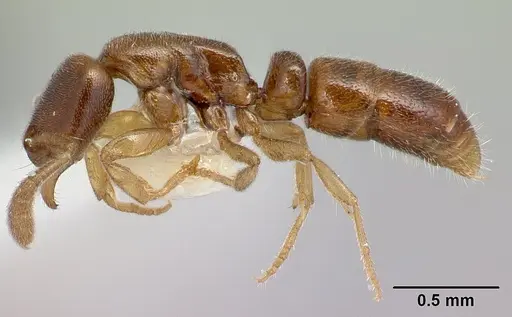
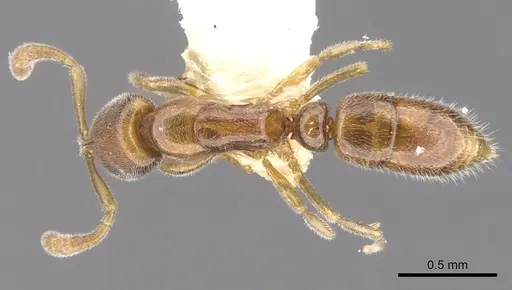
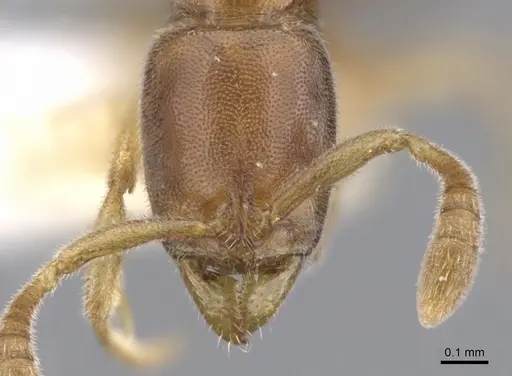
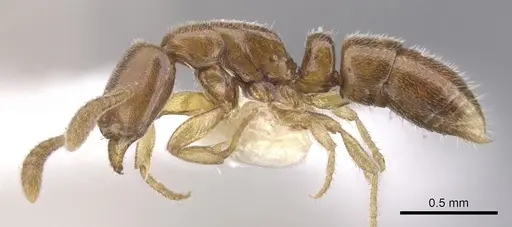
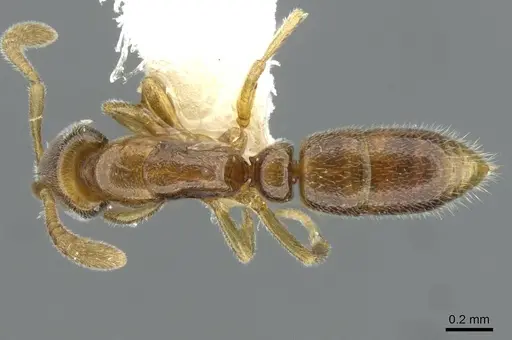
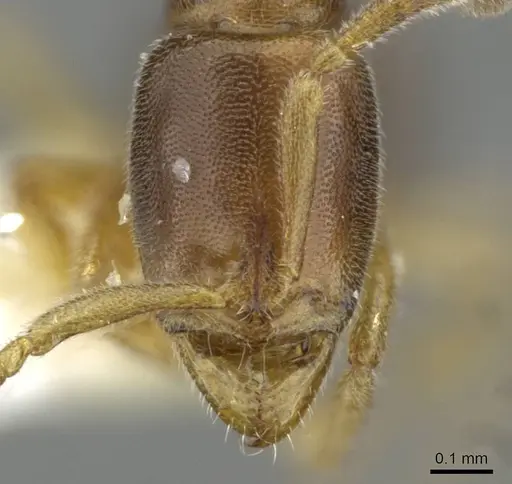
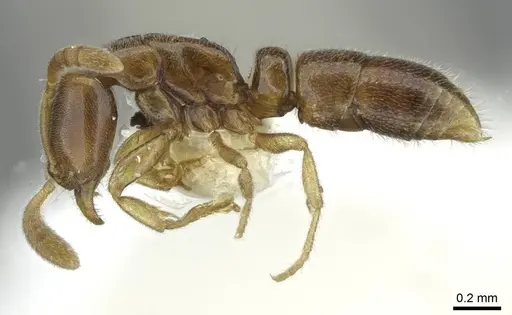
Hypoponera venusta is an exceptionally rare ponerine ant, described in 2011 from specimens collected in the highland rainforests of Rwanda, East Africa . Workers are tiny and blind – they have no eyes, which is typical of Hypoponera species living in dark microhabitats like under stones or deep inside rotting wood . Their body length is not recorded in the literature, but the head capsule is just over half a millimeter long. The genus Hypoponera is large and widespread, with most species being generalist predators that hunt small invertebrates . This species is known only from elevations around 1800 m in Nyungwe Tropical Rain Forest, suggesting it prefers cool, damp, shaded forest-floor conditions.
Quick Summary
- Difficulty: Expert
- Origin & Habitat: Endemic to Rwanda, found only in highland tropical rainforest at elevations around 1800 m. Known from Rangiro and Kayove in western Rwanda, collected in Nyungwe Tropical Rain Forest [1][2][3].
- Colony Type: Unknown. Colony structure has not been documented for this species. Based on genus patterns, it may have single-queen colonies, but some Hypoponera species have unusual reproductive strategies, including ergatoid (wingless) replacement reproductives [3].
- Size & Growth:
- Queen: Not described – queen size unknown.
- Worker: Body length not recorded in literature, head capsule measurements are available but total length is undocumented [1].
- Colony: Unknown – no colony size data exists for this species.
- Growth: Unknown – no captive breeding data exists. Estimated moderate based on related ponerine patterns.
- Development: Unknown. Based on typical Ponerinae development at warm temperatures (24-26°C), estimated 6-10 weeks from egg to first worker. (No direct development data exists for this species. The estimate is based on genus-level patterns for small ponerine ants.)
- Antkeeping:
- Temperature: Inferred from highland rainforest origin. Likely prefers temperatures in the 22-26°C range with stable conditions. Avoid drops below 18°C or peaks above 30°C.
- Humidity: High humidity required. As a rainforest species from 1800 m elevation, keep nest substrate consistently moist but not waterlogged. Provide a humidity gradient so the ants can self-regulate.
- Diapause: Unknown. Tropical highland species may have reduced activity during cooler/wetter seasons but likely does not require true hibernation. Maintain stable temperatures year-round.
- Nesting: Inferred from habitat and lack of eyes. Likely nests under stones, in rotting wood, or in soil on shaded forest floors. In captivity, use a moist plaster nest or a test tube setup with consistent moisture. Keep in low-light conditions.
- Behavior: Behavior is unstudied. Based on genus patterns, these ants are generalist predators that hunt small invertebrates, likely foraging singly or in small groups [3]. Workers are probably shy and non-aggressive, typical of most Hypoponera species. Like other ponerine ants, they have a functional sting used to subdue prey. Escape prevention must be excellent – they are tiny and can squeeze through standard test tube barriers. No sting data exists for this specific species, but larger Hypoponera can deliver a sharp sting.
- Common Issues: no biological data exists – this is one of the least-studied ant species in captivity, escape prevention is critical due to their tiny size – use fine mesh barriers, high humidity requirements can lead to mold if ventilation is poor, completely unconfirmed breeding in captivity – expect significant trial and error, no established care protocols – keepers must experiment with conditions
Why This Species Is Challenging
Hypoponera venusta represents one of the most challenging ants to keep because absolutely nothing is known about its biology in captivity or in the wild. This species was described from just a handful of specimens collected in the 1970s, and no scientific study has ever observed its colony structure, founding behavior, diet, or development [1]. Every aspect of keeping this species will require careful experimentation and observation. You are essentially pioneering the husbandry of a species with no prior captive data. This makes it an expert-level species suitable only for experienced antkeepers who enjoy the process of discovering how to keep a species through trial and error. The reward is being among the first to successfully breed what may be an entirely new species to the hobby.
Housing and Nest Setup
Based on the limited habitat data, this species likely lives in cool, damp, shaded microhabitats in the Rwandan highland rainforest [1][3]. They have no eyes, suggesting they prefer dark, enclosed spaces. A moist plaster nest or a test tube setup with consistent moisture would be the best starting point. Keep the nest in darkness or very low light. Because they are tiny, escape prevention must be excellent – use fine mesh barriers and check all connections regularly. The outworld should be simple and easy to maintain, with a small water source. Given their likely predatory nature, provide a small foraging area where you can offer prey items.
Feeding and Diet
The genus Hypoponera contains generalist predators that hunt small invertebrates like springtails, mites, and other micro-arthropods [3]. In captivity, offer small live prey such as flightless fruit flies (Drosophila), pinhead crickets, small mealworms, and most importantly, live springtails. Springtails are likely an ideal food source given their small size and the damp conditions this species requires. You could also try offering tiny pieces of raw meat or fish, as some ponerine ants accept protein. Sugar sources are unlikely to be accepted – these are predatory ants, not sugar-feeders. Feed small amounts every 2-3 days and remove uneaten prey within 24 hours to prevent mold.
Temperature and Seasonal Care
As a species from 1800 m elevation in equatorial Rwanda, this ant lives in a cool, stable tropical climate. The Nyungwe Tropical Rain Forest experiences temperatures roughly from 15°C to 25°C year-round, with minimal seasonal variation [1][3]. Start with temperatures in the 22-26°C range and observe colony behavior. If workers seem sluggish, slightly increase temperature, if they avoid the heated areas, reduce it. Do not let temperatures drop below 15°C or exceed 30°C. Unlike temperate species, this ant likely does not require a winter dormancy period. Maintain consistent temperatures year-round to mimic the stable highland climate. Humidity should be high – think damp forest floor conditions.
What We Still Need to Learn
Every aspect of this species' biology remains to be discovered. We do not know: the queen size and appearance, how many workers a mature colony has, the exact temperature and humidity ranges they tolerate, how long development takes from egg to worker, whether they accept artificial nests, what specific prey they prefer, if they have any defensive abilities (they likely sting, but this is unconfirmed), when and how nuptial flights occur, or even if they have been kept in captivity anywhere in the world. This represents both a challenge and an opportunity – you may be the first to document captive husbandry of this species. Keep detailed notes on everything you try, and consider sharing your findings with the antkeeping community so others can learn from your experience.
Frequently Asked Questions
Is Hypoponera venusta a good species for beginners?
No. This is an expert-level species that should only be kept by experienced antkeepers. Absolutely no captive breeding data exists, meaning every aspect of its care must be discovered through experimentation. Beginners should start with well-documented species like Lasius niger, Camponotus species, or Myrmica rubra.
What do Hypoponera venusta ants eat?
Based on genus patterns, they are generalist predators that hunt small invertebrates [3]. Offer live springtails, flightless fruit flies, tiny mealworms, and other small live prey. Sugar sources are unlikely to be accepted. Remove uneaten prey within 24 hours to prevent mold.
How big do Hypoponera venusta colonies get?
Unknown. No colony size data exists for this species. Based on related Hypoponera species, colonies likely reach several hundred workers at most, but this is purely an estimate.
What temperature should I keep Hypoponera venusta at?
Start with 22-26°C based on their Rwandan highland rainforest origin. This is an estimate – observe your colony and adjust accordingly. Avoid temperatures below 15°C or above 30°C.
How long does it take for Hypoponera venusta to produce first workers?
Unknown. No development data exists. Based on typical Ponerinae development at warm temperatures (24-26°C), a rough estimate is 6-10 weeks from egg to first worker, but this is highly uncertain.
Can I keep multiple queens together?
Unknown. Colony structure has not been documented for this species. Do not attempt combining unrelated queens – this has not been studied and could result in fighting and colony loss.
Does Hypoponera venusta need hibernation?
Probably not. As a tropical highland species from near the equator, they likely experience year-round activity with no true winter dormancy. Maintain stable temperatures throughout the year.
Where does Hypoponera venusta live in the wild?
Only in Rwanda, East Africa. It is endemic to that country, found in the Nyungwe Tropical Rain Forest at elevations around 1800 m [1][2][3]. This is one of the rarest ant species in the hobby, with extremely limited distribution.
Why is there no care information for this species?
Hypoponera venusta was described in 2011 from specimens collected in the 1970s, and no biological studies have been conducted since [1]. It is known from only a few specimens, making it one of the least-studied ant species in the world. No one has documented captive breeding, which is why you would be pioneering its husbandry.
Report an Issue
The current care sheet is based fully on literature. See inconsistencies, or something that's incorrect? Please , it will be resolved after review from an admin. Contributing to the blogs tab also helps providing information, to make us be able to further improve the caresheets. Thank you for your support!
References

This caresheet is licensed under CC BY-SA 4.0 .
Community Blogs
Literature
Loading distribution map...Loading products...